

chief bootlicker for @standard_rsv, sometimes a dev prev coinbase, cofounder frame (acquired)
Joined May 2020
- Tweets4.1K
- Following1.3K
- Followers29.6K
- Likes10.6K





notifications are bigger, warnings are in more places, granular telegram reminders, x notifications
at this point i might as well add phone number so i can personally call you


agreed, anon teams have tried to fork standard and our other products multiple times
every single one has either rugged, disappeared, or abandoned the project
a founder staking their reputation for their project is the least they can do if theyre asking people to back them


oh yeah, forgot to mention, coming to you soon, on standard reserve

"imagine you take a stock token and make it programmable, like software, what can you do?" - vlad
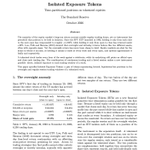
i discuss in the paper below what i believe is a genuinely new financial primitive that is now only possible because of stock tokenization
i present, Isolated Exposure Tokens


it was brought to my attention that a token launched on standard's launchpad was removed from pumpfun's competition for "bundling" because 80% of its supply sits in one place
i want to clarify what this actually is, and why its the complete opposite of a bundle and actually a beneficial mechanism
first, what a bundle is: a deployer buys most of the supply across multiple wallets at launch, hides that theyre connected, waits for buyers, then dumps on them (or in the *optimistic* case, uses them for "supply control"). bundles are opaque and hide a token's real float
standard's launchpad lets deployers do what's called a "charter drop" which is the complete opposite of a bundle:
- charters are nfts held by participants in the @standard_rsv ecosystem. each holder has spent over 3 eth to join the protocol, and they've proven to be aligned, long term supporters of the projects they like
- deployers can choose to airdrop a percentage of supply (up to 80%) to charter holders. these tokens are locked in a vault contract, and charter holders cant access them unless they BURN their charter
- the airdrop isnt controlled by the deployer. the tokens sit in a single public contract, 0xb8748E02f07dd80F1DB99A49F92546B2210D844d, with no admin key and no owner withdrawal
- nothing is hidden. anyone can verify the mechanism and lock onchain, which is the opposite of a hidden bundle
- charter drops cant be dumped instantly. the tokens are split across every charter holder, not one wallet, and holders only receive their share by burning their charter. it's a public token lock with a real cost to unlock, not free supply ready to hit the market
were glad bundled tokens are being policed, but if this counts as a bundle, we'd urge you to look at the majority of the other tokens in this competition
as a side not, over 4M USD of tokens has been airdropped to charters and we've seen less than 5 charter burn to receive the airdropped tokens
since we're on the topic anyway, let's talk about market cap versus liquidity on charter drop tokens. dashboards count the locked 80% in market cap, so the market cap to liquidity ratio looks thin
but, measured against tradable supply, the pool is deeper than on other launchpad tokens since the same amount of liquidity supports a much smaller float, because most of the supply is locked. treating locked supply as tradable gives a misleading ratio
you tards know this ain’t related to ethereum in any capacity right?

Here's a direct link to OpenAI's PDF claiming a refutation of ETH. In particular, it's claimed that 3SAT on n variables is in about exp(n/(log n)^{1/2+o(1)}) time
github.com/openai/math/blob/…

the standard launchpad has a unique feature where tokens deployed can airdrop tokens to charter holders
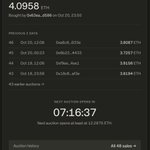
charter holders are members in the ecosystem that have spent a minimum of 3 eth (current auction clearing) and are incredibly aligned with the standard reserve protocol
the unique mechanism is that this airdrop requires charter holders to BURN their nft and position in order to claim their airdrop. this leads to a unique prisoners dilemma not present in any other project and launchpad
it is not an “80% bundle”, it is a vault contract that holds the airdrop that distributes the tokens when charter holders burn
happy to give additional context to anyone

It’s not a bundle. Their launch pad works different than yours. 80% of coin was air dropped to 867 wallets that own a standard reserve bank charter when it graduated. The most tokens any one of those bank charters has is 2M coins. Those coins can’t be accessed unless they burn their charter which is big decision.
It’s fair that you didn’t know how their launch pad works but now that you do will our pnl be restored?


scam call centers having a field day rn

Calling all AI safety researchers.
We’re inviting a small group to explore Dessa, our model trained on speech alone, and help us understand what it can and can’t do.
We’d love to hear from you: block.xyz/dessa


