




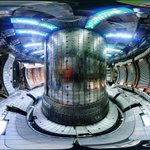


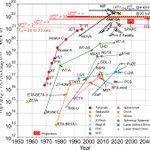
CFS is a commercial company, but as a spinoff of MIT our roots are in academia, and we maintain close ties with the university and lab experts whose decades of research made our company possible. This week @CFS_energy physicists will be meeting with many of the top experts in our field at an annual conference called APS-DPP to share our latest work on turning that research into a practical fusion power plant.
It’s important to keep these connections. Outside experts, whether just chatting at our booth or formally collaborating with us, are the first people who are going to spot problems with our approach or validate when we’re on the right track. It takes a lot to make a fusion demonstration machine like our SPARC tokamak and its successor, the ARC power plant, but the first challenge is getting the plasma physics right, and the openness of talking, collaborating, and publishing research helps tackle that challenge.
1/2

2/2
At APS-DPP, we’ll be talking about the first big demonstration that we have indeed nailed the physics: revving SPARC up to the momentous milestone of Q>1, which means the fusion process will produce more power than we use to heat the plasma inside the machine.
Check our blog post today (the link is in the comments) for details about the different paths we can take to get to Q>1, which is part of what our conference presentations cover. As we get closer to completing #SPARC, you can see how our planning for operating the machine is maturing.
#FusionEnergy
Here’s our blog post on our options for ramping up SPARC to reach Q>1: blog.cfs.energy/how-cfs-will…

The semiconductor industry that’s putting chips in every phone, car, and microwave oven is also important to fusion energy. But there’s more work to be done. That’s why today, @CFS_energy announced a letter of intent with the U.S. @CommerceGov for an $85 million award to advance semiconductor industry work for commercial fusion.
The proposed award, through the CHIPS and Science Act, will allow CFS to improve technologies like power electronics, radio frequency power generators, controller chips, robotic maintenance equipment, and artificial intelligence for fusion.
That innovation effort with the CHIPS Research & Development Office (CRDO) stands to help both fusion energy and the semiconductor industry, advancing two foundational technologies in the United States. These innovations will be a vital part of our global effort to deploy commercial fusion.
#FusionEnergy

And for more details, check our blog post from @BrandonSorbom, Chief Science Officer and Co-Founder of CFS: blog.cfs.energy/how-an-85m-f…

For more information, check our press release on the proposed CRDO award: cfs.energy/news-and-media/co…
This is what good looks like: Significant milestone + credible measurement + peer reviewed result = true fusion advancement.
Congratulations are in order as @GeneralFusion has now advanced the magnetized target fusion concept to Milestone 2 — heating the plasma — and shared the news in a constructive, credible way. 1/4
3/4 We should all also applaud how General Fusion established the believability of this result. They detailed their findings in two papers submitted for peer review — a mechanism that requires researchers to explain their work thoroughly and convincingly to independent experts. They used real diagnostic tools to measure their plasma and detailed what they did. And they collaborated with researchers at the @UKAEAofficial to measure their plasma and help author one of the papers.
4/4 That’s the way to do it. Nothing has to be taken on faith. Nobody needs to sign a nondisclosure agreement to check the math or the methodology. It’s solid work that increases trust in our industry. I look forward to seeing the papers work their way through review, and expect them to get through well, given that they’re well written. Their announcement is here: investors.generalfusion.com/…
I’m excited for their next milestone — getting to relevant triple products — and judging by the density and confinement time they are seeing in these papers, they should be able to do it with some upgrades in this machine. Nice work, keep going.
AI can improve fusion energy, and the U.S. Department of @ENERGY (DOE) can improve AI. CFS announced today we’re leading an effort that’s part of the DOE’s Genesis Mission that we expect will do both.
Through this Genesis Mission Phase II award, @CFS_energy is leading a group of U.S. companies, universities, and labs to use artificial intelligence to help catalyze commercial fusion energy work. By expanding on our earlier work here, we’ll be able to deliver fusion energy’s benefits sooner: clean, safe, baseload energy that can help answer the country’s growing electricity needs.
The program will incorporate decades of past learning on tokamaks, the type of fusion machine we’re building now. Scientific teams will use DOE computing horsepower to turn that knowledge and data into AI “surrogate” models that should help us run our tokamaks better, starting with our SPARC machine in Massachusetts. That’ll speed up learning we’ll apply to our ARC power plants.
It’s a strong group and we look forward to digging into the work together.

For more details, check our press release: cfs.energy/news-and-media/co…
We’ve long known that fusion machines perform better when you make them bigger, but 10 years ago, an @MIT tokamak called Alcator C-Mod showed that bigger isn’t always better. Those results helped chart our course at CFS to bring fusion energy to the electricity grid.
Over more than two decades of research, culminating in a final sprint on its final day in service on Sept. 30, 2016, C-Mod showed that compact tokamaks with high magnetic fields deliver the performance we need for economical fusion power. I was there on that last day at the Plasma Science & Fusion Center as we tried three ways to reach a new performance record — basically, three recipes that combined ingredients like magnetic field, plasma current, and plasma density in different ways.
Each recipe provided a good way to crank up performance, and the winning approach set a record for plasma pressure that stands to this day.
C-Mod is the progenitor of our own compact, high-field tokamaks, the SPARC demonstration machine and ARC power plant. We’ve drawn many of the best C-Mod attributes, giving us confidence that our machines will behave similarly.
That’s how innovation and progress occurs. Stay tuned as we put the C-Mod lessons to use pushing #SPARC to Q>1 — net fusion energy — and beyond.

For more on how MIT’s C-Mod paved the way for CFS, check our blog post:
blog.cfs.energy/how-the-alca…

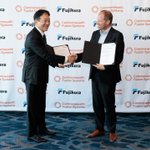
When @CFS_energy got its start, the high-temperature superconducting (HTS) tape necessary for our breakthrough magnets was a relative rarity. We’ve succeeded in dramatically expanding the supply, though, first with our 2021 TFMC magnet prototype and then our SPARC fusion demonstration machine. Today, we’ve announced new progress, a long-term agreement to purchase more than 10,000 kilometers (3 GA-m) of HTS tape from Fujikura Ltd. — the largest single HTS purchase order to date.
This agreement helps us secure HTS tape for our next chapter: ARC fusion power plants. At the same time, Fujikura is investing in a manufacturing capacity expansion so it can deliver HTS tape at larger scale.
Expect more of this trend in the fusion supply chain as our industry develops. To make HTS tape, you need to master a sophisticated manufacturing process. But as we’ve seen with countless other technologies before — microchips, solar panels, Liberty ships, and really anything that’ll come off an assembly line — manufacturers get better at manufacturing, and the supply chain matures.
My thanks to CEO Naoki Okada and the team at Fujikura for working together on a technology that’s crucial to bringing fusion’s clean, safe, secure electricity to the power grid.

For more details on our HTS supply chain agreement with Fujikura, check our press release here: cfs.energy/news-and-media/co…
Cooling our cryogenic system down to its very low operating temperature of 8 kelvin is a big moment for our SPARC fusion demonstration machine. It shows how deeply we’re now into the work of building, commissioning, and running the industrial hardware needed to operate SPARC. We’re steadily checking the check boxes on the SPARC to-do list.
Fusion works by heating and confining a very energetic cloud of charged particles called a plasma. In our case, we do that with very strong magnets that must be cooled to very low temperatures. The plasma is exotic, but the cooling system is ordinary technology you’ll see at liquified natural gas plants and other industrial sites.
But it takes skill and expertise to run cryogenics, and that’s what we’ve shown with this 8 kelvin achievement. We’ve already begun applying this knowledge to designing a very similar cryogenic system for our ARC power plant.
Check out our video and blog post to learn more about this core technology and how CFS is working in parallel on both the core SPARC equipment at the heart of the facility and the support equipment like the cryo system surrounding it.
Congrats to the team that put in long hours to install all the cryogenic system’s pumps, compressors, pipes, and valves and get it working smoothly. This gets us ready to check off one of the big check boxes on SPARC’s path to Q>1, aka net fusion energy.

To create a region with the hottest temperature in the solar system, we also have to create another nearby that’s just about its coldest. For our SPARC fusion machine, that cooling job falls to its cryogenic system — a system that recently reached a major achievement of operating at a very cold 8 kelvin (–445°F or –265°C) temperature.
This cryogenics achievement is a big deal. The system applies well understood cooling technology to the cutting-edge new job of fusion energy. SPARC uses superconducting magnets to confine and control a superhot cloud of charged particles called a plasma, enabling those particles to fuse together and release energy. To perform well, our magnets must be cooled as low as 8 K to carry enormous electrical currents with no resistance.
Bringing the full cryogenic system to 8 K is an example of our shift toward operations at SPARC. We’re testing and commissioning the support systems that surround the heart of the facility in anticipation of a major integrated test called dry dress rehearsal (DDR) that will put the SPARC support equipment through its paces. That allows us to exercise the equipment before we’ve completed assembly of the SPARC tokamak itself — the hardware with the magnets and vacuum vessel where the fusion will occur.
SPARC won’t generate electricity, but its successor, the ARC power plant, will. The ARC cryogenics system will be similar to SPARC’s, though it’ll have to handle the power plant’s continuous operations. That means what we learn on SPARC will apply directly to our work on the ARC plant.
For more details, check the link in the comments for our blog post on the SPARC cryogenic system.
#FusionEnergy
Even though fusion is hard, we’re really confident SPARC will hit its first big goal of Q>1. That milestone means that the amount of fusion energy we get out of the plasma (our very hot fusion fuel) will exceed the heating energy we put in to make the fusion happen.
So far, only one machine in the world has done that, but we expect SPARC will be the second. Check our blog post about this to understand why we’re confident and why achieving Q>1 is important.
To reach Q>1, you don’t just need good science. You also need a team with the skills to engineer, manufacture, build, and operate a fusion machine. @CFS_energy has exactly that. And we put this all together with commercialization in mind: SPARC demonstrates most of the core technology we need for our ARC power plant.
At CFS, we’re very confident that our SPARC tokamak will generate net fusion energy, a crucial performance threshold also called Q>1.
Q is the ratio of fusion power coming out of the heart of a fusion machine to the heating power that’s pumped in to make fusion occur. Achieving Q>1 shows a fusion plasma is generating a surplus of power, and that’s the foundation for a power plant — the electricity source CFS expects to bring to the power grid in the early 2030s.
Fusion is hard, but we have the design, the resources, and the team to make fusion power real. Our conviction that Q>1 is comfortably within reach begins with our 1,000+ person team of physicists, engineers, fabricators, and operators who’ve learned from decades of experience building and running tokamaks. Next is SPARC’s cutting-edge design, which is designed to reach performance well over Q>1.
“We have some margin to achieve Q>1. We’re not sitting right at the threshold, hoping the stars align perfectly,” said Phil Snyder, Vice President of Plasma Physics. “SPARC is designed to reach Q>10, so Q>1 is not an extremely difficult milestone.”
Only one machine so far, the National Ignition Facility (NIF) at Lawrence Livermore National Laboratory, has achieved Q>1 so far. To read about why CFS fully expects SPARC will be the next to reach this enormously important milestone, check our blog detailing our fusion approach.

Dennis Whyte (@MIT_Fusion) is taking over as CEO of the UK Atomic Energy Authority (@UKAEAofficial), and I’m excited to see a longtime friend and collaborator in this new leadership role. I worked for years with Dennis at @MIT's Plasma Science and Fusion Center — where Dennis was Director, I was a grad student getting my PhD, and @CFS_energy has its origins — and now I look forward to his arrival in the UK. CFS has had a joint R&D partnership with UKAEA for four years, including efforts like the LIBRTI program for fusion fuel production.
Dennis is a giant in the fusion world, an author on nearly 400 peer-reviewed papers including several involving the SPARC fusion machine we’re building right now at CFS headquarters. The UKAEA is lucky to have him. Dennis helped build and maintain a strong PSFC program, and now he’ll have a chance to do the same for UKAEA.
His taking this job shows how a well coordinated effort with a strong vision, significant financial and government support, and leading-edge new facilities can attract top talent. Bringing his skill to UKAEA directly strengthens the country’s ability to benefit from fusion energy’s advantages — clean, safe, dispatchable electricity.
One of UKAEA’s most important fusion projects, the Joint European Torus (JET) tokamak, produced important research and operational expertise. It’s also the tokamak that came closest to producing net fusion energy (Q>1), with a Q of 0.67. JET has entered decommissioning now, but there’s more work to be done in fusion. I’m looking forward to seeing how Dennis can help UKAEA push fusion forward now that the world’s attention is focusing not just on experimental projects but commercial fusion technology, supply chains, and the first power plants heading toward the grid.
#FusionEnergy

BREAKING NEWS: Professor Dennis Whyte has been appointed as the new Chief Executive Officer of UKAEA Group.
For the Press Release, visit gov.uk/government/news/fusio…

Neither of these entities is anywhere close to accomplishing what’s needed in their respective domains to warrant working together.
reuters.com/business/energy/…
