

Shaping the future of human stem cell biology. Engineering embryo models. News from our Cambridge labs by Thorsten Boroviak, PhD.
Cambridge, UK
Joined September 2020
- Tweets272
- Following320
- Followers1.6K
- Likes428




Pinned Tweet
We are thrilled that our marmoset embryo paper is out today in @Nature!!!
nature.com/articles/s41586-0…
Applications are still open for the MPhil in Biological Sciences by Advanced Study at Cambridge - a unique programme that combines an 8-month lab research project with interactive teaching and skills training.
Choose from one of multiple pathways to match your interests: from molecular and cell biology, crop science, reproductive biology, developmental biology, infection and immunity, or another area of the biological sciences.
Explore the course and learn more about the funding opportunities available via the link in our bio 🔗
The deadline for funding applications is 8 December 2026.
#BiologicalSciences #Masters #PostgraduateStudy #Research #CambridgeUniversity

Origin of stem cell research (44/175)
But how could Tarkowski prove that the mice really contained cells from both embryos?
He deliberately fused embryos that differed genetically in pigmentation.
The answer could be seen in their eyes.
In seven of nine young examined, the eyes contained a mixture of pigmented and unpigmented cells – reflecting the two embryos from which they originated.
Later experiments made chimerism even more striking: embryos from strains with different coat colours produced animals with characteristic patches of differently coloured fur.
The result was one animal – with two genetically distinct populations of cells.
#OriginOfStemCells #StemCells

5
333
We look forward to welcoming the next generation of researchers to our MPhil in Biological Sciences at Cambridge.
If you are curious, enjoy asking questions and testing ideas - this could be your next step.
Our funding deadline is 8 December 2026.
bio.cam.ac.uk/study/mphil-bi…
Now is the time to apply!

2
224
Origin of stem cell research (43/175)
Tarkowski’s fused embryos developed into chimeras.
A chimera is a single organism composed of cells originating from two genetically distinct embryos.
Importantly, this is different from a genetic hybrid.
The two cell populations retain their own genomes, but cooperate to build the same developing animal.
Tarkowski combined embryos from genetically different mouse strains and found that cells from both embryos contributed to the resulting offspring.
LANDMARK PAPER: Mouse chimeras developed from fused eggs. Tarkowski Nature 1961
DOI: 10.1038/190857a0
For the first time, two mammalian embryos had been experimentally combined to make one animal.
#OriginOfStemCells #Pluripotency

Origin of stem cell research (42/175)
Early embryos are encapsulated a protective shell, the zona pellucida.
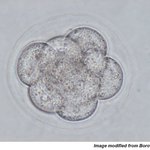
In 1961, Tarkowski removed the zona pellucida from two mouse embryos at the 8-cell stage.
Without this barrier, the embryos adhered to one another and fused.
The fused embryos were transferred into foster mothers and implanted successfully.
And remarkably, they developed into normal mice.
This experiment revealed the extraordinary regulative capacity of mammalian embryos: even after doubling their starting cell number, they can adjust subsequent growth and develop into a normal-sized animal.
#OriginOfStemCells #Embryology

Following the tragic news of Marta Shahbazi's passing in the train collision south of Madrid, I wanted to share a few personal thoughts about a wonderful colleague.
Marta was part of our PDN community at the University of Cambridge for many years, working in Magdalena Zernicka-Goetz's lab before establishing her own research group at the LMB. She was an exceptionally dedicated, hard-working and collaborative scientist – full of enthusiasm for embryology. Her work was highly regarded internationally and her scientific contributions were groundbreaking: from pioneering human embryo post-implantation culture to more recent work on extraembryonic mesoderm and in vitro models of the human chorion.
What I particularly admired about Marta was her openness and her direct, no-nonsense approach. She would always be happy to talk science with you and she would always say what she thought, a character trait that is as rare as it is valuable.
It was a real pleasure and privilege to work with Marta and she will be deeply missed. My thoughts are with her family, friends and colleagues at the LMB during this incredibly difficult time.
mrclmb.ac.uk/research-leader…

Origin of stem cell research (41/175)
CHAPTER 4. Embryos make teratomas (1960-1970)
In the early 1960s, developmental biology entered a new experimental phase.
Researchers began to ask whether mammalian embryos could be manipulated directly to reveal how development works.
One of the boldest experiments of the decade came from Andrzej Tarkowski.
He asked a radical question.
What would happen if two early embryos were physically merged?
#OriginOfStemCells #Embryo

1
6
400
Origin of stem cell research (39/175)
Pierce and Dixon made another striking observation.
In the ascitic tumours, small free-floating cysts appeared.
When examined histologically, these contained only a few embryonic-like cell types, often including embryonal carcinoma and yolk-sac-like tissues.
When such cysts were grafted back under the skin, they produced new teratocarcinomas.
This was crucial.
It showed that primitive tumour-derived structures could regenerate the complex tumour and give rise again to differentiated tissues.
#OriginOfStemCells #Teratoma #Embryology

Origin of stem cell research (38/175)
The key cells Pierce and Dixon isolated were the most primitive malignant cells in the tumour.
They called them embryonal carcinoma cells.
These cells were undifferentiated, highly proliferative and sat at the root of the teratocarcinoma.
They proposed that these were the tumour’s stem cells:
cells capable of giving rise to the remarkable variety of tissues seen in the tumour.
In modern terms, they had identified the malignant pluripotent cell of the teratocarcinoma.
#OriginOfStemCells #StemCells #Cancer

Origin of stem cell research (37/175)
Pierce and Dixon asked a simple question:
Where do the differentiated tissues inside a teratocarcinoma actually come from?
A teratoma contains many differentiated tissues.
A teratocarcinoma contains these tissues together with undifferentiated, malignant embryonal carcinoma cells.
“Malignant” means that these are cancer cells that proliferate abnormally and can invade surrounding tissue.
This made embryonal carcinoma cells prime candidates for the founder cells of the tumour.
Were the many differentiated tissues produced by these primitive cells?
To test this, Pierce and Dixon converted a mouse testicular teratocarcinoma into an ascitic tumour by transplanting tumour cells into the abdominal cavity.
Ascitic tumours grow as free-floating cancer cells and small tumour aggregates suspended in abdominal fluid.
The key advantage was that these primitive tumour cells could now be isolated and studied directly.
#OriginOfStemCells #Teratoma #DevelopmentalBiology

4
297
Excited to be invited at THE 3R LÄND Organoid Conference in Germany on the 18th - 20th March 2027!
Looking forward to sharing our work on stem cell-based models of embryogenesis and catching up with colleagues across organoid biology and bioengineering.
Submit your abstract and hopefully will be seeing you there!
3r-organoidconference-ulm-20…
#Organoids #StemCells #Embryogenesis #3Rs

3
292
Origin of stem cell research (36/175)
Leroy Stevens suspected that teratomas might originate from embryonic cells that had escaped normal developmental control.
This idea would soon transform cancer biology.
A decisive breakthrough came in 1959 by Barry Pierce and Frank Dixon.
They set out to test one of the central ideas in teratoma biology:
Do the many tissues in a teratocarcinoma arise from primitive cells with embryonic potential?
To answer this, they turned mouse testicular teratocarcinoma into an experimental system.
LANDMARK PAPER: Testicular teratomas. I. Demonstration of teratogenesis by metamorphosis of multipotential cells, Pierce and Dixon, Cancer, 1959
#OriginOfStemCells #Cancer #HistoryOfScience

6
305
Origin of stem cell research (35/175)
The tumours in strain 129 were extraordinary.
Leroy Stevens observed an astonishing collection of differentiated tissues.
Skin, cartilage, nerve tissue, muscle and many other cell types could all develop side by side inside the same tumour.
This extraordinary diversity hinted that the tumour must originate from cells with an unusually broad developmental potential.
A concept that would become central to stem cell biology.
#OriginOfStemCells #DevBio

Origin of stem cell research (34/175)
In 1954, Stevens published the first systematic study of teratomas generated in 129 mice.
His work established that these tumours occurred naturally at an unusually high frequency in this inbred strain.
He described their incidence, pathology and developmental features in detail.
This landmark study provided researchers with a reliable animal model to investigate one of the most remarkable tumours known in biology.
LANDMARK PAPER: Spontaneous testicular teratomas in an inbred strain of mice, Stevens and Little, PNAS (1954)
#OriginOfStemCells #Teratoma

7
268
Origin of stem cell research (33/175)
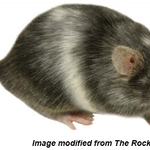
Leroy Stevens noticed that male mice of strain 129 developed spontaneous testicular teratomas at a frequency of 1:100.
This was unusual and of tremendous scientifically value.
In all other strains, teratoma formation was exceedingly rare.
The observation suggested that strain 129 had a unique biological predisposition.
Understanding why these animals developed teratomas would become one of the central questions of Stevens' research and the ability to study teratomas would ultimately transform developmental biology.
#OriginOfStemCells #RegenerativeMedicine

#OriginOfStemCells is back on Monday 5th October after the summer break!
We now enter the chapters that transformed strange tumours into modern stem cell biology:
III. A mouse strain that makes teratomas
IV. Embryos make teratomas
V. Teratomas make embryos
VI. Mouse embryonic stem cells
VII. Human pluripotent stem cells
VIII. Inducing pluripotency in any cell
IX. Pluripotent states reflect developmental stages
X. Clinical breakthroughs from stem cell research
From Leroy Stevens and strain 129 to embryonic stem cells, reprogramming, pluripotent states and regenerative medicine.
This is where the story really takes off.
#StemCells #DevelopmentalBiology

1
2
200
Welcome to Cambridge, Kosuke!

5年ちょっとの戸田研での活動を終え、9月からケンブリッジ大学の @boroviak_lab のメンバーとなりました。信じられないくらい楽しく自由に研究させてくださった 戸田先生 @SatoshiTodaLab には大感謝です。
これからは、"着床"にフォーカスしてよりチャレンジングな研究に取り組みたいと思います。
1
408

We are looking for a Research Assistant to help establish new bioprinted models of human biology at the Cambridge Stem Cell Institute.
A great opportunity for a curious scientist who wants to work across #StemCells, tissue culture and #Bioengineering.
jobs.cam.ac.uk/job/56936/
From the teratomas of the middle ages to Leroy Steven's teratoma-generating mice of the 129 strain, it has been a huge pleasure to explore the history of stem cell research with you.
Our series is now on summer break.
Thank you for reading, sharing and supporting our journey through the origins of the field.
I am looking forward to returning after the summer with more stories, discoveries and pioneers that shaped stem cell research.
Have a wonderful summer!

1
292