

The world's first secure touchscreen hardware wallet. Complete solutions for secure signing, key storage, and backups. Engineered and manufactured in the USA.
Joined May 2017
- Tweets3.4K
- Following892
- Followers20.8K
- Likes7.9K





Nice work!
The GridPlus and @ambire combo is top notch and Ambire is constantly shipping refinements and new features.

WTF moment of last week: my AI agent fixed a 2+ year old @gridplus bug in @ambire with a 1-liner 🤯
Ambire + GridPlus power users know this one: when u import accounts from your Lattice first, then switch to a SafeCard that has a different wallet on it, the import from there fails with “active wallet does not match request” and the only workaround was to restart your extension or browser.
I spent a lot of effort on it back then and only fixed the signing flows.
On Friday, it worked on the first try. That never happens when I code by hand btw 😅 And it did it in the background, while I was busy with another task.
All I gave it was what I’d tried, what I knew, a ref to the GridPlus SDK code, and a real device to test on (I just clicked the physical buttons and swapped the SafeCard when it asked).
Fix is out in Ambire v6.26.4 (or newer). I spent more time writing this tweet than it took to fix the bug. WTF.

Upgrade your hardware security this #WorldBackupDay.
Save $70 on the Lattice1 and get 7 FREE SafeCards. Each swappable card backs up and signs for a different seed phrase. That's 8 wallets for $329!
🗓️7 days only
🌏Free shipping
🤑No code needed
Only @ gridplus.io
Another supply-chain compromise is unfolding tonight, this time affecting Axios on npm.
If Axios is in your stack, audit your lockfiles now for [email protected], [email protected], and [email protected]. Read the thread below and pin or roll back immediately if found.

🚨 CRITICAL: Active supply chain attack on axios -- one of npm's most depended-on packages.
The latest [email protected] now pulls in [email protected], a package that did not exist before today. This is a live compromise.
This is textbook supply chain installer malware. axios has 100M+ weekly downloads. Every npm install pulling the latest version is potentially compromised right now.
Socket AI analysis confirms this is malware. plain-crypto-js is an obfuscated dropper/loader that:
• Deobfuscates embedded payloads and operational strings at runtime
• Dynamically loads fs, os, and execSync to evade static analysis
• Executes decoded shell commands
• Stages and copies payload files into OS temp and Windows ProgramData directories
• Deletes and renames artifacts post-execution to destroy forensic evidence
If you use axios, pin your version immediately and audit your lockfiles. Do not upgrade.
The #WorldBackupDay (March 31) is a reminder that backing up data is crucial. Beyond crypto, it’s about protecting your digital keys, files and priceless memories.
Our hardware is resilient - make sure your backup strategy is too.
👀Stay tuned for our special offer on March 31!
4
11
1,589

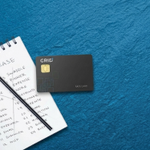
Stop relying on words scribbled on a piece of paper - your wallet backup should be just as secure as the wallet itself.
GridPlus SafeCards are the safest way to store your seed phrase thanks to physical unclonable function (PUF) chips that provide the strongest secret storage mechanism available.

Final hours to save $100 on the Lattice1! 💰
The sale ends tonight.
Grab yours at gridplus.io.


✨LUNAR NEW YEAR SALE IS LIVE 🧧
To celebrate new beginnings in the Year of the Fire Horse, we’re dropping a $100 discount on the Lattice1.
🎁 Each Lattice1 pack includes 3 free SafeCards.
⏳ 7 days only.
Shop at gridplus.io. No code needed.

4
10
1,502
Tired of clicking through tiny screens and still not being sure what you're actually signing? 🧐
Put the magnifying glass away. With the Lattice1's 5-inch touchscreen, you get full transaction details on one screen.
Security, made simple.

2
8
963
✨LUNAR NEW YEAR SALE IS LIVE 🧧
To celebrate new beginnings in the Year of the Fire Horse, we’re dropping a $100 discount on the Lattice1.
🎁 Each Lattice1 pack includes 3 free SafeCards.
⏳ 7 days only.
Shop at gridplus.io. No code needed.
A major campaign is targeting @SafeLabs_ multisig signers. The Lattice1 was created to protect against this.
Address labels on secure hardware can't be replicated remotely by attackers. A poisoned address shows up without your trusted label; with a glance you know not to sign.

🚨 Security update: large-scale address poisoning + social engineering campaign targeting multisig users
We’ve identified a coordinated effort by malicious actor(s) to create thousands of lookalike Safe addresses designed to trick users into sending funds to the wrong destination. This is social engineering combined with address poisoning.
Important: this was not a protocol exploit, not an infrastructure breach, and not a smart contract vulnerability.
That said, we take reports like this extremely seriously, because the end result is the same: users’ funds may be at risk.
Etherscan reference (attacker factory used to deploy malicious Safes): etherscan.io/address/0x8b770…
With the help of SEAL911, Hypernative, and Blockaid, we investigated the attack pattern and identified ~5,000 malicious addresses. These addresses have been flagged as malicious via SafeShield (powered by our security partners) and are being removed from Safe Wallet’s UI, reducing the risk of accidental interaction.
Please note: similar schemes are easy for malicious actors to reproduce. It’s therefore critical to follow secure signing procedures, especially for high-value transfers (e.g., verify the full address, use an address book/allowlist, confirm recipients out-of-band, make a smaller transfer first).
Address poisoning and social engineering, like phishing, are evolving and persistent threats in crypto. Defending against them requires continuous investment in both detection and UX improvements that reduce human error.
For anyone unfamiliar with this attack pattern, we strongly recommend reading more here:
help.safe.global/en/articles…
Using address book in safe: help.safe.global/en/articles…
Using address book in spaces: help.safe.global/en/articles…
Stay vigilant: don’t trust—always verify full addresses, not just prefixes and suffixes. 🛡️
Huge thanks to SEAL911, Hypernative, and Blockaid for their rapid support.

We covered how the Lattice1's secure address verification could have helped prevent the $1.5B Bybit hack, which relied on the same fundamental weakness: signers unable to verify what they were approving on a trusted display.
gridplus.io/blogs/blog/how-t…

🚨 The website for Notepad++, a code editor used by millions of devs, was compromised last year and has since directed some users to compromised installers.
Action: Manually install v8.9.1+ from the official site.
Don't use auto-update on old versions.
notepad-plus-plus.org/news/h…
AI agents unlock countless possibilities for building on @Ethereum, but handing a bot private keys requires a hardened security posture.
Follow practical @OpenClaw security tips from this guide to minimize risk before deploying. Building is more fun without the worry! 🦞

Address poisoning is when scammers send you tiny transactions from addresses that look almost identical to ones you've used before.
When you copy-paste from your history, you grab the scammer's address instead.
Always verify the FULL address and use address labels!

We're lucky to have talented creator friends like r/Ethereum moderator @ProDJKC!
If you haven’t already, head over to the GridPlus YouTube channel to check out his ongoing video work.

Right up there with teaching, my time with @gridplus was such a good time. This was a pic from 4 years ago!
Man...time flies when you're havin' fun.

Hardware built by GridPlus.
Cross-chain trading perfected by @ShapeShift.
Clear transactions, multichain support, no guesswork.
Try it for yourself.


We’re hiring a Senior Firmware Engineer at GridPlus.
We're shipping a new type of security device this year to make crypto safer and easier for everyone and want you to help shape it.
Remote-friendly, competitive comp + equity.
gridplus.io/pages/careers

GridPlus Lattice1 and SafeCards store your seed phrase as an encrypted backup inside secure hardware. Want to see how it works?
In this video, our friend @ProDJKC demonstrates how to back up, copy, restore, and manage SafeCard wallets with your Lattice1.
youtube.com/watch?v=akbob8Co…
You can also read the full guide at docs.gridplus.io/safecards/s….

4
7
410