

Making business work for everyone, everywhere, every day. See @ICCSecGen & @ICC_Arbitration
Paris, France
Joined March 2010
- Tweets19.2K
- Following1.8K
- Followers42.7K
- Likes12K





Global trade finance needs rules that work for everyone.
Effective frameworks depend on collaboration between banks, policymakers and standard setters to help facilitate international #trade.
The ICC Global Banking Commission provides a global forum for banks and helps shape the rules and regulatory frameworks that enable #tradefinance worldwide.
More: bit.ly/4h5gBit
@iccwboUK
Digital trade needs standards that work in practice. 🌐
At Sibos 2026, Team ICC brought the latest work on digital trade and trade finance to the conversation, with a focus on standards, interoperability and creating value for corporates.
Key takeaways included:
▶️ Digital trade was on the agenda at Sibos, including at the Policy Forum, with discussions on standards and aligning banking sector readiness with industry needs.
▶️ #ICCDSI’s work on data standards and the bank defined dataset is helping clarify the documents and data points that matter for banks.
▶️ The upcoming 2026 ICC Global Trade Intelligence Report, formerly the ICC Trade Register, will provide new data and insights on trade finance and global trade. The recently released Pulse Check on Trade Finance offers a first look at the insights that will feature in the report.
▶️ Across these efforts, one message stood out: digital trade cannot advance in isolation. Progress depends on industry-wide cooperation, shared standards and greater interoperability across the ecosystem.


International Chamber of Commerce retweeted

At its 33rd SAFE Working Group Meeting, the WCO launched its first annual MSME Spotlight with @wto & @iccwbo, giving smaller AEO businesses a voice.
We heard inspiring stories from the United States 🇺🇸, Morocco 🇲🇦 India 🇮🇳and Panama🇵🇦, highlighting both the benefits of AEO certification and the challenges faced by smaller businesses.
Members also advanced work on an ACI repository, AEO/e-commerce guidelines, MRA impact and Smart Security Devices.
Read more here 👉World Customs Organization
___________________
À sa 33e réunion, le Groupe de travail SAFE de l’OMD a lancé « Focus sur les MPME » avec l’OMC et la CCI, donnant la parole aux petits OEA.
Nous avons découvert des témoignages inspirants des États-Unis 🇺🇸, du Maroc 🇲🇦, de l’Inde 🇮🇳 et du Panama 🇵🇦, mettant en lumière les avantages de la certification OEA ainsi que les défis auxquels sont confrontées les petites entreprises.
Avancées également sur les RPCM, le commerce électronique, les ARM et les dispositifs de sécurité intelligents.
Pour en savoir plus 👉Organisation mondiale des douanes
#WCO #AEO #MSME
International Chamber of Commerce retweeted
E-commerce, data and trade facilitation in focus at the WCO’s Permanent Technical Committee
The 253rd/254thSessions of the Permanent Technical Committee (PTC) kicked off today in Brussels. Opening the sessions, WCO Secretary General Ian Saunders welcomed delegates and highlighted the importance of continued collaboration to advance trade facilitation and Customs modernization in an evolving global trade environment.
The opening session also featured a keynote address by ICC Deputy Secretary General Andrew Wilson on the digital transformation of international trade and Customs-business cooperation.
During the three-day meeting, discussions will focus on:
🔹 Cross- border e-commerce, enforcement-related developments, and practical exchanges on simplification and facilitation, and public-private partnerships
🔹 Data-driven Customs, focusing on data governance, interoperability and cross-border data exchange, and developments in Information and Communication Technology and data harmonization
🔹 Trade facilitation in practice, covering ongoing initiatives, including the transition to the digital ATA Carnet System (eATA) and implementation of the WTO Trade Facilitation Agreement
The PTC brings together delegates from around the world to address key Customs challenges and review WCO tools to support more effective and responsive Customs.
@iccwbo

Build your export know-how to trade across Africa. 🌍
TradeRoots Africa, an initiative of the ICC Centre of Entrepreneurship, supports African SMEs with practical training and targeted support to strengthen their readiness to trade across the continent.
Gain practical insights into export requirements, trade processes and opportunities under the African Continental Free Trade Area.
#ICCCoE | Registration is now open: iccwbo.org/business-solution…

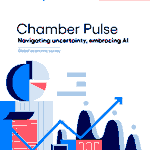
How is the global business landscape changing? 🤔
The 2026 ICC WCF Chamber Pulse explores how chambers worldwide assess the business environment and how businesses are responding to a rapidly changing global economy.
Despite mounting pressures, expectations for business activity are improving, with chambers in six out of ten countries expecting an increase in 2026.
Read the full report: bit.ly/4z5vHwj


What does it take to turn waste into value? ♻️
Collecting more plastic is only part of the circular economy challenge. Demand, investment and policy certainty are also needed to help circular business models scale.
A South African circular economy venture is showing how connecting collectors, recyclers, manufacturers and retailers can help build demand for recycled polypropylene.
The experience offers a wider lesson for the future Global Plastics Treaty: enabling policy frameworks and credible implementation pathways can help create the conditions for circular markets to grow.
Read the full interview: bit.ly/3VlRMry
When food stops moving, everyone pays the price.
Geopolitical shocks can disrupt markets for food, fertilisers and other critical agricultural inputs. In response, governments sometimes turn to export restrictions to protect domestic supply.
Yet experience from past crises shows these measures often amplify shortages, increase price pressures and undermine food security.
The paper argues that export restrictions should be a measure of last resort and, where used, be transparent, targeted and time-limited.
It also sets out practical recommendations to help keep food and agricultural trade flowing during periods of geopolitical stress and prevent supply shocks from escalating into broader food security crises.
Read the paper: bit.ly/4AHBqtx

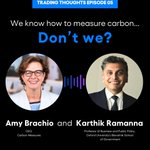
What if we track carbon emissions like we track money?
Today, the same factory or product can produce different emissions figures depending on who is asking and which method they use.
But what if emissions were tracked on a ledger, allocated to products and never lost as they move through the value chain?
In the latest episode of ICC Trading Thoughts, Amy Brachio, CEO of @CarbonMeasures, and Karthik Ramanna, Professor of Business and Public Policy at Oxford University’s @BlavatnikSchool, Co-Chairs of the Technical Expert Panel on Carbon Accounting, explore what it would take to build a carbon accounting system the world can trust.
🎧 Listen to the latest episode: bit.ly/4jsL8JP

What can trade finance tell us about the global economy?
Quite a lot.
Because trade finance typically operates over short financing horizons, shifts in risk and policy can quickly register in market conditions.
Our latest Pulse Check on Trade Finance finds that around 60% of banks now see geopolitical conflict as a high or severe threat.
At the same time, trade volumes are growing, while competition and uncertainty are putting pressure on banks’ margins.
Together, these signals offer a timely view of the risks and pressures facing global trade.
This Pulse Check offers a first look at the insights that will feature in the upcoming ICC Global Trade Intelligence Report 2026.
Read the full report: bit.ly/4iURzoU


The global business pulse check is in.
Here’s what 350+ chambers worldwide are reporting. 🔽
The latest ICC WCF Chamber Pulse survey highlights a more challenging global business environment, with growing geopolitical tensions overtaking all other business concerns.
Trade uncertainty and inflation continue to put pressure on businesses worldwide.
💪 Yet there are signs of resilience.
Businesses are adapting to uncertainty rather than retreating, and economic expectations are improving.
The AI race is accelerating, with China taking the lead.
Drawing on insights from chambers in 113 countries, representing economies that account for 90% of global GDP, the survey reveals how businesses are navigating today’s challenges, adapting to uncertainty and building resilience for the future.
What do these findings tell us about the future of global business?
Read the full report: bit.ly/4z5vHwj

Small businesses power travel and tourism. Let’s help them thrive. 🗺️
Together with the @WTTC, we have launched a strategic partnership to help small and medium-sized businesses in the travel and tourism sector overcome barriers to growth, strengthen their competitiveness and access new opportunities.
By combining WTTC's industry expertise with our global network, we will help connect SMEs with the knowledge, resources and networks they need to thrive.
Together, we can help ensure that the voice of smaller businesses is heard in policy discussions and that entrepreneurs are better equipped to seize opportunities in international markets.
Read more: bit.ly/4dDfK7U


How can we keep free trade agreements aligned with changing tariff codes?
When trade agreements continue to reference outdated tariff codes, businesses can face additional complexity, costs and uncertainty in determining whether their goods qualify for preferential tariff treatment.
With the Harmonized System 2028 entering into force on 1 January 2028, FTA parties have a critical window to update HS references before the new classification takes effect.
Four practical principles can help guide this process, including keeping technical rectification neutral, building dedicated capacity, making better use of existing tools and integrating rectification mechanisms into future FTAs.
Getting this right can reduce compliance burdens and help businesses continue to benefit from preferential treatment.
Read the policy paper: bit.ly/3TB9Du0

The latest electronic Bill of Lading adoption trends are in. ⤵️
The 2026 Future International Trade (FIT) Alliance survey shows sustained growth in the adoption of electronic Bills of Lading (eBLs) and continued confidence in their role as an enabler of wider trade digitalisation.
As adoption grows, attention is turning to the next challenge.
Nearly half of respondents (46.2%) identify interoperability and platform fragmentation as a key barrier to adoption at scale.
The findings highlight the need for electronic trade documents and trusted data to move seamlessly across platforms, jurisdictions and trade participants.
#ICCDSI┃More: bit.ly/4k6RRJI
@BIMCONews @DCSA_org @fiatafederation @swiftcommunity

More than 100 sustainability standards and initiatives.
What does that mean for critical mineral supply chains?
Demand for critical minerals is accelerating as governments advance the energy transition, expand digital infrastructure and scale advanced manufacturing.
Yet businesses face a fragmented policy landscape, with overlapping standards, divergent definitions, due diligence rules and traceability requirements creating complexity and uncertainty across global value chains.
Smaller operators and businesses in developing economies can face a disproportionate burden when navigating these overlapping requirements.
Our latest policy paper sets out seven business priorities for a more coherent, inclusive and responsible approach to critical mineral supply chains, covering standards, traceability, circularity, investment, climate policy and biodiversity.
Read the policy paper: bit.ly/4h9UtF5

Former Colombian President @IvanDuque has been appointed Chair of the new Technical Expert Panel Advisory Group.
Together with @CarbonMeasures, we established the Advisory Group to complement the work of the Technical Expert Panel on Carbon Accounting (TEP).
The TEP brings together experts across academia, financial accounting, industry and civil society to develop a globally applicable framework for carbon emissions accounting.
The new Advisory Group will broaden engagement with policymakers, business leaders and other stakeholders, bringing diverse perspectives to help ensure the TEP’s technical work is relevant and applicable in the real world.
Additional members of the Advisory Group will be announced in the coming months, further expanding the perspectives contributing to this work.
More about the appointment: bit.ly/3TcaxN5

What does it take to turn waste into value? ♻️
Collecting more plastic is only part of the circular economy challenge. Demand, investment and policy certainty are also needed to help circular business models scale.
A South African circular economy venture is showing how connecting collectors, recyclers, manufacturers and retailers can help build demand for recycled polypropylene.
The experience offers a wider lesson for the future Global Plastics Treaty: enabling policy frameworks and credible implementation pathways can help create the conditions for circular markets to grow.
Read the full interview: bit.ly/3VlRMry
Digital trade needs standards that work in practice. 🌐
At Sibos 2026, Team ICC brought the latest work on digital trade and trade finance to the conversation, with a focus on standards, interoperability and creating value for corporates.
Key takeaways included:
▶️ Digital trade was on the agenda at Sibos, including at the Policy Forum, with discussions on standards and aligning banking sector readiness with industry needs.
▶️ #ICCDSI’s work on data standards and the bank defined dataset is helping clarify the documents and data points that matter for banks.
▶️ The upcoming 2026 ICC Global Trade Intelligence Report, formerly the ICC Trade Register, will provide new data and insights on trade finance and global trade. The recently released Pulse Check on Trade Finance offers a first look at the insights that will feature in the report.
▶️ Across these efforts, one message stood out: digital trade cannot advance in isolation. Progress depends on industry-wide cooperation, shared standards and greater interoperability across the ecosystem.


Hello from the UN Biodiversity Conference #COP17
Our team is on the ground alongside a delegation of more than 90 participants, engaging with policymakers, business leaders and partners on how to turn biodiversity commitments into real-world outcomes.
We're advocating for clear policies, effective financing solutions and stronger partnerships that can help close the biodiversity finance gap.
Closing that gap will require collaboration across sectors. Governments, investors, businesses and all other stakeholders each have a role to play in enabling investment in nature.
Read more: bit.ly/4zMgUGN


International Chamber of Commerce retweeted

Don’t confuse political fragmentation for commercial disconnection.
That was my message to a vibrant Bangkok during the IMF/World Bank annual meetings last week. Despite the turbulence, business continues to find ways to connect.
More: bit.ly/4yZbCrr
@iccwbo


