

ILC Dover has supplied NASA with spacesuits since the dawn of Apollo, building upon our expertise to meet our industry's current and future needs.
Frederica, Delaware
Joined December 2021
- Tweets341
- Following39
- Followers184
- Likes144


The final two are here! We’re finishing with the first all-woman spacewalk at #2 and Apollo 11 at #1.
#2: The First All-Woman Spacewalk (Expedition 61, 2019)
Christina Koch and Jessica Meir conducted the first all-woman spacewalk outside the ISS on Oct. 18, 2019.
During the 7-hour, 17-minute outing, they replaced a failed battery charge-discharge unit, which regulates the charge to the station’s batteries. Both wore Extravehicular Mobility Units (EMUs) with ILC Dover soft components for the repair.
#1: The First Moonwalk (Apollo 11, 1969)
On July 20, 1969, Neil Armstrong and Buzz Aldrin began the first moonwalk. The EVA lasted 2 hours, 31 minutes.
We designed and built their A7L suits for NASA, then supplied the suits for every Apollo lunar landing.
Today, ILC Dover’s record spans more than 3,000 hours of spacewalks without a single failure. Thanks for counting down with us!
Four to go! Our next stops are Apollo 17’s moonwalks at #4 and the first untethered spacewalk at #3.
#4: The Final Apollo Moonwalks (Apollo 17, 1972)
In December 1972, Harrison Schmitt and Gene Cernan explored the Taurus-Littrow valley over three moonwalks totaling about 22 hours. Schmitt was the first geologist to reach the Moon and remains the only one to have walked on its surface. Their ILC Dover A7LB suits were designed with greater mobility for lunar exploration, giving the astronauts more freedom to move as they worked.
#3: The First Untethered Spacewalk (STS-41B, 1984)
On Feb. 7, 1984, Bruce McCandless flew about 320 feet from Challenger with no tether connecting him to the shuttle. His Manned Maneuvering Unit (MMU) used nitrogen gas thrusters to control his movement.
McCandless wore the MMU over a shuttle Extravehicular Mobility Unit (EMU) with soft components built by ILC Dover. The suit maintained his pressurized environment while the backpack let him maneuver independently.
We’re halfway through! #6 is Suni Williams’ spacewalking record, followed by the first ISS assembly spacewalk at #5.
#6: The Most Spacewalk Time by a Woman (Expedition 72, 2025)
By the end of her ninth outing on Jan. 30, 2025, Suni Williams had logged 62 hours, 6 minutes of spacewalk time, surpassing Peggy Whitson’s record for the most by a woman.
On all nine spacewalks, Williams wore an Extravehicular Mobility Unit (EMU) built around an ILC Dover Pressure Garment Assembly, the pressurized suit that protects astronauts from the vacuum of space.
#5: The First ISS Assembly Spacewalk (STS-88, 1998)
Before astronauts could switch on Unity, someone had to connect the cables.
Jerry Ross and Jim Newman made those connections on Dec. 7, 1998. Working from Endeavour, they linked power and data cables between Unity, the first U.S.-built module, and the Russian-built Zarya. Electricity from Zarya’s solar arrays could then reach Unity, and the crew inside Endeavour could activate the module.
For that first ISS assembly spacewalk, Ross and Newman wore EMUs with a Pressure Garment Assembly designed and manufactured by ILC Dover.
Next up, #8 and #7: a repair that helped save Skylab and Dr. Bernard Harris Jr.’s historic spacewalk outside Discovery.
#8: The First Successful Repair Spacewalk (Skylab 2, 1973)
Skylab needed repairs almost as soon as it reached orbit. Debris from its damaged shield had jammed a solar array wing, leaving America’s first space station short on power.
On June 7, 1973, Joe Kerwin cut the restraining strap with a tool on a 25-foot pole. He and Pete Conrad then used a rope to pull the wing open, restoring power for research. Their suits were modified versions of the Apollo A7LB, built by ILC Dover for work aboard Skylab.
#7: The First African American Spacewalker (STS-63, 1995)
On Feb. 9, 1995, Harris became the first African American to walk in space. He and Michael Foale spent more than four hours outside Discovery in Extravehicular Mobility Units (EMUs).
Their mission also included the first shuttle rendezvous with Russia’s Mir station, bringing the two spacecraft close together ahead of later docking missions.
Kicking off the countdown! At #10 and #9, we have a satellite rescue and the longest spacewalk of the shuttle era.
#10: The Only Three-Person Spacewalk (STS-49, 1992)
Two attempts to capture the stranded Intelsat VI F-3 satellite had failed. On May 13, 1992, Pierre Thuot, Rick Hieb, and Tom Akers went outside together to stabilize it and attach a capture bar. They then fitted a new rocket motor to help the satellite reach its intended orbit.
#9: The Longest Shuttle-Era Spacewalk (STS-102, 2001)
The shuttle program’s longest spacewalk lasted 8 hours, 56 minutes. Jim Voss and Susan Helms set that record on March 11, 2001, while moving equipment and preparing the ISS for continued assembly.
All five astronauts wore Extravehicular Mobility Units (EMUs). The pressure garment assembly (PGS) of the EMU was designed and delivered by ILC Dover. The PGS is the as-worn part of the EMU that maintains suit pressure while allowing astronauts to bend and reach.
U.S. spacewalk 100 is coming up at the International Space Station. To mark the occasion, we’re counting down 10 spacewalk milestones!
ILC Dover spacesuits and softgoods protected the astronauts during all 10. Our record spans more than 3,000 hours of spacewalks with no failures
Follow along as we count down to number 1.
From Apollo to Artemis, ILC Dover has shaped the future of human spaceflight.
Our spacesuits have supported more than 3,000 hours of spacewalks, 250 missions, and six Moon landings — all without a single failure.
Today, we’re engineering next-generation systems for long-duration lunar and deep-space missions, ensuring a sustained human presence beyond Earth.
CBRN threats no longer follow the Cold War playbook.
State and non-state actors are using chemical and biological capabilities in new ways, and the softgoods that protect the warfighter have to keep pace.
For decades, ILC Dover has engineered CBRN protection in service with U.S. and allied forces, from barrier garments and powered respirators to filtration systems and decontamination equipment. Our work spans the full protective chain, from an individual soldier's gloves to collective-protection shelters and patient isolation systems for medical evacuation. Built to protect lives when failure is not an option.

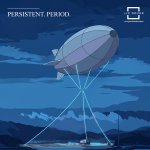
Persistent surveillance depends on platforms that stay on station around the clock, in environments where conventional aircraft struggle.
ILC Dover envelopes are at the core of lighter-than-air systems fielded worldwide for ISR, missile defense, and border security. Tethered, these aerostats carry radar and sensor payloads to over 15,000 feet and provide continuous wide-area coverage, at a carbon footprint 75 to 90 percent lower than a manned or unmanned aircraft flying the same mission.
We build the envelope, the lighter-than-air hull at the core of the system, and deliver it to the integrator who completes the platform. These envelopes have flown on DARPA high-altitude programs and at CBP aerostat sites along the southern border, and they are trusted by defense partners worldwide.

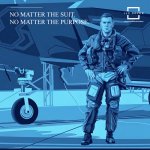
The gear pilots hope they never need is the gear that has to be built best.
ILC Dover manufactures the chemical-biological mask worn by F-35 pilots in emergency situations. It sits ready across the full flight envelope and activates when everything else has gone wrong. From the runway to flight altitude, in a compromised environment, there is no margin for error and no second chance.
That is the standard we build to.

Manufacturing takes teamwork, precision, and a willingness to get hands-on.
For #NationalManufacturingDay, we’re highlighting our ILC Dover team in Frederica as they flip an aerostat to inspect the other side, showcasing the hands-on expertise that goes into building and maintaining complex aerospace systems.
It’s work that happens behind the scenes, but every detail matters when the technology is built for demanding environments.


Early warning and uninterrupted communications depend on protected equipment that does not compromise the signal it carries.
ILC Dover's softgoods radomes are built to do both. They withstand wind, ice, salt, and blowing sand while remaining radio-frequency transparent, so the signal passes through without interference, a trade-off that rigid enclosures often cannot manage. It is a softgoods challenge as much as a radar one.
Whether a site is forward and temporary or fixed and permanent, our radomes help maintain detection range and keep satellite links operational in conditions that would degrade an unprotected system.

You may know us for suiting up every NASA astronaut since Apollo. For more than 75 years, that same softgoods engineering has supported the warfighter on the ground, at sea, and in the air.
The materials science and manufacturing behind a spacesuit also go into radomes, surveillance aerostats, and CBRN protective equipment for U.S. and allied forces.
Each is engineered for environments where the hardware has to keep functioning under sustained stress. It is a discipline we have been refining for decades.

ILC Dover equips defense and security forces with mission-critical softgoods that perform across land, sea, air, and space.
From high-altitude aerostats and inflatable radomes to recovery and containment systems, our solutions deliver persistent coverage, seamless integration, and unmatched reliability.
Trusted by the DoD, DHS, and global partners, built for readiness, resilience, and real-world performance.
On Earth, you don't think about what's protecting you. That's the standard Astro™ is engineered to meet.
ILC Dover's record spans 3,000+ hours of spacewalks, 250 space flights, and six Moon landings, all without a single failure. That record is built on protection systems engineered for the most demanding operating environments in existence.
Astro™ delivers enhanced heat, radiation and micrometeoroid protection through advanced materials developed over more than 75 years of ILC Dover softgoods engineering. Every layer of the suit's environmental protection system is purpose-engineered for the specific threats astronauts face outside a spacecraft.
ILC Dover's advanced materials expertise are designed to support America’s vision for long-term lunar habitation, human missions to Mars, and evolving mission requirements. That starts with a modular spacesuit that is customizable for every mission profile.


Walking is second nature. The suit has to keep it that way, whether in microgravity or on the lunar surface.
Program managers planning for both orbital and surface missions need a suit platform that works across fundamentally different operating environments without requiring separate hardware programs. Supporting multiple mission environments without separate hardware programs reduces logistics burden across the mission lifecycle.
Astro™ delivers enhanced flexibility in the hip and thigh, a highly mobile leg, and compatibility with boots for space or planetary walks. That means the same suit architecture supports station maintenance in microgravity and surface exploration on the Moon or Mars. The suit is designed to be easily mixed and matched to create the best fit for each astronaut.
All ILC Dover spacesuit components maintain compatibility across the entire suit architecture, so any combination of sizes will seamlessly fit together to create a functional, uniquely fitted suit.


On Earth, you feel what you're holding. That feedback matters even more in a vacuum.
The glove is the hardest component to engineer in any spacesuit program. Astronauts rely on their hands for every EVA task, from connector manipulation to tool handling. At the same time, fingers are the body part most exposed to temperature extremes, fatigue, and pressure-related strain during extended operations.
ILC Dover designed the Astro™ glove with enhanced dexterity and increased range of motion in the wrist. The objective: maximize tactile capability and fine motor control through multiple layers of pressure and thermal protection.
These advances directly support the operational requirement for astronauts to perform complex maintenance and science tasks, whether in microgravity or on the lunar surface.


Today marks the 25th anniversary of the day our country changed forever. We take a moment to remember the victims and honor the first responders and law enforcement officers who helped our nation back to its feet. Their courage, service and sacrifice will never be forgotten.

Reaching for a tool is instinct. The suit shouldn't change that.
Upper-body mobility drives EVA productivity. In a pressurized suit, every arm movement works against internal pressure. Higher resistance means faster fatigue and shorter productive work windows. Astro™ delivers significantly increased mobility compared to legacy systems.
That starts at the shoulders, with increased upper-torso range of motion for additional arm rotation, and extends through a highly mobile lower-arm assembly designed for precision tool handling. The result: astronauts can perform maintenance, science and other mission-critical tasks more safely and comfortably than ever before.
ILC Dover has refined spacesuit mobility across every generation of NASA EVA hardware. Astro™ applies that institutional knowledge alongside advanced materials and engineering to support both microgravity operations and surface exploration on the Moon and Mars.


