

The Jewish Institute for National Security of America (JINSA) strengthens US security & promotes strategic ties to like-minded allies. PR: [email protected]
Washington, DC
Joined September 2010
- Tweets9K
- Following1K
- Followers9.3K
- Likes758






Pinned Tweet
Over 75 senior retired 🇺🇸U.S. generals, admirals, and military lawyers have signed a new open letter rejecting claims that Israel committed genocide in Gaza.
The signatories include those who have commanded U.S. armed forces in combat, applying the laws of armed conflict.
Their conclusion: based on the facts and applicable legal standard, the conduct of Israel’s war against Hamas does not constitute genocide.
As the letter states, “Civilian deaths occurring during combat, however tragic, are insufficient, by themselves, to support a finding of genocidal intent.”
The standards used to judge military conduct matter precisely because war is tragic and imperfect.
“The precedent established today regarding Israel will shape the conditions under which American forces fight tomorrow. Protecting civilians and preserving the ability of our nation to defend itself requires us to defend the truth when the laws of war are being distorted to make false charges of genocide.”
This is not an argument for minimizing the suffering of civilians. It is an argument for applying the law faithfully and maintaining the distinctions that matter: between the tragic consequences of war, violations of the laws of armed conflict, and the specific crime of genocide.
Read the full open letter here: jinsa.org/open-letter-from-m…


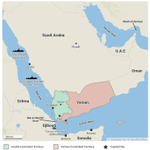
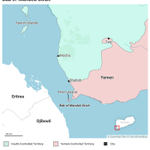
The Houthis are targeting maritime traffic in the Bab el-Mandeb Strait—capable of significantly impacting global shipping.
U.S. forces in East Africa are well positioned to help defend the strait, but requires different arrangements.
🧵@Jonah_Brody spoke with @ckoettl about the importance of “distributed access” to counter the Houthis.

2/
Somaliland’s Berbera and Puntland’s Bosaso could give the United States what it badly needs in the Horn of Africa: distributed access.
Washington’s only permanent African base is in Djibouti, but host-country restrictions limit how U.S. forces can operate there.
Berbera offers a relatively stable position for logistics, surveillance, and contingency access, while Bosaso’s location and counterterrorism role make it a useful forward operating site.
Neither is a silver bullet: Berbera carries political complications regarding Somaliland’s status, while Bosaso presents greater force-protection and infrastructure challenges.
Washington’s goal should not be to replace Djibouti, but to reduce dependence on a single host nation.
@nytimes
nytimes.com/video/world/afri…

3/3
For a deeper look at how the United States can strengthen its ability to defend the Bab el-Mandeb and secure the Red Sea
read JINSA’s Jonah Brody and MajGen Robert Sofge, USMC (ret.), former commander of Marine Corps Forces Europe and Africa, in @smallwars
smallwarsjournal.com/2026/09…

102
Adversaries (Iran, China, North Korea, etc.) are moving their most valuable assets deeper underground.
America will need a broader set of tools to hold those sites at risk, beyond existing bunker-busters.
Lt. Gen. David Harris, USAF (ret) & @TobinYoni in @TheNatlInterest nationalinterest.org/feature…

The key to Iran is its people says JINSA Distinguished Fellow @AmbDermer, telling @mirandadevine:
“Keep the pressure on, keep the military threat credible, keep the economic pressure on, and reach out to the people of Iran. That's the winning formula.”
“Freedom of navigation is a fundamental American national security interest, and we cannot allow the Houthis–or any hostile actor–to hold one of the world's most important waterways hostage.”
- LTG Karen Gibson, USA (ret), fmr. Director of Intelligence, CENTCOM
jinsa.org/jinsa_report/closi…

“If Iran's regime collapses, it's not just about the threats that are removed, it's the opportunities that will be created ... a completely different Middle East.”
- @AmbDermer, JINSA Distinguished Fellow

Former Israeli ambassador to US lays out three things Trump can do to speed up 'inevitable' collapse of Iranian regime trib.al/mSkDAei

This week a district court granted an injunction blocking @usedgov from publishing the names or identifying information of foreign donors to U.S. universities.
Qatar and other foreign actors have invested billions in American higher education, raising serious questions about their influence over our institutions.
Congress should strengthen Section 117 of the Higher Education Act to require full disclosure of foreign gifts, including their sources and any accompanying agreements.
Transparency is essential to protecting the integrity and independence of American universities.
For more see @HusseinAboubak & LtGen Karsten Heckl, USMC (ret.) in @Algemeiner algemeiner.com/2026/10/21/ad…


The United States cannot—and should not—bear the burden of countering the Houthis alone.
JINSA recommends the United States should:
1️⃣ Build linked regional coalitions to degrade Houthi capabilities, defend partners against attacks, and deny the group access to foreign weapons.
2️⃣ Establish a dedicated counter-Houthi threat finance cell to disrupt the networks funding its operations.
3️⃣ Expand U.S. access to facilities along the Horn of Africa, lessening reliance on Djibouti and improving operations around the Bab el-Mandeb.
4️⃣ Work with Saudi Arabia and the UAE to unify anti-Houthi forces and build a credible Yemeni government capable of holding territory.
The United States should provide intelligence, weapons, coordination, and diplomatic support while regional partners lead the fighting.
(6/7)

1
104
The Houthis continue to pose a challenge to Yemen’s territorial integrity while adversely affecting global commerce, regional security, and the credibility of American security guarantees.
The Iran war cannot be resolved if Tehran's most resilient regional partner remains capable of threatening an additional critical maritime chokepoint.
Washington needs a coordinated, partner-led strategy to prevent the Houthis from rebuilding and restore secure passage through the Red Sea.
📜Read JINSA's full report
(7/7) jinsa.org/jinsa_report/closi…
1
92
Our leadership sat with @jewishinsider to assess the challenges to and mismanagement of the U.S.-Israel relationship — on both sides, how the Middle East is reacting, and America's indispensable role in the region. jewishinsider.com/2026/11/ji…

“All negotiations with Iran have gone absolutely nowhere”
JINSA Fellow, VADM Robert Harward tells @bungarsargon President Trump is right to call off negotiations and stay the course to economically strangle the regime in Tehran. @NewsNation
JINSA retweeted

The Iran War shows how the “adversarial axis” of China, Russia, Iran, and North Korea is more cohesive than the original Axis. This new global competition requires a different approach than the Arsenal of Democracy that won World War II. My latest: thedispatch.com/article/iran…
