

Welcome to a place to share every bit of KAIST. Official account feed by Public Relations Office. Tag your tweets with @kaistpr for us to retweet :-)
Daejeon, Republic of Korea
Joined May 2013
- Tweets2K
- Following98
- Followers4.5K
- Likes488






🌧️ A joint research team from KAIST and the APEC Climate Center has found that the East Asian summer front has migrated north over the past half century, raising the risk that the Korean Peninsula will experience heavy rain and heat stress.
🔗nature.com/articles/s41612-0…

📱KAIST has developed a method that predicts the lifetime of blue phosphorescent OLEDs from changes in their brightness under a magnetic field.
🔗 doi.org/10.1038/s41467-026-7…
#KAIST #OLED

💧A KAIST team has developed a wearable patch that delivers eyedrops without relying on gravity. Vitamin C and baking soda generate gas pressure, so it needs no pump or electrical drive.
📖 Sensors and Actuators B: Chemical
🔗 doi.org/10.1016/j.snb.2026.1…
#KAIST #SpaceMedicine

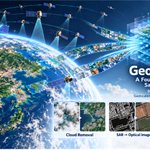
🛰️ KAIST’s GeoCore-9B AI restores cloud-covered satellite images and turns radar images into photo-like ones. Trained on 10M image-text pairs with location and scale, it beat existing models at cloud removal. 🌍
🔗 doi.org/10.48550/arXiv.2608.…
#KAIST #AI #EarthObservation
🤖 Made with AI

KAIST researchers developed an unmanned synthesis platform that combines robots and visible light to automate drug candidate synthesis, from mixing raw materials to analysis. 🤖💡
#KAIST #DrugDiscovery
📖 JACS Au (Aug 7, 2026)
🔗 doi.org/10.1021/jacsau.6c010…

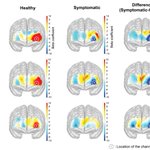
Same “depressed” body movements, opposite brain responses. A KAIST study found that hugging the knees, sighing, or drooping the shoulders raised left anterior prefrontal activity in healthy people but lowered it in those with elevated symptoms.
📎sciencedirect.com/science/ar…


🌍 An international research team including Professor Buhm Soon Park from KAIST has proposed a common framework for defining the Anthropocene, coinciding with the “Great Acceleration” of the mid-20th century.
🔗 doi.org/10.1038/s43017-026-0…
#KAIST #Anthropocene

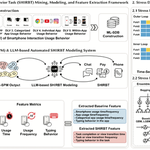
📱 KAIST researchers have developed a technology that reads daily stress from repeated smartphone behaviors such as chatting, searching, and payment.
🔗 doi.org/10.1145/3770644
#KAIST #DigitalHealth

KAIST researchers developed a single transistor that controls both long-term and short-term memory, enabling encryption in which information is revealed only after a set amount of time has passed. 🔐
🔗 advanced.onlinelibrary.wiley…
#KAIST #Semiconductor

🔬 KAIST has developed a technique that sets in advance where a 2D semiconductor crystal begins to grow, allowing only one crystal to grow at that position, a key step toward stacked AI chips.
🔗 doi.org/10.1038/s41586-026-1…
#KAIST #Semiconductors

🪲 KAIST, with Caltech and NTU, has developed BeetleBot, a small soft robot powered by artificial muscles that users can move by bending a finger while checking the images and contact information it sends back.
🔗 doi.org/10.1126/sciadv.aeg88…
#KAIST #SoftRobotics

🚀 2026 KAIST Tech Fair
From noise reduction to autonomous robotics, explore 6 promising technologies and 4 faculty-founded startups.
📍 COEX, Seoul | Oct 13
🤝 Meet researchers and explore collaboration.
🔗 tlo.kaist.ac.kr/
#KAIST #KES2026

🤖 Physical AI KOREA 2026
Beyond humanoids: KAIST will unveil its vision for physical AI platforms spanning manufacturing, healthcare, logistics and more.
📍 KAIST, Daejeon | Oct 13
🔬 Robotics demos and a roadmap for research and industry.
#KAIST #PhysicalAI

🔬 KAIST, with TU Dresden, has revealed how information is written in ferroelectric memory at the nanoscale: new domains form while existing ones expand at the same time.
🔗 doi.org/10.1021/acs.nanolett…
#KAIST #FerroelectricMemory


KAIST researchers led by Professor Min-Soo Kim have developed CONDA, a vector database technology that maintains high search accuracy even as data is continuously added and deleted.
🔗 doi.org/10.14778/3836663.383…
#KAIST #AI

🧬 KAIST and IBS researchers have determined the three-dimensional structure of the VEGF-C–VEGFR-3 complex and identified how higher-order clustering of these complexes acts as a "hidden amplification switch" in lymphangiogenic signaling.
🔗advanced.onlinelibrary.wiley…
#KAIST#CryoEM

🚴 Prof. Hyotcherl Ihee used ultrafast X-ray pulses to reconstruct how the light-responsive molecular switch azobenzene changes shape, revealing a coordinated motion of its central nitrogen linkage. nature.com/articles/s41586-0…
#KAIST #Chemistry

🪴 Inspired by the Venus flytrap, KAIST researchers developed the 'Ionograsper,' a single soft material that senses approaching objects and bends to grasp them under UV light, holding its shape for more than 10 minutes after the light is turned off.
🔗 doi.org/10.1002/adma.74981
🤖 Made with AI
