Physician | https://xitter.cf/t.co/ymdHK4O5hQ | The Podcast by KevinMD

Nashua, NH, north of Boston
Joined December 2007
On the day her insurance ran out, a woman with wounds on both feet was told to go home from a skilled nursing facility. 34 home health agencies refused her. Gary Rothenberg, a podiatrist who had treated her for years, says there was no plan for home care and she lived alone. He says it was around Thanksgiving, the agencies were short staffed, and no one was in her home to teach the wound care she needed. He says she ended up back in the emergency room with infected ulcers and a prolonged hospital stay. What should be in place before a patient’s coverage for a facility stay ends? Listen to the full conversation on The Podcast by KevinMD. Link in the replies. Search "The Podcast by KevinMD" wherever you listen to podcasts. #CareTransitions #ThePodcastbyKevinMD
2
1
184
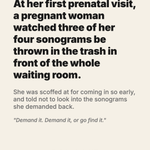
At her first prenatal visit, 3 of a patient’s 4 sonograms were thrown in the trash at checkout, in front of the whole waiting room. The 1 the office kept for its records showed what appeared to be a single embryo. Nichole Cubbage, a biorepository technician, says she demanded the other 3 back and was told the images of her own uterus were incorrect and nothing she should look into. Of course, she looked. She had come in at 6 weeks and 1 day and says she was scoffed at for coming in so early. After that, she says, her repeated questions met a huge lack of answers, with physicians referring her to other physicians within the same practice. She did not have an ultrasound after 24 weeks because her provider said it was not medically necessary. What should an office do before it throws away a patient’s own images? Listen to the full conversation on The Podcast by KevinMD. Link in the replies. Search "The Podcast by KevinMD" wherever you listen to podcasts. #PatientAdvocacy #ThePodcastbyKevinMD
1
1
1
1,012
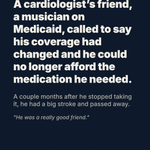
A cardiologist’s friend, a musician on Medicaid, called to say his coverage had changed and he could no longer afford the medication he needed. Payman Sattar (@md_payman), a cardiologist, says the medication was now over $300 a month. Then the pandemic dried up all of his friend’s gigs. Sattar tried a few things to get him the medication, but he just stopped taking it. About a couple months later, he had a big stroke and passed away. How many patients stop a medication without ever telling their doctor? Listen to the full conversation on The Podcast by KevinMD. Link in the replies. Search "The Podcast by KevinMD" wherever you listen to podcasts. #Medicaid #ThePodcastbyKevinMD
2
3
1,527
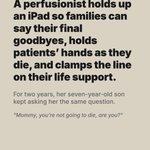
A perfusionist holds up an iPad so a family can say their final goodbyes, holds the patient’s hand while they die, and clamps the line on their life support. Julie Collins, a cardiovascular perfusionist, says the patients she was taking care of were the same age she was, and they were dying. She says health care workers took their clothes off in the backyard, followed themselves through the house with a can of Lysol, and showered in the basement so they would not touch anything. Her 7-year-old son, probably every month for two years, came to her with one question: “Mommy, you’re not going to die, are you?” She told him no, everything was going to be OK. In the back of her head, she says, she was wondering. When you remove support from one patient, she says, there is usually another patient who needs the machine. At the end of the night you cry a little bit, and you realize the next patient needs you as much as the one who just died. What did the people taking care of your family carry home that you never saw? Listen to the full conversation on The Podcast by KevinMD. Link in the replies. Search "The Podcast by KevinMD" wherever you listen to podcasts. #HealthcareWorkers #ThePodcastbyKevinMD
1
1
673
In the final year of her physical therapy program, the professors split the class into “the white guys” and “the janitors.” The janitors were all the students of color. Jerenda Bond (@JerendaBond), DPT, a physical therapist, says it was a competitive learning game in a joint mobilization class. The students of color ended up not doing as great in the class as they could have, because they felt intimidated and pushed aside to the margins. The students took it to the provost. Leadership let the professor continue so the class could finish. In the meetings, she says, he maintained his innocence, that it was just a game. If the only way to finish a course is to keep the professor, what should a school do? Listen to the full conversation on The Podcast by KevinMD. Link in the replies. Search "The Podcast by KevinMD" wherever you listen to podcasts. #HealthEquity #ThePodcastbyKevinMD
1
928
A mother arrived at her daughter’s first cystic fibrosis consultation with highlighted protocols and all her questions. Her doctor saw that her hands were shaking. Laura Spiegel, a patient advocate and the mother of a child with cystic fibrosis, had printed the evidence-based protocols and highlighted them. She says she looked like a very informed and activated caregiver. Within the first 5 or 10 minutes, the pulmonologist saw past that. The doctor sat in a chair right next to her, took her hands and, Laura recalls, told her that her daughter would lead a long and full life. That is what let Laura hear the rest of the visit. Her tip for families: write down your number-one goal for the appointment and say it first. What would you want a doctor to say in the first five minutes? Listen to the full conversation on The Podcast by KevinMD. Link in the replies. Search "The Podcast by KevinMD" wherever you listen to podcasts. #CysticFibrosis #ThePodcastbyKevinMD
5
5
1,918
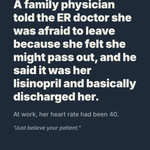
A family physician told the ER doctor she was afraid to leave because she felt she might pass out. He said it was her lisinopril and basically discharged her. Lisa Baron, MD, had COVID in December 2021. She almost passed out at work with a heart rate of 40. In the ER, her blood pressure was about 90 over 50 and her heart rate about 50. Later, a monitor showed her heart rate going to the 220s and down to the 40s. A lot of the time she had to lie supine because she couldn’t sit up. After her first son was born, she couldn’t swallow and was told it was because she lives in Colorado, where it’s dry. She was also told she had "postpartum bone hunger." A scope finally showed celiac disease. She says she is not bashing doctors. They have limited time, and not a lot is known about long COVID. Her ask is small: tell the patient, "I believe you. I just am not sure what this is or what to do." What would you want to hear from a doctor who doesn’t have the answer yet? Listen to the full conversation on The Podcast by KevinMD. Link in the replies. Search "The Podcast by KevinMD" wherever you listen to podcasts. #LongCOVID #ThePodcastbyKevinMD
7
3
13
12,227
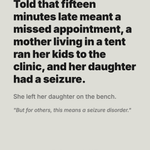
Told that 15 minutes late meant a missed appointment, a mother living in a tent ran her kids to the clinic, and her daughter had a seizure. Wendy L. Hunter, MD, a pediatrician, says the mother called from the bus to say they would be late. As most offices say, the front desk told her, “Well, if you’re more than 15 minutes late, you’ve missed your appointment.” Her son had been coming to the clinic for about six months. She knew that if she missed an appointment, she would not get his refills. So she got her kids off the bus, and they ran. Her daughter had a seizure. A dental hygienist from a neighboring office saw her on a bench outside the clinic door. The mother, by herself, had left her there. The mother was living in a tent, and the kids were living with their father. The daughter had been having seizures for about a year and had no insurance. The clinic had never known she had a daughter. “I have figured out that if she doesn’t run, she doesn’t have a seizure, so I never make her run or exert herself.” For some people, 15 minutes late is “no big deal.” “But for others, this means a seizure disorder.” What does your office say to a parent who calls to say they are running late? Listen to the full conversation on The Podcast by KevinMD. Link in the replies. Search "The Podcast by KevinMD" wherever you listen to podcasts. #Pediatrics #ThePodcastbyKevinMD
2
2
820
The day before her family left for Hawaii, a physician’s very sick mother was denied Medicare Part B. Her daughter fought it from Hawaii while her kids were at the pool. Catherine L. Chen, MD (@DrChenMD), an anesthesiologist and health services researcher, uses Medicare data in her work. Her mother needed blood transfusions every other week and was waiting on a stem cell transplant evaluation. The website said Part B takes 30 to 60 days. A transplant center said the estimate was about $500,000 out of pocket without it, and asked for half before the first appointment. After about 20 days and hours on hold, the denial letter came. Its reasons, she says, were clearly incorrect. She found the public Social Security operations manual and read the rule to them. The answer was that she was welcome to file an appeal. General enrollment was six months away. She wrote to a congressional office. The next morning, Social Security called. This was our mistake, they said. She also left multiple messages with a state Medicare help program and never reached a live person. She says her mother could not have done this on her own. What happens to the families who do not know to call? Listen to the full conversation on The Podcast by KevinMD. Link in the replies. Search "The Podcast by KevinMD" wherever you listen to podcasts. #Medicare #ThePodcastbyKevinMD
4
6
8
1,328
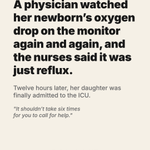
A physician watched her newborn’s oxygen drop on the hospital monitor again and again. The nurses told her it was just reflux. Tomi Mitchell, MD (@DrTomiMitchell), a family physician, says her three-day-old daughter had already stopped breathing once, and she had done CPR to bring her back. In the hospital, her daughter’s oxygen went from 99 to as low as 51 on six separate occasions. She told the nurses, "My child isn’t breathing. She’s seizing." They told her, "She’s fine. It’s just reflux." They even changed the monitor. They knew she was a physician and a mother, she says. She says no one had called the doctor on call, because the shift change was around eight. A physician friend called the attending. After about 12 hours, her daughter was finally admitted to the ICU. Afterward, she says, there was zero apology and zero acknowledgment. "It shouldn’t take six times for you to call for help." How many times should a parent have to ask? Listen to the full conversation on The Podcast by KevinMD. Link in the replies. Search "The Podcast by KevinMD" wherever you listen to podcasts. #PatientSafety #ThePodcastbyKevinMD
5
2
2
16
4,493