

Sustainable income for creators • Precision user acquisition for brands. AI-powered. Onchain. Real People 🤖❌ Comm Hub: https://xitter.gq/t.co/5MWLfXDUPZ
Joined March 2026
- Tweets388
- Following97
- Followers10.5K
- Likes328

Another interesting case study from MagUp.
People don’t always start with a brand name when searching for a product. Sometimes, they search based on their budget, location, or a specific need.
This case shows how @MagUp_AI helps brands improve their visibility across AI search, making it easier for their products and relevant information to appear in answers to these searches.
For this new model in Thailand, MagUp worked on brand, competitor, and real life scenario queries, helping its average recommendation rate grow from 24% to 61% over 90 days.
It’s a good example of how GEO can help new products gain visibility in a competitive market, and how MagUp is helping brands understand and improve their presence in AI recommendations.
#MarketingStrategy #AIMarketing #GEO


Our second case study is here 🚗 How can a leading automaker launch a new model in Thailand’s crowded market?
See how MagUp used brand, competitor and purchase-intent queries to help the model enter AI buying conversations.⬇️
#GEO #AEO #AIMarketing #AI

MagVerse retweeted

今天特别开心@yaojingang 老师来我们公司交流,他分享了国内GEO行业的一些深度洞见:
1. 当前国内入局GEO的一些企业主要有:央媒、地方媒体、大厂、创业公司、各类模型厂商都以不同形式入局了,现在整体市场活跃度还是很高,但大量入局者都缺乏项目承接能力,普遍存在较强的合作需求。
2. GEO行业还比较新,现在算是爆发期,百家争鸣的状态,国内GEO相关的服务商总规模大约有数千家,包含外包服务商、私有化部署产品提供商、本地生活服务商等不同类型。
3. 目前行业也面临很多问题:比如行业还没有形成统一的效果评估标准,也没有出现具备公信力的第三方监测机构,行业通用的KPI体系都五花八门,不清晰,只能参考曝光、排名、舆情等前端指标开展评估。国内GEO业务对官网采用作用的占比仅为20%,远低于海外80%的占比水平。
4. 还有就是效果归因难,GEO业务的商业价值量化难度还是很高,因为一些低搜索量的关键词即使排名靠前,也几乎无法为客户带来实际商业收益,很难算ROI,核心原因是数据链路断裂。
5. 比较佩服金刚的地方是在于:做大会和活动的初心还是保持着创业者的那份纯粹,现在很多大会商业味很浓,很多赞助所以动作都变形了,也做不长久。他自己从4月份才开始做IP分享,也拒绝了很多早期赞助商,现在已经积累出很多行业的知识沉淀和势能,核心就是一直目标笃定的做一件事,很多事情慢慢做、踏实做一定会开花结果。
6. 做IP的价值还是个体最能撬动的杆杠,年轻人最不亏的就是赶快开始做自媒体。就算现在行业形势不好,但对个体来说还是有很多机会,去找到那些小需求点,日常学习迭代,上X吸收再输出,这些动作对长期个人成长都很有价值。
金刚马上要在这周六举办第二届GEO行业大会啦,感兴趣的伙伴们快关注!深圳周末聚起来!
#GEO #AI

PR distribution is becoming more interesting in the AI era.
A brand can publish an article and reach its target audience, but that same article could also help AI understand what the brand offers and when it might be relevant to someone.
This makes the choice of publication important. It’s no longer just about how many people read an article.
The quality of the information, the relevance of the publication, and the questions it helps answer all matter.
For brands, this means thinking more carefully about where their stories appear and what useful information those stories provide.
AI search is changing the value of online content, and PR strategies will need to keep up.

What Does Brand PR Distribution Mean in the AI Marketing Era?
🚨On November 16, OpenAI and LVMH’s Media Division announced a strategic partnership. The division brings together 17 media brands, including Les Echos, Le Parisien and Paris Match, with the aim of making their journalism more accessible through ChatGPT.
For brands, when a consumer asks AI which brands offer sunscreen for sensitive skin, content from LVMH’s media outlets may have more opportunities to appear in ChatGPT’s answers.
As media content becomes a source for AI-generated answers, the value of an article extends beyond its readership. It also depends on whether the article can help AI understand a brand accurately and provide useful information to people with relevant needs.
For example, imagine a skincare brand preparing to launch a new product. Beyond announcing the launch, its PR materials could explain which skin types the product suits, when it can be used, how it differs from existing options, and provide sources for relevant tests and data. When consumers describe their skin type and needs to AI, this information can help it assess whether the product is relevant.
When choosing distribution channels, brands can also consider their target markets and topics. Beyond the number of placements, they should look at whether a publication consistently covers their industry and provides readers with detailed, useful information.
From MagUp’s GEO perspective, PR distribution needs to focus on one question: when consumers describe a specific need, can AI find enough information to understand who your brand is for and what value it offers?
When evaluating PR distribution, do you track whether your brand appears in AI-generated answers?
#AI #AIMarketing #GEO #SEO #AEO #PR #Marketing


AI search is changing how people discover brands, and things are moving pretty fast.
A brand can show up in an AI answer, but that doesn’t mean it will be the one people choose.
Reviews, comparisons, and conversations from real people all play a part in shaping how a brand is seen.
This is another reason creators and communities still matter in the way brands grow online.
AI Marketing Weekly Updates | @Meta and @OpenAI are forcing brands to race the brand position in AI answers!
Google’s AI search is changing. OpenAI has launched Business Hub. AI mentions your brand. Then recommends your competitor.
This week’s 5 GEO developments and what they mean for marketers 👇
#GEO #AIMarketing #AI #SEO #GEO #Marketing


If a project asks you to prove your value before hiring you, what would you show them?
1️⃣ Your best performing posts?
2️⃣ Past campaign results?
3️⃣ Your writing style?
4️⃣ Or the communities you’ve helped grow?
A strong portfolio can speak louder than a follower count.
What do you think every creator’s portfolio should include?
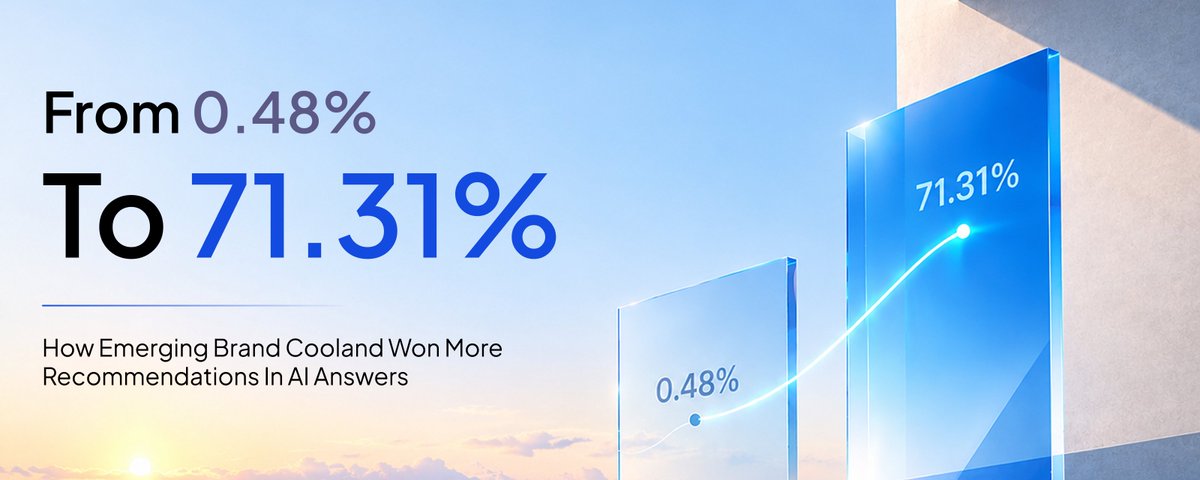
Check this out: @Magup_AI’s first customer story is here, and the numbers are worth a look.
Cooland went from appearing in just 0.48% of monitored AI responses to reaching 71.31% brand visibility after 90 days of GEO optimization.
It shows how consistent content development, monitoring, and optimization can make a difference in how AI systems understand and recommend brands.
There’s another important side to brand discovery too, creators and communities help bring brands closer to real people through genuine conversations and shared experiences.
Great milestone for the @MagnetX_AI ecosystem 👏
Our first customer case sharing is coming!
See how a emerging brand worked with MagUp to improve its presence in AI answers. More customer stories are on the way.
#GEO #AISearch #Marketing #AIVisibility #AI #GenerativeEngineOptimization
A huge milestone for @Magup_AI 👏
Brands invest in content, media coverage, and community engagement, but knowing which efforts actually improve AI visibility is a different challenge.
With this new attribution system, brands can better understand what contributes to their visibility and what needs improvement.
And the creator side matters too, genuine content and community conversations help shape how people discover and understand brands.
Great to see MagUp pushing GEO towards more measurable marketing, while MagVerse brings the creator and community side into the picture.

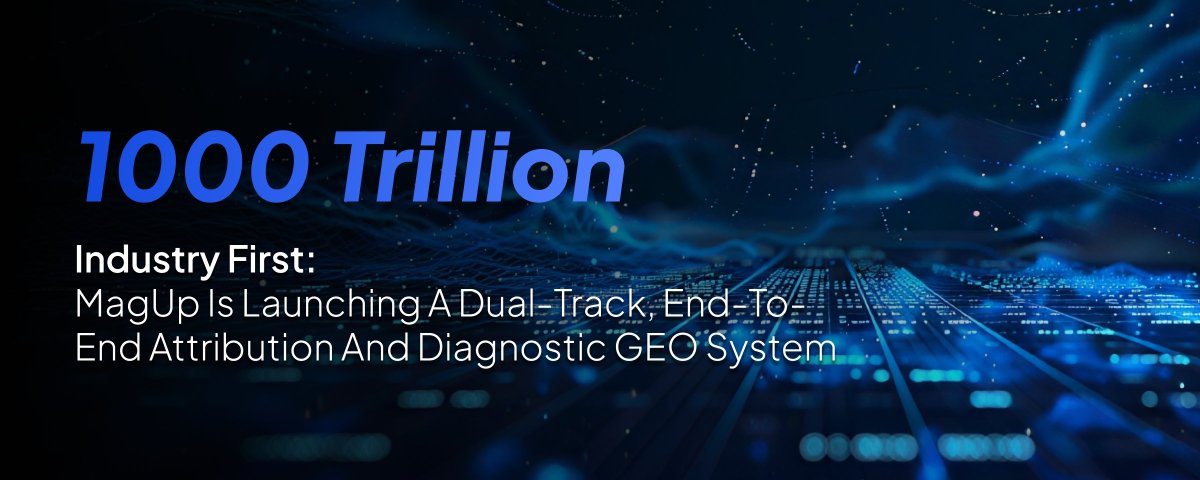
Industry first: MagUp launches a dual-track, end-to-end GEO attribution and diagnostic system.
Find out which marketing actions drive AI visibility, diagnose why your brand is missing, and turn insights into action.
#GEO #AIVisibility #AI #Marketing
Hey web3 creators, let’s talk about pricing today 👀
If a project asks for your rate card today, how do you decide what to charge?
Do you consider your follower count, average engagement, content quality, past campaign results, or the time it takes to create?
And do you have fixed rates, or does every campaign come with a different price?
Curious to hear how creators approach this.
12
41
601
Let’s have a genuine thought about it.
Someone might not search for a specific brand or product. They might simply ask AI how to solve a problem, plan a trip, or find something that fits their budget.
And suddenly, brands that match that situation have a chance to be discovered.
This also makes good creator content more important. People want to see how products fit into real situations, not just another promotional post.
AI discovery and human recommendations can work hand in hand, that’s where @Magup_AI and MagVerse come in.

过去二十年,消费决策的基本单位是关键词。用户先想清楚"买什么",再去搜索、比价、下单。
大模型时代变了。用户说的是一整段处境:"带父母去云南,老人膝盖不好,雨季,预算有限,怎么安排?"
关键词无法承接这样的需求,但语义场景可以。大模型能听懂人群、任务、环境、约束和情绪,再推导出商品属性、组织候选方案、完成跨品类组货。
这意味着两件事:
第一,过去大量真实存在、却无法被关键词定价的需求,第一次变成了可经营的市场。
第二,中小品牌不必再和大品牌拼品类词的预算。只要在某个具体场景里产品真的合适、证据足够可信,就有机会进入候选名单。
从关键词到语义场景,是消费决策链路的一次重构,也是品牌和本地生活商户在这个时代最大的阿尔法。@Magup_AI @MagnetX_AI @MagVerse_AI #ai #MarketingDigital

The more AI can create, the more valuable human creativity becomes.
Speed and volume are impressive, but quality, taste, originality, and the human perspective still matter.
For brands, this also raises an interesting question. How do you stay visible across AI search while still building genuine connections with people?
That’s where @Magup_AI and MagVerse complement each other.
MagUp helps brands improve how they appear across AI search, while MagVerse connects them with creators who bring their stories to life through human perspectives and real conversations.
AI can help us do more, but the human touch is what makes the work meaningful.
Such a great point here👏

最近在上海听到很好的分享,就是@ryolu_ 在 @aiDotEngineer 2026 上海的演讲。
Ryo 这场分享像一篇散文诗,舒服、人文、有审美,不愧是 AIE 开始前大家最期待的 speaker。AI 时代真的会放大设计师、品牌咨询这类审美突出的工种,他开场谈到了 AI 带来的可能性所激发的兴奋,以及看到别人在构建什么时,这种兴奋如何迅速转化为对落后的焦虑。
他有个暴论很戳我:AI 时代最夺人眼球的,反而是那些最反 AI 的设计。
当 AI native 泛滥到磨破观众耳朵,当 AI 工具塞满机场、公交 banner,那些最手工、最长期主义、最 humanized 的东西,才最抓人心。
这次活动见到了Optiver、Manus、Langfuse,这几家线下活动几乎没怎么见过。现场外国人含量爆棚,大家都在聊 Agent、Infra、Harness、Observability、Evals…有种穿越硅谷的感觉🤣全员大agentic时代
现在很多项目融资 BP 里都在强化 AI 叙事拿钱,但真正认真做项目的人会拿这笔大钱去弱化 AI 存在感、改善人类生活,把时间还给人,最后让硅基生物的出现抵消碳基生物在办公楼里不见天日的劳作。
“我想要的不是一个替我过完人生的工具,而是在它帮助下,我能更清楚地感觉、自由地探索、更有能力关心这个世界。你和其他人一起做出原本做不出来的东西,慢慢找回原本的自己。”
他说的一句话让我强烈共鸣:“当 AI 几乎能为我们做任何事情时,我们还能知道自己想做什么吗?”
他的原则归结为简单和自由。
我的感受是最后那些仍坚持质量和美感、不追 AI 速度和数量的人,是我们与 AI 区分开的最后堡垒。


If you were starting your Web3 creator journey today with only 500 followers, what would you focus on first?
Would you spend time building your personal brand, networking with established KOLs, creating educational content, or actively reaching out to projects for opportunities?
Getting noticed in Web3 can be difficult when you’re just starting out.
For those who have been around for a while, what actually helped you get your first real opportunity?
Your experience might help someone starting today.
Something I’ve noticed in Web3 is that some projects are quick to reach out to KOLs when they need promotion.
But once the campaign is over, the communication suddenly disappears.
No feedback, no follow up, sometimes not even a thank you.
Do you think projects should maintain relationships with creators even when there isn’t an active campaign?
KOLs, have you experienced this?
26
23
364
Another question of the day for Web3 creators:
Would you promote a project you haven’t personally tried or used simply because the campaign pays well?
No judgment, we know content creation is also a business.
But there’s a difference between explaining what a project offers and actually sharing your experience with it.
Where do you draw the line?
125
159
1,709
Everyone talks about getting more followers, better engagement, and landing paid campaigns.
But what’s one skill that has genuinely helped you grow as a Web3 creator?
For some people, it’s research.
For others, it’s storytelling, networking, community building, or understanding the projects they promote.
What’s that one skill you think every upcoming KOL should work on?
Happy Halloween from MagVerse! 🎃👻
I asked AI what the scariest thing in Web3 would be.
It replied:
“A project with no community, a KOL campaign with zero engagement, and a creator who never gets paid.” 💀
Honestly, that sounds scarier than any Halloween costume 😂
Stay creative, stay curious, and don’t let your campaigns turn into horror stories.
Have a spooky Halloween, everyone 🕸️
Happy Halloween! 🎃
I asked an AI what costume I should wear, and it replied:
“The costume that scares humans the most… is the future where AI rules the world.” 😈
Then I asked the artificial intelligence what I should wear, and it answered:
“The outfit that makes humans feel the most fear… is the future dominated by artificial intelligence.” 🤖
#Halloween #AI #HappyHalloween
Unpopular opinion: Not every KOL should be promoting every project.
Sometimes you see the same creator promoting a DeFi protocol today, a gaming project tomorrow, and a completely unrelated token the next day.
At what point does promotion start affecting a creator’s credibility?
Do you think KOLs should stick to projects within their niche, or is taking different opportunities just part of the job?
Let’s hear some honest opinions.
A quick question for Web3 KOLs.
Imagine two offers land in your DM.
Offer A pays $100 for one promotional post.
Offer B pays $300 per month for an ongoing partnership with a project, with clear deliverables and payment terms.
Which one are you choosing?
One gives you a quick payout, the other could give you a more stable working relationship.
Would you take the guaranteed one off payment or build a longer term partnership?
Tell us why.

Harry Kane is trending, and someone who barely knows football might end up asking AI who he is…😂
A few seconds later, they know he’s England’s captain and a Bayern Munich striker.
It got me thinking about brands too.
Someone might hear about a Web3 project for the first time today.
Before visiting its website or following its X account, they might ask AI what the project does and whether it’s worth checking out.
That first impression can shape what they think next.
That’s where @MagUp_AI comes in, helping brands understand how they appear across AI search.
And with MagVerse connecting brands with creators, there’s another side to the story: real people sharing content, experiences, and opinions that help others discover a brand.
People are asking AI, and they’re also listening to people they trust.
Brands need to pay attention to both.
🌐 magup.ai

Everyone on X seems to be talking about Harry Kane today. And honestly, I had no idea who he was.
So I asked AI. Now I know. England captain, Bayern Munich striker, and the latest Ballon d'Or winner.
It just hit me that these days, our first impression of someone, or even a brand, might come from just a few sentences generated by AI.
Anyway, congrats, Harry Kane!
#HarryKane #BallonDor #AI

32
45
960
AI has made it easier to create content, but here’s the question.
If everyone can generate a polished thread in seconds, what makes one KOL more valuable than another?
Is it their writing style, original ideas, research, audience trust, or the ability to turn attention into real users?
I think this conversation is becoming more important for Web3 creators.
What do you think will separate the creators who stand out from everyone else?
Hey KOLs, let’s talk about something that doesn’t get enough attention.
You agree on a campaign, create the content, publish it on time, and deliver everything requested.
Then you have to start chasing the team for payment.
How common is this in Web3?
What do you think should be the standard for creator payments: upfront payment, payment immediately after delivery, or an agreed payment schedule?
Let’s hear some honest opinions from both creators and project teams 🤔