

Head of digital assets research @VanEck_us. PM, VanEck Onchain Economy ETF ($NODE). ❌️ Disclosures https://xitter.gq/t.co/oN8RR1GzoJ https://xitter.gq/t.co/kuyqdO3qgW
NYC
Joined July 2017
- Tweets20.5K
- Following2.6K
- Followers67.1K
- Likes37.3K






Huge relief for $MARA.
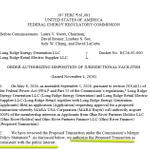
FERC approved $MARA’s Long Ridge acquisition today (EC26-92). Good to see the IMM’s spurious BlackRock/Vanguard challenge get the Heisman. FERC also turned down the request to condition approval on keeping the plant’s output in PJM. Solid.
The deal: $1.512B enterprise value for ~0.5 GW of gas generation (485 MW authorized, 505 MW nameplate) and ~$144M of annualized adj. EBITDA, about 10.5x. Recent PJM gas plant deals went at about 7x (Talen 6.7x, Vistra 7x, NRG 7.5x), which would put the plant alone at ~$1.0B. MARA is paying ~$0.5B more for the land, gas wells, rail and expansion option. MARA keeps ~$900M of Long Ridge debt in place and needs ~$610M of cash, which the $600M of BTC-backed loans it drew in August are meant to cover. I’d expect it to close by the Nov 30 outside date.
Debt math: ~$1.9B of MARA’s $2.3B convert stack is zero coupon, so total post-close cash interest is roughly $140M: ~$58M on the Coinbase and Two Prime loans, ~$76M on Long Ridge’s own debt (the 8.75% notes alone are $52.5M) and ~$7M on the converts. Judging the deal on its own: the debt that finances it (Long Ridge’s ~$76M plus ~$46M on the new BTC loans) costs ~$123M a year against $144M of EBITDA, about 1.2x. The upside is expansion.
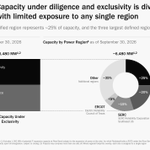
MARA talks about 600 gross MW of AI load at the site. That appears to include the existing 200 MW of grid load (on top of the 505 MW plant that sells into PJM). AEP’s 2025 filing proposed reconductoring the feeder serving a customer at the Hannibal station to go from 100 to 200 MW, for about $0.5M, targeting about nine months from PJM first seeing the need to in-service. The station ties into four 138 kV lines and once fed a 540 MW smelter, which is encouraging, but nothing is signed. To get from 200 to 600 MW, AEP would likely need to add a second feed or upgrade lines, or MARA would build on-site generation, which raises turbine availability questions. I can’t find a public study of how much more the grid connection can carry. AEP Ohio’s data center tariff also requires large customers to pay for at least 85% of contracted capacity for up to 12 years, if it applies here. Still, an energized site with fuel, land and a 138 kV hub may beat waiting in ERCOT’s queue.
It’s unclear whether the Hannibal buildout goes through the Starwood JV, where MARA would keep up to 50%. That will decide how much of the 600 MW upside MARA owns. Each 100MW developed at a 7% cap rate and $2M/MW rent could be $1.5B+ of value creation, so it's a big variable and explains why they paid ~$500M above the 7x multiple for the extra capacity.
Next catalyst, possibly at closing or just after: a signed lease.

Apparently Florida isn't far enough for some people. Started with "good riddance" and escalated to this gem. The basement dweller deleted it but I keep receipts.


My humble suggestion to the management teams in the sector with the weakest balance sheets: hire an advisor and formally discuss selling your company to someone who can better afford to build out your infrastructure.
Be a hero. Set the valuation floor for everyone. Your legacy is secure. Find your next chapter.
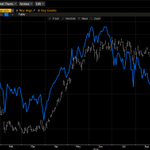
Bitcoin miners have been crushed, and November is picking up where October left off.
Rarely do we see this much valuation support across an entire sector of our digital assets universe.
The market is pricing in a lot of bad news in our opinion. Our latest research explains why we think it's overdone.
H/T Griffin MacMaster
⬇️

Bitcoin miners have been crushed, and November is picking up where October left off.
Rarely do we see this much valuation support across an entire sector of our digital assets universe.
The market is pricing in a lot of bad news in our opinion. Our latest research explains why we think it's overdone.
H/T Griffin MacMaster
⬇️
Full note -->
vaneck.com/us/en/blogs/digit…


Key Takeaways:
>Bitcoin and gold are outperforming post-election while tech lags. The Bitcoin-NASDAQ correlation breaking down is affirming.
>More spending and debt issuance under a divided government is likely to keep the lights and the debt ceiling raised. Rs no longer have the numbers for their austerity wing to achieve anything. That's a bullish backdrop for Bitcoin as a hard asset as a meaningful percentage of the electorate and our trading partners object not only to the magnitude of deficits but also the use of funds.
>Bitcoin’s regulatory picture is already clear. Nothing changes post-election. Custody and leverage are both regulated. Adoption continues to grow, with Bhutan becoming the third country to hold Bitcoin on its central bank balance sheet and Israel considering using BTC to circumvent some sanctions which are probably more likely given the elections' outcome.
>VanEck sees Bitcoin setting up for another major run. It follows a predictable four-year cycle, and based on that pattern, the bottom came in October. Democrats don’t create regulatory uncertainty for Bitcoin. Debate around altcoins and stablecoins is a separate story.
>Bitcoin miners hit by Texas data center approvals may be a buying opportunity. Many stocks have round-tripped since announcing their AI pivots. Miners with orphaned capacity can still mine Bitcoin instead, to maximize powered land while they wait. Perhaps the election reinforced the value of that optionality.
I'll be on @PowerLunch at 2:40pm ET with Kelly and Dom.
Tune in for takes on Bitcoin, stocks, and the election.
matthew sigel, recovering CFA retweeted

If only there were enough engineers
I'll be on @PowerLunch at 2:40pm ET with Kelly and Dom.
Tune in for takes on Bitcoin, stocks, and the election.
matthew sigel, recovering CFA retweeted

🚨SCOOP: House Democrats are discussing plans to expand the Crypto Investor and Consumer Bill of Rights, @RepMaxineWaters’ amendment to the Clarity Act in 2025, into a broader crypto “market structure” bill next Congress.
The proposal would fold in Democratic Clarity Act provisions originally offered by Waters in the House (which were not adopted), as well as provisions Senate Democrats were able to agree to with Republicans before the September cloture vote, according to three industry sources who have spoken with Democratic staffers.
Some of the proposals under discussion are said to include giving the @SECGov more of a role in supervising the crypto markets, and a more limited role for the @CFTC. Additionally, it’s likely that further ethics provisions will be offered to restrict the crypto activities of President Trump and other federal officials.
Republicans are calling this a “messaging bill.”
matthew sigel, recovering CFA retweeted

Up to volume 11 on this call👇. India = clear beneficiary of sharp market structure shifts & repositioning = underheld/vals/catalysts etc...
@vaneck_us @JanvanEck3 @matthew_sigel

INDIA - V positive. See below X POST: LOOKS PRETTY MUCH DONE. Market/Currency probably rip. Underheld/-1/-2SD valuation levels/this = game changer if/when confirmed - reprices b4. reuters.com/world/india/indi…
@vaneck_us @JanvanEck3

And don't forget the jobs:
Construction workers -->
45,500 to 130,000 for 65 GW
143,500 to 410,000 for 205 GW
331,800 to 948,000 for the full queue.
Permanent operations jobs -->
9,750 to 22,750 for 65 GW
30,750 to 71,750 for 205 GW
71,100 to 165,900 for the full queue.
As a reminder, any Texas Governor needs PUCT/ERCOT to pause interconnection/energization or TCEQ to pause environmental permits.
PUCT's Abbott appointed chairperson runs through 2029 with only 2 of the 5 seats open in Sept 2027, and TCEQ chair runs until August 2027.
So, might not have as much risk to a pause until 2H27. Some sites can get energized/approved and necessary permits before then.
The legislative session will present additional uncertainty though.


Reminder of what's at stake here for TX (and US) economy.
Impact of construction cancellations:
$520B to $780B for 65 GW (18-27% of TX GDP)
$1.64T to $2.46T for 205 GW (56-85% of TX GDP)
$3.79T to $5.69T for the full queue (131-196% of TX GDP)

Good thread on practicalities of TX policy

Assessing Data Center Risk After a Texas Surprise
While the markets were pricing in a Democratic takeover of both the House and the Senate to some extent, we believe the magnitude of the win was unexpected. Most notably, a new Democratic Governor in Texas was not our base case, we think this introduces new questions and greater uncertainty for many PSPs operating in that region. We believe states with available power and comparatively lower near-term political risk, such as North Dakota, Louisiana and Kentucky, could stand to benefit from a potential moratorium on Texas data centers.
All Eyes on Texas: Texas holds ~30% of data center capacity currently under construction nationally, and Governor-elect Hinojosa has floated a broad moratorium on new sites until new legislation can be put in place. With the scope, mechanism and timeline all undefined, we expect greater uncertainty to continue to drive a risk-off reaction to many Texas based operators. Governor Abbott currently has two months left in office and retains the ability to push project approvals through before handoff, a dynamic that could favor operators who are already energized or sit at the front of ERCOT's interconnection queue.
Key Questions the market is Asking:
Scope and mechanism of a moratorium: Would it cover only new applications or also projects under construction or with an interconnect agreement in hand?
PUCT Control: With two seats expiring in September 2027, could Hinojosa's appointments change the trajectory of ERCOT into 2028?
Fate of the ERCOT Process: Will ERCOT's interconnection process continue as planned?
Energization dates: Is a reasonable base case that the mega projects with energization dates in proceed as planned?
Grandfathering of executed agreements: For sites planned in 2H27 and beyond, is a signed PPA or interconnection agreement protected from retroactive review or do those publicly committed project timelines still hold if tenants are already secured (such as HUT's Beacon Point Phase 2 project with a signed tenant)?
Sales-tax repeal bill: With the bill already advancing in the Senate under GOP control, will the trajectory change under a Democratic governor?