
The Ministry of Finance, Planning and Economic Development derives its mandate and functions from the 1995 Constitution of the Republic of Uganda.
Plot 2-8, Apollo Kaggwa Road
Joined October 2011
- Tweets7.5K
- Following279
- Followers207K
- Likes1.7K




Ministry of Finance retweeted

@henrymusasizi1 Minister @mofpedU has arrived at Kakore Rugambwa Parish to preside over the official opening of the parish commercial building that was constructed at Ugx 1Bn


GOVERNMENT, WORLD BANK ADVANCE UGIFT 2.0 DESIGN
The Government of Uganda and the World Bank are working to finalize a practical, affordable and results-focused Phase I of UGIFT 2.0, aimed at strengthening decentralized service delivery across the country.
The ongoing technical workshop, led by Acting Commissioner, Budget Policy Mr. Ali Tagoole, representing the Ag. Director, Budget, Mr. Hannington Ashaba @mofpedU brings together the @WorldBankGroup, Ministries, Departments and Agencies (MDAs), and @GovUganda technical teams.
Discussions are focusing on sector priorities, financing, costs, expected results and implementation arrangements, while ensuring that investments in schools, health facilities, water systems and other infrastructure are supported by adequate staffing, operations and maintenance.
Participants are also reviewing the Programme Expenditure Framework and Government’s medium-term fiscal commitments to agree on priorities, appropriate phasing, institutional responsibilities, and results and verification mechanisms.
The outcomes will guide the next stages of UGIFT 2.0, including feasibility, appraisal, negotiations, approval and implementation.


STANBIC AT 35: MUSASIZI TASKS BANK ON LONG-TERM FINANCING
Finance Minister @henrymusasizi1 has challenged Stanbic Bank Uganda to deepen its support for Uganda's economic transformation by providing long-term financing of at least 15 years, shifting lending from consumption to production and expanding access to finance for women, youth, farmers and small enterprises.
Speaking at the bank's 35th anniversary celebrations, Musasizi said achieving Uganda's ambition of growing the economy to US$500 billion by 2040 would require substantial private-sector investment, noting that Government cannot finance the transformation agenda alone because of debt sustainability considerations.
He explained that the Tenfold growth strategy is anchored on agro-industrialisation, tourism development, mineral-based industrial development, including oil and gas, and science, technology and innovation, including ICT and the creative industry.
“These are not just sectors. They are where we will create jobs, build exports and lift household incomes,” he said.
Musasizi said the Uganda Bankers Association estimates that credit to the economy must grow from approximately Shs 36 trillion to Shs 490 trillion by 2040, while capital markets should mobilise another Shs 420 trillion, bringing the total financing requirement to nearly Shs 930 trillion.
He commended Stanbic for extending financing across the agricultural value chain, supporting more than 30,000 women through its programmes and providing lower-interest financing to businesses, savings groups and smallholder farmers.
The bank also unveiled Shs 1 trillion Positive Impact Pledge by 2028 to expand financing, skills and opportunities for women, youth and farmers, enabling more Ugandans to participate in the country’s next chapter of growth.
Stanbic Bank Uganda Chief Executive, Mumba Kalifungwa, said the bank's heritage in Uganda dates back to 1906, when the National Bank of India established operations, while its current institutional journey under Standard Bank Group began in 1991.
“35 years since Uganda became home, 35 years of growing Uganda and 35 years of helping to drive Uganda's growth,” Kalifungwa said.
He said the bank had expanded from a small specialised operation into a leading financial institution with 34 branches and more than one million customers across retail, commercial and corporate banking.
Kalifungwa disclosed that its loan book stood at Shs 6.3 trillion, representing approximately 25% of borrowing in Uganda's banking sector. Lending included Shs 442 billion to agriculture, Shs 950 billion to manufacturing, Shs 742 billion to trade facilitation and Shs 615 billion to transport and communication.
“For us, these are not simply just numbers on a balance sheet. They represent farms producing and creating livelihoods, factories making products and employing people, roads, buildings and infrastructure taking shape,” he said.
The Second Deputy Prime Minister, Rt. Hon. Dr. Crispus Kiyonga, said Stanbic had helped address financial barriers faced by women, brought communities into the formal banking system through unsecured, low-interest loans to savings organisations, supported businesses transitioning from informal to formal enterprises and equipped young people with innovative skills.
“The Government values your partnership, and is pleased to celebrate the positive impact made possible by this collaboration,” Kiyonga said.


MUSASIZI SEEKS BANK SUPPORT FOR INTELLECTUAL PROPERTY-BACKED LENDING
Government is calling for support from commercial banks and financial institutions to enable players in the cultural and creative industries to use their intellectual property as collateral for loans, unlocking financing for enterprise growth, investment and job creation.
The Finance Minister @henrymusasizi1 who was the Chief Guest at the Uganda Culture and Creative Industries Policy Dialogue organised by the Economic Policy Research Centre (EPRC) at Serena Hotel in Kampala, said the Security Interest in Movable Property Act, 2019 provides for intellectual property to be used as collateral to access commercial bank credit.
However, he noted that some banks remain hesitant to implement the provision, limiting creatives' ability to leverage their intellectual assets to secure financing.
Musasizi added that in FY2025/26, Government provided Shs 66 billion to support the creative industry, including Shs 10 billion for a revolving fund for artists, with the balance allocated to creative arts. An additional Shs 33 billion was provided to the musicians' revolving fund in FY2026/27 to promote enterprise growth and job creation.
Other interventions include a Shs 500 million grant to filmmakers through the Uganda Communications Commission in 2021, Shs 5 billion advanced to the podcasters' SACCO in 2026 and Shs 7 billion to support the event promoters' SACCO.
“Government prioritises the cultural and creative industries as a key for boosting the country's domestic resource mobilisation,” Musasizi said.
He noted that informality remains a major challenge, with much of the value generated in the sector coming from informal activities rather than registered enterprises. Consequently, its actual contribution to the economy is significantly higher than what is reflected in official national accounts.
He said strengthening data systems, improving sector classification and supporting the formalisation of creative enterprises would be critical to unlocking investment, improving measurement and broadening the tax base.
The 2024 National Population and Housing Census counted 353,115 people in creative occupations, representing 3.7% of Uganda's total working population. Government targets to double the sector's contribution to GDP from 3% to 6%, increase its share of employment from 1% to 5%, and grow its export earnings and domestic revenue contribution by 25%.
EPRC Executive Director Dr. Sarah Ssewanyana said the creative industry presents an important opportunity to address Uganda's youth unemployment challenge through productive and sustainable employment.
“According to the Bureau of Statistics, four in every ten young people in Uganda are not in employment, not in education or training,” she said.
She added that approximately 7 in every 10 people working in performing arts, music, film and fashion are young people, making the industry an important source of livelihoods and business opportunities.
Dr. Ssewanyana also observed that creative industries remain resilient amid technological advancement and artificial intelligence because they depend on cultural sensitivity, social skills and individual vision, qualities that cannot easily be replicated.
The interventions form part of Government's Tenfold Growth Strategy, which targets expanding Uganda's economy to US$500 billion by 2040.


TAX INCENTIVES & ELIGIBILITY REQUIREMENTS📌📌
Uganda offers a wide range of tax incentives to investors under the current legal framework for a number of reasons such as the need to improve Uganda’s competitiveness regionally and globally, attracting investment for industrial development, value addition, increased exports and employment creation as well as directing investments to strategic sectors of the economy.
Follow the link below to know the principal incentives available to investors, including the applicable benefits, eligibility requirements, investment thresholds, tax rates and incentive periods👇👇
finance.go.ug/sites/default/…

Ministry of Finance retweeted

Launching the 13th Annual Retirement Benefits Sector Report 2026 today, Finance Minister @henrymusasizi1 said long-term domestic savings are central to financing the Ten-fold Growth Strategy, adding that retirement schemes remain the largest pool of long-term domestic savings.
“We must therefore continue to support the sector in raising domestic savings to 40% of Gross Domestic Product by 2040.” said the Minister, adding that Government will also continue to create opportunities for schemes and institutional investors to invest in public infrastructure, energy, transport, housing and industrial parks among other avenues.
“Let me be clear that members' interests must come first. Every such investment must offer a fair, risk-adjusted return. It must rest on sound project preparation, transparent pricing and strong legal protection, and it must be governed by clear contracts and independent valuation," said Musasizi.
The sector has registered consistent growth of an average of 15% for the last 10-years, and almost hitting UGX 40 trillion (tenfold) in less than fifteen years compared to less than UGX4 trillion before the reform.


MUSASIZI WARNS AGAINST EARLY WITHDRAWAL OF RETIREMENT SAVINGS
Finance Minister @henrymusasizi1 has cautioned workers against excessive mid-term access to retirement savings, warning that premature withdrawals could undermine the sustainability of pension schemes and leave members with inadequate income in old age.
Musasizi said retirement savings are intended to provide financial security after employment and should therefore be managed with a long-term perspective, even as the sector explores ways of making savings more accessible to members.
Speaking as chief guest at the launch of the 13th Annual Retirement Benefits Sector Report 2026 at Serena Hotel in Kampala, Musasizi acknowledged workers' desire to access their savings while they are still young enough to enjoy the benefits, rather than waiting until old age when they may have limited opportunity to do so.
Musasizi called for wider participation in the retirement benefits industry through liberalisation,urging workers not to fear the reforms. “Let's open the industry so that we are able to rise more broadly than what we are seeing now,” he said.
He cited the National Social Security Fund (NSSF), which declared an interest rate of 22.5% for FY2024/25, noting that the Fund had demonstrated its capacity to deliver competitive returns to members.
Uganda's retirement benefits sector has grown from less than Shs 4 trillion before the 2011 reforms to nearly Shs 40 trillion, registering average annual growth of 15% over the last decade. Retirement savings now account for 14.7% of GDP, compared to 8.4% in 2011, while the sector has recorded average investment returns of 21.5%.
Musasizi said the next priority for the sector should be ensuring that growth in pension assets translates into better returns and secure retirement incomes for members.
“Growth alone should not be the measure of success of the retirement benefits sector,” he said, urging schemes to preserve members' savings, manage investment risks and ensure that returns credited to members are supported by income actually earned.
He emphasised that “members' interests must come first” in all investment decisions, adding that schemes must maintain adequate liquidity to meet benefit payments when they fall due.
Martin Anthony Nsubuga, the Chief Executive Officer of the Uganda Retirement Benefits Regulatory Authority (URBRA), said sustaining the sector's growth would require reforms that attract new members and unlock suitable investment opportunities.
He called for Government-supported, bankable investment products capable of delivering consistent returns and predictable long-term cash flows to support members' retirement benefits.
Moses Zziwa, a URBRA Board Member representing the Board Chairman, Henry Balwanyi, said the proposed Government-enabled savings scheme would make saving more accessible through small, regular contributions, affordable accounts and flexible payment options.
Government targets to increase domestic savings to 40% of GDP by 2040, with retirement benefits schemes expected to play a critical role in mobilising long-term financing for national development.


Finance Minister @henrymusasizi1 has today met the International Fund for Agriculture Development (IFAD) Regional Director for East and Southern Africa, Sarah Mbago Bhunu, who paid him a courtesy call at @mofpedU
The Minister thanked IFAD for the support extended to Uganda by financing a number of projects such as National Oil Palm Project, National Oil Seeds Project and Resilient Livestock Value Chain Project.
IFAD portfolio currently has three signed operations (loans and grants) worth USD 279.59 million with USD 89.53 million disbursed representing a disbursement rate of 32%.
Government of Uganda has agreed to increase its pledge from USD 300,000 to USD 1 million for the 14th replenishment of the resources of IFAD (IFAD14) in recognition of IFAD's commitment to Uganda's development agenda.
The Minister and the Regional Director discussed the portfolio performance and how to improve the performance of the projects whose disbursement rates are still low.
The IFAD Regional Director thanked Uganda for the cooperation,pledging continued support by IFAD to the Government of Uganda.


TAX REFORMS ARE KEY TO HOTEL SECTOR COMPETITIVENESS - MUSASIZI
Government and hotel owners have agreed on practical reforms to reduce the cost of doing business, simplify regulation, improve tourism infrastructure and strengthen Uganda’s competitiveness as a tourism and Meetings, Incentives, Conferences and Exhibitions (MICE) destination.
The agreement was reached during a dialogue between the Finance, Minister @henrymusasizi1, and the Uganda Hotel Owners Association led by Chairperson @SusanMuhwezi
Hotel owners reaffirmed their commitment to paying taxes but called for a simpler, fairer and more predictable tax and licensing regime. They cited multiple taxes and licences, inconsistent treatment of VAT exemptions and high compliance costs as major constraints to investment and formalization.
In response, Musasizi committed to reviewing the outstanding tax concerns raised by the industry and working with relevant agencies to harmonize the requirements, reduce duplication and improve predictability in tax administration, adding that there is need to create an efficient system that encourages compliance, investment and business growth.
The Minister committed to working with all relevant agencies to prioritize critical tourism infrastructure, including access roads, reliable electricity, water supply and digital connectivity.
Uganda Hotel Owners Association Chairperson Susan Muhwezi welcomed the engagement and called for stronger investment in hospitality skills and training programmes.She said better infrastructure will reduce operating costs while improving access to tourism attractions and Uganda’s capacity to host international conferences.
The meeting was also attended by the Acting Director Economic Affairs, Kaggwa Moses; Diana Nanono, Head of the Private Sector Development Unit officials from the Ministry of Tourism, Wildlife and Antiquities.


FINANCE MINISTER TASKS URSB TO MAKE FORMALISATION ATTRACTIVE TO BUSINESSES
Finance Minister, @henrymusasizi1 has challenged the Uganda Registration Services Bureau (URSB) to make business formalisation more attractive by linking registration to tangible economic benefits, including access to finance, public procurement, commercial partnerships and wider markets.
Speaking as Chief Guest at the inaugural @URSBHQ Conference 2026 at the Uganda Business Facilitation Centre in Kampala today, Musasizi said formalisation should enable enterprises to access financing, technology and wider market opportunities.
"Businesses are more likely to formalise when the economic benefits outweigh the costs. Our approach must, therefore, make formalisation an attractive economic proposition rather than merely a regulatory obligation," he said.
He emphasised that government must nurture enterprises into growth rather than burden them with excessive compliance requirements.
The Minister identified high costs of capital, electricity and transport, alongside informality and inadequate irrigation facilities, among the constraints affecting business growth.
He outlined five strategic priorities for improving business facilitation: institutional integration, reducing the cost of doing business, incentivising formalisation, leveraging business registration data and measuring economic outcomes.
On institutional integration, Musasizi called on URSB, Uganda Revenue Authority, Uganda Investment Authority, local governments and other regulatory agencies to establish interoperable systems to eliminate duplication and reduce the burden on businesses repeatedly submitting the same information to different government institutions.
"We want a one-stop centre for all business registration services in the country," he said.
He further challenged URSB to measure its success beyond the number of registered businesses, focusing instead on their survival, growth, access to capital, employment creation and contribution to the economy.
Musasizi commended URSB for digitising its services, deploying 187 mobile business registration clinics and facilitating the formalisation of 17,990 entities between FY 2023/24 and FY 2025/26.
The Acting Registrar General, Mustapher Ntale, said the Bureau had undergone significant transformation from a manual registry to a digital institution, improving efficiency and service delivery.
"Since 2016, we have embarked on a digital journey, and all our services can be accessed online. The automation of our services has promoted efficiency and improved our turnaround time,” Ntale said.
The Minister of Justice and Constitutional Affairs, Norbert Mao described URSB as a strategic pillar of Uganda's economic infrastructure, citing its role in supporting enterprises, protecting intellectual property and maintaining electronic business records.
"URSB is therefore not just a registry. It is a strategic pillar of Uganda's economic infrastructure," Mao said.
He encouraged young Ugandans to embrace entrepreneurship, noting that businesses create employment and improve household welfare through salaries that support families, pay school fees and meet healthcare needs.
Mao also commended the collaboration between URSB, government institutions and development partners in strengthening Uganda's business environment.


Ministry of Finance retweeted
According to @mofpedU Performance of Economy report for October 2026,the Democratic Republic of Congo remained Uganda's largest export market in the East African Community (EAC) accounting for 43.8% of exports to the region. This is followed by South Sudan at 22.1%,while Kenya and Rwanda accounted for 13.0% & 12.4% respectively.
In October 2026,currencies across the EAC,except the Tanzanian shilling depreciated against the US Dollar.
Annual headline inflation increased in Uganda,Kenya and Rwanda in October 2026. In Kenya it rose to 7.3% from 6.8% in September 2026,while in Rwanda it increased to 26.5% from 20% over the same period.
In Uganda it increased from 4.6% to 5.8% over the same period,while in Tanzania inflation eased to 4.2% from 4.3%.

MACROECONOMIC AND FISCAL PERFORMANCE REPORT FY 2025/26
Despite a challenging global environment characterised by heightened geopolitical tensions, elevated international fuel prices and domestic public health challenges, the report shows that Uganda’s economy demonstrated remarkable resilience.
Real GDP growth is estimated at 6.4 percent in FY 2025/26, compared to 6.3 percent in the preceding financial year, supported by sustained growth across agriculture, industry and services.
The size of the economy expanded to UShs 250.4 trillion (US$ 69.3 billion).
Government continued to prioritise wealth creation and structural economic transformation through the Parish Development Model, which supported the shift from subsistence to commercial production, alongside Emyooga and GROW, which strengthened entrepreneurship and expanded economic opportunities, particularly for women and youth.
Macroeconomic fundamentals remained stable and broadly positive during the financial year, supported by low inflation, stronger private sector credit growth, a stable exchange rate and an improving external position. Inflation averaged 3.3 percent, while private sector credit growth accelerated to 16.1 percent.
Fiscal performance remained favourable, with tax revenue growing by 14.0 percent and the fiscal deficit of 6.0 percent of GDP remaining below budget.
Looking ahead, Uganda’s economic prospects remain positive, underpinned by continued investment in productive sectors, improvements in infrastructure, private sector development and the anticipated commencement of commercial oil production.
These developments present significant opportunities to accelerate economic transformation, expand the revenue base, create employment and improve household welfare.
To mitigate global economic shocks that continue to cause significant risks to economic performance, government will undertake several strategies including the revenue led fiscal consolidation and the tenfold growth strategy to ensure economic resilience.
Government will also continue to prioritise macroeconomic stability, fiscal consolidation and the efficient allocation of public resources to strategic interventions that support the Ten-Fold Growth Strategy.
“Emphasis will be placed on strengthening domestic revenue mobilisation, maintaining debt sustainability, enhancing agricultural productivity and industrialisation, promoting export competitiveness and creating an enabling environment for private sector-led growth,” said Finance Minister @henrymusasizi1
For more details👇👇
finance.go.ug/sites/default/…


PERFORMANCE OF ECONOMY REPORT FOR OCTOBER 2026
Private sector activity and business confidence remained positive in October 2026, as reflected by the high-frequency indicators of economic activity and business perceptions. The Purchasing Managers’ Index (PMI) stood at 50.9, while the Business Tendency Index (BTI) was recorded at 53.5 above the 50-point threshold.
Annual headline inflation increased from 4.6 percent in September 2026 to 5.8 percent in October 2026, partly driven by higher prices of food crops, particularly dry beans, sweet potatoes, tomatoes and pineapples, following low harvests caused by unfavourable weather conditions.
Still on inflation,prices of other consumer goods, including maize flour, rice, beef and refined cooking oil, also increased. Higher prices of petrol and diesel also contributed to increased transportation costs during the month.
The Shilling experienced substantial pressure in October 2026, depreciating by 7.8 percent against the US Dollar, from an average mid-rate of Shs 3,868.87/USD in September to Shs 4,170.48/USD. This depreciation was attributed to reduced foreign exchange inflows, driven by lower portfolio inflows, declining international prices for agricultural exports particularly coffee, and reduced tourism earnings.
In September 2026, total merchandise export earnings amounted to USD 1,421.98 million, representing an increase of 47.7 percent from USD 962.84 million in September 2025. This growth was largely driven by higher earnings from gold, which rose from USD 410.99 million to USD 839.99 million over the period.
For more details👇👇
finance.go.ug/sites/default/…

Finance Minister @henrymusasizi1 this morning met Andile Ramaphosa,son to South African President, Cyril Ramaphosa and also the Founder and Chief Executive Officer, Africa Certification and Inspection Agency (ACIA).
ACIA is a testing, inspection and certification organization operating in Africa with its headquarters in South Africa and regional operations in Zambia and Uganda. Its core services include; mineral testing, oil and gas laboratory testing and electric/autonomous vehicle compliance and testing.
Musasizi and Ramaphosa who was accompanied by other officials from ACIA and partners including his Ugandan wife,Bridget Birungi discussed the importance of a national testing, inspection and certification (NTIC) program for Uganda.
Andile said NTIC programme, an independent third party beyond operator and regulator laboratories, can help the country to grow revenue, open export markets and ensure national control through building the testing, inspection and certification capacity for the long term.
ACIA is already working with Uganda National Bureau of Standards (UNBS) on improving testing and certification services.
The meeting was also attended by the Permanent Secretary and Secretary to the Treasury @rggoobi and the Director Economic Affairs, Moses Kaggwa.


Ministry of Finance retweeted
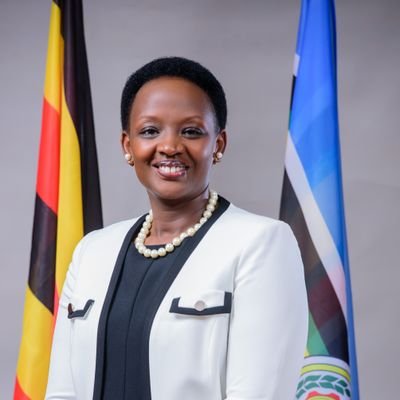
Over the last two days, I had the opportunity to officiate and host Hon. Henry Musasizi, the Minister of Finance, Planning and Economic Development, at the 4th Annual National Microfinance and Savings Groups Conference 2026.
Our collective commitment to wealth creation remains unwavering, as evidenced by its investment over the last seven years. Government has invested Shs 4.4 trillion in the Parish Development Model, supporting 1,589 SACCOs and about 3.57 million Ugandans. Emyooga has provided Shs 760 billion to enterprise groups, and the Agricultural Credit Facility has disbursed Shs 1.35 trillion to finance about 1,400 projects. The Uganda Development Bank has extended over Shs 2 trillion to businesses and received a further Shs 442.2 billion in capitalisation for FY2026/27. The Small Business Recovery Fund holds Shs 200 billion, with loans of up to Shs 500 million available, while GROW supports women enterprises of all sizes, including large-scale businesses.
I further reaffirmed Government's commitment to expanding financial inclusion, particularly among households at the bottom of the economic pyramid. SACCOs and savings groups can amplify this effort by taking full advantage of Government programs to extend affordable financing to their members and strengthen household income generation.
In this particular regard, we are finalizing a Savings Groups Coordination Strategy to improve coordination, harmonisation and oversight of savings groups across the country. We believe that financial inclusion will make significant strides when information, capital and institutions reach people in an efficient and sustainable manner.
On the issue of a single regulator for SACCOs, I assured stakeholders that Government will engage and consult widely on the matter, taking into account industry concerns, financial stability, and our regional and international obligations.
I commend all SACCO leaders, savings group members and microfinance practitioners for their continued partnership, and I look forward to working with them to ensure that every Ugandan is supported to engage in an activity that brings income.


MUSASIZI HAILS BANKS FOR IMPROVED ASSET QUALITY, PROFITABILITY
The Finance Minister @henrymusasizi1 has commended Uganda's banking sector for improved asset quality, profitability and resilience, urging financial institutions to translate their strong financial performance into increased lending to businesses and productive sectors to support economic transformation.
Speaking as Chief Guest at the annual bankers awards under the theme 'Together towards greatness' at Mestil hotel in Kampala last night, Musasizi noted that the industry had registered significant improvements, with total assets rising to Shs 61.7 trillion and net profits reaching Shs 2.17 trillion.
He particularly applauded banks for reducing non-performing loans to 2.67% by mid-2026, reportedly the lowest level recorded since 2011.
The Minister, however, challenged banks to make commercial credit more accessible, questioning why businesses and individuals continued to face stringent borrowing requirements despite the sector's improved financial position.
"We cannot build a US$500 billion economy if private sector credit remains at 14% of GDP. We need to move towards our target of 25% by 2030," Musasizi said.
He also urged banks to reduce lending rates, which he noted hover around 18%, by leveraging digital innovation and shared infrastructure to lower operational costs.
Representing the Governor of the Bank of Uganda, Director Bosco Bainamazima reported that banking sector assets increased by Shs 9.25 trillion, representing 16.7% growth, in the year to June 2026. Loans grew by Shs 3.2 trillion (14%), while deposits increased by Shs 6.35 trillion (15.6%). Industry profits rose by Shs 480 billion, representing 15.7% growth.
Bainamazima challenged banks to look beyond balance-sheet growth and focus on financing productive investment, creating jobs and strengthening household resilience.
"The real measure of success is the extent to which financial services contribute to productive investment, job creation, household resilience and sustainable economic growth," he said.
UIBFS Board Chairperson Godfrey Sebaana reaffirmed the banking industry's commitment to Uganda's Tenfold Growth Strategy, revealing that financial institutions had submitted proposals to the Bank of Uganda outlining their contribution towards achieving the US$500 billion economy ambition.
He said the regulator had responded with several interventions, including policy proposals and guidelines requiring further engagement with Government.
At the awards, Stanbic Bank emerged Bank of the Year in the Tier 1 category, while Pride Bank won in Tier 2. Julius Kakeeto of Pearl Bank was named Banker of the Year.
NCBA Bank also secured three awards: Best Customer Service (Tier 1), Best Bank in Corporate Banking and the Financial Crime Prevention Award.
The awards recognised outstanding performance and excellence across Uganda's banking and financial services industry.


FINANCE MINISTRY TARGETS 10,000 INFORMAL BUSINESSES FOR FORMALISATION BY 2031
The Ministry of Finance, Planning and Economic Development is targeting 10,000 informal enterprises for formalisation by FY2030/31 under the Informality Management for Compliance and Revenue Mobilization (IMCORE) Programme, with businesses set to benefit from free digital accounting tools, training and business development support.
Presenting the programme's implementation strategy, Richard Mubiru, the IMCORE Team Lead, said the Government is adopting a support-before-enforcement approach to help informal businesses improve their operations, strengthen financial management and transition into the formal economy.
Under the programme, every participating enterprise will receive access to the free EasyAccounts digital tool, training and handholding by accounting and business development experts, internet support and a tablet to facilitate digital record-keeping.
Mubiru also outlined a proposed seed capital incentive of Shs 5 million for graduates in cohorts one and two, with a 5% repayment arrangement and a three-year grace period. The incentive will be subject to approval by the Programme Steering Committee.
The programme will initially target 400 enterprises in Kampala in FY2026/27, before expanding to 1,600 in Greater Kampala in FY2027/28, 3,600 in FY2028/29 and 6,600 in FY2029/30. The target is to reach 10,000 enterprises nationally by FY2030/31.
Implemented in partnership with the United Nations Conference on Trade and Development (UNCTAD), IMCORE seeks to address barriers that prevent small businesses from formalising, including limited accounting skills, inadequate record-keeping systems and gaps in access to business development support.
The programme's outreach will cover several sectors of the economy, including agriculture and agribusiness, printing and graphic arts, mining and mineral value addition, manufacturing and cottage industries, retail and wholesale trade, as well as women and youth-led enterprises.
Target groups include farmers' cooperatives, produce dealers, artisans, metal fabricators, market vendors, hardware dealers, SACCOs and youth investment clubs.
To accelerate adoption, the Ministry is leveraging business and trade associations, whose established membership networks, sector knowledge and relationships with small business owners provide an effective channel for reaching enterprises.
The associations will support mobilisation, onboarding and peer-to-peer learning, while selected leaders will serve as digital accounting champions, providing continued guidance to members.
The EasyAccounts tool is free and accessible through easyaccounts.go.ug


