

Cape Town
Joined April 2008
- Tweets648
- Following1.6K
- Followers9.6K
- Likes1.1K





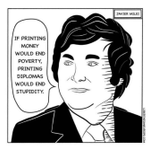

Quite a good ChatGPT ad subtly sharing the message that "We won't actually take your job, instead we'll make you richer". Much better messaging than "We're all going to die".

Some of you have been asking very politely. Some of you have just been asking.
GPT-6.2 Astra and Sol are now available.
Super efficient and built to perform where it counts—the real world.
openai.com/index/introducing…
1
276


What a sad video. Our government and sporting administrators should be ashamed of themselves.

South Africa’s most decorated Olympian, Tatjana Smith, has officially switched sporting allegiance to the Netherlands after World Aquatics approved her change of nationality.
🥇🥇 Olympic gold medals
🥈🥈 Olympic silver medals
🇿🇦 A South African legend
While she will now compete in Dutch colours and target LA 2028, Smith will remain based in South Africa, continue training with her long-time coaches, and support local athletes through the Lighthouse Sport Foundation.
👉 A new flag, but an enduring legacy in South African sport. 💚💛
@robertmarawa
#TatjanaSmith #Olympics #Swimming #SouthAfrica #Netherlands 🏊♀️✨
3
204

Rob Stokes ⚡ retweeted

There's nothing more natural than having no shelter, food, and healthcare. This is the natural state of man.
That we enjoy anything beyond that state, is due to markets, trade, and technological innovation.
Capitalism produces these things... or more specifically, the pursuit of gain, combined with the protection of property rights.
Rob Stokes ⚡ retweeted
How is offering someone a job for an agreed price, and permitting them to leave whenever they wish, exploitive?
If they took the job, it means it was the best of any option available to them.
So either I offer to pay someone, they join, and by definition I just provided their best opportunity available... or I don't make such an offer.
By the logic of the socialist, offering job is exploitative, and not offering a job is morally superior.

Rob Stokes ⚡ retweeted

Being an exceptionally talented musician is one thing. But to stand before such high-caliber fellow musicians, a large audience, and cameras—all while remaining composed, communicating skillfully and effectively, showing genuine enjoyment, and staying focused on the creative process—that is what truly amazes me.
Rob Stokes ⚡ retweeted

My post about Hitler and the far right got millions of views. Clearly, it hit a nerve. So today I'm going to show you, step by step, why the notion of "far right" as it's used in France makes almost no sense. And why the people who wield it are usually the last ones who should be lecturing anyone.
Let's start with the only question that matters: what makes a political system work or fail? To a very large extent, it's the economy. A country that produces wealth, that lets its citizens create, trade and build, stays standing. A country that destroys that collapses, no matter how beautiful its slogans are.
And in economics, there are really only two worldviews.
The first is collectivism. The idea that the State knows better than you. That it must plan production, set prices, run companies, decide what you earn, what you buy, and eventually what you think. The individual is just a cog serving a grand collective project: the class, the nation, the race, the people.
The second is freedom. Capitalism, property, individual liberty, individual responsibility. The idea that millions of people creating value for one another produce infinitely more prosperity than an office of planners, however brilliant they may be.
Now look at the list of the great totalitarian regimes of the 20th century. Stalin: total planning, forced collectivization, millions dead. Mao: the Great Leap Forward and the deadliest famine in human history. Pol Pot: money abolished, cities emptied, nearly a quarter of Cambodia's population exterminated. Mussolini, the man who coined the word fascism: "Everything within the State, nothing outside the State, nothing against the State." And Hitler, leader of the National Socialist German Workers' Party, whose program proclaimed "the common good before individual good." He subjected the entire German economy to State plans: the Four-Year Plan, frozen prices and wages, unions dissolved into a single state labor front, industrialists producing whatever the regime decided.
Their flags were different. Their designated enemies were different. But the machinery was the same: the individual doesn't exist, only the collective matters, and the State decides everything.
Why does it always end in totalitarianism? Because collectivism doesn't work. And when a system doesn't work, it has only two options: admit failure or force people. They always choose force.
Ludwig von Mises proved it as early as 1920: without free prices, without a market, a planner simply cannot know what to produce, how much, or at what cost. He is flying blind. A planned economy isn't a less efficient version of the market. It's an impossibility.
Friedrich Hayek drew the political conclusion in 1944 in The Road to Serfdom, a book he dedicated "to the socialists of all parties." One chapter is titled "The Socialist Roots of Naziism." Another, "Why the Worst Get on Top." For Hayek, controlling the economy isn't controlling one sector among others. It is "the control of the means for all our ends." Whoever controls your bread controls your life. Then your speech. Then your thoughts.
Milton Friedman put it his own way: a society that puts equality before freedom ends up with neither.
So we know exactly what works. It's not an opinion. It's a century of real-world experiments. Listen to the Austrian school, Mises and Hayek, with Friedman from Chicago alongside them: economic freedom, limited government, individual responsibility.
And this is where we get to the great accusatory inversion. Part of the left-wing press spends its time screaming fascism. Why? Because the fascism fantasy is the best way to never talk about the track record of their own ideas. Deep down, they know: if their collectivist program were applied all the way, it wouldn't work, because a collective economy cannot work. And an economy that doesn't work always ends up having to coerce, surveil and ban. In other words, it becomes exactly what they claim to be fighting. The real heirs of totalitarian logic are not the ones being pointed at.
So who gets called "far right" in 2026? People who want safe cities. People who want to keep their culture. People who just want to live a peaceful life, raise their kids, and not have to board up their shop every weekend. People who want the law to apply to everyone.
If that's the far right, then the word no longer means anything. And maybe that was the point.


Rob Stokes ⚡ retweeted

A friend in the UK sent me this, saying "This is one for you." It's nice to have friends who know you.
theguardian.com/sport/2026/o…

Rob Stokes ⚡ retweeted

If more billionaires do this, Brad Gerstner could ultimately be responsible for the biggest mass generational wealth transfer in the history of humanity… without taxes or bureaucracy. Changing the trajectory of America and making capitalism work for everyone 👏🏾

Incredible Elon! This will be the largest philanthropic gift in history! 70 M accounts - every citizen under 18 & every child born forevermore now has a free, lifetime investment acct making them an owner in the upside of America & our greatest companies! 🇺🇸🚀🤍@TrumpAccounts @InvestAmerica24
The wonder an amazement from my young sons to the Tesla launch says it all. No other company inspires those smiles.


Rob Stokes ⚡ retweeted

Absolutely brilliant. Sheer brilliance. Thank you.

I am a member of the Norwegian Nobel Committee.
There are five of us. Five people, appointed by a parliament most of the planet could not find on a map, who decide, once a year, which human being the world has agreed to call good.
I know. I know. I think about it on the tram.
We meet in a building on Henrik Ibsens gate, a street named after a man who wrote almost exclusively about people discovering they are frauds, which nobody on the committee finds funny except me. There is a room with a long table and the portraits of the dead laureates looking down, Mandela, the Dalai Lama, a great many earnest men in spectacles, and one portrait we do not discuss, which is Kissinger, 1973, awarded while the bombs were still falling, after which two of our predecessors resigned and the satirist Tom Lehrer said political satire was now obsolete. We keep him on the wall. A reminder. Every family has the uncle.
It is October in Oslo, which means the sun gives up around four in the afternoon like a civil servant, and it rains the particular Norwegian rain that isn’t quite falling, just hanging there, judging you. I arrive with wet shoes. I always arrive with wet shoes. There is coffee, because this is Norway and there is always coffee, we drink more of it per person than almost anyone alive, and someone’s wife has sent kanelboller, the cinnamon buns, and we sit, five Norwegians, damp, caffeinated, sugared, and we decide the moral standing of the entire species.
Let me tell you how it actually works, because the world imagines a cathedral and it is, I promise you, a book club with a mandate.
287 nominations this year. 208 people, 79 organizations. Anyone can nominate, that’s the secret nobody understands: a professor, a parliamentarian, a former laureate, so the “nominee” list is meaningless, it’s a suggestion box, and every autumn some congressman nominates his own golden retriever and the press writes “SHORTLISTED.” Nobody is shortlisted. There is no short list the public ever sees. There is us, and the coffee, and the rain, and the portraits, and a Norwegian stubbornness that is older than the prize itself.
We read reports. The institute’s advisers write them, thick dull documents, and we argue. Our chairman told the BBC once that in the final meeting “there is a high temperature.” High temperature, for a Norwegian, means someone slightly raised an eyebrow and then apologized for it. We don’t do high temperature. We do a long silence, and then Kristin says “well,” and everyone knows exactly what “well” meant, and it’s settled. That’s our shouting. “Well.” You’d have to be raised here to hear the violence in it.
Now. This year. I will not say the name, because we never say the name, but you know the name.
A certain head of state wanted this prize the way a child wants a thing in a shop window, which is to say loudly, and in public, and with the full belief that wanting it was itself the argument. He said he deserved it. He said he’d ended eight wars, a number that grew most times he said it, like a fish. He had other heads of state phone us. Israel’s prime minister posted it on the internet, “Give him the Nobel.” The leaders of Cambodia and Pakistan announced they’d nominated him, as though announcing it were part of it, as though we tally mentions. A man flew around the globe collecting endorsements for a Norwegian committee the way you’d collect signatures for a petition to the council about a noisy dog.
And here, uff da, is the detail I treasure, the one that makes me smile into my coffee. The nomination deadline is the 31st of January. He took office on the 20th. So for all the phone calls, all the posts, all the gilded lobbying, the only nominations that could possibly count for this year’s prize were filed in the first eleven days of his term, before he had, by his own arithmetic, ended a single one of the eight wars. He campaigned all year for a prize whose window had shut while he was still hanging up his coat. We didn’t have to reject him. The calendar did. We just watched. Norwegians are very good at watching. We have long winters.
People think we sit there weighing his deeds. We don’t. That’s the thing I can’t make the world understand. We’re not grading his homework. We don’t owe anyone the prize for a ceasefire, however real, however loud the announcement. “He made peace” is not a sentence that ends in a medal, the way he believes it does, the way he believes every good thing ends in his name on it. The will of a dead Swede says the prize goes to whoever did the most for fraternity between nations. A dead Swede, I should add, who made his entire fortune inventing dynamite and selling arms, and spent his last years horrified at his own obituary, which called him a merchant of death, and so bought his way to immortality as a man of peace. The whole prize is one guilty arms dealer’s attempt to launder his name. We are, all of us, administering a dead man’s public relations. I find this clarifying. It keeps me humble. It should keep everyone humble, and it keeps, by my count, no one humble at all.
So who did we give it to?
An eighty-five-year-old woman. A judge. Born in Durban, under apartheid, granddaughter of a Tamil man who came to South Africa as indentured labor, a bus driver’s daughter from the poor Indian quarter, who became the first non-white woman to run a law practice in her province, who defended Mandela’s people when defending them was dangerous, who sat on the Rwanda tribunal and the court at the Hague, and who, at eighty-five, is right now a judge weighing whether a genocide is a genocide. When we told the world, our chairman said the rule of law “underpins the system we have set up to ensure peace,” and that “peace requires justice.” She wasn’t even in Oslo. She was in Nuremberg. In courtroom 600. The actual room where they tried the Nazis. You cannot stage that. God staged that, and God, it turns out, is a better satirist than any of us.
She did not phone us. She did not post. No prime minister demanded it for her on the internet. She had, as far as our deliberations are concerned, the one qualification the loud man could never manufacture, which is that she wanted the work and not the medal. The medal finds those people. It flees the ones who chase it. This is not a rule we wrote. It’s just the only pattern the hundred-odd years of our mistakes has ever shown.
The reaction from across the ocean was immediate. His spokesman posted that we “place politics over peace.” Ja. Perhaps. We’re five damp pensioners in a rainy city; of course it’s political, it was always political, it was political when we gave it to a sitting American president nine months into his first term for the promise of things he had not yet done, and we have been quietly embarrassed about that one for fifteen years, so believe me, we had a particular reason this year to prefer a woman with fifty years of verdicts behind her over a man with eight wars in front of him and a deadline already behind him.
Here is what he will never understand, the thing I’d tell him on the tram if he ever took one. We are the one prize he cannot buy, cannot post his way to, cannot have a friendly dictator phone in for him. Not because we’re incorruptible, nei, we’re as vain and wrong and human as the portraits on our wall. But because the entire point of the thing, the only power a small cold country’s book club has ever held, is that it goes to the person not performing the wanting. The moment you demand it, you’ve proven you don’t understand what it’s for, and proving that is itself the disqualification. He ran the most expensive campaign in the history of the prize and the campaign was the reason. He was never losing to Navi Pillay. He was losing to the concept.
It’s dark now. Four o’clock dark. The buns are gone. Kristin said “well” an hour ago and we all went home. I’m on the tram with my wet shoes, and somewhere across the water a very powerful man is explaining to a camera that the prize is rigged, that we’re corrupt, that he’ll win it next year, and he genuinely might, we’re only five idiots and we’ve been wrong before, Kissinger is still on the wall.
But not this year. This year an old woman in Nuremberg, in the room where the law once stared down the exact kind of man who thinks wanting a thing loudly enough should make it his, got a phone call she didn’t ask for.
That’s the job. We don’t reward the man who ends the war and announces it.
We reward the woman who spent fifty years deciding what a war was.
He’ll never see the difference. That’s rather the whole point of him.
Takk for i dag. I have to change trams.

Rob Stokes ⚡ retweeted

get rid of the bug which shows me a tantalizing tweet for 1/50th of a second when I open the app only for it to be lost forever

