


Pinned Tweet
courage is the scarcest resource
be bold enough to aim for things you think matter, even if they sound crazy to everyone around you
and be prepared to go through years of excruciating pain to get there
7
50
1,117
sacha retweeted

Frank Slootman on what to do when you don't know how to solve a problem:
"When you're in a place where you're like, don't know what to do. I don't know how to solve this. The way to deal with that is... you attack it with everything you've got, right? Every amount of energy you have, you're going to force it onto that problem. And then you learn that very unexpected things happen.
The old saying is... when you commit... providence commits as well. So things start to happen to you that are unexpected because your conviction and your commitment is so high that now... the world is changing with you to help you.
Whereas when you hesitate, the world does nothing. Actually, it might be working against you."


sacha retweeted

@ORE coded

NEW EPISODE with @Justin_Bons , founder of Cyber Capital, live at @solana Breakpoint.
Awesome to chat with Justin. He's got some terrifying views on BTC and thinks it won't survive past 10 years, because the block reward keeps halving and fees aren't stepping up to pay for its security.
He's so bullish Solana for exactly that reason... the fees actually fund the network, so in his view it ends up the best money in crypto.
Justin's been a Bitcoiner since 2013 and I really admire that he's been able to change his mind over the years to his strongest working hypothesis.
Thanks for taking the time Justin, excited for the next one!
Topics:
- Who pays to keep @Bitcoin safe as the block reward halves
- Whether Bitcoin's 21 million limit can ever change
- The block size war and what it did to Lightning payments
- Why @ethereum changed its layer 2 plan
- Ethereum versus @solana on locked value
- Letting coin owners vote on network changes
Timestamps:
0:00 Intro
0:57 Justin Bons At Solana Breakpoint
2:11 Why Solana's Crowd Stays Excited
4:33 Who Pays To Keep Bitcoin Safe
7:11 Could Bitcoin Face An Attack
10:25 Could Bitcoin Ever Make More Coins
11:32 Can Lightning Handle Everyday Payments
13:14 The Block Size War
14:40 Replace By Fee Explained
16:59 Can Bitcoin's Price Keep It Safe
18:13 Why Ethereum Changed Its Layer 2 Plan
22:11 Ethereum TVL Versus Solana
23:52 Can One Network Do Everything
26:52 Letting Coin Owners Vote On Changes
3
165
sacha retweeted

"It's always been retail last, but MetaDAO is like retail first."
Mori Finance founder Pavan on why decision markets push founders to raise at a low FDV:
"Oh yeah, I totally was like nerding out. I was like, oh, this is so neat. I was like, how does this work?"
"I had questions. Okay, so if they can liquidate the treasury, will token holders give us a chance to grow the company?"
"After thinking about it more, it incentivizes the founder to go at a low FDV. You can grow and grow and grow. It incentivizes founders to raise just the right amount. Not over-raise at like a high valuation that you can't live up to immediately."
"And so it incentivizes founders to really think about retail investors. And that's been missing in crypto for so long. It's always been retail last, but MetaDAO is like retail first."
FT @pavankat @morifinance_ @MetaDAOProject

Ownership Podcast S2 E5: Mori Finance (@morifinance_)
"If there's a coin that you want options on, we can provide it to you."
00:00 Intro
02:02 @pavankat's background: a $750M edtech exit, ConsenSys and early DeFi
04:43 Buying a dollar for 88 cents: market making DAI
07:28 LedgerX and selling covered calls on Bitcoin
09:34 What Mori is and isn't: a market maker account for everyone
11:03 Why options beat delta-neutral hedging
12:18 Mori vs Derive: market makers vs resting liquidity
13:33 Long-tail assets and why a fund wanted Grass puts
14:46 DeFi front end, CeFi back end: why there are no smart contracts
16:26 Routing orders straight into market maker trading desks
17:49 How it works: a decentralised OTC desk for retail
20:28 Why Mori chose European over American options
21:56 Covered calls explained
23:57 Spreads explained
25:31 Covered calls vs delta-neutral funding farming
28:16 Why perps dominate crypto derivatives
30:11 The undefeated Hyperliquid trader who shorted HYPE
33:09 Roadmap: cash-secured puts and spreads
37:16 Taking 12% of premiums and $1.7M in monthly volume
40:22 Competition: Rysk, HYPE options and listening to users
43:44 Why Mori raised on MetaDAO: revenue before a token
47:37 Low FDV, high float and 50% unlocked on day one
48:56 The team gets nothing: MetaDAO as the integrity play
50:04 Decision markets and why MetaDAO is retail first
52:05 Biggest risk: perps just win
55:34 What excites Pavan most: builder codes and user alpha
58:49 Closing thoughts: bringing on engineer Fabian
This show is sponsored by @MetaDAOProject.
sacha retweeted

ORE is not trying to replace Bitcoin, it's bringing early Bitcoin energy.
The tokenomics are honestly brilliant in their simplicity.
Mining activity generates protocol revenue. That revenue funds buybacks. The majority of those buybacks get buried while miners and holders compete to accumulate supply. No VC allocation. No insider premine. No hidden unlocks. Just transparent on chain mining and a community competing to accumulate a scarce asset.
People criticize ORE mining because it can look like “gambling” if approached with pure speculation and low conviction. But the design heavily rewards miners who think long term and mine to accumulate, not chase quick flips. That’s why many speculators eventually leave while conviction holders stay.
ORE mining is transparent by design. If you want privacy, you can shield your ORE, move funds to a fresh wallet, and mine anonymously while the mining activity itself remains publicly verifiable.
What makes ORE special isn’t just the tokenomics.
It’s the community.
Many ORE features, ideas, and even names came directly from OG community members. During the November drawdown, the Discord stayed just as active, involved, and alive as it is during price rallies.
That’s rare in crypto.
ORE brought back the mining and holding culture and that’s exactly why so many early Bitcoin miners and holders naturally gravitate toward it.
Hard hats on.


sacha retweeted

I don’t think this is true. The airplane, computer, and even nuclear power were overwhelmingly popular when introduced. A 1957 poll found 76% support for nuclear power, for example. One can of course debate the moral importance of public opinion on such matters, but the specific claim that the public has historically been opposed to technological progress does not seem correct to me.




sacha retweeted
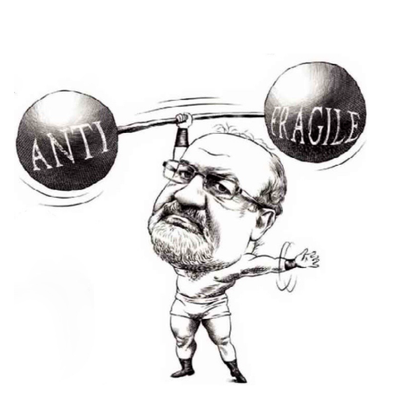
"I woke with this conclusion from Skin in the Game: 1) Things work thanks to a handful of people; the rest operates by situational imitation, narrow mimicry, and semi-conscious role-playing." - Nassim Nicholas Taleb
sacha retweeted

Up until a few days ago, I had no idea what the fuck Lean even was.
Genuinely had never heard of it. After spending a few days working with it (more so my agents than myself), it’s becoming increasingly clear how important it could be.
Beyond the conversation around rewriting the Solana client in Lean, I think there’s a much larger opportunity here, especially in the era of agentic development.
We’re entering a world where the cost of writing software is rapidly approaching zero, but the cost of trusting that software hasn’t.
Rust gives us strong guarantees around memory safety, but memory-safe code can still have fundamentally flawed logic.
Lean allows us to mathematically prove that software satisfies a defined set of properties rather than relying solely on tests and audits.
The irony is that we’ve built an entire industry around minimizing trust, yet we still place an incredible amount of trust in the people writing our software.
As agents become increasingly responsible for writing that software, I think having them generate machine-verifiable proofs alongside their code should become a much more common practice.
Especially in crypto, where the code we’re having these agents write is directly responsible for securing people’s money.


sacha retweeted

The majority of hardcore people I've met, come packaged as average people.
Most think of it as some "ripped dude," brash, or someone that looks a certain way.
Nope.
There are so many packages to killer instincts you can't see coming...and they're often the most effective.


