

Ambassador of 🇪🇪 to 🇬🇧. Former Amb to 🇫🇮 / director of ICDS (@ICDS_Tallinn) / director of NATO Cyber Center (@ccdcoe) / POLDIR of @MoD_Estonia.
London, England
Joined November 2011
- Tweets11.8K
- Following380
- Followers7.1K
- Likes69.6K




“THE HOUSE is on fire. The arsonist insists that before anyone reaches for a hose, the neighbours must discuss the building’s design….Absurd, yes. It is also a fair summary of Kremlin diplomacy, with its demands for talks on “European security architecture”. “

Russia broke the rules of European security. Now it wants to rewrite them. We must not fall for it.
My piece in @TheEconomist, as I head to the Coalition of the Willing meeting on a rainy morning in Berlin.
economist.com/by-invitation/…

2
131
sven sakkov retweeted

Good to meet @EmilyThornberry and members of the UK Parliament’s Foreign Affairs Committee in Tallinn today, following their visits to Tapa and Narva.
We discussed the security threats facing our region. Russia is already targeting Europe through sabotage and hybrid attacks. I stressed that we must publicly attribute these attacks and respond together, making clear that Russia cannot divide us.
I also stressed, that we must remain united in supporting Ukraine and maintaining pressure on Russia. Our goal is a just and lasting peace that upholds Ukraine’s sovereignty and territorial integrity. Strong security guarantees for Ukraine are essential for the security of all Europe.
The UK is a vital strategic partner for Estonia. I expressed our deep appreciation for its commitment to our defence. British and Estonian troops stand shoulder to shoulder here every day. We deeply value this commitment and our shared understanding of the threats we face.
sven sakkov retweeted

🇪🇪🤝🇬🇧 UK Chief of the Defence Staff, Air Chief Marshal Sir Richard Knighton, visited Estonia on 15–17 November, meeting EDF Commander Lieutenant General Andrus Merilo and British troops in Tapa.
Discussions focused on regional security, defence plans and strengthening deterrence.
#kaitsevägi #EDF #StrongerTogether


sven sakkov retweeted

Estonia will close all Estonian-Russian border crossing points as of 1 December.
Russia’s attempts to intimidate, destabilise, or undermine our security will come with a price.
We will take every necessary step to protect Estonia’s security.

Following clear evidence that Russia’s military intelligence service GRU, ordered a sabotage attack against an Estonian defence industry company, Estonia will close all Estonian-Russian border crossing points as of 1 December.
Russia must understand that hostile actions against Estonia come with consequences. Attempts to intimidate, destabilise, or undermine our security will not go unanswered.
Closing the border crossings will reduce Russia’s ability to conduct hostile activities in Estonia and strengthen our efforts to prevent sanctions circumvention.
I have informed my Finnish, Latvian, and Lithuanian counterparts of this decision.

sven sakkov retweeted
Following clear evidence that Russia’s military intelligence service GRU, ordered a sabotage attack against an Estonian defence industry company, Estonia will close all Estonian-Russian border crossing points as of 1 December.
Russia must understand that hostile actions against Estonia come with consequences. Attempts to intimidate, destabilise, or undermine our security will not go unanswered.
Closing the border crossings will reduce Russia’s ability to conduct hostile activities in Estonia and strengthen our efforts to prevent sanctions circumvention.
I have informed my Finnish, Latvian, and Lithuanian counterparts of this decision.
sven sakkov retweeted

The Baltic States lead the way. They embraced the free market system when they gained their independence from USSR and they’re flourishing. I’ve enjoyed being the Chair of the Baltic Security Caucus for the last 8 years and working with these great people.

🌎 The most competitive tax codes in the OECD:
1. 🇪🇪 Estonia
2. 🇱🇻 Latvia
3. 🇳🇿 New Zealand
4. 🇨🇭 Switzerland
5. 🇱🇹 Lithuania
6. 🇱🇺 Luxembourg
7. 🇨🇿 Czech Republic
8. 🇦🇺 Australia
9. 🇹🇷 Turkey
10. 🇭🇺 Hungary
See full rankings: hubs.ly/Q04F9Wms0

sven sakkov retweeted
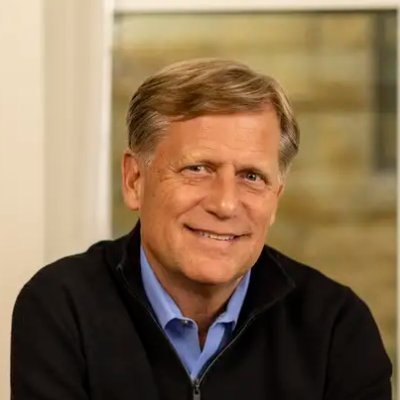
In negotiations I participated in with Russians while I was in the US government, the Russia side always started by putting on the table maximalist goals and then they just waited. They waited for our side of the table to start negotiating with ourselves.
They also threw in crazy new ideas into the mix so that when they withdrew them later they could claim it was a concession.
That’s exactly what Putin is doing now.
sven sakkov retweeted
Estonia’s Internal Security Service has confirmed that the failed arson attack against Estonian defence industry company Threod Systems on 14 November was ordered by the Russian military intelligence agency GRU.
This is yet another example of Russia using sabotage and coercion to destabilise our societies, sow fear, and divert attention from supporting Ukraine.
Faced with mounting setbacks and a lack of success on the battlefield, the Kremlin is increasingly resorting to sabotage. Ukraine’s resilience and strategic momentum have clearly rattled Putin.
Estonia takes every act which tries to undermine our security extremely seriously. Our security services acted swiftly: the suspects have been detained and criminal proceedings are underway.
We will continue our close cooperation with international partners to identify, expose, and hold accountable anyone who seeks to threaten our security or stability.
At the same time, we will continue to increase pressure on Russia through sanctions, isolation, and travel restrictions until it ends its aggression against Ukraine and accepts full responsibility for its actions.

At 3:06 a.m. on November 14, an attempt was made to attack the premises of a defense industry company Threod Systems that manufactures drones, with the aim of causing an explosion and setting the building on fire. We have quickly detained the suspects. We advise against even considering such job offers from Russia. The consequences are serious!
Second arson attack against an Estonian defence industry company in recent months. If the Kremlin thinks it can intimidate us into scaling back our support for 🇺🇦, it is gravely mistaken.
We will not back down. We will double down.
On the night of 14 November, GRU-ordered sabotage attempt targeted Estonian defence company Threod Systems. Extensive damage was averted thanks to heightened security measures and a swift reaction by law enforcement. The attackers have been detained. This is part of Russia’s broader hybrid war against Europe, with the aim of decreasing support to Ukraine and pressure on Russia.
We will not be intimidated. Estonia is preparing for the possibility of closing its border with Russia to reduce the risks to our people and national security.
sven sakkov retweeted

A newish Kremlin spin to “prove” NATO is a threat: NATO has never attacked Russia, but countries that later joined NATO have fought Russia “in the past”.
In short: NATO is responsible for wars fought decades before it existed.
The American and Canadian interventions began in 1918, not “the 1920s”. They arose from the First World War and the Russian Civil War, with Allied forces assisting Russians fighting the Bolsheviks. Presenting this as evidence of a NATO threat today to justify Russian aggression is absurdity.
Dragging Germany and Hungary during WWII into the same argument completes the Stalinist-Putinist narrative. NATO was founded in 1949. It does not retroactively inherit the historical wars of countries that subsequently joined it.
This would be funny if useful idiots weren’t repeating it with straight faces calling it a “view on security”
Justifications for aggression are not “views on security”

sven sakkov retweeted

Putin is playing mind-games when he tells Witkoff/Kushner that Europe must choose peace or war. Europe was at peace till Putin chose war. A new security architecture cannot be built on the basis that Russia gets to dictate future security arrangements in Ukraine.
sven sakkov retweeted
#OTD in 1918, the first official letter of the newly established Estonian Ministry of Foreign Affairs was sent, signed by Foreign Minister Otto Strandman.
That letter marked the beginning of Estonia’s 🇪🇪 diplomatic service.
108 years later, that service spans 50 embassies and permanent representations around the world, with more than 650 dedicated professionals advancing Estonia’s interests, building partnerships, supporting our citizens abroad, and strengthening our security.
Happy anniversary, Estonian Ministry of Foreign Affairs!

sven sakkov retweeted

When normal countries seek security guarantees, they mean the right to live within their own borders without fear of interference.
When Russia seeks security guarantees, it means the freedom to expand beyond its borders without fear of resistance.
sven sakkov retweeted

In 1939, following its pact with the Nazis, Moscow demanded -- and got -- bases of its own in the Baltic states. Its demand was backed by threat of force, and the Baltic states, which had no strong external allies, felt they could not resist. Once the Soviet army was in, annexation by the USSR soon followed.
Today, Moscow still seeks a say over who is stationed on Baltic soil. The difference is that instead of being able to impose ultimatums on isolated countries, it has to bargain with an alliance that already exists. Without NATO, the Baltics would be back in the world of "bilateral" ultimatums followed by unilateral annexations. This is what "NATO expansion" has changed for us.

sven sakkov retweeted
Europe’s security is decided by Europeans.
Neither Estonia nor Europe will ever discuss Finland’s NATO membership, or any other sovereign security decision, with Putin.
After nearly five years of killing and destruction, Russia cannot credibly claim to seek peace while continuing its daily attacks against Ukraine.
We must not allow the theatre of negotiations to obscure reality. Nor can we ignore that Russia’s demands are aimed not only at Ukraine, but at the security architecture of Europe itself.
Europe should therefore focus more on how to use every instrument at its disposal to raise the cost of Russia’s aggression.
We have substantial leverage. More than €200 billion in frozen Russian assets. The ability to intensify sanctions, tighten visa restrictions, and advance accountability measures, including the Special Tribunal for the Crime of Aggression.
On Monday, I will travel to Brussels for the #FAC meeting, where I will urge my colleagues to move beyond statements and fully use the tools available to Europe to increase pressure on Russia.
sven sakkov retweeted

1994.
L'Ucraina accetta di smantellare il terzo maggior arsenale di armi nucleari al mondo in cambio delle rassicurazioni di USA e Russia che non sarà aggredita.
2026.
USA e Russia chiedono all'Ucraina di cedere territori in cambio della promessa che non sarà aggredita.
sven sakkov retweeted

🇺🇦🇷🇺 PUTIN ALREADY SIGNED A DEAL RECOGNIZING UKRAINE’S BORDERS. THEN RUSSIA INVADED.
There is a document that deserves far more attention whenever Moscow talks about peace.
On January 28, 2003, Vladimir Putin and Ukraine’s then-president Leonid Kuchma signed a treaty establishing the state border between their countries.
Russia formally recognized a border that placed Crimea and Donbas inside Ukraine.
The agreement entered into force in April 2004.
Ten years later, Russia annexed Crimea and began its military intervention in Donbas. In 2022, Moscow launched its full-scale invasion.
That history exposes a fundamental problem with any peace proposal built primarily around another Russian promise.
Ukraine is not asking whether Moscow knows where its borders are. Moscow already acknowledged them in a treaty signed by Putin himself.
The question is what would prevent Russia from violating another agreement.
This is why security guarantees are not some diplomatic luxury that can be discussed after territorial concessions. They are central to whether any settlement could actually endure.
An agreement without credible enforcement risks leaving Ukraine exposed to another round of aggression.
And there is a particularly uncomfortable contradiction in asking Ukraine to surrender territory in exchange for peace when Russia previously recognized that same territory as Ukrainian.
Putin’s signature was already on the document. The problem was never the absence of a treaty. It was Russia’s decision to disregard it.
sven sakkov retweeted
A great deal of blood has been spilled since Russia issued its ultimatum-like demands to NATO and the West in 2021.
Nearly five years of death, destruction and plundering have passed, yet Russia is making essentially the same demands it made before launching its full-scale invasion of Ukraine.
Following the Abu Dhabi talks, Russia's chief negotiator, Vladimir Medinsky, explicitly invoked Moscow's 2021 security ultimatum. Putin's foreign policy adviser, Yuri Ushakov, went further, saying Russia now wants to add new demands based on its experience during the war.
Once again, Russia is demanding restrictions on NATO membership and the deployment of Allied forces, as well as on Ukraine’s right to choose its own security arrangements and allies.
It is clear that Russia is not taking part in the current process with the intention of ending its war against Ukraine. Instead, it wants to use negotiations to achieve what it has failed to achieve on the battlefield: force sovereign countries to abandon their security choices and restore Russian spheres of influence in Europe, where Moscow would decide the fate of other countries.
If these demands become the starting point for negotiations, or are met even in part, it would send an extremely dangerous message: if you cannot get your way before a war, you can achieve your aims after years of killing, looting and destruction. It would also signal to other aggressive powers around the world that the use of force pays off.
History has repeatedly shown that concessions to aggressors do not guarantee peace. They only encourage further aggression. Russia must be made to understand that aggression and the use of force will not help it achieve its objectives.
Europe’s security architecture was created to protect our countries and deter Russia. We cannot allow the very source of the threat to dictate the rules designed to contain it. Decisions on European security must be made by European countries themselves.
Europe must stay the course, increase pressure on Russia and continue supporting Ukraine. We must step up sanctions, limit Russia’s ability to finance and sustain its war, put frozen Russian assets to use and restrict the issuing of visas to Russian citizens. Only through sustained pressure on Russia and continued support for Ukraine can we force Moscow to abandon its aggressive objectives towards Ukraine and Europe as a whole.