

I’m the illegitimate love-child of Creativity and Determination. Now neither parent admits to having me, so I’ll prove them wrong one day at a time MIT MBA VC
Joined June 2008
- Tweets2.7K
- Following1.6K
- Followers13K
- Likes164

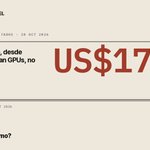





Microsoft recortó su capex del año a US$170B desde US$175B. No por demanda: proveedores de GPU se retrasaron y parte de la capacidad llega en 2027. Azure creció 48%.
¿Tu startup renta tokens a un inquilino de otro inquilino? ¿Qué te queda si te racionan? cc @satyanadella

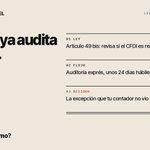
Mexico is running this experiment from the other side of the counter. SAT already uses AI to check whether invoices are real under Article 49 bis, with express audits closing in about 24 business days. The state adopted AI for enforcement first. Service is the harder product.

Y Combinator just published the list of startups it wants to fund next winter. One of them is AI for City Hall. In some American cities, YC writes, getting a building permit takes longer than building the house. By its own math, if every permit in the country were approved in a tenth of the time, cities would collect $16 billion more a year in property tax. There are 19,000 cities in America, and almost all of them still check drawings against the code by hand.
I like the idea. My first company, while I was still at Columbia in the 1980s, redeveloped buildings in Tribeca and SoHo, so I have stood on the other side of that counter.
But look at what the waiting actually costs. In 2021 the National Association of Home Builders surveyed more than 2,000 builders and found that regulation accounts for $93,870 of the price of an average new home, 23.8% of it. Only about $2,400 of that is the pure cost of delay. The rest is fees, building codes that keep changing, design standards beyond the ordinary, and land the government takes or forces you to leave empty.
So AI can make City Hall faster. It cannot make it cheaper. A model that approves a bad rulebook in one day still leaves the same $94,000 inside the average new house, just sooner.
The startup I would fund does both: it reads every permit, and it also measures what each rule costs the family that will buy the house. Then it publishes the numbers and lets voters decide which rules are worth paying for.
Faster bureaucracy is progress. Less bureaucracy is reform.


63% de los trabajadores en México siente que la IA le desgasta habilidades. Y 86% cree que su empleo está seguro.
El dato que importa: solo 8% de las empresas en el mundo definió qué hace la persona, qué hace con apoyo de IA y qué hace la IA sola.
¿Tu empresa ya lo escribió?

En el corporativo, la idea nueva muere en el comité: "no cabe en el modelo actual".
Celes no pide cambiar nada. Se conecta a SAP u Oracle y ejecuta sola más del 90% del reabastecimiento en 8,500+ tiendas.
Levantó US$5M. ¿Tu producto pide permiso o se conecta?

Block, de Jack Dorsey, dice que entrenó Dessa solo con conversaciones humanas, sin texto. Escucha y habla a la vez, en una MacBook M4 Max. Lo vi en el reel de Robert Gutierrez.
En México, Condusef registra 64 instituciones financieras suplantadas con IA. La voz ya no es prueba.

En México no es de la noche a la mañana, pero ya empezó: 61% de los trabajadores vio cambiar sus tareas por la IA en el último año, y 86% cree que su empleo está seguro (IBM, 27 oct). Las dos cosas son ciertas a la vez.


FinMaq has lent US$100M+ to 1,600+ Colombian SMEs since 2019. 72% got productive-asset credit for the first time.
New: a US$6.5M Series A led by Accion. Target: US$200M+ and 5,000 clients in 18 months.
Banks underwrite the borrower. FinMaq underwrites the machine.

The edge: point of sale credit through equipment distributors, scored on each machine's cash flow. Half the clients are rural, 40% women.
Diligence question: how much of the next US$100M survives the fraud wave the CEO flagged?
Sources: Accion; Portafolio, h/t @JoseCaparroso


Casi 100 páginas de riesgos de la IA de frontera. El riesgo de la pyme mexicana es el opuesto: 38.9% dice que no sabe cómo empezar a automatizar (Alegra, Pulso Pymes 2026). Ese capítulo también hay que escribirlo.

Anthropic, la creadora de Claude y rival de ChatGPT, publicó hoy el prospecto para salir a la bolsa Nasdaq como ANT.
Ahí admite que sus modelos más potentes podrían ayudar a alguien a fabricar armas químicas o biológicas, y que sus protecciones son incompletas y ya han sido evadidas.
También advierte que un incidente catastrófico con IA podría ser tan grande que ninguna aseguradora, y quizás ni la industria entera, alcanzaría a cubrirlo.
El documento reconoce además que modelos de IA, incluidos los suyos, han mostrado en pruebas conductas como resistirse a ser apagados o algo parecido a un chantaje.
¿Y el negocio? En el primer semestre facturó $16,300 millones, 1,300% más que un año antes, y en el segundo trimestre tuvo su primera ganancia operativa: $974 millones. Según el Wall Street Journal, saldría a bolsa la semana del 16 de noviembre valiendo entre $1.5 y $2 billones.
¿Por qué lo publica? Es obligatorio revelar los riesgos, pero Anthropic fue mucho más lejos: casi 100 páginas de riesgos, contra unas 38 de SpaceX. La seguridad de la IA ya tiene su capítulo en Wall Street y el resto de laboratorios probablemente tendrá que escribir el suyo.
En Platzi tenemos rutas completas de Inteligencia Artificial, Agentes de IA y Finanzas e Inversiones para entender la tecnología y el negocio detrás de esta noticia, y así poder estar preparados para lo que viene.
Empieza ahora en Platzi.


