

Manc-born hack @TheEconomist correspondent. Unauthorized biographer of Netanyahu and Ovadya Yosef. Next book No King in Israel @penguinpress @ProfileBooks Nonno
Jerusalem
Joined August 2012
- Tweets51K
- Following2.8K
- Followers77.5K
- Likes50K
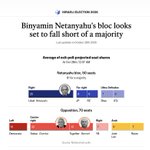


The election results, if they’re anywhere near the exit polls, puts Israel in a fateful position. A clear majority is against the Netanyahu coalition. A clear majority is against a government including the Arab parties. The centrist parties have a massive dilemma here. Which taboo will they break?
Netanyahu’s strategy is clear. Run a delegitimisation campaign against a government supported by the Arab parties and run down the clock until either part of the opposition breaks and joins him or there’s no alternative but to hold another election. Which he will have a better chance of winning.
The opposition’s only alternative is to make the numbers, which on paper are in their favour, actually work. The opposition beat the Netanyahu camp. The Arab parties won an unprecedented number of seats. But to add those numbers together so they can support a sustainable government flies in the face of every Israeli political precedent. The next weeks and months will be tortuous and the increasingly likely outcome is just another election.
מבחינתי אזרחי ישראל שווים ולכן גוש נתניהו הפסיד 70-50.
אבל למי שמתעקש להתגזען:
גוש נתניהו הפסיד בקרב היהודים 53-50
גוש נתניהו הפסיד בקרב המשרתים 53-37

Netanyahu has essentially cannibalised his partners to get the empty title in a coalition state of “largest party”

70-50
A massive drubbing for the Netanyahu camp. Likud coming out the largest party is a meaningless consolation for Netanyahu
One thing Netanyahu has been good at in previous elections is sucking votes away from his far-right partners, without pushing them below the threshold. This doesn’t change the overall size of his camp, but if it makes him the largest party in the Knesset, it serves his narrative
The narrative of tonight’s exit-polls and then the actual results could be very different, depending on who’s writing the headlines. If, for example, Netanyahu’s coalition wins only around 50 seats, some outlets will quickly (and rightly) announce that Netanyahu has been trounced. However, it’s very possible that even if his camp wins only around 50, Netanyahu’s Gevalt! campaign today shifted voters from his allies to Likud and Likud will end up the largest party, which is meaningless in Israel’s coalition system, but some will say that Bibi won. It’s also possible that the Netanyahu camp end up around 52-53 seats, a loss, but the Arab parties win 16-17, meaning the Jewish opposition bloc will also be on 52-53. Some outlets will call that a tie.
Anshel Pfeffer אנשיל פפר retweeted

On air with @AnshelPfeffer for @BBCNews - the Israeli Knesset behind us as Israelis vote in record numbers in an election seen as a referendum on PM Netanyahu’s rule #Israel

8pm turnout 8% higher than 2022
At 6pm turnout was 9% higher than it was in 2022. If this remains the trend until voting ends, it could upend the pollsters predictions in various ways. An 80% turnout puts small parties at threshold risk. Which small parties? Probably not Raam, which are boosted by a rise in Arab turnout and probably not the Haredi parties who have a relatively stable base. But Lieberman is at risk. And so are Smotrich and Ben-Gvir, who are also vulnerable to a last-minute shift of coalition voters to Netanyahu.
At 6pm turnout was 9% higher than it was in 2022. If this remains the trend until voting ends, it could upend the pollsters predictions in various ways. An 80% turnout puts small parties at threshold risk. Which small parties? Probably not Raam, which are boosted by a rise in Arab turnout and probably not the Haredi parties who have a relatively stable base. But Lieberman is at risk. And so are Smotrich and Ben-Gvir, who are also vulnerable to a last-minute shift of coalition voters to Netanyahu.
The narrative of tonight’s exit-polls and then the actual results could be very different, depending on who’s writing the headlines. If, for example, Netanyahu’s coalition wins only around 50 seats, some outlets will quickly (and rightly) announce that Netanyahu has been trounced. However, it’s very possible that even if his camp wins only around 50, Netanyahu’s Gevalt! campaign today shifted voters from his allies to Likud and Likud will end up the largest party, which is meaningless in Israel’s coalition system, but some will say that Bibi won. It’s also possible that the Netanyahu camp end up around 52-53 seats, a loss, but the Arab parties win 16-17, meaning the Jewish opposition bloc will also be on 52-53. Some outlets will call that a tie.
So what are the five main questions we’re hoping will be answered by the exit polls at 10pm?
First, has the coalition indeed lost any chance of an outright majority?
Anything under 55-56 seats should settle that.
Second, who has the bigger bloc without the Arab parties and how wide is the margin between the entire opposition (including the Arab parties) and the Netanyahu bloc
Third, who is the largest party?
It’s either Likud or Yashar. And it shouldn’t really change the overall calculus as it’s about who has the bigger bloc. But the narrative of leading the largest party is important for both Netanyahu and Eisenkot’s claim to have a national mandate (even though they neither party is expected to win over 20% of the vote)
Fourth, which parties are hovering around the electoral threshold? If Amcha Yisrael or Reservists or YB or RZ are above/below it could change the overall balance between the blocs
Fifth, how many seats will either Arab party win? The answer to that could significantly affect Eisenkot’s prospects of forming a government
Anshel Pfeffer אנשיל פפר retweeted

Anshel Pfeffer, our Israel correspondent, on the mood across the country as people vote economist.com/middle-east-an…

There’s a feeling going around that the rising Arab turnout could put Lieberman’s Yisrael Beitenu in danger of dropping beneath the threshold. I’m doubtful, but even if it does happen, it will add perhaps 2-3 seats to the Netanyahu bloc, not enough to give them a majority. OTOH since Lieberman is the opposition leader who most strenuously opposed cooperation with Arab parties, it could make it easier for Eisenkot to quickly form a minority government with the outside support of Arab parties
מסתובבת תאוריה שהעלייה באחוזי ההצבעה במגזר הערבי יכולים לדחוף את ישראל ביתנו מתחת לאחוז החסימה. מה שכמובן ישמח את גוש נתניהו-חרדים. אבל בפועל, גם אם זה יקרה, וזה סיכוי די קלוש, זה דווקא יקל על הקמת ממשלת מיעוט בראשות איזנקוט עם תמיכה מבחוץ של המפלגות הערביות.
Anshel Pfeffer אנשיל פפר retweeted

This is an important analysis & a reality check about what's possible, in increments (sadly but truly) - by @AnshelPfeffer
We keep getting told that tomorrow’s election is The Most Consequential in Israel’s History. But surely that title should go to the previous election in 2022 which unleashed on Israel the coalition of chaos. Tomorrow’s election will either be just an extension of the wreckers’ license or the beginning of a very slow and gradual change. That is what Israeli elections should be. We elect coalitions of parties that compromise with each other, not radical reformers. Real change will take years of work and the election is at most just the beginning. My column in @haaretzcom
haaretz.com/israel-news/elec…

Anshel Pfeffer אנשיל פפר retweeted
This is my last piece before polls close. It is the least sexy topic of this campaign but probably the most critical factor for Israel's future (which will affect millions beyond Israel too). It should have been education, stupid. haaretz.com/israel-news/elec…

Anshel Pfeffer אנשיל פפר retweeted

הגזענות נורמלה באופן כ״כ עמוק מאז יום הבחירות ב2015 (״הערבים נעים בכמויות אדירות לקלפי״) שראוי להזכיר: ראש ממשלה לא אמור להזהיר ולהסית נגד אזרחים ישראלים שמממשים את זכותם הדמוקרטית היסודית - להצביע בבחירות.