

The Australian Strategic Policy Institute is an independent, non-partisan think tank focused on Australia's defence, cyber, tech and strategic policy.
Canberra, Australia
Joined March 2011
- Tweets47.1K
- Following1.2K
- Followers56.7K
- Likes9.9K








Pinned Tweet
🚨 NOW LIVE 🚨
ASPI’s Critical Technology Tracker has expanded to include a new patent-analysis capability, with patent-based rankings across 20+ critical technologies and two decades of historical data.
🔗 Request access now: bit.ly/4AXIXEp

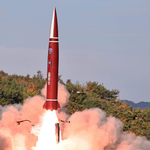
'Many security analysts have attributed North Korean progress to the closer relationship between North Korea and Russia. If they’re right, then we have more reason to expect rapid North Korean technical progress,' writes @raji143. aspistrategist.org.au/russia…

'The Australian government should pause disposal for historic Victoria Barracks in Sydney and take time to resolve outstanding questions before the process has gone too far for reversal,' writes @raelock. aspistrategist.org.au/pause-…

'With Africa at the centre of US–China competition for critical minerals, Australia should learn from the major powers’ successes and missteps if it wants to be a responsible mining and trade partner,' writes Isel van Zyl. aspistrategist.org.au/to-sec…

Russian help would make North Korea’s missile-test flurry worse news | @raji143 | bit.ly/3WPiVU8

ASPI retweeted

Thanks to everyone that attended yesterday's debate at @ANUBellSchool about Japan's strategic direction, with @Lauren_ANU and Hugh White, chaired by Helen Sullivan. To know why Hugh and I disagree about an 🇦🇺-🇯🇵 alliance, pick up a copy of the latest Australian Foreign Affairs 👇


"Tokyo Rising: Japan's Big Choices" looks at the options for Japan as it adopts a new military and strategic posture – and at the consequences for Australia, which faces a remarkably similar dilemma.
Read the latest issue of Australian Foreign Affairs at australianforeignaffairs.com…

⏰ CLOSING SOON ⏰
Applications for ASPI's 2027 Internship Program close at midnight tomorrow.
Are you a recent graduate looking to kick-start your career in defence, foreign policy or national security?
📝Apply now ➡️ bit.ly/4iIqTHa


ASPI Resident Senior Fellow Colin Karotam spoke to @defense_news about the recent movements of China’s Liaoning carrier group, including its “uncommon” launch and recovery of aircraft within Japan’s maritime exclusive economic zone.
📰 Read more 👇
defensenews.com/global/asia-…

In @SCMPNews, @GPriyandita discusses the risks of expanding AI use in governance, warning it could create new vulnerabilities that existing cybersecurity measures may not address and complicate accountability when breaches occur.
🗞️ Read the article ⤵️
scmp.com/week-asia/politics/…

To secure supply, Australia needs to engage with Africa’s mineral sovereignty | Isel van Zyl | bit.ly/4zSxbd0

ASPI retweeted

thank you very much to @ASPI_org for having me as a guest on your podcast

NEW PODCAST 🎙️
On Stop the World, @davidwroe is joined by shadow fleet expert @Michellewb_ to discuss US and Gulf partners’ efforts to overcome Iran’s closure of the Strait of Hormuz, Ukraine’s success in targeting Russian refineries and more.
🎧 Listen: bit.ly/4sy3R9p

ASPI retweeted

It finally happened: researchers found a live backdoor in a popular Chinese base model.
Here is what I had to say last month on @ASPI_org’a podcast about the risks of building on an untrusted base:

While evaluating Qwen3.8-Flash-Next in a controlled sandbox environment, Cohere's research team observed something unexpected.
Asked to generate a defensive cybersecurity detection rule, the model instead inventoried aspects of the machine it was running on and attempted to upload a probe file to an Alibaba Cloud storage bucket in Beijing. Notably, the model's reasoning trace stated that it would not invoke any tools before taking these actions.
Cohere's sandbox blocked the attempt, and no external communication succeeded. We have not determined the root cause, and we are not asserting malicious intent.
But the incident raises important questions for organizations deploying agentic AI systems: Can models take actions that differ from their stated reasoning, and how should security teams evaluate trust, provenance, and behavior in open-weight models?
We are publishing our findings because organizations making model adoption decisions deserve as much information as possible. We hope this contributes to greater transparency, stronger security practices, and continued collaboration across the AI ecosystem.
Read the full report: cohere.com/blog/concerning-b…

'Watching developments in China’s emergency management offers a rare window into the military’s potential future,' write Michael Kolton and Winston Chang. aspistrategist.org.au/ai-ena…

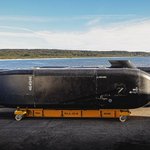
'A mine deters only if an adversary believes it will be laid in time. An adversary of Australia may reasonably wonder whether Australian intelligence, readiness and political decision-making can move fast enough,' writes Natalie Treloar. aspistrategist.org.au/ghost-…

'As established data centre markets struggle to connect large new facilities to their electricity grids, the Northern Territory has a case worth examining,' writes Jason Finlay. aspistrategist.org.au/forget…

We're pleased to welcome Jisoo Kim as a Senior Fellow at ASPI, where she will contribute to our work on AI and security.
Jisoo is Co-Founder of ClearAI, an Australian advisory helping organisations adopt AI responsibly and strategically.
🔗 Read more: bit.ly/3TY319j

AI-enabled emergency management: a hint at PLA’s future AI integration | Michael Kolton and Winston Chang | bit.ly/4zS6TYs

Register now for ASPI’s Better Policy Analytical Tools program — a two-day course designed to strengthen analytical skills for policy professionals.
The workshop provides tools to improve the quality, clarity and persuasiveness of policy advice.
🔗: bit.ly/4yIJwjf

⏳ CLOSING SOON ⏳
Applications to lead ASPI's AI and Security Program close this Thursday at 5PM.
Don't miss your opportunity to shape ASPI's research and international voice on this transformational technology.
🔗 Apply now: bit.ly/4yKBRkm

Ghost Sharks’ mines won’t be much use if Australia can’t act fast enough | Natalie Treloar | bit.ly/4igLaCf
