

Economists for Future e.V. – deutschsprachige Community. Gegründet im Mai 2019 | International: @econ4future | #Economists4Future #econ4future RT≠endorsement
Germany-Austria-Switzerland
Joined July 2020
- Tweets6K
- Following2.8K
- Followers3.2K
- Likes2.1K



Pinned Tweet
📅 Webinar: Boden als öffentliche Infrastruktur
5 kostenlose Online-Termine von Okt. 2026 bis Jan. 2027 zu #Bodenpolitik, #Flächensparen & #Wohnen, #Transparenz, #Daseinsvorsorge & #Landwirtschaft + Filmscreening „Kernstück“.
👉 Infos & Anmeldung: econ4future.de/projekte/webi…

Economists for Future DE retweeted

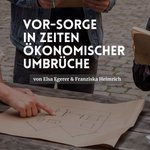
Was nützt finanzielle Vorsorge, wenn Geld allein keine Sicherheit mehr garantiert? Klimakrise und ökonomische Umbrüche erfordern ein neues Verständnis, das unsere Lebensgrundlagen gemeinschaftlich absichert, so @EgererElsa
& @FranziskaHeimr1: makronom.de/vor-sorge-in-zei…

Economists for Future DE retweeted

What might an economy look like if it put people's livelihoods, collective wellbeing and the future of our planet first?
In Anti-Fascist Economics, Professor Isabella Weber envisions an economics that centres the essentials of livelihood and production, strives to make life on our planet livable for all, confronts rather than conceals corporate power, and charts a path towards international cooperation beyond the familiar dichotomy of free trade and trade wars.
Join us on 26 November to hear directly from Professor Weber at a special book launch and discussion.
Explore the ideas behind the book, consider what an alternative approach to economics might look like, and take part in the conversation.
Date: 26 November 2026
Time: 4–6pm UCT
Location: Join us in-person or online
Book your space at rethinkeconomics.org/events/…
Brought to you by Tide Oxford, Rethinking Economics Oxford and Rethinking Economics International


Economists for Future DE retweeted

Die gegenwärtige Krise der Bezahlbarkeit erleben wir nicht nur aufgrund von Knappheit, sondern auch weil der Staat seine Verantwortung für ein bezahlbares Leben aufgegeben hat.
Im Interview mit dem @derStandardat habe ich erklärt, was das mit Neoliberalismus und dem Aufstieg rechtsextremer Kräfte zu tun hat.

Economists for Future DE retweeted

Der Ökonom William D. Nordhaus ist am vergangenen Freitag gestorben. Seine Modelle rechneten die Schäden des Klimawandels klein und gaben Regierungen jahrzehntelang einen Grund, mit effektivem Klimaschutz abzuwarten.

✨ Impuls 4 zu #Vertrauen: @EgererElsa & @FranziskaHeimr1 hinterfragen, was als „vernünftige“ #Altersvorsorge gilt. Geld allein sichert keine Versorgung im Alter. Ihre Perspektive: gemeinschaftlich gestaltete „Vor-Sorge“.
➡️ makronom.de/vor-sorge-in-zei… @MakronomMagazin #econ4future


Economists for Future DE retweeted

I support Proposition 40. California’s billionaires should pay, and the state’s health system needs the money.
But a one-time levy collected decades after the fact is a costly way to claim a return that could have been written into the contract at the start.
Redistribution settles old accounts. Pre-distribution redesigns an economy from the outset.
New in @TIME ➡️ buff.ly/KaA14s8
More in new book, The Common Good Economy ➡️ buff.ly/zfNmMU9

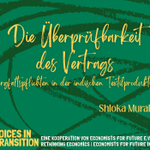
🚨 #CSDDD: Die geänderte EU-Lieferkettenrichtlinie droht #Heimarbeit zu übersehen
@ShlokaMurarka zeigt im 6. „Voices in Transition“-Beitrag, wie Indiens #Textilindustrie Heimarbeit nutzt und unbezahlte #Care-Arbeit niedrige #Stücklöhne subventioniert.
➡️ econ4future.de/voices-in-tra…

Economists for Future DE retweeted

The signal is clear: we're heading for a future warmer than the Paris Agreement goal of 1.5°C.
What does this mean in practice?
We break down "overshoot" into five key things to understand: unep.org/news-and-stories/st…

Economists for Future DE retweeted

Mensch sollte vielleicht dazusagen, dass es 1. wieder an den Kernthemen vorbeigeht (Existenzsicherung als Wirtschaftsmotiv & Grundlage von Wirtschaftsordnungen) & 2. die NoAfD auch ein Ordo-Prof-Kind war...

Hier eine Antwort auf die „antifaschistische Wirtschaftspolitik“: mehr Ordoliberalismus, schärferes Kartellrecht. epaper.zeit.de/article/fa352…
Economists for Future DE retweeted
"Fiscal responsibility should ultimately be judged by whether public finances strengthen the economy’s capacity to grow and withstand shocks."
Our democracies are under threat from austerity. Governments must resist this pressure. That's one of the key messages in our new policy brief, from the Global Council on New Economics for the 21st Century.
Together with @MazzucatoM, @carlos_cuerpo, @Jayati1609, @JosephEStiglitz and many more, I'm looking forward to working with policymakers to implement our recommendations. Read more at the link below.

Economists for Future DE retweeted

It is 20 years since the landmark Stern review of the economics of climate change. Why have we still failed to learn the lessons? Come on, economists, catch up!
theguardian.com/commentisfre…

Morgen geht's um 13 Uhr los👇 Mit @IsabelFeichtner. Wir freuen uns über das große Interesse und einen spannenden Impuls zu "Von Verwertung des Bodens zu Vergesellschaftung: Welche Rolle spielt das Recht?" 😊

📅 Webinar: Boden als öffentliche Infrastruktur
5 kostenlose Online-Termine von Okt. 2026 bis Jan. 2027 zu #Bodenpolitik, #Flächensparen & #Wohnen, #Transparenz, #Daseinsvorsorge & #Landwirtschaft + Filmscreening „Kernstück“.
👉 Infos & Anmeldung: econ4future.de/projekte/webi…
Economists for Future DE retweeted

Greenhouse gas levels hit new record highs, locking in more long-term temperature increase.
The intensifying El Niño may lead to a further surge.
New WMO Greenhouse Gas Bulletin provides authoritative scientific information on the state of our climate. 👉 bit.ly/4iIqwMR
Economists for Future DE retweeted

„Die Grundlagen unseres Wohlstands werden durch den Verlust der Biodiversität & ungebremsten Klimawandel unterminiert“, so PIK-Direktor Edenhofer. Kooperation sei entscheidend, um die Abhängigkeit von fossilen Energien zu vermindern.
radioeins.de/programm/sendun…

Economists for Future DE retweeted

So let met get that straight: paying a wealth tax is impossible (“billionaires have no liquidity”, “it would be taxing unrealized gains”, “their wealth is virtual”) but paying half a billion to influence elections is possible. Did I understand well?

Elon Musk has cemented his record as the largest individual political donor in modern American history.
Musk poured $446 million of his own money into this year’s midterm elections, mostly aimed at preserving the Republican Party’s control of Congress. wapo.st/4igb5Kq

Economists for Future DE retweeted
Do you find yourself wondering…
‘What is economics?’, ‘How did economics become language of power and its practitioners, the gatekeepers?’, ‘How do you do economics?’, ‘Can economics help serve people and planet?’
Join the Rethinking Economics Fundamentals to explore and find some answers.
It’s a four-week course designed to introduce to some of the big questions that preoccupy Rethinkers.
Only open to members. Starts on 11/11/26.
To sign up visit the members' hub.


Economists for Future DE retweeted

Economics is fundamentally political. We cannot escape this fact.
The so-called “free market” is constructed by laws, maintained by institutions, and enforced by states.
The choice between austerity and stimulus reflects deeper beliefs about responsibility, fairness, and social obligation.
The mandates of central banks are products of political decisions. The emphasis placed on price stability in Western central banks rather than, say, regulating private finance reflects value judgments as well as political lobbying.
One of the biggest differences between mainstream economics and heterodox economics is that the former often disguises political choices as technical ones.
Economics has never been, and never will be, a value-free science, no matter how much today's mainstream economics tries to present it that way.
At its core, economics is shaped by ideologies, human morality, competing interests, social norms, and political priorities. Pretending otherwise does not make economics more rigorous. It just makes it more dangerous.
Economists for Future DE retweeted

Zur Erinnerung: Die Weltgemeinschaft hat sich 2015 auf das Pariser Klimaabkommen mit der 1,5-Grad-Grenze geeinigt. Wir steuern auf 2,8 Grad zu. Das ist kein kleiner Unterschied, das bedeutet Zerstörung & unzählige Tote. Damit das nicht die Realität wird, sehen wir uns am 13.11.!
Economists for Future DE retweeted

This is the frustrating thing about mainstream Econs. They see diversity of *topics* and think it represents genuine diversity in *theoretical foundations*. Completely oblivious to the historical narrowing of what counts as Economics that led us to this situation.


Economists for Future DE retweeted

"The real difference is methods. Heterodox economics is an avowedly political project not a social scientific effort to better understand the world. And I have nothing against political projects just shouldn't confuse the two."
In fact, it is quite the opposite. Heterodox economics is largely concerned with institutional economics. As such, institutions — like money — are described and analyzed. Unlike orthodox economics, there is no bias towards state-led solutions, but rather a market bias. Reality is explained as an 'equilibrium' brought about by individuals. The 'capital market', the 'labour market', the 'goods market' — the 'holy cross' of supply and demand — is invoked, although it is built on sand due to problems of aggregation (just google the Cambridge Capital Controversy). Hence, policy advice is neoliberal, focusing on finding the right 'incentives' for private investment (de-risking), pollution (trading certificates) and employment (pushing down wages). Fallacies of composition (not everyone can save, for example) are ignored. Any empirical reality that goes against a model's processes or data is ignored. New Keynesians, for example, create an abstract model based on assumptions that can be empirically tested. This did not stop them. They neither saw the financial crisis coming nor could they explain it. No time for worry. The fact that there is no 'Nobel', as mentioned by Jason Furman? Ignored. Free trade theory was "applied" in the 2000s, with the US losing almost one in three manufacturing jobs. Did that trigger a return to industrial policy in the orthodox academic journals? Nope. Have orthodox economists learned anything from MMT? It does not seem so. You still claim that taxpayers finance the government, despite there being not a single paper that explains the details, whereas there are literally dozens of papers describing balance sheets and accounting mechanics published by MMT economists. Have any orthodox economists learned that showing only public debt means omitting the private and external sectors, and that there is a bigger picture?
So, the orthodox paradigm is centred on a pro-market and anti-government core, which is highly ideological. People are assumed to be rational, and society is dismissed as an irrelevant concept. This paradigm cannot be touched. It is a political programme enabled by those who saw the fall of the Soviet Empire as meaning that the 'end of history' was near. Orthodox economists have enabled policies that have rolled back the state (thus diminishing democracy) and brought in finance. The policies it has supported over the last forty years — financialisation, privatisation, etc. — have created many problems, including climate change, inequality, mass unemployment and inflation. These problems cannot be solved by the same theories that created them. If there is any hope of solving the problems of the 21st century, it lies in rethinking them from a heterodox perspective.
The fatal challenge to heterodox economics is that there isn't actually orthodox economics.
Just take a few recent Nobels: behavioral, information failure, institutions, bubbles, financial fragility, labor monopsony (sort of), Schumpeterian creative destruction, etc.
Not to mention RCTs which are emblematic of how much economic research is empirical and only lightly if at all structural.
The real difference is methods. Heterodox economics is an avowedly political project not a social scientific effort to better understand the world. And I have nothing against political projects just shouldn't confuse the two.