

Dad, Plant biologist, Postdoc: @ourANU & @futurecropsAU 🇦🇺, Master&PhD: Korea University 🇰🇷, Bachelor: Universitas Gadjah Mada 🇮🇩, Hometown: Bali 🇮🇩
Canberra, Australia
Joined November 2009
- Tweets1.7K
- Following206
- Followers183
- Likes4.7K



Pinned Tweet
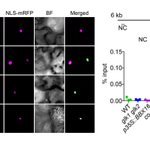
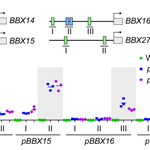
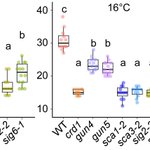
Happy to share our newest publication on florigen sequestration in temperature-responsive flowering. Here, we found that the florigen (FT) interacts with THF1 to prevent precocious flowering, especially under low ambient temperatures.
onlinelibrary.wiley.com/doi/…

Hendry Susila retweeted

CRISPR tools can track RNA, not just edit
This PLOS Biology study develops a binding-activated CRISPR/dCas13X imaging system for RNA tracking in living plant cells, enabling visualization of endogenous mRNA dynamics, including FT mRNA trafficking journals.plos.org/plosbiolog…

Hendry Susila retweeted
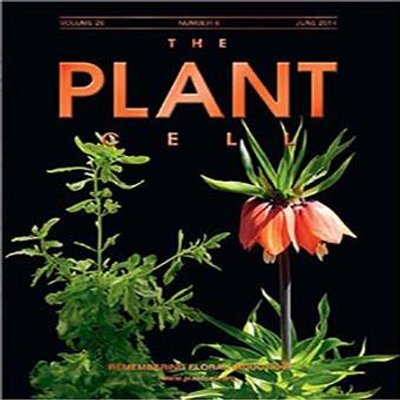
A cryptic START domain regulates deeply conserved transcription factors (Courtney E Dresden , Ekaterina P Andrianova , Brian J Smith , et al doi.org/10.1093/plcell/koag2… @ASPB #PlantSci

Hendry Susila retweeted

UMAP makes useful pictures, but what structure does it destroy?
Daan H. de Groot and coauthors introduce Bonsai, a Bayesian method that represents high-dimensional data as a tree rather than forcing it into a conventional two-dimensional embedding.
The motivation comes from single-cell biology. Methods such as UMAP and t-SNE are extraordinarily useful for visual exploration, but their geometry is not a faithful representation of the original high-dimensional space. Local and global relationships can be distorted, and changing visualization parameters can change the apparent biological story.
Bonsai takes a different approach. Each cell is treated as a noisy point in high-dimensional gene-expression space, complete with uncertainty estimates. The method then reconstructs the maximum-likelihood tree connecting those points under a probabilistic model of how expression states can change.
Because a tree can always be drawn in two dimensions, visualization no longer requires projecting the data onto two artificial coordinates.
On synthetic benchmarks, Bonsai almost perfectly reconstructs structures that PCA and UMAP largely fail to recover. It also preserves cell-to-cell distances much more faithfully.
And the biological payoff is not only prettier visualization.
Applied to cord-blood single-cell data, Bonsai recovers established differentiation relationships and identifies an apparently previously undescribed subset of natural-killer cells associated with the myeloid rather than lymphoid lineage. The method also scales through a backbone implementation to datasets exceeding one million cells.
There is a broader scientific lesson here.
Dimensionality reduction is not a neutral preprocessing step. When ML changes the representation of scientific data, it can also change which hypotheses become visually plausible.
Paper: de Groot et al., Nature Biotechnology (2026), CC BY 4.0 | DOI: 10.1038/s41587-026-03220-2

Hendry Susila retweeted

Nature is insane.
Dinophysis steals chloroplasts from Mesodinium—but Mesodinium stole those chloroplasts from algae first.
So an organelle can be stolen, stolen AGAIN by another species, and still keep working.
Biology is stranger than science fiction. #Kleptoplasty
pubmed.ncbi.nlm.nih.gov/3132…
Hendry Susila retweeted
One of the most shocking papers....that neutrophils spit out webs of DNA !
science.org/doi/10.1126/scie…

Hendry Susila retweeted

Fake news. Next, they'll tell you there is no such thing as the luckiest thermocycler in the lab

#MicrobiologyMonday: Bunsen burners are used to reduce airborne contamination. Data in #JournalSpectrum suggest the practice is not evidence-based and, except in some cases, Bunsen burners can be removed from practice w/o compromising research integrity. asm.social/33D

ALT Several resources suggest that an active Bunsen burner flame produces convection currents, which in turn push contaminated air up and away from a work area proximal to the burner.

Hendry Susila retweeted

🚨 Can broken DNA generate a new protein?
Our study independently confirms that DSBs trigger transcription from the break—and shows, for the first time, that the resulting RNA can be translated.
Could this generate neoantigens after radio/chemotherapy?
nature.com/articles/s42003-0…

Hendry Susila retweeted

Excited to share Mario’s latest manuscript, now up on bioRxiv!
Using new single-locus multi-hormone reporters, Mario and the team dissected the spatially resolved Auxin-Cytokinin-Ethylene crosstalk hierarchy driving root growth inhibition in Arabidopsis. biorxiv.org/content/10.64898…

Hendry Susila retweeted

Mapping the architecture of protein complexes in Arabidopsis using cross-linking mass spectrometry | PNAS pnas.org/doi/10.1073/pnas.25… @PNASNews

Hendry Susila retweeted

New publication from the lab!
Winter cold doesn't just make plants flower — it also primes them to regenerate🌱❄️. We show cold-induced CBFs recruit HAG1 to switch on key regeneration genes like WOX5.
Many congrats to @FuYuHung!
cell.com/developmental-cell/…

Hendry Susila retweeted

Our back to back paper @NatureNeuro is out today (rdcu.be/fzGg0). We developed a method to visualize ribosomes bound to endogenous mRNAs with near codon resolution and made some really counterintuitive cell biological discoveries which have cool implications for AD🧵
Hendry Susila retweeted

HInt: Interaction-based homology discovery through accelerated genome-scale AlphaFold screening
1 Rouger et al. propose “interaction-based similarity” as a third axis for homology detection, complementary to sequence (e.g., BLAST) and structure (e.g., Foldseek), targeting cases where both signals have eroded but binding interfaces remain evolutionarily constrained.
2 The work introduces HInt (Homology by Interaction), an accelerated AlphaFold-based framework that makes proteome-scale protein–protein interaction (PPI) screening practical via biologically informed pre-filtering plus optimized high-throughput multimer modeling and scoring.
3 HInt formalizes two interaction-driven homology modes: (i) remote homologues inferred because each protein binds its (homologous) partner through a conserved interface, and (ii) interolog groups where multiple proteins in the same organism bind a common partner using the same binding site, revealing unannotated members.
4 Key engineering step: a pre-filtering stage that reduces the combinatorial one-vs-all search space using user-configurable biological priors (protein length, signal peptide via SignalP5, and subcellular localization via DeepLoc2/DeepLocPro), so expensive modeling is focused on plausible candidates.
5 To remove the MSA bottleneck, HInt reuses precomputed MSAs from the AlphaFold Database when UniProt IDs exist, and otherwise runs GPU-accelerated MMseqs2; it reports shallow alignments (<100 sequences) as potential confidence risks and caches MSAs for reuse across runs.
6 For structure prediction throughput, HInt combines multi-GPU parallelization with VRAM-aware batching (memory estimates based on complex size) and a dynamic job queue, yielding ~4.5x faster modeling for AF-Multimer and AF3 without changing output quality.
7 For interaction ranking, the authors benchmark multiple interface/complex quality metrics (pi-score, pDockQ/pDockQ2, ipSAE, LIS/iLIS, actifpTM, etc.) on 500 IntAct positives + 500 Negatome negatives; iQ-score performs best and becomes the default, with CPU-parallel scoring for scale.
8 End-to-end performance: compared to AlphaPulldown2 (Snakemake) on a one-vs-proteome screen, HInt runs ~5x faster without pre-filtering; with pre-filtering, overall acceleration reaches ~25x while returning the same set of modeled PPIs.
9 Biological validation in bacteria (remote homologue): in the F-plasmid type IV secretion system, long thought to lack core protein VirB5, HInt uses TraGB6 as bait and identifies TraH as a VirB5-like tip protein; TraH localizes to the pilus tip by western blot of purified pili and immunogold EM, despite <3% sequence identity and no meaningful monomer structural similarity (TM-score ~0.14).
10 Biological validation in yeast (interolog): screening 6,033 cytoplasm/nucleus proteins against Skp1, 20 of the top 22 hits are known F-box proteins (including several missing InterPro F-box annotations), and the unannotated Ydr249C ranks #2; NanoBiT confirms SCF incorporation dependent on its predicted F-box-like region (aa 71–118) and on Skp1, motivating the proposed name Fbl1.
💻Code: github.com/Qrouger/HInt
📜Paper: biorxiv.org/content/10.64898…
#computationalbiology #bioinformatics #proteininteractions #alphafold #structuralbioinformatics #proteomics #genomeannotation #evolution #ppi #ubiquitin

Hendry Susila retweeted

What if designing a protein felt less like writing code and more like sculpting something with your hands?
A new bioRxiv preprint introduces ProteinSketch, a VR environment where researchers can physically sketch protein backbones in 3D, shape the volume they want a protein to occupy, and let a diffusion model turn those gestures into molecular structures.
Put on a headset, use both hands to draw a topology or define a curved 3D envelope, and RFdiffusion continuously refines that spatial idea into candidate proteins.
This sounds almost like a futuristic interface demo, but the deeper problem is real: generative protein models are becoming extremely capable, while communicating high-level spatial intent to them remains surprisingly difficult.
A sequence prompt is easy to type. “Build me a protein that bends around this molecular surface, enters this gap, and presents a binding interface here” is much harder.
ProteinSketch makes geometry itself part of the conversation.
The researchers used volumetric constraints to generate unusual anisometric protein shapes and confirmed shape fidelity by cryo-EM. They also used the same framework for functional binder design and to extend existing minibinders toward molecular surfaces that conventional design approaches struggled to reach.
What I like about this direction is that it changes the interface to generative biology. We have spent enormous effort teaching models the geometry of proteins. The next challenge may be giving humans a more natural way to express the geometry they actually want.
Maybe the future protein-design language will not be text at all. It may be shape, motion and space.
Preprint : biorxiv.org/content/10.64898…


Hendry Susila retweeted

RNA-seq tells us how much RNA is present in the cell. But to understand gene regulation, we need to easily measure the synthesis and decay rates driving this abundance. We introduce AIR-seq: analog intrinsic recoding sequencing. (1/6) biorxiv.org/content/10.64898…
Hendry Susila retweeted

The latest episode of #No_Time_To_Read podcast!
It was a wonderful conversation with Greg about his recent @CurrentBiology paper.
Podcast: open.spotify.com/episode/7Jl…
Article: cell.com/current-biology/abs…

Hendry Susila retweeted

Our international collaborative paper has been published in The Plant Journal!
We show that triple florigenic signaling promotes rice stem elongation via transcriptional de-repression.
Congratulations to Giulio, Fabio, Vittoria, and everyone involved!
onlinelibrary.wiley.com/doi/…

Hendry Susila retweeted

For biologists using Claude Science, here is Motif, an AI-native molecular biology workbench plugin. Now, you don't need to leave Claude Science to view and operate on your sequences.
Motif gives the full power of Claude to your upstream mol bio workflows, such as asking Claude to: 1) fetch the genes in a target pathway and annotate them, 2) perform and view multiple sequence alignments using your preferred alignment tool, 3) design and label CRISPR-Cas guide sequences, and much more.
Motif was built as part of the "Built with Claude: Life Sciences" hackathon, and is an MIT-licensed, open source plugin.
Also, Claude made this demo video using HeyGen's Hyperframes and Elevenlabs TTS.
Hendry Susila retweeted

Biasanya, twit yang diawali hal identifikasi otoritas besar (Bank Dunia/IMF) dan statement yang tidak nyaman (upah minimum terlalu tinggi, padahal kecil), maka akan membawa narasi ke arah konspirasi elit global. Padahal, mari baca apa yang ditulis para peneliti di laporan ini.


