

Official @ESA feed for #Hubble Space Telescope — the space-based observatory which has revolutionised modern astronomy. #BFFinSpace with @ESA_Webb
space
Joined April 2010
- Tweets6.7K
- Following430
- Followers924K
- Likes1.7K
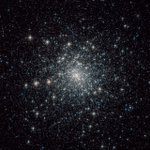


Our #HubbleTopImage features a swarm of stars!
This is the globular cluster Messier 30. Although clusters like this are mainly populated by old stars, the crowded field of stars leads to some old stars apparently reclaiming their youth in the form of ‘blue stragglers’. 1/2

Researchers identified two types of blue stragglers in Messier 30: those that form in near head-on collisions and those in binary systems where the smaller star siphons life-giving hydrogen from its companion 🧛
Read more: esahubble.org/news/heic0918/
📷 @NASA / @ESA 2/2
Our #HubbleTopImage features vintage jewels! 💎
This view of NGC 4755, the Jewel Box cluster, was captured by Hubble in 2009. Bright, blue supergiant stars, a ruby-red supergiant and a variety of other colourful stars are visible in the image. 1/2

The variety of brightness is because the stars’ masses range from less than half the mass of the Sun ☀️ to 15-20 times the mass of the Sun!
Read more: esahubble.org/news/heic0913/
📷 @NASA / @ESA , and Jesús Maíz Apellániz (Instituto de Astrofísica de Andalucía, Spain) 2/2

Cosying up with the globular cluster Messier 30!
Access more space-themed .gifs at our giphy page: ow.ly/1iWa5105Hvy
However, something about M30 suggests it did not form within our galaxy after all…
Read more: esahubble.org/images/potm261…
📷 @ESA / @Hubble_Space & @NASA , M. Libralato, G. Piotto, A. Sarajedini, N. Bartmann (ESA/Hubble)
🎶 Stellardrone - Billions and Billions 2/2

Our #HubbleTopImage features a blushing, dusty nebula 😳
The Iris Nebula is the perfect dust laboratory! Studying cosmic dust in detail helps identify the ingredients of the raw mixture that stars are made from. 1/2

This area in the northwest region of the Iris Nebula seems clogged with cosmic dust. This is made up of tiny particles of solid matter, ten to a hundred times smaller than those of the dust grains we find at home.
Read more: esahubble.org/news/heic0915/
📷 @NASA & @ESA 2/2

Our ESA/Hubble Picture of the Month gives a lesson in galactic history!
This sparkling collection of stars, Messier 30 (M30), lies about 27,500 light-years away in the constellation Capricornus 🌊🐐
1/3

ALT A star cluster seen up close, filling the view with thousands of stars. They are clearly divided between blue ones, which are scattered around the outskirts of the image but more towards the centre and are the majority in the bright core of the cluster, and yellow stars, which are present in the core but make up most of the cluster outside of that. A few orange stars are closer to us and appear noticeably larger.
However, M30 is among the globular clusters that orbit in the direction opposite from the way our galaxy spins. This may mean that they did not form within our galaxy, but were captured by it in the distant past!
Read more: esahubble.org/images/potm261…
📷 @ESA / @Hubble_Space & @NASA , M. Libralato, G. Piotto, A. Sarajedini 3/3
It is seen here from the perspective of Webb’s #MIRI (first), Hubble’s WFC3 (second), and Webb’s #NIRCam (third).
Read more here: esahubble.org/news/heic2614/
📷 @NASA, @ESA, @csa_asc, STScI, J. Depasquale (STScI), ESO, Digitized Sky Survey 2, N. Bartmann (ESA/Hubble), J. Emerson, M. Irwin, J. Lewis, E. Slawik, N. Risinger, D. De Martin
🎶 Tonelabs – The Red North (tonelabs.com) 2/2

In the 2026 ESA/Hubble and ESA/Webb calendar, the month of November features the planetary nebula NGC 6072 in the near-infrared. This shows outflows expanding at different angles from the dying star at the centre of the scene ☠️⭐
Ready to print .pdf here: ow.ly/zBal5102lFJ
📷 @NASA , @esa , @csa_asc , STScI

pspspspspsps
Calling the Cats Head Nebula 🐈⬛ with Hubble and Webb!
Access more space-themed .gifs at our giphy page: ow.ly/ta5Y5102lEs
Hubble’s visible-light view shows the cat as a shadowy pillar of dust, while Webb’s infrared-light imagery reveals many stars ✨ and other hidden details.
Read more here: esahubble.org/news/heic2614/
📷 @NASA , @ESA , STScI. Image Processing: J. Depasquale (STScI), N. Bartmann (ESA/Hubble)
🎶 Stellardrone - Twilight 2/2