

Artist : @destijldemons @bonfiretreasure Creator: ZeroContract https://xitter.gq/t.co/U3nXJXDHwA | https://xitter.gq/t.co/rwC0NhKIpz | https://xitter.gq/t.co/GRzZQGWZSG Discord : https://xitter.gq/t.co/eqrZhojS7Z
Joined December 2015
- Tweets33.1K
- Following4K
- Followers3.1K
- Likes54.6K




Pinned Tweet
Exit Notes - An Origin Story
🧵 1/6
Bitcoin was born to decentralize money. Its proliferation, however, was inherently centralized with the English language a quiet barrier. The code was permissionless, but understanding it wasn’t. A system designed to remove gatekeepers began with a linguistic one. To be an early participant, you first had to understand what was actually written.

Hard reminder about reality.
If a person is not willing to do something themselves, they cannot expect others to do it for them.
This apples too all of us. And on many different topics. Stand up for your beliefs, your views. Because nobody will do that for you.
✊

Exit Notes Storytime #5 - Swahili
KUSHUKA KWA THAMANI KUNAISHIA HAPA
Before the American Civil War, Zanzibar had a remarkably diverse monetary system. Merchants used the Maria Theresa thaler, Spanish and South American silver dollars, French francs, British sovereigns and other coins. Their relative values fluctuated with seasonal demand, trade routes and market preferences. Merchants decided what they wanted to accept from the different currencies. When the American Civil War disrupted trade, the supply of popular coins diminished and exchange rates became increasingly unstable. By late 1861, Zanzibar's merchants had abandoned fluctuating market rates and agreed on fixed values for coins in circulation, enforced by the Sultan.
In 1863, under pressure from the British consul, the Sultan introduced the Indian rupee as legal tender at a fixed rate. The merchants had not asked for it, yet within a few years the rupee had become the dominant silver currency. By 1900, it was the principal currency along much of the East African coast. External influence, war and foreign directives had turned a functioning system in which merchants accepted a variety of competing currencies into one dominated by a single standard, increasingly controlled by centralized authority.

⚔️Jestem Zero retweeted

Thank you to @GrantYun2 for trusting us with a second release, and to @opensea for collaborating on Sections. Thank you, as always, to our collectors and community for continuing to support artists working with generative and interactive systems. ✨
To celebrate the release, Grant has kindly offered 30 free mints. Anyone from the community can participate. Please share this post and reply with your ETH wallet address, and we will add you to the list of eligible wallets. We will select the 30 wallets by Tuesday, November 17 at 1:00 PM ET.
Once selected, you can mint in the Community Mint on Wednesday, November 18 at 12:50 PM ET. Good luck, everyone!
🗓️ Public mint Wednesday, November 18, 1:00 PM ET
Exit Notes Storytime - Drink and Fight Version
(aka Ireland)
BÍ I DO BHANC FÉIN
In 1970, Ireland's main banks were shut for nearly six months after a dispute between employees and their employers. Checks stopped clearing, cash became scarce, and the government did not step in. Instead, an extraordinary private payment system emerged. Pubs, shops and businesses began cashing checks for the customers they knew and trusted. Businessowners effectively became local bankers. When bank checkbooks ran out, people wrote their own IOUs. For months, the economy ran on personal trust, informal credit and pieces of paper that existed entirely outside of the banking system.
This remained remarkably resilient but still carried risk. Businesses were exposed if they trusted the wrong person and the IOU checks could not be settled. Some businesses suffered serious losses or even failed. Although the banks eventually reopened, so much personal banking acitivity had transpired all of the checks were not fully cleared until 1971. Ireland had, in effect, a flourishing commerce backed by personal trust and individual banking that lasted in parts for a full year.

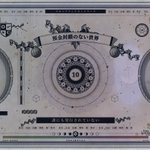
Exit Notes Story Time #4 - Japan
Thanks to @HarryOtterNFT for banknote translation
In 1946, Japan introduced emergency financial measures that froze bank deposits and replaced the yen with new currency. The exchange began on February 25 and people had under two weeks to swap their yen. Any cash over 100 yen had to be deposited in a bank and those had withdrawals restricted to limited living expenses. Salaries paid from these restricted deposits were capped at 500 yen per person per month. The nation's entire economic freedom was suspended.
The stated objective was to contain runaway inflation, absorb excess money circulation, and expose hidden wealth. But the true effect fundamentally changed people's access to their own money. Accumulated savings became inaccessible except government-approved limits. Cash kept at home was subject to required deposit and conversion. Businesses faced restrictions on working capital, while households had to alter their spending. The government had not simply issued new banknotes, but placed strict conditions on how much of people's own money they could actually use.

@ryangtanaka are you interested in doing another level or review on my Japanese translations?
Exit Notes story time - Turkish Version
Thanks to @lfuzzywuzzyl for banknote translations
In 1942, Türkiye passed Varlık Vergisi (Wealth Tax) with virtually no debate. People were classified by various identity (M/Muslims, G/Non-Muslims, D/Dönme, E/Foreigners) and the taxes assess were profoundly unequal (Muslim 4.94%, Greek 156%, Armenian 232%). Many minority taxpayers were assessed amounts exceeding the estimated value of everything they owned. And everybody had just 15 days to pay their tax entirely in cash.
Those who could not pay faced confiscation and public auctions of their possessions. Some were even sent to harsh conditions in forced-labor camps, sometimes resulting in death. Presented as a way to tax wartime profiteering and extraordinary wealth, it actually systematically targeted ethno-religious minorities and accelerated the transfer of economic assets from non-Muslim to Muslim ownership.


Exit Notes - An Origin Story
🧵 1/6
Bitcoin was born to decentralize money. Its proliferation, however, was inherently centralized with the English language a quiet barrier. The code was permissionless, but understanding it wasn’t. A system designed to remove gatekeepers began with a linguistic one. To be an early participant, you first had to understand what was actually written.
⚔️Jestem Zero retweeted
Exit Notes story time #2: Nigerian Pidgin
Thanks to @OddGopher001 for the translation support.
COMMOT FROM FIAT SYSTEM
In 1984 Nigeria's military government changed the color of the naira banknote giving citizen less than 2 weeks to make an exchange. After that deadline, their money was essentially worthless. While the claim was this revision was needed to fight counterfeiting and corruption, in reality it was an extraordinary exercise in monetary control. Borders were closed, withdrawals and exchanges restricted, and banks were overwhelmed by people scrambling to exchange their cash.
This was a stark exhibition of a state's power to determine what counts as money and under what conditions people's assets have any value. Anyone with any physical money, regardless of how legitimately it had been earned, was subject to a government-imposed process to preserve its validity. Owners of the "old" naira were exposed to overnight disruption of not just their money but their financial stability and safety. The policy did not distinguish between illicit wealth targeted by the government and legitimate wealth held by ordinary citizens.


This is what web3 social media should look like.
tezcity.com/post/8069ce27-46…

Exit Notes story time #2: Nigerian Pidgin
Thanks to @OddGopher001 for the translation support.
COMMOT FROM FIAT SYSTEM
In 1984 Nigeria's military government changed the color of the naira banknote giving citizen less than 2 weeks to make an exchange. After that deadline, their money was essentially worthless. While the claim was this revision was needed to fight counterfeiting and corruption, in reality it was an extraordinary exercise in monetary control. Borders were closed, withdrawals and exchanges restricted, and banks were overwhelmed by people scrambling to exchange their cash.
This was a stark exhibition of a state's power to determine what counts as money and under what conditions people's assets have any value. Anyone with any physical money, regardless of how legitimately it had been earned, was subject to a government-imposed process to preserve its validity. Owners of the "old" naira were exposed to overnight disruption of not just their money but their financial stability and safety. The policy did not distinguish between illicit wealth targeted by the government and legitimate wealth held by ordinary citizens.
This Exit Note is written in Kurmanji Kurdish. I have not found a native speaker to review the translations. If any knows of lead (I believe @itskaiwan is a native speaker?) that would be appreciated. I am certain my translations are remedial and likely confusing to anybody that speaks Kurmanji.
Exit Notes tells a story of language, history, money and culture and how it relates to cryptocurrency. I have incorporated 77 languages into the collection. And each one comes with a story. The Kurish story is one of my favorites.
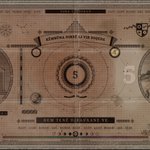
KÊMBÛNA NIRXÊ LI VIR DIQED
After the 1991 Gulf War, and under sanctions, the controlling Iraqi government was unable to order banknotes printed from its foreign supplier. As a result, they began printing dinars domestically. These new Saddam Dinars were poorly made, with thin stock, and easy to counterfeit. Supply exploded in just a few years and the value of the domestic dinars collapsed.
In contrast, the older Swiss Dinar notes, printed with high standards, maintained its trust. While the rest of the country used the devalued new banknotes, the Kurdish north refused the new currency and never stopped use of the old one. Since printing new Swiss dinars was unavailable to the Kurds, the supply stayed fixed. This effectively avoided inflation and the value of the currency actually strengthened. When the Saddam-led government collapsed, the new coalition authority introduced an Iraqi Dinar and the Kurdish-used currency exchanged 150-to-1 of the new banknotes.

I think it is time to stop using the crypto term for everything blockchain.
Crytocurrency ≠ Blockchain commerce
I like where @backseats_eth is going with this. But is it really "crypto"? It has to do with digital ownership and blockchain commerce. Which I am a big proponent. But its not crypto.
An update to the lexicon will unshackle us I think.

I've been quietly frustrated with crypto for a while. Some of it leaks out on the timeline. Most of it happens in group chats with friends, where I keep trying to name a product category I can feel but can't quite articulate.
Here's my best shot: NFTs can be durable digital toys.
Think about the toys you had as a kid. If it was in your drawer, you could come back 20 years later and, as long as nobody threw it out, it was still there, exactly how you left it.
Digital things don't work like that. The company goes out of business or gets acquired, the servers shut off, and your stuff is just gone. And more and more of our lives are digital.
So what makes a digital toy durable?
It's yours. Provably, verifiably yours. Not "yours until the terms of service change." You should be able to come back years later, read the chain, and pick up right where you left off. The actual data, same as it was before.
It's expandable. As a kid, you'd grab two sets of toys and imagine what they could do together. You'd race your cars down a ramp you built out of blocks. They were sold separately, by different companies, but in your room you played exactly how you liked.
Onchain toys work the same way. You don't need my permission to build on what I made. If you want to use it in a way I never would, just ask your favorite coding agent to build the thing you always wished existed! No need to wait on me.
Rare means rare. When something might carry real value, you need honest bookkeeping. If we release 100 of something and rescind ownership of the contract, we cryptographically cannot make more. Anyone can check. No mystery pack odds. No quietly printing extras.
Here's the thing, though. Nobody wants to buy a "verifiable toy." That's not fun. The blockchain can be the source of truth. It's there if you want it even if most people will never look at it. The toy is the point.
That's what we're building with Chonks.
Your Chonk is yours. It doesn't depend on us at all. Its traits and history live on-chain, so if you come back in ten years, it's right where you left it.
It's expandable: anyone can plug their Chonk (or anyone else’s) into a game, a comic, or some weird tool we never imagined, no permission needed.
And when we drop a trait collection, the number we say is the number that exists. Forever.
We spent years treating this stuff like it was only about pictures and floor prices. I think what comes next is a lot more fun.
Durable digital toys: digital toys that are actually yours.

Exit Notes tells a story of language, history, money and culture and how it relates to cryptocurrency. I have incorporated 77 languages into the collection. And each one comes with a story. The Kurish story is one of my favorites.
KÊMBÛNA NIRXÊ LI VIR DIQED
After the 1991 Gulf War, and under sanctions, the controlling Iraqi government was unable to order banknotes printed from its foreign supplier. As a result, they began printing dinars domestically. These new Saddam Dinars were poorly made, with thin stock, and easy to counterfeit. Supply exploded in just a few years and the value of the domestic dinars collapsed.
In contrast, the older Swiss Dinar notes, printed with high standards, maintained its trust. While the rest of the country used the devalued new banknotes, the Kurdish north refused the new currency and never stopped use of the old one. Since printing new Swiss dinars was unavailable to the Kurds, the supply stayed fixed. This effectively avoided inflation and the value of the currency actually strengthened. When the Saddam-led government collapsed, the new coalition authority introduced an Iraqi Dinar and the Kurdish-used currency exchanged 150-to-1 of the new banknotes.
Read the initial motivation in my pinned
xitter.gq/JestemZero/status/2115…
Exit Notes - An Origin Story
🧵 1/6
Bitcoin was born to decentralize money. Its proliferation, however, was inherently centralized with the English language a quiet barrier. The code was permissionless, but understanding it wasn’t. A system designed to remove gatekeepers began with a linguistic one. To be an early participant, you first had to understand what was actually written.
Exit Notes is heavily influenced by @luchopoletti who not only makes incredible banknote artwork but is a consistent advocate for the real ethos of cryptocurrency. When his Bank Runners collection was released, the wheels started turning. I had so many ideas about a fully on-chain version that could grow into something bigger (not just artwork).
It has taken two years and LLM advancements to help bring my ideas to life, but here we are with the start. Which I hope I can execute each stage in full successfully.
Exit Notes - An Origin Story
🧵 1/6
Bitcoin was born to decentralize money. Its proliferation, however, was inherently centralized with the English language a quiet barrier. The code was permissionless, but understanding it wasn’t. A system designed to remove gatekeepers began with a linguistic one. To be an early participant, you first had to understand what was actually written.
5/6
The motivation behind Exit Notes is to continue pushing crypto language decentralization forward. Remind everybody that the world is big with rich uniqueness. People from all cultures help widen our reach of who can understand, shape, and challenge crypto. Yet access alone isn’t enough. We must also reclaim cryptocurrency’s founding intent.
People are free to transact, control, and verify their own money without fear or asking permission.

6/6
A decentralized language base should not be leading us to just a larger market or more customers. It should help build a system with fewer gatekeepers. Where knowledge and financial power are distributed rather than concentrated.
Bitcoin was meant to change who we trust.
So that we do not have to rely just on trust.
Let's not forget why.
