

Technology journalist. I listen and write. see also: @DiscCheap
Back Creek WV
Joined March 2009
- Tweets24.1K
- Following6.9K
- Followers6.7K
- Likes25.8K








Pinned Tweet
Extending its eighth generation of TPUs, Google has added two new variants, the 8i Max and 8tx, which specialize respectively in agentic computing and confidential computing. @TechTargetNews techtarget.com/news/google-s…


Joab Jackson retweeted

PyTorch 2.15 tackles the 'one bad GPU' problem
More here:
theregister.com/devops/2026/…

Joab Jackson retweeted

MIT researchers have figured out how to freshen up a model without expensive retraining cycles, using a technique they call weight-space programming that lets a general language model read another network's raw weights like source code.
In one test, GPT-6 Astra diagnosed a model stuck in a repetitive reasoning loop and fixed it by editing a handful of internal weights, jumping its math score from 8% to 48% with no training loop at all.
The full breakdown of how it works, and where it still falls short, is here: buff.ly/v8bTTCc
#AgenticAI #MIT #MachineLearning #LLM #AIResearch #ModelOptimization

Joab Jackson retweeted

Kubernetes cleans house, bins legacy kube-dns, IPVS, and cgroup v1 dlvr.it/TVCL7R

Joab Jackson retweeted
JavaScript installer pnpm recast in Rust because ECMAScript can't keep up dlvr.it/TVLHgg

Joab Jackson retweeted
Apple iPhone Duo makes developers think in folds dlvr.it/TVVdSd

Joab Jackson retweeted
Microsoft agentically ports Copilot runtime to Rust for $120K dlvr.it/TVYdDJ

Joab Jackson retweeted
Valen creator drives 'Golden Spike' to connect new languages with Rust dlvr.it/TVftQF

Broadcom heard the user feedback, finally, and is releasing its VMware vSphere virtual machine software as a standalone package for deployments of up to 128 cores. techtarget.com/news/broadcom… @TechTargetNews

Joab Jackson retweeted
Most JavaScript coders default to their ride-or-die frameworks, but loyalties can hinder them when they task AI agents with doing their dirty work. Human-friendly tools aren't necessarily the most effective ones for the model-powered minions.
More here: theregister.com/devops/2026/…

Joab Jackson retweeted
HTTP/3 is faster with some engineering work and help from Cloudflare. Here's how Uber-bound Delivery Hero tuned its mobile networking stack to cut latency.
More here: theregister.com/devops/2026/…
theregister.com/devops/2026/…

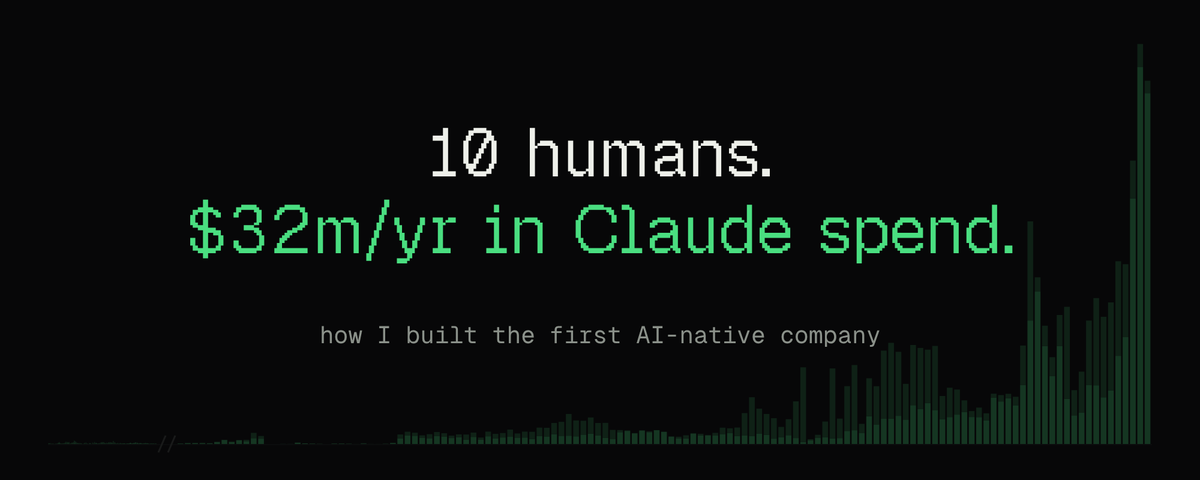
“Big companies will struggle to adopt this, because none of it works unless you close the loop. And closing the loop takes risk appetite. You have to be willing to let your agents break production.”

Joab Jackson retweeted
Less JavaScript, more Rust?
Tokio creator Carl Lerche's Topcoat shifts web app rendering to the server, aiming for faster page loads.
More here: theregister.com/devops/2026/…
theregister.com/devops/2026/…

Joab Jackson retweeted
How Google botched the jump from AngularJS to Angular 2 offers timely lessons in how not to update a software package theregister.com/devops/2026/…

“Things were a little bit rough at the time. It was a bit of a death march,” @stephenfluin told the @AllThingsOpen audience. “We had no idea when Angular 2 was going to come out, and the core fundamentals of Angular kept changing.” @TheRegister theregister.com/devops/2026/…

Joab Jackson retweeted

Many of you don't understand how serious this is, so let me break it down.
In computer science there is a famous kind of puzzle called 3-SAT. You are given a long list of yes-or-no switches and a set of rules about how they must be arranged, and you have to find a combination that satisfies every rule. The obvious way to solve it is to try every combination, but each new switch doubles the number of possibilities, so a puzzle with a few hundred switches would take longer than the age of the universe to brute force.
For decades, the smartest people in the field found clever tricks that made this a little faster, but every trick still hit the same wall: the time required kept exploding as the puzzle grew.
About 25 years ago, two computer scientists, Russell Impagliazzo and Ramamohan Paturi, working with Francis Zane, turned that wall into a formal idea.
They proposed the Exponential Time Hypothesis, which says this explosion is not a failure of human cleverness but a law of nature. No algorithm, however brilliant, will ever solve 3-SAT without the time blowing up exponentially. Nobody could prove it, but almost everyone believed it, and it became one of the foundations of modern computer science.
Researchers used it as a measuring stick. If you could show that solving some other problem quickly would also crack 3-SAT quickly, you had shown that problem was hopelessly hard too. Hundreds of papers, across scheduling, graphs, logic and much more, rest on this one assumption.
Now an internal AI model at OpenAI claims to have broken it. It says it found an algorithm that solves these puzzles meaningfully faster than the hypothesis allows, and it has checked the proof in a computer verification system called Lean.
And here is the remarkable part: the very people who proposed the hypothesis, Impagliazzo and Paturi, along with MIT's Ryan Williams, are now leading the public review of whether a machine has disproved their own idea.
So what happens next? If the disproof holds, a large part of theoretical computer science has to be revisited.
Every result that said "this problem cannot be solved faster, assuming ETH" loses its foundation, and researchers will have to work out which of those walls were real and which were simply where we stopped looking. It does not mean everything becomes easy. The new algorithm is still slow in absolute terms and this is not the famous P versus NP problem being solved.
But it means our map of what is possible was wrong in a place we were very confident about, and it was an AI that redrew it. If the disproof fails, the hypothesis survives and the field breathes out, but we will still have watched an AI produce serious, checkable work on one of the deepest questions in the discipline, closely enough that the founders of the idea had to take it seriously. Either way, something has shifted.

Well, I'm not going to worry about my outdated PHP then.... arstechnica.com/security/202…

Joab Jackson retweeted
Stop burning $165K on AI rewrites; Jac is meant to "gobble up" your polyglot stack theregister.com/devops/2026/…
