Jason Major retweeted
BIG NEWS! We have a whole new look at Dimorphos, the first asteroid humans have ever moved 👀☄️
@ESA_Hera mission has captured Dimorphos completing a full orbit around its larger companion, Didymos. Look closely and you will see the impact site come into view, and Dimorphos disappear into Didymos’s shadow.
In 2022, @NASA's DART changed Dimorphos’s orbit by 33 minutes but couldn’t show us exactly what happened to the asteroid itself. Now Hera is there to find out.
Our first planetary defence mission is investigating the impact up close and helping us learn how asteroid deflection could one day protect Earth 🌍

ALT Side-by-side black-and-white views of the same pair of asteroids against the darkness of space. In both images, a large, irregularly shaped asteroid appears on the right and a much smaller, roughly rounded companion appears to the left. In the left-hand view, the larger asteroid appears slightly blurred, with a bright illuminated face and darker, rugged edge, while faint bright specks are visible around the two bodies. In the right-hand view, both asteroids appear sharper and more detailed, revealing the larger asteroid’s uneven, rocky surface, ridges and irregular outline. Both views are illuminated primarily from the left.
Jason Major retweeted
The ice geysers of Enceladus imaged by NASA's Cassini spacecraft on November 21, 2009 from a distance of about 11,500 km
Jason Major retweeted
A view of Saturn's second-largest moon Rhea made from images captured with Cassini using IR, green, and UV spectral filters on November 21, 2009 from a distance of about 30,000 km.
Credit: NASA/JPL-Caltech/SSI/Cassini Imaging Team/Jason Major
Jason Major retweeted
The Moon moving in front of Earth as seen by @NASA_Orion on November 21, 2022 #Artemis1
Jason Major retweeted
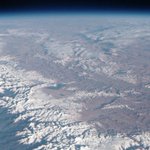
A view of Earth from NASA's Orion spacecraft after #Artemis I launch on November 16, 2022
Jason Major retweeted
Hard to top the sheer aura of Buzz Aldrin chilling with a pipe in orbit while a slide rule floats by.
Taken by Jim Lovell 60 years ago TODAY during NASA’s Gemini XII mission (14th Nov 1966).
The 2-meter-high L-band boom antenna on the Agena Target Vehicle is visible in the background.
Jason Major retweeted
POV: You are landing back on Earth after a ten-day mission flying around the Moon.
Jason Major retweeted
A comparison of our time lapse shots of a small aurora and a night orbit to real time footage that isn’t sped up. Though it looks a lot slower, we are really going fast. 17500 mph fast.
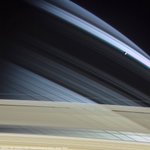
Mimas in front of Saturn, captured with Cassini by the Cassini Imaging Team 22 years ago today on November 7, 2004. The dark bands are the shadows of Saturn's rings on the planet's northern hemisphere, which had a blue tint during its late winter season.
Jason Major retweeted
Auroras pulsing intensely through this orbital timelapse. Natural light shows! If you look closely, wisps of the higher altitude red auroras briefly appear within the sea of green before fading away, like sprites from a thunderstorm. Watching them never gets old!
Jason Major retweeted
Curiosity didn’t kill the cat, it helped NASA capture it 🐱
@NASAHubble & @NASAWebb peeked at the Cat’s Head Nebula. Despite its demure appearance, the star-forming region was shaped by shockwaves from nearby stars in the Carina Nebula.
See the pictures: go.nasa.gov/4yVsFJX
Jason Major retweeted
NASA says the Swift Observatory reentered at 7:39 am EST this morning (Nov 4) "over the North Sumatra region of Indonesia, at approximately 3.4 degrees north latitude and 98.6 degrees east longitude." science.nasa.gov/blogs/swift…
Jason Major retweeted
Seen through the Japanese module window: The newly installed solar arrays are rollin’ as they provide 45% more power than previously. We are using that power to perform science, manufacture pharmaceuticals, and pave the way to the moon and, eventually, Mars.
Jason Major retweeted
Here's Saturn's second-largest moon Rhea peeking from beyond the limb (and through the upper atmosphere) of larger moon Titan, imaged by Cassini on October 27, 2009. #OTD Color data applied from lower-resolution observations taken a couple weeks earlier.
Jason Major retweeted
On its way to Jupiter, the European JUICE mission recently flew by the Earth & Moon, viewing them as we would explore another planetary system.
It's fun to step back and think how strange we'd seem if studied up close for the first time.
dlr.de/en/latest/news/2026/s…
Jason Major retweeted
A view of the 890ºF surface of Venus. This is a view made from monochrome image data captured by the Soviet Venera 9 lander on October 22, 1975, reprojected to a flat horizon format by @tsplanets with color added using data from later Venera images processed by @DonaldM38768041