

Dairy farmer & cat wrangler. Born again Folkie. Mother of @JRfromStrickley and other Strickley family. Transcriber of daily Tweets from @1940atStrickley
Joined October 2011
- Tweets15.9K
- Following572
- Followers585
- Likes24.4K





Kathleen Robinson retweeted

Tim at Penrith wanted to tell you about Strickley Dairy Milk which has just landed in store!
Made with milk from Shorthorn Cows in the Lake District, Strickley Dairy use regenerative farming practices to support the environment and biodiversity 🐄

Kathleen Robinson retweeted
Find yourself a partner who messages before you come in for supper to ask if you’d like to go looking for woodcock with the night-vision scope…
*no woodcock, but roe deer, hare, rabbit and then swans and moorhen on the pond

Kathleen Robinson retweeted
Perfect weather for a Boxing Day walk up The Helm which backs onto our land. A superb view of our farm and the south east Westmorland farmed landscape 💚
Please excuse the background whining, Ronnie was getting bored with the sitting still 😆
Kathleen Robinson retweeted
If you have any money left after today’s budget, you may like to book on our next hedgelaying course here at Strickley.
10th Jan 2026
A great day, with fabulous homemade lunch, plus tea & cakes!
Perfect for a Christmas present!!
Link here 👇
visitmyfarm.com/online-store

An excellent hedgelaying training day here at Strickley, 10 folks from different backgrounds learning how to traditionally manage hedges.
Claire & I enjoyed sharing our love for hedges and Michelle’s lunch was amazing!
Next course 10th Jan
BOOK HERE!
visitmyfarm.com/online-store


Kathleen Robinson retweeted
An excellent hedgelaying training day here at Strickley, 10 folks from different backgrounds learning how to traditionally manage hedges.
Claire & I enjoyed sharing our love for hedges and Michelle’s lunch was amazing!
Next course 10th Jan
BOOK HERE!
visitmyfarm.com/online-store
Kathleen Robinson retweeted
Three generations hedgelaying here today.
It’s not fancy, but with the size of the stuff we are ligging it’s not surprising.
Farmers just doing what needs doing, despite the best efforts of multiple governments.
Tomorrow’s budget may well spell the end for many farms like ours.


Kathleen Robinson retweeted

“Scruffy edges are now cool." 🫐🌳
Cumbrian dairy farmer and FG columnist @JRfromStrickley explains why a new generation is bringing hedgelaying back to the forefront.
Plus, he discusses how his youngstock and winter housing plans are shaping up on the farm. 🐮
READ MORE: ow.ly/OFAT50Xsz8Z

Kathleen Robinson retweeted

What’s happening on the River Brathay, which flows into Windermere?
Yes, you do get natural foam in rivers — but the scale of this, especially with the grey scum on the water’s surface, seems to be something different.
Hopefully EA attends and samples. I’ve got a sample in the back of my car if anyone wants it.
This was taken yesterday morning before the storm.
savewindermere.com
Kathleen Robinson retweeted
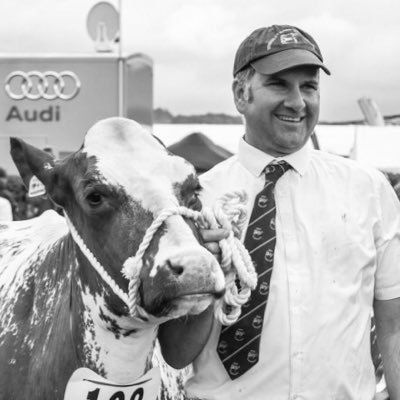
We’ve got the photo back from the Show 😊
Ladies and gentlemen..
The Westmorland Show dairy interbreed champion 2025
Strickley Strawberry 21st 🏆
Isn’t she a beauty !

Kathleen Robinson retweeted

25 September 1661
By coach with Sir W. Pen to Covent Garden….
Hence, much against my nature and will, yet such is the power of the Devil over me I could not refuse it,* to the Theatre, and saw “The Merry Wives of Windsor,” ill done. And that ended, with Sir W. Pen and Sir G. More to the tavern, and so home with him by coach, and after supper to prayers and to bed. In full quiet of mind as to thought, though full of business, blessed be God.
King's House (Theatre Royal, Vere St)
Admiral William Penn & Sir George Ayscue
*He attributes his attendance to an irresistible urge (“the power of the Devil”), suggesting it goes against a personal resolution, possibly to avoid the theatre without his wife, Elizabeth, or to curb his frequent theatre going . It‘s also worth noting that in the Restoration period, theatre was a popular but morally debated pastime.
King's House (Theatre Royal, Vere St)
Merry Wives of Windsor (William Shakespeare)
Henry Fuseli: "Falstaff in the Washbasket", 1792:
In this scene, Falstaff, hoping to seduce Mistress Ford, is tricked by her and Mistress Page into hiding in a filthy laundry basket to avoid the jealous Master Ford. The wives arrange for the basket, with Falstaff inside, to be dumped into the river. Though humiliated, Falstaff's ego remains intact, and he persists in pursuing the wives for sex, money, and potential blackmail, believing they are merely playing coy.

Kathleen Robinson retweeted
26 September 1661
At the office all the morning, so dined at home, and then abroad with my wife by coach to the Theatre to shew her “King and no King,” it being very well done. And so by coach, though hard to get it, being rainy, home. So to my chamber to write letters and the journal for these six last days past.
King's House (Theatre Royal, Vere St)
A King and No King (Francis Beaumont and John Fletcher): 1619
A tragicomedy by Beaumont and Fletcher, is a highly praised work exploring royal intemperance in an absolute monarchy. It was often cited in mid-17th-century polemics regarding King Charles I’s predicament.


Kathleen Robinson retweeted
Friday 27 September 1661
By coach to Whitehall with my wife (where she went to see Mrs. Pierce, who was this day churched, her month of childbed being out). I went to Mr. Montagu and other businesses, and at noon met my wife at the Wardrobe; and there dined, where we found Captain Country (my little Captain that I loved, who carried me to the Sound), come with some grapes and millons from my Lord at Lisbon, the first that ever I saw any, and my wife and I eat some, and took some home; but the grapes are rare things….
Here we staid and supped too, and, after my wife had put up some of the grapes in a basket for to be sent to the King, we took coach and home, where we found a hampire of millons sent to me also.
Baltic ("The Sound")
Melons (“millions”)
Hampire is large basket or container
The arrival of grapes and melons from Lisbon is significant, as these were considered luxury items in 1661 England. Sam notes that these are the “first that ever I saw,” emphasizing their rarity and the novelty of imported goods. The global trade networks of the time, particularly with Portugal, are evident here, as is the excitement surrounding exotic produce.
The Wardrobe, a government office responsible for royal furnishings, was a hub of social and administrative activity, reflecting Sam’s involvement in both spheres.
Churching of women
“In Christian tradition the Churching of Women is the ceremony wherein a blessing is given to mothers after recovery from childbirth. The ceremony includes thanksgiving for the woman's survival of childbirth, and is performed even when the child is stillborn, or has died unbaptized.” Wikipedia
“God, we praise Thee for Thy great mercy shown to this mother and her child, and humbly beseech Thee to keep them always in Thy gracious care.”
1918 liturgy of The Lutheran Church—Missouri Synod
Presentation in the Temple, a representation of the presentation of Jesus at the Temple upon which the churching of women is based. (Hans Memling, 1470, Museo del Prado. Madrid). Wikipedia

Kathleen Robinson retweeted
29 September 1661
(Lord’s day). To church in the morning, and so to dinner, and Sir W. Pen and daughter, and Mrs. Poole, his kinswoman, Captain Poole’swife, came by appointment to dinner with us, and a good dinner we had for them, and were very merry, and so to church again, and then to Sir W. Pen’s and there supped, where his brother, a traveller, and one that speaks Spanish very well, and a merry man, supped with us, and what at dinner and supper I drink I know not how, of my own accord, so much wine, that I was even almost foxed, and my head aked all night; so home and to bed, without prayers, which I never did yet, since I came to the house, of a Sunday night: I being now so out of order that I durst not read prayers, for fear of being perceived by my servants in what case I was. So to bed.
Admiral William Penn, Margaret Lowther (b. Penn), Capt. Jonas Poole, Capt. George Penn
St Olave, Hart Street
“The church is named after Saint Olave. At the 1014 Battle of London Bridge between the Danish army and the English King Ethelred, known to history as ‘The Unready’; Olav supported the Christian king of England in an attempt to regain his throne from the pagan Danes.… Upon returning to Norway, Olaf is known for bringing Christianity there; he was canonised after his death in 1030 and became the patron saint of Norway became known as its “Perpetual King” Our church on Hart Street could well have been built on the site of the battle.” St. Olave website

Kathleen Robinson retweeted
30 September 1661
This morning up by moon-shine, at 5 o’clock, to White Hall …
I went into King Street to the Red Lyon to drink my morning draft, and there I heard of a fray between the two Embassadors of Spain and France; and that, this day, being the day of the entrance of an Embassador from Sweden, they intended to fight for the precedence!*
Our King, I heard, ordered that no Englishman should meddle in the business …
in Cheapside hear that the Spanish hath got the best of it, and killed three of the French coach-horses and several men, and is gone through the City next to our King’s coach; at which, it is strange to see how all the City did rejoice. And indeed we do naturally all love the Spanish, and hate the French.
I saw the Spanish coach go, with fifty drawn swords at least to guard it, and our soldiers shouting for joy. And so I followed the coach, and then met it at York House, where the embassador lies; and there it went in with great state. So then I went to the French house, where I observe still, that there is no men in the world of a more insolent spirit where they do well, nor before they begin a matter, and more abject if they do miscarry, than these people are; for they all look like dead men, and not a word among them, but shake their heads.
The truth is, the Spaniards were not only observed to fight most desperately, but also they did outwitt them; first in lining their own harness with chains of iron that they could not be cut, then in setting their coach in the most advantageous place, and to appoint men to guard every one of their horses, and others for to guard the coach, and others the coachmen. And, above all, in setting upon the French horses and killing them, for by that means the French were not able to stir.
There were several men slain of the French, and one or two of the Spaniards, and one Englishman by a bullet. Which is very observable, the French were at least four to one in number, and had near 100 case of pistols among them, and the Spaniards had not one gun among them; which is for their honour for ever, and the others’ disgrace.
*The conflict between the ambassadors of Spain and France, centered on the issue of precedence—a matter of diplomatic protocol determining which ambassador held higher status in ceremonial contexts. Both the French ambassador, Godefroy, Comte d'Estrades, and the Spanish ambassador, Baron de Watteville, sought the honored position immediately behind King Charles II's coach in the procession, as this symbolized superior diplomatic status. This procession occurred because the Swedish ambassador, was making his formal public entry into London to present his credentials to King Charles II. Such entries were significant diplomatic events in 17th-century Europe, marked by elaborate processions
Precedence was a serious issue in 17th-century European diplomacy, reflecting national pride and power dynamics. Both nations were vying for influence at the English court, particularly after the restoration of Charles II in 1660. The Peace of the Pyrenees (1659) had recently ended a major war between them.
This was known historically as the Affair of the Spanish Ambassador’s Carriage. Louis XIV’s diplomatic pressure forced Charles II to issue a formal apology and grant France precedence in future ceremonies. This outcome humiliated Spain and strengthened France’s influence, foreshadowing England’s alignment with France in the secret Treaty of Dover (1670). It almost led to a new Franco-Spanish war.
Godefroi, Comte d'Estrades, 17th century: In 1667 he negotiated the Treaty of Breda with the king of Denmark, and in 1678 the Treaty of Nijmwegen, which ended the war with Holland. Portrait of Charles de Watteville, painted in Italy 1637–40: After his return from London, he was punished and held prisoner in the castle of Santorcaz, not recovering his role at Court until the death of Philip IV, in 1665.


Kathleen Robinson retweeted
Thursday 25 September 1662
Up betimes and to my workmen, and then to the office, where we sat all the morning. So home to dinner alone and then to my workmen till night, and so to my office till bedtime, and so after supper to my lodgings and to bed.
This evening I sat awhile at Sir W. Batten’s with Sir J. Minnes, &c., where he told us among many other things how in Portugal they scorn to make a seat for a house of office (privy or outhouse), but they do shit all in pots and so empty them in the river.*
Sir William Batten & Sir John Mennes (Comptroller of the Navy)
*Hispania encompassed Portugal during Roman and Visigothic times. Portugal emerged as a distinct kingdom only in AD 1139 under Afonso I.
The Romans constructed sophisticated public toilets, like those in Pompeii, connected to aqueduct-fed sewer systems such as the Cloaca Maxima (built around 600 BC). The Romans were also master engineers, constructing aqueducts like the Aqueduct of Segovia (AD 50) to deliver water across Hispania using arches, concrete, and precise gradients. These systems, detailed by Frontinus in De Aquaeductu (AD 97), supported urban life with millions of cubic meters daily. Maintained by a skilled workforce, they declined after Rome’s fall (AD 476) due to neglect, setting the stage for later deterioration under Visigothic (Germanic tribe) rule.
Panorama view of Aqueduct of Segovia in 2014

Kathleen Robinson retweeted
Tuesday 23 September 1662
Up betimes and with my workmen, taking some pleasure to see my work come towards an end, though I am vexed every day enough with their delay.
We met and sat all the morning, dined at home alone, and with my workmen all the afternoon, and in the evening by water and land to Deptford …
back again by coach with Sir G. Carteret and Sir W. Batten …
In our coming home Sir G. Carteret told me how in most cabaretts in France they have writ upon the walls in fair letters to be read, “Dieu te regarde,” as a good lesson to be in every man’s mind, and have also, as in Holland, their poor’s box; in both which places at the making all contracts and bargains they give so much, which they call God’s penny.
Sir George Carteret and Sir William Batten were prominent figures in the Navy Board
The phrase “Dieu te regarde” means “God is watching you.”
A cabaret was a type of public establishment.
A poor’s box, (alms box or charity box), was a receptacle placed in public spaces—such as churches, taverns, or community halls—where people could deposit money or goods to support the poor, destitute, or local charitable causes. These boxes were a common feature in Christian societies, particularly in Europe during the medieval and early modern periods, reflecting a religious and social obligation to aid the less fortunate.
The “God’s penny” likely refers to a small sum given as a token of good faith or charity during business dealings, a custom rooted in Christian values of generosity.
Poor (Mite) Box: English 1590-1610 & “Situated to the right of the south door, is the Poors Box, dating back to the reign of King Charles II.” “the Poors box owes its existence to the Social history of much of the 17th Century. In 1608, plague returned to Cheshire, killing up to 20% of the population, disrupting trade and food production seriously harming whole communities.” Middlewich Parish


Kathleen Robinson retweeted
Monday 22 September 1662
Up betimes among my workmen, hastening to get things ready against my wife’s coming … by coach to St. James’s, and there with the Duke. I did give him an account of all things past of late….
Thence I parted from them and walked to Greatorex’s, and there with him did overlook many pretty things, new inventions, and have bespoke a weather glass of him.…
So to my brother Tom’s, … Thence to Mr. Townsend …then home and to my study, and so to my lodgings and to bed.
Ralph Greatorex
Greatorex was known for crafting mathematical and scientific instruments, and Pepys’ fascination with “new inventions” aligns with his membership in the Royal Society, founded in 1660 to promote scientific inquiry.
A weather glass, or early barometer, was a cutting-edge device used to measure atmospheric pressure and predict weather. Sam’s decision to commission one underscores his enthusiasm for scientific advancements and his ability to afford such novelties.
It may have had professional utility as a status symbol or conversation starter in naval circles.
The weather glass, as an early barometer, was invented by Evangelista Torricelli, an Italian physicist and mathematician, in 1643. Torricelli, a student of Galileo Galilei, developed the first documented mercury barometer while working in Florence. “We live submerged at the bottom of an ocean of the element air, which by unquestioned experiments is known to have weight.”

Kathleen Robinson retweeted
Sunday 21 September 1662
(Lord’s day). Got up betimes and walked to St. James’s, and there to Mr. Coventry, and sat an hour with him …
Thence to the Park, where by appointment I met my brother Tom …
The Queen coming by in her coach, going to her chappell at St. James’s (the first time it hath been ready for her), I crowded after her, and I got up to the room where her closet is; and there stood and saw the fine altar, ornaments, and the fryers in their habits, and the priests come in with their fine copes and many other very fine things. I heard their musique too; which may be good, but it did not appear so to me, neither as to their manner of singing, nor was it good concord to my ears, whatever the matter was. The Queene very devout: but what pleased me best was to see my dear Lady Castlemaine, who, tho’ a Protestant, did wait upon the Queen to chappell.* By and by, after mass was done, a fryer with his cowl did rise up and preach a sermon in Portuguese; which I not understanding, did go away, and to the King’s chappell, but that was done; and so up to the Queen’s presence-chamber, where she and the King was expected to dine: but she staying at St. James’s, they were forced to remove the things to the King’s presence [chamber]; and there he dined alone, and I with Mr. Fox very finely; but I see I must not make too much of that liberty for my honour sake only, not but that I am very well received….
And so after supper broke up and home, and after putting my notes in order against to-morrow I went to bed.
St. James's Palace is one of London's oldest palaces. It is situated on Pall Mall in London.
St James's Park is the oldest of the Royal Parks of London.
Catherine of Braganza (Queen), Queen's Chapel (St James' Palace), Barbara Palmer (Countess of Castlemaine), Chapel Royal (St. James Palace)
*According to Wikipedia, “Catherine fainted when Charles's official mistress, Barbara Palmer was presented to her.” Barbara was in an open relationship with the King. Sex with the Queen: 900 Years of Vile Sovereigns, Virgins, and Viragos: Eleanor Herman
On August 15, 1662, Sam records that Catherine was “in a great passion” and threatened to return to Portugal when Charles insisted on appointing Palmer to her household.
Sir Stephen Fox
"the best creature in the world, from whom I have so much affection, I have the joy to see the King love her extremely. She is a Saint!" Queen Mother (Queen Henrietta Maria)
Catherine of Braganza departs Lisbon from the Palace Square, 23 April 1662. King Charles II and Queen Catherine of Braganza


Kathleen Robinson retweeted
Saturday 20 September 1662
Up betimes and to my office …
All this morning we sat at the office, Sir J. Minnes and I. And so dined at home, and among my workmen all the afternoon … in the evening Tom brought Mr. Lull to me, a friend of his mistress.…
We walked a good while in the garden together, and did give him (Tom) a glass of wine at my office, and so parted.
So to write letters by the post and news of this to my father concerning Tom, and so home to supper and to my lodgings and to bed….
To-night my barber sent me his man to trim me, who did live in King Street in Westminster lately, and tells me that three or four that I knew in that street, tradesmen, are lately fallen mad, and some of them dead, and the others continue mad. They live all within a door or two one of another.
The "madness" could have been caused by a physical ailment, such as lead poisoning (common in urban areas due to lead pipes or pewter utensils) or ergotism (from contaminated grain). The clustering of cases in one street could also indicate a social or psychological phenomenon, such as mass hysteria.
Dancing Plague of 1518 (also known as the Dance Epidemic of Strasbourg), a notorious outbreak of mass hysteria in Strasbourg, Alsace (then part of the Holy Roman Empire, now in France). It began on July 14, 1518, when a woman named Frau Troffea started dancing uncontrollably in the streets, and quickly spread to hundreds of others—estimates range from 50 to 400 people—who continued dancing for days without stopping. According to Ned Pennant-Rea “some of those who had witnessed her strange performance had begun to mimic her, and within days more than thirty choreomaniacs were in motion, some so monomaniacally that only death would have the power to intervene.” The episode lasted until September 1518, when it mysteriously subsided. Some believe the dancing could have been brought on by food poisoning caused by the toxic and psychoactive chemical products of ergot fungi (ergotism) which is structurally related to LSD.
Engraving by Hendrik Hondius portraying three people affected by the dancing plague. Work based on original drawing by Pieter Brueghel.

Kathleen Robinson retweeted
Thursday 18 September 1662
At the office all the morning, and at noon Sir G. Carteret, Mr. Coventry, and I by invitation to dinner to Sheriff Maynell’s, the great money-man; he, Alderman Backwell, and much noble and brave company, with the privilege of their rare discourse, which is great content to me above all other things in the world. And after a great dinner and much discourse, we arose and took leave, and home to the business of my office, where I thank God I take delight, and in the evening to my lodging and to bed.
Among other discourse, speaking concerning the great charity used in Catholic countrys, Mr. Ashburnham did tell us, that this last year, there being great want of corn in Paris,* and so a collection made for the poor, there was two pearls brought in, nobody knew from whom (till the Queen, seeing them, knew whose they were, but did not discover it), which were sold for 200,000 crownes.
Ald. Francis Maynell “the great money-man”
Ald. Edward Backwell
An English goldsmith, financier and politician.
*The "great want of corn" (grain shortage) in Paris in 1661–1662 was part of a broader European crisis exacerbated by poor harvests, wars, and economic strains. In 17th-century Europe, "corn" referred to grain (primarily wheat, barley, or rye), a staple food.
Catholic traditions of almsgiving and anonymous donations were common, and such acts by royalty underscored themes of divine favor and social responsibility.
Maria Theresa of Spain (1638–1683), Queen of France, married Louis XIV in 1660.
Her last words were: "Since I have been Queen, I have had only one happy day."
Queen Marie Thérèse and her son the Dauphin of France in Polish costumes, dated 1663 by Charles Beaubrun.
