

Systematic fixed-income infrastructure for institutions, on-chain. Backed by @superteamsg
Joined February 2026
- Tweets52
- Following71
- Followers348
- Likes359







Pinned Tweet
1. Token due diligence often starts with one simple question:
"What am I actually exposed to?"
The answer is rarely contained in the token ticker.
A single opportunity can sit on top of an underlying asset, wrapper, protocol, oracle, redemption path, governance system, custodian or other dependency.
In short, this means that risk is often always layered.
At Kurtosis, we think of risk like a Russian doll. And here’s an introduction to Kurtosis Ratings:

Kurtosis Labs retweeted

Kurtosis is one of the most interesting projects I’ve come across in a while.
Right now they’re building a ratings system that breaks down every risk factor in a vault and explains it. That matters because funds can’t invest in what they can’t explain to their committee. Clear ratings open the door for them to allocate into DeFi primitives.
They’re also backtesting Horizon, a suite of vaults that uses Pendle to deliver structured, fixed-rate yield.
If you care about what actually bridges new money and DeFi, @kurtosislab is one to watch.


Kurtosis Labs retweeted

kurtosis is the first of many research-first companies building on elfa's real-time world monitoring stack
> sharp enough to sees value in actionable entity intelligence
> energetic enough to experiment and embrace new tech quickly
this is a pleasant surprise because onchain risk ratings weren't even a use case we thought of.
the team experimented, found this helpful to help them build better onchain risk ratings and adopted it, completely unguided.
i know the world's moving too fast recently. i recommend reading this to stimulate your mind on what else is possible out there
Risk monitoring doesn't stop after a rating is published.
That's why we're integrating @elfa_ai's real-time event data into our Russian Doll Ratings.
Connecting emerging market developments and hidden risks directly to the positions and dependencies they affect.
Big thanks to the @elfa_ai team for the feature, and for helping us build towards a smarter, 24/7 risk infrastructure 🐧🫶
Excited to share that the Kurtosis team (@0x_Jade_, @leptokurtic_kai) took 2nd place in the General Track at @arbitrum Founder House!
And @leptokurtic_kai somehow managed to bring our legendary Kurtosis penguin pitch to the stage yet again.
A great few days with @aditichoprax, @0xBenjamintan, @Swagtimus, @0xYudhishthra, @themetalboyrick, @vibegrower, and many fellow builders who've been part of our journey.
We're only just getting started.
> Building the world's best ratings in DeFi.


First up: General Track.
From RWAs to consumer products, the winning teams showcased a range of ideas pushing the boundaries of what’s possible with onchain products.
🥇 1st Place ($60k): @atoma_fi - Market-neutral RWA yield layer for tokenized stock perps on Arbitrum and Robinhood Chain
🥈 2nd Place ($40k): @KurtosisLabs - Layer-by-layer risk ratings for onchain yield positions
🥉 3rd Place ($20k): shared by @okcontract who is building a self-custodial control layer protecting onchain operations from internal and external threats and WageFlow who is building a programmable settlement and liquidity network for wage-linked finance.

Kurtosis Labs retweeted

Holiday ❌ Work ✅
Went to KL to recharge after a one-month sprint. Ended up pitching at the @Superscrypt KL20 demo day instead.
Huge shoutout to @leptokurtic_kai for absolutely nailing the Kurtosis pitch.
Thank you @SuperteamMY @tuakdotsol @hanstmy @semiii for the opportunity.
NOOT NOOT 🐧🐧🐧🎉🎉🎉


Our @colosseum Frontier teams are taking the stage at Demo Day at KL20 today and @cradlefund Live Summit on Nov 4.
Ten teams pitch and demo, then @Superscrypt breaks down why they back Malaysian founders, what they look for in a team, and how to actually raise in Web3. Global coverage, and the whole of Malaysia’s innovation economy in one room. Show up for our own.
Presenting: @Hexofun @PAYtienceAPP @raptor_trade @velloagents @GENPowered @NextRare_cards @fractionaxapp @canopydex @senimatik_art @rarible

Kurtosis Labs retweeted
on a deeper note, 3 themes I observed from this week:
1/ Institutional adoption means a greater emphasis on regulations.
> speed and TPS for L1s still matter greatly, but security & regulations are going to be the key selling points to differentiate the winning chain.
> projects that aren’t regulated will find it increasingly hard to operate in this industry thats maturing so fast.
2/ The trend forward seems to be neobanks, DEXs (or just hyperliquid), stablecoins AND yes, tokenization.
> apart from all the rando booths that are in these categories, they seem to be the most common topics discussed at all the panel discussions
> not sure if those talks are just there to suit the narrative, but it seems to me at least, that these sectors have real traction, and have the most potential for institutions to back.
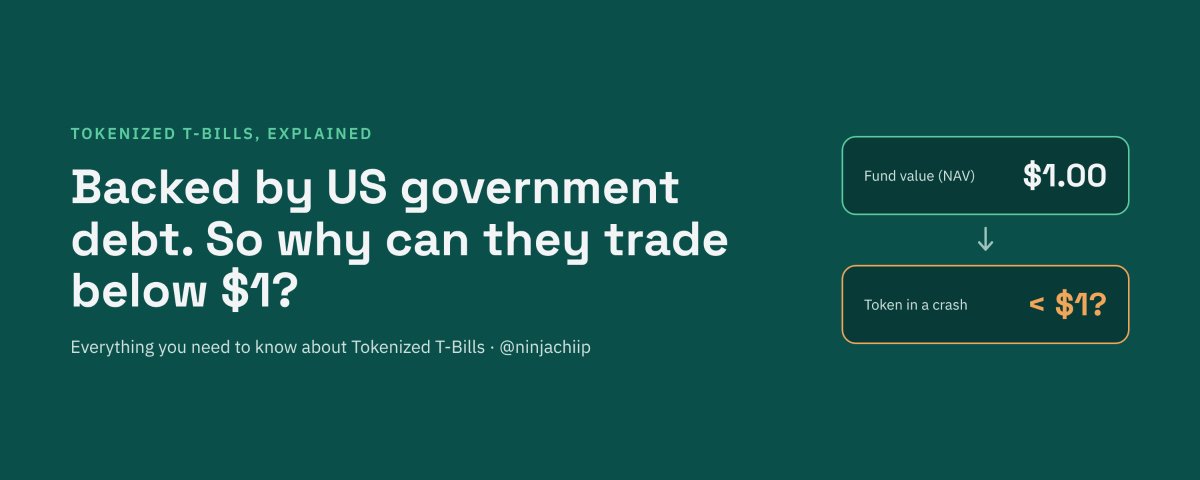
3/ Tokenization is the biggest buzzword and its hyped up too much.
> I’m a big believer in RWAs & tokenizing them, but the truth is only a few have found PMF, and likely will continue dominating
> MMFs, T-bills, and fixed income stuff will likely continue dominating for a loooooong time
> for everything else, liquidity is tough and to truly take off, these assets will need to be novel and have use cases like collateral to truly make sense
lmk ur thoughts if any


Kurtosis Labs retweeted

Straight after TOKEN2049, our @KurtosisLabs Product Lead @0x_Jade_ and I somehow ended up in front of a whiteboard at 1:30am.
One of us had bought a whiteboard for home, so naturally we went over and started mapping out our plans for the next few weeks (and months).
This is why I love sniping ex-founders.
Jade is ridiculously good at taking a bunch of messy ideas and turning them into a coherent system.
That's the calibre of talent you want from a Product Lead !

Same underlying asset. Very different risk.
Two investors allocate to the same asset. One holds it directly. The other earns yield through a wrapper, lending market, PT, or vault.
The underlying exposure looks similar, but the position isn’t.
Redemption may follow a different path. Liquidity may come from a different market. And new counterparties and protocols now sit between the investor and the asset. If any one of them fails, getting capital back depends on a very different process.
A risk assessment that stops at the underlying asset is incomplete.
Before allocating, ask:
> How is the asset actually held?
> Where does the yield come from?
> What does the position depend on?
> How does redemption work under stress?
Those answers should be in hand before the position goes up for approval.
That's why Kurtosis rates the position, not just the token.
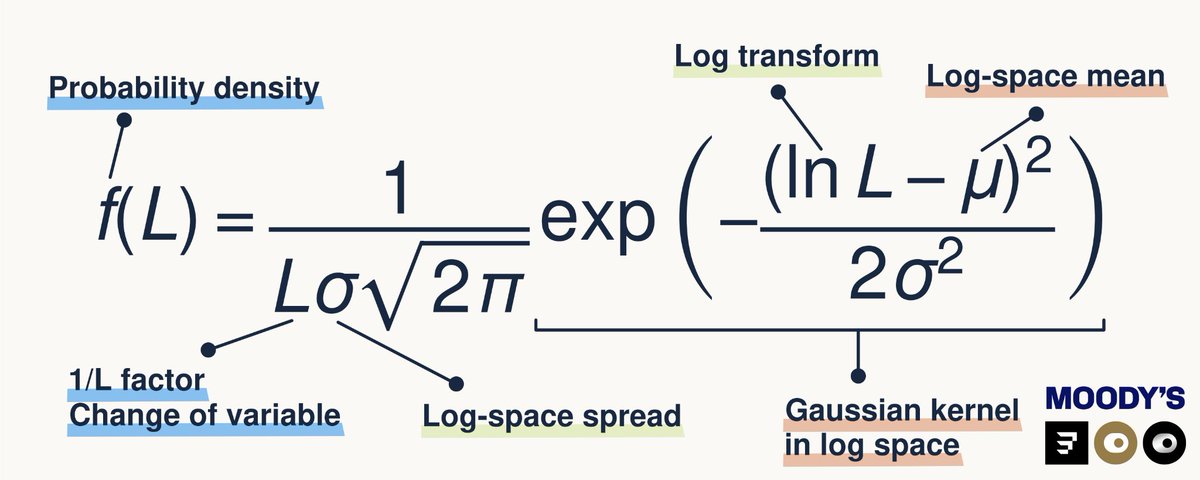
Our Russian Doll methodology works through each layer, from the underlying asset to the wrapper, redemption path, and counterparties, before a rating is assigned.

The biggest risk isn’t always in the smart contract.
A protocol can be audited, the code can look sound, and there can still be important risks sitting elsewhere in the position.
For example:
> Who has admin permissions, and what can they change?
> What happens to liquidity when you actually need to exit?
> Does redemption depend on an issuer, custodian or other counterparty?
--------------------------------------------
These questions matter, because the outcome of an investment depends on more than whether the contract behaves as intended.
A risk assessment has to look at the full path your capital relies on.
That includes governance, liquidity, redemption, counterparties, and any other systems that can affect whether capital can be recovered as expected.
Hence, an audit gives us valuable evidence, but shouldn’t be the end of the diligence process.
So before you allocate capital, remember to ask:
What else does this position depend on?

1. If risk had a physical form, what would it look like?
At Kurtosis, we think it would look like a Russian Doll.
An onchain asset can look simple from the outside.
Open it up, and you may find wrappers, protocols, liquidity, counterparties and redemption risk.
But why does that matter?

5. That is the core idea behind Kurtosis Ratings.
Open the Russian Doll.
Follow the position layer by layer until the important risks, dependencies and redemption paths are clear.
Because understanding what you own starts with understanding everything it depends on.
1
2
33
Learn more about our approach to onchain fixed-income risk assessment at our website.
Link in bio.

1. If risk had a physical form, what would it look like?
At Kurtosis, we think it would look like a Russian Doll.
An onchain asset can look simple from the outside.
Open it up, and you may find wrappers, protocols, liquidity, counterparties and redemption risk.
But why does that matter?
2
31
To the analysts out there, you can probably agree with this:
The hardest part of risk research isn’t finding risks.
Spend enough time researching an onchain asset and the list of risks gets long quickly:
> Smart contracts, liquidity, oracles, governance, counterparties, redemption, custody...
Instead, the harder part is deciding which risks deserve weight in the investment decision.
That means asking which risks could:
> materially affect the position?
> prevent or delay redemption?
> change the size of the allocation, or stop it altogether?
That distinction matters.
Because an investment team shouldn’t treat every conceivable risk equally.
It needs to know which risks deserve attention, which ones should influence sizing, and which ones could change the allocation decision entirely.
Ultimately, good risk assessment comes down to judgment:
knowing which risks deserve weight when capital is on the line.

1. A seemingly simple yield position can depend on far more than just the asset itself.
Say you deposit USDC and receive a yield-bearing asset showing 9% APY.
At first glance, the trade looks straightforward. Then you follow where the yield actually comes from.

5. That is the logic behind our Russian Doll approach to risk.
> Start with what the investor actually owns.
> Follow the structure layer by layer, until the important dependencies, liquidity, redemption paths and counterparties are clear.
So, as you can see… a 9% yield is easy to spot.
But the actual work is in understanding everything that has to go right, in order for the position to perform as expected.
1
2
27
6. Learn more about our approach to onchain fixed-income risk assessment at our website.
Link in bio.

1. A seemingly simple yield position can depend on far more than just the asset itself.
Say you deposit USDC and receive a yield-bearing asset showing 9% APY.
At first glance, the trade looks straightforward. Then you follow where the yield actually comes from.
2
28