

Light Stalking is all about beautiful photography. Free photography presets and blueprints here - https://xitter.gq/t.co/ibGMnod8Dp
Joined March 2009
- Tweets40.2K
- Following6.3K
- Followers338K
- Likes2.9K


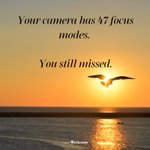


Photography is spending years learning technical control so you can eventually make something look effortless.


One of the strangest things photographers do is pack up immediately after sunset.
They spend two hours driving to a location.
Forty minutes setting up.
Twenty minutes complaining about someone standing in their composition.
Then the sun disappears and they leave.
Meanwhile, the sky is still changing, the colours are becoming subtler, and the blue hour is just getting started.
Sometimes the best photograph happens after everyone else has gone home.
Which is convenient, because they've usually taken their tripods with them.
You don't need to discover your unique photographic style before you start making photographs.
Photograph landscapes. Try portraits. Experiment with black and white. Make something abstract. Copy a composition you admire and figure out why it works.
Eventually, you'll notice certain subjects and approaches keep attracting you.
That's probably the beginning of a style.
It develops through making photographs.
Not through spending three weeks choosing a consistent colour palette for your Instagram grid.
A slightly uncomfortable thought for photographers.
Some of the most important photographs you'll ever take won't be technically impressive.
They'll be pictures of your kids being ridiculous. Your parents laughing. Your friends around a table. The dog doing something stupid.
The light might be terrible.
The composition might be worse.
Twenty years from now, nobody will care.
It's entirely possible that your most valuable photograph will be the one you almost deleted because the ISO was too high.
Photographers have developed a remarkable ability to complain about the weather.
Sunny? The light is too harsh.
Cloudy? Not enough contrast.
Rainy? The equipment might get wet.
Windy? The tripod keeps moving.
Foggy? Can't see anything.
Then we spend six months complaining that we haven't taken any interesting photographs.
At some point, the weather stops being the problem.
Unfortunately, that leaves us with a rather uncomfortable alternative explanation.
Before taking a photograph, spend five seconds looking at everything that ISN'T your subject.
The telegraph pole growing out of someone's head.
The bright plastic bag in the corner.
The mysterious elbow entering from the left.
The tree that appears to be attacking your model.
Most composition problems aren't particularly complicated.
They're just things we were too excited about the subject to notice.
Photography is partly the art of seeing.
And partly the art of noticing the bin.
Taking 400 photographs of the same subject does not necessarily improve your chances of getting a good one.
Sometimes it just means you have 400 photographs to look through when you get home.
Try making ten deliberate photographs instead.
Change the composition. Watch the light. Consider the background. Wait for the right moment.
You'll probably learn more.
And your Lightroom catalogue might finally stop resembling an evidence locker.
There comes a moment in every photographer's editing career when they discover the Dehaze slider.
For approximately three weeks, every landscape looks like the atmosphere has been removed by industrial machinery.
The clouds become threatening. The mountains become aggressive. Even a photograph of a duck looks like it's announcing the apocalypse.
Eventually, you discover restraint.
It's one of the most useful editing techniques.
And Adobe has inexplicably refused to give it a slider.


Golden hour is wonderful.
Unfortunately, the internet has convinced half the photography community that the other 22 hours of the day are a technical malfunction.
Overcast light is beautiful for portraits. Midday shadows make wonderful graphic compositions. Rain produces reflections. Fog simplifies backgrounds.
Every kind of light has something to offer.
Admittedly, some of it requires considerably more effort than pointing your camera at a sunset and collecting compliments.