

We advance science and technology to benefit humanity.
Joined February 2009
- Tweets10.2K
- Following1.8K
- Followers556K
- Likes5.8K




AI agents are writing more code. How can developers ensure that code is correct?
Microsoft Research’s Proof-Driven Development (PDD) Kit explores a more rigorous approach: it translates a developer’s intent into a formal specification, then uses formal verification to prove that generated code meets it.
PDD Kit works with Verus for Rust and is integrated with @GitHubNext’s Chopin, bringing formal methods into an AI-assisted development workflow for teams.
See the work in action at @github Universe, Oct. 28–29, 2026.
Join @GitHubUniverse Oct 28–29 in SF or online. Explore AI, security, and open source with hands-on sessions, product updates, and devs from around the world. msft.it/6015aa5OS

For decades, a key question about the challenges of high-dimensional computation resisted proof. New research resolves the KLS conjecture, removing a major barrier to understanding the efficiency of randomized algorithms used throughout science and computing.
msft.it/6011aar01
What keeps you hopeful when the problems you're working to solve feel overwhelming?
For Microsoft Research's Chris White, it's knowing there's something he can do.
Catch the latest episode of the Microsoft Research Podcast. msft.it/6014av214
Last week at the OCP Global Summit, @MediaTek demoed a live MicroLED optical link in a standard pluggable form factor, built on technology developed at Microsoft Research: inexpensive LEDs instead of copper or lasers to send many parallel streams of data at low power. This is a meaningful next step toward AI datacenters that are more reliable and use less power.

Co-developing the future of AI interconnects with @Microsoft. 🌐
We’ve taken our pluggable MicroLED Active Optical Cable (AOC) from concept to reality—demonstrated live at OCP 2026.
As AI scales, conventional laser-based AOCs face power and cost challenges. Our MicroLED optical engine, co-developed with @MSFTResearch and @Azure, is designed to deliver lower power, lower cost and enhanced reliability.
Together, we are building the physical foundation for the AI era.
#DataCenter #CustomSilicon #AILiveDemo

Zero-knowledge proofs can verify computing results without rerunning workloads or exposing sensitive data. Magnetar helps bring them into the mainstream with support for standard programming languages, major speed gains, and quantum-resistant security: msft.it/6016atJb6
Weather forecasts are unreliable past two weeks, leaving a crucial gap for farmers and others. Probabilistic Bias Correction improves extended forecasting, taking top honors in a global competition and showing promise for real-world use: msft.it/6013aseY9
IMAGE CREDIT: Cooperative Institute for Research in the Atmosphere at Colorado State University and the National Oceanic and Atmospheric Administration (CSU/CIRA & NOAA)
AI does better when it acknowledges it needs clarification; Improving robot performance on vision-language tasks; How we learn from AI’s failures; Improving AI tutoring; Understanding our sense of smell; More efficient KV-cache memory storage msft.it/6019aSVIP
StudentSim is a research system for evaluating and improving AI tutoring tools before they are tested with learners. It models how individuals may engage with tutors, giving feedback to improve tutor performance across subjects like chess, writing, and mathematics: msft.it/6013aS3JF
The most important AI failures may not be the obvious ones.
Microsoft Partner Research Manager Jennifer Neville explains to host Chad Atalla why “surprising failures” can reveal where human expectations about intelligence diverge from how AI systems actually work. msft.it/6017aU8r7
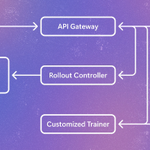
Training AI agents with reinforcement learning can be challenging because their tools, context, and decision-making are managed by complex frameworks. Agent Lightning connects existing agents to RL training, making it easier to improve them without rebuilding them.: msft.it/6019aokV1
Progress can be a winding road.
Jennifer Neville discusses spinning her research wheels, taking a multiturn path to computer science, and pushing today’s AI systems with more practical evaluations.
Catch the latest Microsoft Research Podcast episode.: msft.it/6183aW0lD
Extreme space-weather events can damage power systems on Earth and degrade GPS accuracy and satellite operations. A new machine learning system can predict where damage is likely to occur 30-60 minutes before a storm arrives: msft.it/6019aYXwh
Biology doesn't operate in silos, and neither should the AI representation of it. Quine is an early-stage research effort to create a multimodal world model of biology. By connecting insights across biological scales and modalities, Quine helps scientists computationally search a space far larger than intuition allows and prioritize hypotheses before they reach the lab. Experimental results provide important feedback, helping researchers sharpen future research directions. msft.it/6014acaRn
Since launching a year ago, the Microsoft Research Asia — Singapore lab has established a strong foundation, deepened collaboration across government, academia, and industry, and explored how frontier AI research can create real-world value: msft.it/6019acwE5

Securing data when trusted hardware is compromised; monitoring underwater recordings to protect endangered whales; Living Library enables conversations with historical figures; AI builders should listen to the young people who will ultimately use it. msft.it/6013acHnt
Robots are getting smarter, but how can their hardware match that growth? New Microsoft Research findings show that moving AI inference beyond the robot can improve task success, boost efficiency, and support more advanced physical AI workloads. msft.it/6014agepg
Custom-made molecules are advancing medicine, materials, and agriculture, but producing them is slow and expensive. A new Nature paper highlights RetroChimera, a predictive model that helps accelerate chemical synthesis, helping researchers explore a wide range of molecules.: msft.it/6012a5Ogy
A look at how coding agents behave at scale; evaluating AI models that find lymphoma lesions in PET/CT scans; understanding AI chatbot dependence; and advancing large-scale decision-making systems. Dive into the latest issue of Research Focus.: msft.it/6016abyrY
How is AI reshaping the way we work?
Join researchers, builders, and practitioners at The New Future of Work Summit on Sept. 14 for practical workshops, live demos, and research-backed insights on AI and agents.
Free and open to all. Register: msft.it/6013akn9U
