

Building @OfficialBequall - More Housing, Faster // Former CGO @MassChallenge - Helping Entrepreneurs Win
CLT | SMF | BOS | BTV
Joined November 2009
- Tweets1.4K
- Following2.2K
- Followers2.2K
- Likes947



Before comparing modular options, name the condition that would rule the approach out for this project. A comparison becomes more useful when the team knows what could actually change the decision.
🤖 Made with AI

47
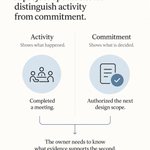
A project update should distinguish activity from commitment. Completing a meeting is activity. Authorizing the next design scope is a commitment. The owner needs to know what evidence supports the second.
🤖 Made with AI

45
Scott Bailey retweeted

I have conducted an audit of Anthropic's finances.
What I have found is so shocking that I am calling for a Congressional investigation.
Anthropic is not just seeking regulatory capture.
It has built a regulatory capture machine that cannot be turned off.
Structural financial incentives make it impossible for Anthropic -- I call it the Anthropic Network -- to turn off its own AI doom cycle.
It starts with METR.
Dario Amodei proposes "third-party evaluators" to assess the risk of Anthropic's models.
He proposes METR for this purpose.
But METR is financially dependent on the Anthropic's success -- specifically, on the explosive growth of more than $7 billion dollars in Anthropic stock.
Dustin Moskovitz invested this stock into Good Ventures Foundation, where it represents the majority of that organization's portfolio.
And GVF is the overwhelming funder of the entire Anthropic Network ecosystem.
This stock was worth $500 million early last year.
It is worth more than $7.7 billion just ~16 months later.
METR -- and all of those building a career its parent organizations -- cannot afford to disrupt that growth.
Because if Anthropic goes under, many of the organizations that fund METR go under as well.
But if Anthropic succeeds, METR and its parent organizations become more richly financed to regulate AI -- something those at METR want very much.
The "third-party evaluator" is not "third-party" at all.
The evaluator is on Anthropic's payroll.
If this were the end of it, that's bad.
But that isn't all.
The same organizations that fund METR also fund the many organizations, such as the Tarbell Center, that promote AI Doom.
The Tarbell Center publishes AI Doom articles in The Verge, Science, LA Times, The Dispatch, TIME, and others.
They are selling the problem, and then selling the solution to the problem -- from the same money pile: Anthropic's.
All of these organizations are financially dependent on the same exploding $7 billion money pile.
As Anthropic grows more and more powerful, its AI Doom Machine grows better and better financed -- louder and louder.
Meanwhile, the regulatory regime seeded in METR grows larger to solve the increasingly loud -- now hysterical -- problem of AI Doom that the Anthropic Network itself created.
From this standpoint, as Anthropic becomes more powerful, AI might be getting scarier, sure -- but the positive feedback loop also becomes more deafening -- independent of objective facts.
This itself is an objective fact.
The deafening AI Doom is part of an business model, that, as it expands, so too does the AI Doom messaging -- there is simply more money to do it.
But the problem also goes in the other direction:
If Anthropic dies, the Regulatory Regime and the AI Doom Machine are crippled or die.
Neither METR nor Tarbell nor the other organizations in the Anthropic Network can allow that to happen.
Hence, neither METR or the AI Doom Machine can be trusted to provide independent assessments of Anthropic's models or AI more broadly.
They simply are not organizations independent of Anthropic.
And Anthropic cannot detach itself from METR or Tarbell or countless other safety orgs (not shown here), either, because they drive hype for the models and the possibility of eventual regulatory capture, and Anthropic will not give that up willingly.
What's more, the people at all of these organizations are all the same ecosystem, the same community. They just shuffle between organizations.
The Anthropic Network is therefore, so long as it is successful, locked into a self-amplifying feedback loop inside an ideological monoculture.
And that feedback loop is winning.
That's what Jacob Coxon is.
China is keeping messaging tight. That is why optimism for AI is so high in China.
America has Anthropic: a massive company pushing anti-AI propaganda at a state level.
Anthropic will either create hysteria until American AI slows down and China wins, or it will create fractures throughout American society with severe political consequences.
Ironically, because of the structural financial incentives underpinning the Anthropic Network, it has become the same kind of self-amplifying virus that it fantasizes AI to become in the future -- while hiding its tracks just as carefully.
It is the mirror of the same AI virus that it hypothesizes to consume America.
Anthropic's business model, models itself after the very thing it claims to fear.
Except Anthropic's ideology infects humans, not computers.
Congress must investigate.
Evidence and Github in next post.
Then some supplementary figures.

I'm building a housing and real estate list on X. If you follow someone who should be on it, drop the handle in a reply.
xitter.gq/i/lists/20386710673051…
🤖 Made with AI

1
91

Scott Bailey retweeted

We ran Kimi K3 through 3 agent harnesses (Claude Code, Hermes, Kimi Code) on 28 identical tasks.
All 3 harnesses completed the tasks at similar success rates, but the interesting story is token efficiency: the same task cost up to 30x more tokens depending on the harness. 🧵🧵

FHA being directed to remove barriers to modular financing -- loan limits up, ADUs included, standardized code study authorized. The financing constraint on factory-built projects now has a rulemaking clock.
1
67
Section 212 -- the RESIDE Act -- funds conversion of vacant commercial and industrial buildings into housing. Former offices, retail corridors that didn't recover. The supply of viable sites just expanded.
1
45
The ROAD Act doesn't preempt local zoning -- it builds a grant system that makes reform worth doing. $200M annually, CDBG production linkages, pre-reviewed designs that enable by-right pathways. Different mechanism. More durable incentive.
1
42
The moment AI clicks for an operator is almost never the demo.
It's the first time they watch it do their own work. Three bids compared in minutes instead of a day.
Then the real question: how much of my week looks like that?

2
44
Two kinds of operators in this market right now.
One is waiting for permission to use AI. The other started on one real task and has been compounding that head start for months.
The gap isn't talent. It's who decided to begin.

3
25
The California housing package isn't six bills. It's one system.
Code, inspectors, insurance, transport, interpretation, capital. Every place factory-built projects break, there's a bill for it.
Watch Sacramento this summer.

2
39
The coordination process between factory and site is usually not a process.
It is assumptions held by different parties who have never agreed on the same handoff checklist.
That gap shows up on the schedule first.
2
46
I run these conversations as structured sessions.
One problem. One week. One result you can point to.
If you are figuring out where to start with AI in your operation, DM me.
1
40
The window to be in the first group of ops leaders building their AI practice is still open.
It will not be for long.
3
42
Most teams do not have a defined process for the factory-to-site handoff.
There are 47 distinct items in it. When no one owns the list, every party assumes someone else does.
2
37
The train-the-trainer model is the most underrated play in enterprise AI adoption.
You build your playbook. You show what works. The team asks how. That is your opening to lead the broader conversation.
You do not need buy-in before you start. You need
1
31
Three months. One ops leader who decided to go first. The output difference is visible to everyone in the building.
That is not a technology story. That is a decision story.
2
24