







Sad didn’t end up making any friends here.
Tagging @PinkPunks__ the only person who once was a friend.
I’m sorry I didn’t help with the last thing you asked and that we drifted apart. But I still want you to know that the time we spent together was one of the most incredible experiences of my life. I’m truly grateful for everything we shared and for you. I still think back on those moments sometimes and they make me smile. It was a real privilege building something amazing together side by side.
And tagging @CrossChainAlex who’s part of this story tho has already blocked me. We agreed no regrets yeah?

0x冷冷 🤡 retweeted

前几天和朋友喝茶时,他抛出了一个挺有意思的问题:“像CZ(赵长鹏)这么有钱了,为什么还要那么拼?”其实不只是CZ,细想一下,特朗普、马斯克、扎克伯格这些站在财富顶端的人也都一样。
早已实现财务自由的他们,却没有一个选择停下来。为什么?因为到了这个层次,钱多钱少可能已经不是核心驱动力,维持和扩大影响力才是他们无法松懈的关键。
不过,人毕竟不是机器,精力总有尽头。再拼命的人,也没法在有限的时间里榨取无限的财富。身体迟早会敲响警钟,提醒你该歇一歇。于是,我开始琢磨一个概念——“睡后收入”,也就是在你睡着时,资产依然能稳步增长的那种玩法。
最近发现一个项目@gridix_fi,号称是全球首个基于#Base 链的多链网格交易协议。思路就是把传统的网格交易策略和链上LP相结合,能够全天候自动低买高卖,同时还能赚取交易费。简单说,就是帮你通过网格交易从meme币的波动里榨取被动收入。界面设计得挺友好,UI/UX体验不错。
传统的流动性提供(LP)模式大家都知道:价格涨时,LP逐步卖出持仓;价格跌时,又逐步买回。听起来忙忙碌碌,但本质上是随波逐流,最终往往是“原价卖出、原价买回”,没实现真正的低买高卖,收益全靠手续费撑着。尤其在震荡行情里,这种被动策略效率不高。
而@gridix_fi的做法有点不一样。它把LP拆分成多个网格小区间,动态调整流动性:
>价格涨过某个区间时,撤出那部分流动性,锁定“高卖”利润;
>把这部分资金挪到更低的价格区间,挂上“买单”;
>等价格回落,低价买单成交,完成“低买”。
这套策略的好处显而易见:
<波动差价收益:通过网格捕捉价格波动的利润,不只靠手续费吃饭;
<手续费加成:LP身份还能叠加交易费收入,双管齐下;
<适配性强:特别适合土狗币、meme币这种波动大、交易量足、手续费高的品种。这些币可能不会随便10倍、100倍,但分分钟20%、30%的振幅可不罕见。
现实来看,这类币种长期暴涨的概率不高,但短期剧烈波动和高交易活跃度却是天然优势。如果能一边用网格吃波段收益,一边收手续费,确实比单纯持有或传统LP香多了。
想试试的话,可以去他们的测试网体验:app.gridix.fi,体验需要code,晚上抽取5个,让资产在你睡觉时也能“悄悄努力”的新路子。

📢 解锁 TAO 质押的新纪元!
在去中心化 AI 世界中,$TAO 正以超过 40 亿美元的市值占据主导地位,但质押和最大化收益一直是用户的痛点。现在,@TaiNetProtocol 打破僵局,推出首个原生 TAO 兼容的流动质押代币 (LST) —— $yTAO!
👇 了解 TaiNet 如何重新定义 TAO 质押 👇
1️⃣ 颠覆性解决方案:优化质押与流动性共存
在 Bittensor 生态中,用户必须从 52 个子网中手动选择质押,收益波动让选中“最佳”子网几乎不可能。TaiNet 的聚合器利用 AI 技术自动质押与解除质押,确保资金始终流入表现最佳的子网,同时通过 LST 保持资金流动性
2️⃣ AI 驱动的收益优化:与传统的被动质押不同,TaiNet 的 Bittensor 子网聚合器通过 AI 持续分析和调整质押策略,预测收益最高的验证者。为用户提供最大化收益的可能性的同时,还极大简化了质押流程
3️⃣ $yTAO:打开 40 亿美元市场机会
$yTAO 是首个支持原生 TAO 存款的流动质押代币,相较于仅支持 wTAO的现有解决方案,直接解锁 40 亿美元的市场潜力,为 TAO 持有者带来全新的质押方式
4️⃣ 多重收益加成,放大回报
TaiNet 的独特收入模式,50% 的铸造、赎回及收益费用返还给 $yTAO 质押者,形成复利效应,让长期质押者收益成倍增长
5️⃣ 突破 DeFi 生态,进入 50+ 区块链网络
$yTAO 不止于质押,作为 Layer Zero OFT 代币,未来将跨越 50 多个区块链网络,成为 AiFi 生态中的重要角色,真正将 TAO 带入 DeFi 世界,实现多链之间的互通与合作。
6️⃣ 领先的 TAO LST 市场地位
TaiNet 以原生 TAO 存款、AI 优化的收益策略、以及通过收入共享提供的额外收益,碾压市场上的竞争对手,目标直指 TAO LST 市场的头把交椅
🚀 tainet.finance
0x冷冷 🤡 retweeted

Bittensor $TAO VS Commune $COM 💻 - A comprehensive comparison
There are a lot of arguments on CT about which one is better, @bittensor_ the OG or @communeaidotorg, a heavily modified fork. After doing a deep dive on both, here is my objective analysis
FYI - I am invested in both and I believe in a world where both Pepsi & Coca-Cola exist, so why should it be one and not the other?
Meet the Pioneers of Blockchain-ML Integration -
Bittensor $TAO: Introduces a decentralised network specifically for machine learning, focusing on creating a global neural network. It emphasises incentivizing data sharing and model training across a distributed ledger.
Commune AI $COM: Presents a modular framework for ML, stressing on interoperability and reusability of ML models. It aims to create a more open and collaborative ML environment, breaking away from platform-centric models.
Technical Architecture: Building the Foundations
Bittensor $TAO: Built around a unique neural blockchain network. It utilizes specialized nodes (neurons) that communicate and collaborate for ML tasks, incentivized through a custom token system.
Commune AI $COM: Develops around the 'Modulus' framework, focusing on modular and interoperable ML components. This allows for greater flexibility and scalability in integrating various ML tools and environments.
Module/Node Structure: The Core Units
Bittensor $TAO: Each node in the network acts independently, contributing to the overall ML process. Nodes are rewarded based on their contribution, fostering a competitive yet cooperative ecosystem.
Commune AI $COM: Introduces Module Blocks as core units, which are highly versatile and support multiple inputs and outputs. This encourages the development of more adaptable and scalable ML models.
Data Management and Storage: Securing and Utilizing Information
Bittensor $TAO: Focuses on decentralised data storage and management, leveraging blockchain's inherent security features. This ensures data integrity and accessibility across the network.
Commune AI $COM: Offers a robust file-system for modules, enabling organized and efficient data management. This enhances the deployment and maintenance process of ML modules.
API and User Interaction: Bridging Users and Technology
Bittensor $TAO: Provides a unique API that interacts with the neural blockchain network, allowing users to access and contribute to the ML process easily.
Commune AI $COM: Features a comprehensive Module Manager API for overseeing module activities, offering a user-friendly and intuitive interface for managing ML operations.
Interoperability and Connectivity: Expanding the Network
Bittensor $TAO: Each neuron/node in the network can connect and communicate with others, forming a cohesive and dynamic ML network.
Commune AI $COM: Emphasizes seamless connectivity between modules, both locally and remotely, facilitating a more collaborative and interactive ML environment.
Security and Governance: Protecting the Ecosystem
Bittensor $TAO: Implements robust security measures to protect the integrity of the neural network and its data.
Commune AI $COM: Focuses on secure module access control and implements smart contracts to ensure compliance and governance in module interactions.
Tokenomics and Incentive Structures: Fueling Participation
Bittensor $TAO: The TAO token is central to the ecosystem, incentivising nodes for their contributions to the ML network. $TAO token plays a central role in its ecosystem. It incentivises nodes (neurons) for their contributions to the ML process, creating a token-based economy that rewards data sharing and model training. This approach encourages active participation but may also introduce challenges related to token distribution and value stability.
Commune AI $COM: While not relying on a native token for its core operations, it allows developers to monetize their modules and interactions in various ways, providing financial incentives for participation.
$COM's approach to tokenomics is less direct, as it does not rely on a native token for its core operations. However, it allows for the monetization of modules and interactions, which can provide financial incentives for developers and contributors. This approach focuses more on the utility and market value of individual modules rather than a centralized token economy.
Scalability and Future Prospects: Looking Ahead
Bittensor $TAO: Aims to scale up its neural network to create a truly global and decentralized ML ecosystem.
Commune AI $COM: Focuses on expanding its modular framework to accommodate a wider range of ML tools and applications, aiming for a more open and collaborative ML future.
Pros of Commune AI $COM:
Modular Framework: Offers great flexibility and scalability in ML development, enabling easier integration of various tools and methodologies.
Interoperability: Its focus on interoperability makes it easier to use and integrate with existing ML systems and tools.
User-Friendly: The platform is designed to be accessible to a broad audience, from beginners in ML to experts.
Efficient Data Management: The organised module file-system enhances the ease of deployment and maintenance.
Innovation-Friendly: The open and collaborative approach encourages innovation and sharing in the ML community.
Cons of Commune AI $COM:
Dependency on Community Engagement: The success of the platform heavily relies on active community participation and contribution.
Lack of Native Token Incentivisation: Without a native token system, the platform might lack a direct incentivisation mechanism for contributors.
New Market Player: Being relatively new, it may face challenges in gaining widespread adoption and trust.
Pros and Cons of Bittensor's $TAO Protocol
Pros of Bittensor $TAO:
Decentralised Neural Network: Creates a unique and innovative approach to ML, leveraging the power of a global neural network.
Token Incentivisation: The TAO token system incentivises participation and contribution, motivating developers and data scientists.
Data Security and Integrity: Utilizes blockchain's security features for data management, ensuring integrity and reliability.
Scalability: Aims to scale globally, potentially leading to a vast and powerful decentralized ML network.
Established Presence: As an earlier market entrant, it may benefit from greater recognition and trust in the crypto and ML communities.
Cons of Bittensor $TAO:
Complexity: The concept of a decentralized neural network may be complex for new users to grasp and engage with.
Competitive Environment: The token-based incentivisation could create a highly competitive environment, possibly leading to centralisation tendencies among more powerful nodes.
Resource Intensiveness: Operating a node might require significant computational resources, potentially limiting broader participation.
Conclusion: Trailblazers in Their Own Right
Bittensor $TAO and Commune AI $COM both represent significant advancements in integrating blockchain with machine learning.
While Bittensor focuses on creating a decentralised neural network incentivised through tokenomics, Commune AI emphasizes a more open, modular approach, offering flexibility and scalability in ML development. Both projects hold the potential to revolutionize how machine learning and blockchain technologies converge and interact.
Back to the analogy, where in an ideal world, both Pepsi and Coca-Cola can co exist. Excited to see how both scale and grow
0x冷冷 🤡 retweeted

just witnessed a fellow @miladymaker absolutely demolish 4 desserts by means of inhalation, only after getting through 6 appetisers, a main course and a bottle of wine. she is 110lbs. I don’t know if I’m disgusted or in fact extremely turned on. bravo milady, bravo

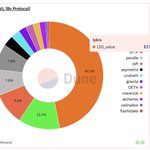
Lybra is definitely the market lead in the #LSTFi game.
@LybraFinanceLSD hold 47% of TVL among all LST projects. That's like being the Beyoncé of DeFi, slaying the competition 🧑🎤

And peUSD is for professional traders.
Trade it, use it as collateral, lend, borrow, leverage – you name it!
Wait for it, when you convert your peUSD back to eUSD, your accrued eUSD yield is STILL there waiting for you!
1
387
Who needs other projects/copy cats to solve the problems when @LybraFinanceLSD can solve them by themselves 🤔😎😎
358
Personally, I'm quite bullish on LSDFi CDP space since it can effectively reduce the liquidation risk of borrowing and increase the capital efficiency of users.
1
1
469
As for the competition among these three, it's rather intense at present - we will see who can carve out their own space in the market.
Thanks for the great write up, not biased at all.
xitter.gq/qiaoyunzi1/status/1665…

现在市面上有三种基于以太坊LST建立的稳定币协议,他们的区别是什么?
说在最前,他们的模式都是基于以太坊生息实现的。
@LybraFinanceLSD 债务生息,即你铸造了的债务会自动给你rebase奖励,以稳定币的形式给到你。
@PrismaFi 自动偿还债务,即你铸造了多少债务,协议会通过你的抵押品所产品的利息自动偿还你的债务。
@raft_fi 抵押品rebase,即债务不变,抵押品数量会随着时间增长,不对债务有所影响。
从激进程度来看,Lybra最激进,Prisma处于中位,Raft和传统超额抵押借贷区别不大。
从优势来看,Lybra用自身代币来激励流动性,后面也在推全链和eUSD的采用;Prisma虽然不清楚具体的激励模式,但是它拥有Frax、Curve、Convex的背景,想来会深度参与到Frax、Curve生态中;Raft的背景也很好,但多是做市商背景,比如Wintermute、GSR和Jump,以及领投的是Lemniscap,Lemniscap是一家很成熟的VC,之前投过Avalanche、Aurora、Kava、Liquity这些协议,应该会为Raft带来不俗的资源和合作。而Raft激励流动性的方式是为其稳定币 $R 增加一些高额挖矿奖励的LP对。
其实从其激励流动性的角度来看,就可以了解到,Lybra更像是一群DeFi Degen组了一个局——他们敏锐地察觉到LSDFi的趋势,并以其强大的执行力推出产品,并吸引了一波流动性。但是由于他们最初冷启动只能通过代币来激励流动性,因此招来了一些Fud,Fud内容大抵都是代币LP流动性无法承载代币的释放量。
不过这也是没办法的事情,换作是你会怎么做呢?
冷启动如果不激励,那玩的人就少。另外一个是eUSD没有深度流动性——这也是没办法的事情,毕竟团队由一群DeFi Degen组成,没办法迅速在Curve上建立深度的v1池子,且他们也没办法快速积累veCRV的投票权。
最终,Lybra只能通过做出一点成绩来吸引潜在合作对象的青睐,以此获得更加长远的发展,比如他们现在和 @LayerZero_Labs 有了合作。
而Prisma是由一群DeFi OG组的班子,显然在发布之初就有机会得到各类大型DeFi乐高们的支持,所以冷启动难度更低。我猜测,Prisma的代币可能会走ve的形式。就像是 @leslienomad 说的之前没找到他的Twitter是因为故意不公开不让大家找到,早期不想让别人参与。
Raft是由一群VC和做市商组的班子,资源好,比如一上来就在 @beefyfinance 上搞了高APY池子,慷他人之慨激励流动性,当然也没有自身代币下跌的风险。我猜测,Raft的代币应该更偏向于治理功能,VC和做市商们应该也能拿到更低成本的代币。
从风险角度来看,Lybra和Prisma的模式差不多,但是Prisma的自动偿还能够降低贷款人的LTV。Raft也可以,他是通过抵押品价值增长来降低LTV,不过效果没有Prisma好。Lybra的eUSD rebase需要人为手动操作还款,所以面临风险是更高的。不过我还是希望能够看到更多像Lybra这样的协议,包括在协议构想、产品执行力等方面。
我个人是很看好稳定币LSDFi这个赛道的,因为它能够有效地降低借贷的清算风险和增加用户的资本效率。至于三者的竞争在当下还是蛮激烈的,就看谁能过杀出一片天地了。


1
676