

Brief glimpses into fights, and fighters, of the 20th century; the great, the near great, the very good, the journeymen, the opponents and much more.
Joined April 2025
- Tweets12K
- Following320
- Followers728
- Likes11.5K
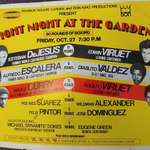

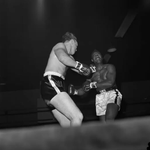




On Don King's first co-promotion with Madison Square Garden, former WBC Lightweight Titlist Esteban Dejesus wins a 10-round split decision over Edwin Viruet at the mecca of boxing on October 27, 1978.
The AP, which unofficially had it 7-3 in favor of DeJesus, would report:
"Esteban DeJesus stalked Edwin Viruet and beat him on a 10 round split decision. Viruet is a boxing master who thinks defense at all times, but he scored well with jabs and quick hooks, beating DeJesus to the punch, especially early in the fight. But DeJesus never lost his poise and kept applying pressure. He landed several good hooks to the head and was effective to the body, hurting Viruet with body punches in the 9th round."
"I think Don King had something to do with this." said a disappointed Edwin Viruet, complaining about the decision, believing DeJesus had already been promised a shot at WBC Junior Welterweight Champion Saensak Muangsurin.
Dejesus would get a shot at WBC Titlist Saoul Mamby in 1980 losing via TKO13.
Also on this card were 10 rounders between Alfredo Escalera and Julio 'Diablito' Valdez (UD10 win) and between Adolfo Viruet (UD10 win) and Bruce Curry.
----------------------------------------------------------
From the July 28, 1978 edition of The New York Times:
Don King and Garden Join to. Promote Boxing.
By Michael Katz Special to The New York Times
EASTCHESTER, N.Y., July 27 —Sarah Schwartz of Bronxville, sitting in a lounge chair on the terrace of the Lake Isle Country Club, was an unwilling witness to boxing history today when Madison Square Garden formally announced that it had entered a copromotion agreement with Don King, the man who bills himself as “the world's greatest promoter.”
However, David A. (Sonny) Werblin, president of the Madison Square Garden Corporation, and King, did not announce their first co‐promotion, which will be three or four title bouts on the same card, highlighted by Larry Holmes's first defense of the World Boxing Council heavyweight championship against Alfio Righetti of Italy. Where and when, except for “sometime in September” were still undecided.
So Mrs. Schwartz, in the midst of news Conference at a club of which Werblin is a co‐owner, continued reading her paperback novel, “The Thorn Birds.”
“They asked me if I wanted to leave,” said Mrs. Schwartz, a club member for 20 years, looking up from her book. “But I'm enjoying myself.”
A Flamboyant Conflict
No wonder. The Garden‐King agreement, in which the flamboyant promoter promised to put on monthly shows, has more intrigues and subplots than most novels.
As Mrs. Schwartz read on, King and his old enemy, Teddy Brenner, the president of boxing for Madison Square Garden, were exchanging sharp comments about each other.
Brenner declared, “there's no show going to be produced without my O.K.” King said, “Teddy Brenner will have nothing, absolutely nothing, to do with whatever I do with the Garden.”
“His ideas and my ideas conflict,” King added. “I'm for the people, Teddy doesn't like me, and he's going to do everything he can feverishly to knock me out. lie's been doing that for five years. Sonny promised me that when we say, ‘Charge up the hill,’ I don't get shot in the back.”
Werblin, whose agreement with King is “nonexclusive,” meaning the Gar. den can deal with other promoters such as King's bitter rival, Bob Arum, was asked if he thought Brenner could work with King.
“I hope he will,” said Werblin. “If he's president of Madison Square Garden boxing.”
King said he hoped his first “inhouse” co‐promotion would feature Esteban DeJesus, the former lightweight champion, against Saensak Muansurin of Thailand, the World Boxing Association junior welterweight titleholder, around Oct. 6. Brenner said he and Arum had been talking about coproducing a much bigger show, featuring Carlos Palomino, the W.B.C. welterweight champion, defending his title against Wilfredo Benitez, the No. I contender, on the same date.
In effect, then, Werblin had maneuvered the Garden, handicapped in the past by a law saying that it specifically could’ not tie up fighters indefinitely (whereas King and Arum were not so restricted), into a position in which its rivals have become its partners.
Giants Stadium Out
However, King's idea of staging his first Garden co‐promotion at the house Werblin built, Giants Stadium at the Meadowlands complex, will not happen. The main tenant of the stadium, the Giants, have their National Football League home opener against the Dallas Cowboys on Sept. 10, two days after King wanted to stage the first fights at the 76,000‐seat stadium.
King, said he now hoped to obtain Rutgers Stadium in Piscataway, N.J., which could seat perhaps 95,000 for boxing, for his first Garden “extravaganza,” or even Shea or Yankee Stadiums.
The show would feature Holmes, making about $1.5 million, against Righetti, a mediocre puncher with some boxing ability; Roberto Duran, defending his lightweight title against Termite Watkins; Alexis Arguello, defending his junior lightweight crown against Ernesto Espanano, and possibly, Eilfredo Gomez defending his bantamweight title against Samuel Serrano.
King said most of the fighters already had signed for the bouts, but the question of where and when remained. Meanwhile, King allied himself more closely to Werblin than to the Garden per se.
“I'm sb happy to be associated with him,” said King, “I shall perform even more extraordinarily than I have in the past.”
Mrs. Schwartz just turned the page.

"Jolting" Jeff Chandler makes a sucessful 6th defense of his WBA Bantamweight Championship with a 9th round TKO of Miguel Iriarte at Resorts International in Atlantic City on October 27, 1982.
From Ed Schuyler Jr. in the New London Day on Chandler-Iriarte:
Jeff Chandler won two fights in the same day - and the second victory was the more enjoyable for the WBA bantamweight champion.
Chandler's first battle on Wednesday was with the scales. He weighed in at 119 1/4 pounds that morning for his fight with Miguel Irarte of Panama and had two hours to get down to the class limit of 118. A half-hour before the deadline, he weighed in at 117 3/4 to Iriarte's 117 1/2.
The second fight lasted less than 27 minutes.
Chandler seemed dubious of Iriarte's high ranking and wasn't pleased about the WBA threats to strip him of the title if he didn't fight the Panamanian.
Chandler made Iriarte pay, peppering him with head shots and taunts and playing to the crowd before stopping the challenger at 2:20 of the ninth round of the scheduled 15-rounder at Resorts International.
"They had a clown in the ring with me, and so I clowned," said the unbeaten Chandler, who made his sixth title defense. "They put a novice in the ring with a world champion. That's not right."
"When I found out he couldn't fight... wow," said Chandler.
The 26-year-old champion took control of the fight in the third round spearing the 27-year-old challenger with with several sharp left jabs and hooks.
In the sixth, Chandler ripped a cut on the bridge of Iriarte's nose and landed seven or eight crisp head shots with either hand.
Iriarte got a respite for a little more than two minutes late in the seventh when Chandler's right glove split and had to be changed.
In the ninth, Chandler wobbled Iriarte with a right to the head and backed him up with a left hook. The champion pounded home a 10-punch barrage to the head, then after being bulled across the ring by the desperate Iriarte, landed eight more blows, climaxed by a right to the jaw.
Iriarte began to fall, but kept himself up by grabbing a strand of the ropes. However, referee Joe Cortez stopped the fight.
"I respect the judgment of the referee," said Iriarte, who also complained that Cortez let Chandler get away with butting and thumbing. Chandler felt that Cortez let Iriarte get away with butting and said it was a butt that opened a nick over his left eye.
----------------------------------------------------------
Chandler had genuine reason for his animosity towards the WBA as Iriarte, all due respect to him, didn't seem to have the resume of a genuine title contender.
The Panamanian challenger had never fought outside of his native country, in compiling a 12-1-1 record coming in, with no victories of note.
In fact, 10 of Iriarte's first 13 pro bouts were against fighters with 10 bouts or less, 9 of them with 4 or less pro fights.
He did have a decision over Rafael Pedroza, who held the WBA Super Flyweight Title for four months in 1981-82. However, Pedroza was in the midst of losing six of his final ten bouts at the time that he met Iriarte.
Iriarte woud return to Panama and lose his final two bouts after his failed challenge for Chandler's crown, a decision loss and a TKO loss, before hanging up the gloves for good.
----------------------------------------------------------
Jeff Chandler, who turned pro only four months after he had entered a boxing gym for the first time, became the first American to hold a world title at bantamweight since Manuel Ortiz 30 years earlier.
At the beginning of his career, Jeff Chandler was trained by Pat Patterson and managed by a man named Arnold Giovanetti.
Giovanetti is referenced in a 1964 Sports Illustrated article on Joey Archer as "an advisor" who got 5% of Archer's (and other fighter's) purses during his career for "just being around and helpful, and was described as "a bus lines employee who can, somehow, afford to drive a Cadillac." You make your own inferences off of that if you like but he sounds crooked as a three dollar bill to me.
In August of 1977, two months after Chandler's eighth professional fight, Giovanetti, who obviously had ties to organized crime, mysteriously disappeared. His Cadillac was later found at the Philadelphia airport, but he was never seen or heard from again. His disappearance/murder remains unsoved to this day.
After Giovanetti disappeared, Chandler asked Willie O'Neill to manage him. O'Neill declined and suggested that Chandler hire his wife, Becky O'Neill, for the job. Becky became Chandler's manager, Nick Belfiore then replaced Patterson as trainer, and Willie became assistant trainer.
In October of 1984, six months after he lost the WBA Bantamweight Championship to Richie Sandoval in his 10th title defense by a 15th-round knockout, Chandler underwent surgery to remove a traumatic cataract from his left eye.
He retired shortly afterward with a 33-2-2 (18 KO's) record.


Brooklyn's Everette Copeland (right) grimaces after taking a left from Chuck Wepner (left) on October 27, 1964 during their 8-round heavyweight bout at Sunnyside Gardens in Sunnyside, Queens, New York.
"The Bayonne Bleeder" has to settle for a draw in his third pro fight. He and Copeland will fight to another draw, this one a six-rounder, in March of 1965, at the same venue.

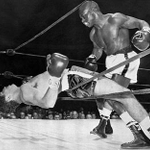
Rubin "Hurricane" Carter makes a sensational network tv debut (ABC) on October 27, 1962, knocking out the WBA's 5th-ranked middleweight contender Florentino Fernandez in the 1st round at Madison Square Garden.
Carter, who went to 13-2-0, scored two knockdowns. flooring Fernandez for the first time with a short right. Fernandez got up at the count of two and took the mandatory eight-count from referee Johnny LoBianco. Seconds later, Carter connected with a right-left-right that sent Fernandez through the ropes and onto the ring apron. He was counted out at 1:09 of the first round.
This was a huge win for Carter as Fernandez was very highly regarded.
----------------------------------------------------------
The Cuban-born Florentino Fernandez was one of that island's biggest punchers and holds the Cuban record for most consecutive knockouts (16 straight).
Fernandez was known to the Cuban community as " El Barbaro del Knock Out".
Fernandez was a big left hook artist who racked up a series of impressive victories that led to his title challenge against Gene Fullmer.
When Cuba outlawed professional boxing, Fernandez lived in exile from their communist government, in Miami Beach, Florida, where he became a fan favorite on television, and on the fight cards promoted by Chris Dundee. In most cases Fernandez either knocked out his opponents, or was in turn KO'd himself.
Fernandez, who had an amateur win over the great Luis Rodriguez, was bombed out in mere seconds by Rubin Carter but came back a few years later to knockout the then undefeated future World Light Heavyweight Champion Jose Torres. He also had a 2-2 record against Argentine slugger Rocky Rivero.
After a stunning knockout defeat to club-fighter Willie Tiger, in February of 1967, Fernandez announced his retirement.
He was working as a dishwasher and busboy when he decided to launch a comeback as a light heavyweight. Fernandez shocked the boxing world by scoring upset knockouts over Florida Middleweight Champion Jimmy Williams and highly regarded Jerry Evans.
But just when it seemed that Fernandez was on the verge of a title shot against light heavyweight titlist Bob Foster, he was stopped in the 10th round of a toe-to-toe slugfest with upstart Vernon McIntosh.
Fernandez finished 50-16-1 with 43 of his wins by KO and 10 of his 16 losses by stoppages.

Donnie Fleeman KO's a long-past-his-prime Ezzard Charles on October 27, 1958 at Memorial Auditorium in Dallas, Texas.
Sadly, for one of the all-time pound for pound greats, it's the Cincinnati Cobra's eleventh loss in twenty fights following his rematch loss to Heavyweight Champion Rocky Marciano.
Charles will, unfortunately, fight on losing two of three bouts before finally hanging up his gloves for good.
Fleeman was Muhammad Ali's fifth professional opponent on 21 Feb 1961 in Miami Beach, Florida. He sustained an injured rib and was KO'd by the then-named Cassius Clay in the sixth round of his final bout. Fleeman aslo suffered losses to Roy Harris and Pete Rademacher before facing Ali.


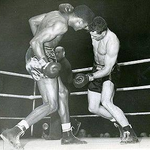
Former Middleweight Champion Rocky Graziano (right) nails Tony Janiro with a right hand on October 27, 1950 at Madison Square Garden, enroute to a 10-round unanimous decision victory.
"The Rock" wins his eleventh of twelve (11-0-1) and avenges an earlier draw with Janiro in March of that year. He'll also add on a TKO of Janiro in September of 1951 as he seeks to reclaim the 160-lbs belt.
Graziano tacks on nine more wins in a row after this win, leading to the final title shot of his career in April of 1952, in which he gets KO'd in the 3rd by Middleweight Titlist Sugar Ray Robinson after he had the champ on the deck in the same round.

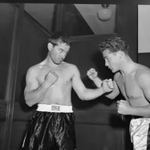
Two of today's subjects, Rocky Graziano (left) and Tony Janiro, posing at the weigh-in before their rematch (2nd of their 3 bouts) in October of 1950.
Graziano will take a 10-round UD.
The pair had previously fought to a 10-round draw on March 31, 1950.

Whitey Bimstein and the other handlers go to work on Gaby "Frenchy" Ferland following the 5th round of his bout with Johnny Greco, on October 27, 1948, at The Forum in Montreal.
Down once in both the 2nd and the 5th rounds, Bimstein won't allow his fighter out for the 6th round.
From the January 12, 1949 issue of The Ring magazine:
“Johnny Greco, Canadian welterweight champion, staged another of his dynamic, all-out displays to pummel rangy Gaby Ferland into submission in five furious rounds, his victim being unable to come out for the sixth heat. This all-local fracas, a rousing humdinger while it lasted, attracted a gate of $20,465 at the Forum, marking another profitable presentation by Match-maker Raoul Godbout.
Ferland boxed carefully during the first two rounds, jabbing with a long left and making Greco miss. However, he wasn’t moving as fast as usual and eventually paid for his cockiness, as Greco’s body punching slowed him considerably. The third round was sensational. Ferland opened up to catch Greco coming in and kept beating him to the punch. It was Ferland’s round, too, but the pace was beginning to tell. As they maneuvered at long range in the fourth Greco suddenly snapped over a right that nailed Ferland on the upper jaw. He went down like a log, but got up at nine. It was all Greco from then on. They were mixing it at close quarters a few seconds before the bell in the fifth when Ferland suddenly collapsed to the canvas. He was helped to his corner at the bell but Whitey Bimstein wouldn’t let him start out for the sixth, motioning to referee Tommy Sullivan that it was all over.”
73-22-9 (22 KO's), Gaby Ferland would fight Greco again in 1951, for the Canadian Welterweight Championship, losing on a 9th round TKO.
Ferland fought Carmen Basilio twice; to a 10-round draw in their first meeting, and a KO1 loss in an immediate rematch in 1950. He also dots the resumes of Johnny Saxton, Johnny Bratton and Bobby Dykes.

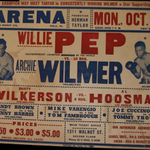
Willie Pep goes to 117-1-1 on October 27, 1947 with a 10-round majority decision over Archie Wilmer at Philadelphia Arena.
Pep fought in spurts, according to the Philadelphia Inquirer, as he was content to keep Wilmer off-balance. Wilmer became more active and courageous as the bout, forcing Pep to fight back.
Pep had survived a commercial plane crash that left him with a broken leg and two fractured vertebrae in January of 1947.
Though he miraculously returned to the ring just five months later, his surprisingly difficult struggle against Wilmer led contemporary boxing writers, including those at The New York Times, and analysts to note that he looked human and "had lost something" as a fighter.
Starting with this fight, Wilmer lost six of his final eight (1-6-1) bouts.
Archie Wilmer, 27-23-2 with 8 KO wins, went the distance with Willie Pep, Lulu Costantino and Sandy Saddler during his six-year (1943-49) career. He passed in 1974 at the age of 49.
----------------------------------------------------------
Pep won his first 62 professional fights before losing a 10-round decision to former World Lightweight Champion Sammy Angott on March 19, 1943.
He was seriously injured in that plane crash in January of 1947. The co-pilot and two passengers were killed.
Pep had a record of 134-1-1 when he lost the World Featherweight Championship to Sandy Saddler by a 4th-round knockout on October 29, 1948.
Pep defeated Saddler by a 15-round unanimous decision to regain the title on February 11, 1949. It was named The Ring Fight of the Year for 1949.
Saddler regained the title from Pep by an 8th-round RTD on September 8, 1950, and successfully defended it against Pep with a 9th-round RTD on September 26, 1951.
Their last fight was named the 6th dirtiest fight of all time by The Ring in 1997.
Willie Pep was named the greatest featherweight of the century and the fifth greatest boxer of the century by the Associated Press in 1999.
He was named the greatest featherweight of all-time by The Ring in 1994 and 2002.
And he may have the greatest divorced man line of all time. Married six times, Pep would later say:
"All my wives were great housekeepers. After every divorce, they kept the house."

Sugar Ray Robinson TKO's Lou Woods in the 9th round, on October 27, 1944, at Chicago Stadium, to run his record to 47-1.
Woods came into this fight at 27-3, having lost a split decision to Jake LaMotta in March.
It's Robinson's seventh straight win since his first pro loss, a 10-round decision to LaMotta in 1943, and incredibly, he won't get a title shot until 1946 beating Tommy Bell (in his 76th pro fight) for the Welterweight Title, vacated by Marty Servo, to go to 74-1-1.
Read this twice please:
Think about guys getting title shots in the modern era and ponder that Sugar Ray also BEAT Bell in a 10-rounder that year, Sammy Angott (twice!), Jake LaMotta (4 times!), Henry Armstrong, Jose Basora, California Jackie Wilson, Marty Servo, and Fritzie Zivic (twice!), all BEFORE getting his first title shot.
Robinson had a better resume BEFORE he won a world title title than most modern boxers have for their entire careers.
Hobert Lou "Seargeant" Woods had been an Army boxing instructor during World War II.
Woods went 45-10-0 (19 KO's) as a pro from 1941-50.
He also had a win over Tommy Bell, albeit in only Bell's 4th pro fight (Woods was then 16-0).
Woods also fought some of the best middleweights of his era including George Costner (DQ by 3), Jake LaMotta (losing a 10-round SD), Tony Zale (KO by 3) and Sugar Ray Robinson in this bout.
Woods never fought for a world title.

Sammy Angott wins a 15-round unanimous decision over Slugger White, on October 27, 1943 (the illustration is incorrect), at Gilmore Stadium in Los Angeles, California for the NBA Lightweight Title.
This bout was interrupted for one hour and seven minutes during the 4th round when the lights failed in the outdoor stadium.
White was knocked out of the ring in the 15th round and "got the boxing lesson of his life." according to the Associated Press.
----------------------------------------------------------
Sammy Angott had won the Lightweight Championship in 1940, with a decision over Davey Day, after Lou Ambers had been stripped of the title for refusing to face Day.
Angott only made three defenses of the title between 1940 and March of 1944, when he lost it on a 15-round UD to Juan Zurita, though he fought numerous non-title bouts during that span.
On November 13th of 1942, Angott had announced that he was retiring from boxing due to a broken right hand that failed to heal properly.
"My right hand's been bothering me ever since I fought Bob Montgomery in Philadelphia about two years ago," Angott said. "I've had it operated on and treated since, but it got bad after every fight."
There were rumors that Angott was forced to retire because he refused to do business with organized crime though he and his manager, Charley Jones, denied the rumors.
Angott announced his return to boxing on January 8th of 1943, saying that his hand had "healed again." and, in his first bout, he defeated Willie Pep by a ten-round unanimous decision on March 19th of 1943. Pep, the reigning World Featherweight Champion, had entered the fight with a record of 62-0.
Salvato "Sammy" Angott faced numerous titlists and highly rated contenders during his (94-29-8 with 22 KO's) career. Among the highlights were: three decisions over Bob Montgomery, and although he lost two split decisions to Williams in 1944 he would score an 6th round TKO win over Williams, then the reigning titlist, in September of 1945.
Angott also had wins over Pep, Johnny Bratton, Lenny Mancini (father of Ray), Danny Kapilow, Lew Jenkins and Davey Day.
Angott also fought a prime Sugar Ray Robinson three times; in 1941,1942 and 1946, losing all three on 10-round unanimous decisions, and his only stoppage loss in 136 bouts was a 7th round TKO loss to Beau Jack in 1946.
Angott was inducted into the International Boxing Hall of Fame in 1998.

Two future world champions battle on October 27, 1942 as Ezzard Charles (left) wins a 10-round unanimous decision over Joey Maxim at Duquesne Gardens in Pittsburgh, Pennsylvania.
Future Heavyweight Champion Charles goes to 29-2-1 while future light heavyweight titlist Maxim drops to 21-6-0. Maxim came in at 181 for this fight while Charles weighed in just over 165 lbs.
They'd rematch in Cleveland, five weeks later, with Charles winning another decision.
The number of excellent boxers that Ezzard Charles faced in just less than twelve months, in 1942, is astounding; Anton Christoforidis(LH Champion), Ken Overlin (Middleweight Champion), Billy Pryor, Kid Tunero (an all-time great we've covered here before and will get back to), Charley Burley twice in five weeks in May and June, Steve Mamakos, Booker Beckwith, Jose Basora, Mose Brown and Joey Maxim twice. Burley is considered, by many, to be the greatest boxer in the sport's history to never fight for a world title and Charles beat him twice in 1942.
That's three future world champions, and five guys that either fought for titles in the future and/or are considered among the best boxers ever in their weight classes not to fight for, or win, world titles, all in less than twelve months.
By the way, Ezzard Charles turned 20 in May of 1942.
Charles may have the best overall resume of any Heavyweight Champion in boxing history. Hell, he may have the best overall resume of any fighter in boxing history next to Ray Robinson or Harry Greb.
And it's hard to believe he's not in the top five of every single all-time P4P list on social media.

Manager Jack Kearns (left), Heavyweight Champion Jack Dempsey, and manager Bernard Descamps (right) watch on October 27, 1920 as Light Heavyweight Champion (he'd won the title on October 12th) Georges Carpemtier signs a contract to challenge for the Heavyweight Title held by 'The Manassa Mauler'
On November 4th of 1919, Dempsey had signed a contract with promoter Dominick Tortorich to fight British Heavyweight Champion Joe Beckett in a 20-round fight in New Orleans (LA) on March 17, 1920. However, it was contingent on Beckett defeating Carpentier on December 4th of 1919. The Dempsey-Beckett fight went up in smoke when Carpentier knocked out Beckett in the first round.
(Article in pic is from the Pittsburgh Post-Gazzette)
After signing Dempsey and Carpentier, promoter Tex Rickard borrowed $250,000 to build a 91,613-seat stadium in Jersey City, New Jersey. The stadium was built in nine weeks on a piece of land known as Boyle’s Thirty Acres. Octagonal, it covered seven acres. The final row of bleachers rose 34 feet from the ground and was 312 feet from the center of the ring.
Rickard promoted the bout as "The Fight of the Century" (the third time he used that label.
He also promoted the fight as "hero" vs. "villain."
The hero in this case was not the American, Dempsey, but the Frenchman, Carpentier, who had distinguished himself as a pilot in World War I.
Dempsey, on the other hand, was cast as the villain, as he had been labeled a "slacker" for avoiding the military draft, even though he had been found not guilty of the offense in 1920.
This was the first fight sanctioned by the new National Boxing Association. The NBA would change its name to the World Boxing Association in 1962.
Dempsey trained in Atlantic City, New Jersey. Jack Renault and Larry Williams were his sparring partners.
Carpentier's training camp was in Manhasset, Long Island. Joe Jeannette and Paul Journee were his sparring partners.
This was boxing's first million dollar gate, generating $1,789,238. Tickets were priced from $5.50 to $50. After the fight sold out, Rickard said he should have doubled the prices. Dempsey was guaranteed $300,000 and Carpentier $200,000. Each man received 25% of the motion picture rights.
This was the first fight to be broadcast to a mass audience over the radio. The ringside commentators were Major Andrew White and J.O. Smith.


Harry Thomas wins the Gold Medal at Bantamweight, on October 27, 1908, with a 3-round points decision over felllow countryman John Condon in the London Olympic Games.
Albert Henry "Harry" Thomas, 19-6-1 with 8 KO's as a pro, had been the British amateur bantamweight champion and then, in 1908, won the Olympic Bantamweight championship in London, with a decision over John Condon. In 1909 Thomas would leave for the United States, where he would eventually serve in the United States Navy in World War I and become an American citizen.
His biggest win as a pro would be a 10-round newspaper decision over recently deposed long-time Featherweight Champion Abe Attell in 1912.

On October 27, 1908, Great Britain's Johnny Douglas wins three bouts (3-rounders) in one day, at Northhamptom Institute in Clerkenham, UK, to take the Gold Medal at Middleweight in the London Olympic Games.
Douglas had taken up boxing while still a schoolboy, and won the Amateur Boxing Association 1905 middleweight title, while boxing out of the Belsize ABC.
Douglas would KO his first two opponents in the 1st round, René Doudelle of France and his compatriot Ruben Warnes.
He went on to claim the Olympic Gold after a controversial victory over Australian Snowy Baker.
It would be claimed by Australian supporters of Snowy Baker that Douglas’ father was not only the referee but also the sole judge, although newspaper and historical records state clearly that Douglas Sr. was simply there to present the medals. Dougas had knocked Baker down during the 2nd round and Baker's claims, regarding Douglas' father being the sole judge and referee, were levelled 45 years after their bout.
The real referee was Eugene Corri, who did not have to give a casting vote as the two judges agreed that Douglas was a narrow winner. Douglas Jr, his father and his younger brother, Cecil were all prominent referees and officials in the ABA, the brother also being the leading referee in the professional sport in the 1930s.
Douglas’ father combined a successful career in business with being an influential sports administrator, a National Sporting Club member, the Amateur Boxing Association President, and the Club Cricket Conference Chair.
Douglas was known for his Cricket and Football (Soccer to us Americans) skills as well. He was an all-rounder who played for Essex County Cricket Club from 1901 to 1928 and captained the county from 1911 to 1928. He also played for England and captained the England team both before and after the First World War with markedly different success.
You might say that sport was in his blood.
His life, however, would be cut tragically short in a horrific accident.
On December 19th of 1930, Douglas travelled with his father to Finland to purchase timber on a ship called The Oberon.
After collecting the timber the vessel set sail for England where seven miles off the coast of Denmark, it collided with another ship named Arcturus and sank, killing both Douglas and his father.
Tragically, the captain of Arcturus was none other than Douglas’ own brother and reports state that the two boats collided when Douglas and his brother tried to exchange Christmas greetings while passing.
According to a survivor, Douglas died trying to save his father.
He was only 48.

Jack Johnson (Left, 15-3-6 coming in) and "The Oxnard Cyclone" Sam McVea (on the right, sometimes spelled McVey, he was 8-1-0 coming into this bout) square off on October 27, 1903, at Hazard's Pavillion in Los Angeles, where Johnson will sucessfully defend "The World Colored Heavyweight Championship" with a 20-round points win.
(This photo is from their first fight, in February of 1903, according to most boxing sites, and was a 20-round decision win for Johnson)
The San Francisco Call reported that McVey, who was floored in rounds 1 and 6, put up a plucky fight but was 'outgeneraled, outboxed and outclassed.' "Johnson fought cautiously, as he always does." according to theri report.
Sam McVea, 74-14-10 with 60 KO's in his career, fought Sam Langford 15 times, Battling Jim Johnson 7 times, Harry Wills 5 times and Jack Johnson 3 times. Two of his wins, over Langford and Wills, earned him the title of "World Coloured Heavyweight Champion" during his career.
McVea ranked alongside Jack Johnson, Joe Jeanette, Sam Langford, and Harry Wills as the top black heavyweights of their generation. All of them, except for Johnson, were denied a shot at the World Heavyweight Championship due to the color bar, which ironically was maintained by Johnson when he became the first black fighter to win the World Heavyweight Title.
McVea died of pneumonia at a hospital in New York City in 1921 at only 37- years-old. His funeral and grave marker were paid for by three-time opponent Jack Johnson, who called McVea "the toughest man I ever fought."
----------------------------------------------------------
From The Fight City:
Oct. 27, 1903: Johnson vs McVea II
On February 5th of 1903, Jack Johnson outpointed “Denver” Ed Martin to win what was referred to at that time as the “Black” or “Colored” heavyweight championship of the world. Then, just three weeks later, “The Galveston Giant” outpointed tough Sam McVea to notch his first defense of the title. Johnson and McVea were part of a group of gifted fighters excluded from competing for the universal heavyweight championship because of widespread bigotry. Johnson, McVea, Joe Jeannette, Harry Wills, Sam Langford, Big Bill Tate — all highly talented and all denied the opportunities they deserved because they happened to not be white. Of course, Johnson would go on to become the first black heavyweight champion, but only after he chased Tommy Burns to the other side of the globe. But that’s another story.
This was only Sam’s seventh pro fight, but McVea rebounded with two wins including a knockout over Martin, thus setting up nicely a return with Johnson. Buoyed by their man’s stoppage of a fighter Johnson had failed to defeat inside the distance, McVea’s fans in Oxnard, California journeyed to Los Angeles to see the scheduled 20 round tilt, but they left disappointed. Sam McVea was a tremendously tough and powerful battler, but Jack Johnson, six years older and more experienced, was a truly gifted boxer and one of the finest defensive masters the heavyweight division has ever seen.
McVea knew that, given his disadvantages in terms of height and reach, his best chance of victory was to attack and force his way to the inside. The challenger charged with fury in the opening round, hoping to ambush his man, but all he got for his trouble was a hard right hand to the chin. The punch traveled just a few inches but it was powerful enough to award the otherwise sturdy McVea with the first knockdown of his career. The challenger beat the count and survived to both hear the bell and then receive a welcome dose of smelling salts.
Following this, McVea decided that bull-rushing Johnson was no longer the strategy of choice. For the next few rounds Johnson called the tune while Sam kept a healthy distance, content to throw the occasional lead. Urged on by his corner, he picked up the pace in round five, but his offensive efforts only allowed Johnson to demonstrate his skill at blocking and parrying. And then in round six a right hand put McVea on his backside again.
Round seven saw Sam surprise Johnson with a rare telling blow, a quick straight left to the chin that put the champion on his heels, but in the eighth Jack regained control. Aware he was well behind on points, McVea doubled his efforts to force his way to the inside in rounds nine and ten, even provoking a shout from Johnson of, “See here, Sam, don’t you crowd me!” The exclamation was punctuated by a volley of stiff left jabs to McVea’s dour countenance.
Credit to the challenger: he never stopped trying, but more slashing jabs and right crosses were all he received in return for his efforts to corner Johnson and land a jackpot punch. Two big right hands in round 15 staggered McVea, and more jabs and rights had him covering up in round 17. Sam initiated a series of wild attacks in the final three rounds, but to no avail. By the final bell, his face was a mass of lumps and swellings, while Jack had barely a mark on him.
Johnson and McVea would clash again less than six months later, this time in San Francisco, and it was virtually a replay of their second meeting, the only difference being that in round 20, just before the final bell, Johnson scored a clean knockout.
Of course, at this stage both young pugilists were just getting started. Johnson would go on to become the world’s heavyweight champion in 1908 and a legend of boxing. McVea never had an opportunity to compete for the world title but he still had considerable success in his own right, including many high-profile battles with Sam Langford and Joe Jeannette. His epic 1909 slugfest against Jeannette in Paris is widely regarded as one of the greatest fights of all-time.

youtu.be/gBJPY_A7GjU
On the undercard of Holmes-Cobb, on October 26, 1982 at the Houston Astrodome, Greg Page TKOs James 'Quick' Tillis in the 8th-round for the USBA Heavyweight title.
From the AP:
"Greg Page got up from a 2nd round knockdown to floor James 'Quick' Tillis in the 8th round and keep the USBA heavyweight title Friday night at the Astrodome. Tillis dropped Page with a left and right to the jaw late in the 2nd round and drew a warning from referee Mark Tessman when he hit Page while Page was still on the floor. Page struggled up at eight and lasted the round. Tillis, 216, seemed to hold an edge after the 6th round. Then in the 7th, Page, 238 3/4, began to find the range with his right hand and rocked Tillis on seven occasions. A right and left almost put Tillis down near the end of the round. In the 8th round, Page sent Tillis reeling around the ring with four overhand rights to the head, then after hitting him with a left, he slammed home another right that dropped Tillis in a heap. The time was 43 seconds of the 8th round."
