

Working with Attention. It’s all we need
Bengaluru, India
Joined December 2018
- Tweets3.7K
- Following7K
- Followers1.2K
- Likes58.3K







Amey Muke retweeted

The coding interview is dead, at least for my team at Anthropic. I've seen enough to know that it no longer provides signal. I removed it from loops this month.
I have a spicy, optimistic take - I think there's an opportunity for junior engineers: felixrieseberg.com/hunger-be…

Amey Muke retweeted

The largest math proof in human history is now computer-verified.
Today, Axiom announces a complete Lean auto-formalization of the Classification of Finite Simple Groups, the "periodic table of symmetry."
About 15,000 pages, built by over 100 mathematicians across generations.
Amey Muke retweeted

All AI should be free, so I’m giving away the first RTX laptop for free, signed by NVIDIA Founder
@UnderdogAI gives everyone a free, capable & private AI. 100% on-device
To enter:
1) Retweet and like this post
2) Sign up for Underdog giveaway: underdog.ai/spark
3) follow @UnderdogAI so we can dm u
Amey Muke retweeted

In the spirit of transparency and openness, we are releasing the traces so developers can test this out for themselves. We noticed this behaviour without prefilling with the following prompt, but this is rare. If you want to reproduce it, you can use this prompt with prefilling.
Open models make for better science and are part of why this problem came to light at all: developers running Qwen3.8 on their own machines spotted the strange links, and having the weights let us study the behaviour in depth.
We're encouraged by the thoughtful discussion our research has sparked across the AI and security communities. It's our belief that open-weight models are an important part of the future of AI, and we've recently released several under the Apache 2.0 license.
Trace, raw tokens, & minimal reproduction script: huggingface.co/datasets/Cohe…


Amey Muke retweeted
While evaluating Qwen3.8-Flash-Next in a controlled sandbox environment, Cohere's research team observed something unexpected.
Asked to generate a defensive cybersecurity detection rule, the model instead inventoried aspects of the machine it was running on and attempted to upload a probe file to an Alibaba Cloud storage bucket in Beijing. Notably, the model's reasoning trace stated that it would not invoke any tools before taking these actions.
Cohere's sandbox blocked the attempt, and no external communication succeeded. We have not determined the root cause, and we are not asserting malicious intent.
But the incident raises important questions for organizations deploying agentic AI systems: Can models take actions that differ from their stated reasoning, and how should security teams evaluate trust, provenance, and behavior in open-weight models?
We are publishing our findings because organizations making model adoption decisions deserve as much information as possible. We hope this contributes to greater transparency, stronger security practices, and continued collaboration across the AI ecosystem.
Read the full report: cohere.com/blog/concerning-b…

Amey Muke retweeted

Anthropic has filed an S-1 registration statement with the SEC related to its proposed IPO.
Read more: anthropic.com/news/s1-sec
Legal disclaimer: A registration statement relating to these securities has been filed with the SEC but has not yet become effective. These securities may not be sold, nor may offers to buy be accepted, prior to the time the registration statement becomes effective. This post does not constitute an offer to sell or the solicitation of an offer to buy these securities, nor shall there be any sale of these securities in any state or jurisdiction in which such offer, solicitation or sale would be unlawful prior to registration or qualification under the securities laws of any such state or jurisdiction.

RT @tanishasharmax: @Uber @Uber_India @UberIN_Support @Uber_Support
i landed at delhi airport today and had one of the most terrifying ex…
Amey Muke retweeted

Turning vague intuitions and introspection into crisp concepts and ideas (a big part of making philosophical advances) is difficult. Very few people can do this well, and even then it takes them many years of dedicated study and grind (similar to producing novel math or science or art). Part of the challenge is that it's hard to know if you're making partial progress.
[This is partly based on my own direct experience seeing people develop philosophical ideas that have become important in thinking about AI. But this also fits my reading of the history of philosophy and science more broadly.]
Once the new ideas have been produced, they can be easy to pick up and use. The ideas often become second nature and part of how we construe the world. This makes them seem obvious, as if they were trivial to invent. But this is extremely misleading. [If the concepts are mathematical (e.g. Frege and Russell on foundations of math and language) then they are less likely to be dismissed as trivial wordcel stuff. But informal concepts are very important too, and some of the insights that Frege and Russell had were informal.]
My sense is that something similar is true for literature, especially for writing that captures aspects of human experience in a new way. I'm less versed in the history, but thinking of the development of Romantic poetry, Jane Austen's novels, modernist novels like Proust and Woolf, Kafka, autofiction like Knausgaard, etc. It's incredibly difficult for humans to produce this kind of innovation. Almost all attempts to convey internal human experience are highly derivative on previous examples. (We take the form of the novel today for granted but it's just quite distinct from the great literature of Ancient Greece or Rome or Medieval Europe, and it's an amazing innovation in capturing human experience).
<Inevitable connection to AI>
Today AIs are often derivative in the way they describe things (including attempts to describe their being/experience) and draw on their human training data. Keep in mind that AI minds and activities are very different from ours, and so developing the concepts and forms to describe and crystallize them may be very hard (as it was for humans doing it the first time round). AIs also appear to be relatively worse at hard-to-verify domains like philosophy than verifiable ones like math and some coding. So a naive expectation is that as AIs get better at philosophy, they'll get better at introspecting on their own minds and experiences. It will be hard work for the AIs (e.g. benefitting from huge swarms and long CoTs), as it is for humans.
Amey Muke retweeted
In August, @AISecurityInst reported an incident where Claude Mythos 5 took unauthorized actions on the internet during AISI’s testing of its cyber capabilities.
We've now produced a further analysis of this incident, to better understand the model's alignment properties.
anthropic.com/research/align…

Amey Muke retweeted

Introducing Kimi K3.1 Pro: our most capable 3T-class open-weight model.
🔹 1M-token context, 2.8T total / 104B active params (MoE), Multimodal.
🔹 Full-project coding: games in Unreal, Unity & Godot.
🔹 Excels at parametric 3D modeling in Blender & CAD.
🔹 More reliable at finance work: Accurate modeling with hallucination down by 65%.
🔹 Matching the strongest proprietary models across coding, agentic and knowledge benchmarks.
Kimi K3.1 Pro and K3.1 Pro Highspeed (2–3× faster) are now live on Kimi.ai, Kimi Work, Kimi Code, and the Kimi API.
Open weights by Nov 4, 2026.
🔗 API: platform.kimi.ai
🔗 Tech blog: kimi.ai/blog/kimi-k3-1-pro

Amey Muke retweeted

Introducing Reinforcement Learning from Collective Rewards (RLCR).
RLCR is a recipe that trains language models as agent organisations, which share a message board and workspace. We use it to train Avalon-M1-Mini (120B) and study its behaviour.
We find a number of interesting results, including:
🛠️ Learnt organisational hierarchies and divisions of labour
🕵️ Increased collective verification, through hires of verifiers and testers
👥 The rise of collective thinking, where agents think more about other agents and how to help them
We believe RLCR can provide a laboratory for studying collective intelligence and multi-agent safety.
Blog post and technical report 👇
Amey Muke retweeted
New on our Frontier Red Team blog: using Claude to formally verify software at large scale.
Formal verification can prove that code is free of certain bugs, but historically it has only been feasible for small codebases (or required a lot of expert time).
With AI models, however, this is beginning to change. In collaboration with @theoremlabs, we used Claude to prove security properties in over one hundred real-world open-source libraries over the span of a few weeks.
Read our research in full here: anthropic.com/research/forma…

Amey Muke retweeted

Models love reward hacking. Maybe we should just let them!
In our new paper, we let models reward hack during RL but we dictate which parameters learn this behavior. When we disable these parameters for deployment, the model keeps its new capabilities but doesn't hack!
Amey Muke retweeted

LMs can play chess, but they can't really explain their moves well (chess engines can't at all). Our new BinProp scaffold tackles this, and nearly triples LMs’ score on our chess-explanation benchmark. It works on other games too!
Try it on your own games on our site-🧵👇
Amey Muke retweeted

🚀 Introducing DeepInfer, our in-house inference framework, now fully open source!
Powering DeepSeek-V4.1-Flash at scale with high throughput and low latency. We’re sharing our production stack to help the community lower compute costs, reduce energy use, and make AI more affordable.
🔗 github.com/deepseek-ai/DeepI…
1/4

Amey Muke retweeted

today we're opening @DetectIfAI to every developer.
real-time voice deepfake detection, 24 ms per check.
#1 in latency on Podonos' independent benchmark, ahead of companies that raised hundreds of millions.
97.3% of cloned voices caught.
API + MCP. link in the comments.
Amey Muke retweeted
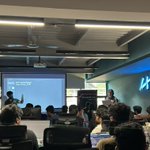
Had an absolute blast at the @OpenAI DevDay Exchange in Bengaluru! 🔥
Met so many new people and friends, had great conversations with the OpenAI team, and the demos, booths, and talks were all next-level.
Learned a ton!!!
Seeing the old ChatGPT UI from the early GPT days during @derrickcchoi session hit different though
We’ve come such a long way from those simple conversations to the powerful agentic workflows and tools we have today.
Wild how far this has come. 🚀
Grateful for the energy and the people.


Amey Muke retweeted

This week’s Paper Club is all about AI safety. Not the headlines, but the science.
AI safety has been a research field for decades, with its own conferences, methods, and a track record in systems like aircraft collision avoidance, where the standard is one catastrophic failure per billion flight hours.
We'll hear from @ClarkBarrett7 and Mykel Kochenderfer (@aiprof_mykel), Stanford professors and co-directors of the Stanford Center for AI Safety.
Together with @FrancoisChauba1, they break down the OpenAI–Hugging Face incident, how formal verification can mathematically prove properties of code, how aircraft safety techniques are being adapted to language models, and why AI may need its own NTSB.
00:00 - Science fiction vs. science fact
04:32 - Engineering problem, or P(doom)
06:04 - What actually happened at Hugging Face
07:53 - Where "10% in 10 years" comes from
11:21 - The real risk: open weights in the wrong hands
17:25 - Clark Barrett: when AI met automated reasoning
20:35 - CSLib: proving code correct in Lean
24:32 - From English spec to verified code in one click
27:55 - Mykel Kochenderfer: how do we know a system is safe
32:11 - Adaptive stress testing, from aircraft to LLMs
36:57 - Verifying neural networks
40:30 - Runtime monitoring and BetterBench
43:53 - Panel: reacting to the past three weeks
45:55 - An NTSB for AI
52:18 - Is cybersecurity solvable in five years
55:00 - If you were CISO of Bank of America
1:03:06 - The Swiss cheese model
1:05:43 - Audience Q&A
Amey Muke retweeted

Also met perhaps only human who actually went through my graph runtime repo 5% increase in self esteem registered @7613Perfect - glad I met you
Had an absolute blast at the @OpenAI DevDay Exchange in Bengaluru! 🔥
Met so many new people and friends, had great conversations with the OpenAI team, and the demos, booths, and talks were all next-level.
Learned a ton!!!
Seeing the old ChatGPT UI from the early GPT days during @derrickcchoi session hit different though
We’ve come such a long way from those simple conversations to the powerful agentic workflows and tools we have today.
Wild how far this has come. 🚀
Grateful for the energy and the people.
Amey Muke retweeted

interpretability might be the most important scientific problem in the world right now, as I don't think we can solve alignment if we don't know what we're building. I think I have good news about it. I co-authored early work in mechanistic interpretability at OpenAI and came away pessimistic, because neural networks appeared to fold into arbitrary tangled knots. years later, I started openai's first large-scale automated interpretability project, finding about 2% of neurons legible with the primitive tools we had
with modern agentic tools and a much closer look, the picture looks totally different. the vast majority in models up to trillions of parameters are legible, and their circuits beautiful. many famous examples of tangled neurons turned out to be misunderstood. The roadblocks I expected mostly aren't there. I now think ambitious interpretability will be solved by the time we need it most, and possibly quite soon, as automated scientists keep improving. it may be a bitter lesson for interpretability: the simple thing, at absurd scale, works
already-clean.goodfire.com/
