




Pinned Tweet
🇺🇸 FL | Miami 2027: The New Geography of Power
Miami has always reinvented itself. Once a gateway to Latin America, it is now emerging as a crossroads where American diplomacy, global capital and transnational political networks intersect, bringing seemingly unrelated actors and agendas into the same orbit. Its latest transformation may be less about geography than about influence.
The pattern is becoming increasingly visible. Steve Witkoff and Jared Kushner have been involved in high-level discussions with Russian, Ukrainian, European and Middle Eastern officials, with South Florida serving as a venue for negotiations over Ukraine and Gaza. This approach relies heavily on personal relationships and trusted intermediaries, with political negotiations often linked to economic incentives.
The geography helps explain Miami’s appeal. The city combines Latin American diaspora communities, conservative political networks, deep financial infrastructure and easy access to Washington. International negotiations and domestic political movements can operate side by side — and sometimes intersect.
The Brazilian dimension adds another layer. Following his defeat to Lula, Flávio Bolsonaro arrived in the United States after visas were confirmed for him and his family. In South Florida, the Bolsonaro family can draw on an established Brazilian diaspora, political allies and business networks cultivated over the years by their father, Jair Bolsonaro. These connections offer a platform for continued political visibility, transnational mobilisation and engagement with the US administration.
Yet Miami’s significance extends well beyond Latin America. Renewed Arab interest in American diplomacy, investment and regional security adds another dimension, as Gulf capital and Middle Eastern diplomatic initiatives intersect with broader discussions about reconstruction, energy infrastructure and regional stability. These parallel networks may converge in Miami without forming part of a single geopolitical project. The question is whether proximity and personal connections will translate into lasting cooperation.
That distinction matters. Personal diplomacy can open doors, but it can also blur the boundaries between public authority, private interests and political influence. Lasting agreements still require institutions, enforceable commitments and accountability.
Three tests will determine whether Miami’s influence endures: whether talks translate into lasting agreements, whether access to power survives the ebb and flow of personal relationships and political favour, and whether democratic oversight can keep pace with increasingly informal diplomacy.
Miami’s power lies in its connections, not its formal authority. A switchboard is not a capital: it routes power without owning it. And in a city defined by reinvention, the next chapter will depend on whether those connections can turn access into lasting influence.


⚽️ The celebrations continue for @InterMiamiCF. Today, players and staff officially received their custom championship rings, commemorating the club’s historic 2025 MLS Cup triumph.
The special ceremony brought together the squad, led by club captain Lionel Messi, alongside former Inter Miami defender and club legend Jordi Alba, who joined the celebrations to mark this memorable milestone.
Designed and crafted by Baron Championship Rings, the custom rings feature Inter Miami’s distinctive pink-and-black crest, complemented by personalised details, including individual player numbers.
More than a piece of jewellery, each ring represents a season of dedication, teamwork, sacrifice and championship glory.
🇺🇳 #UNSC10260 🇬🇷 | Western Sahara: A Security Council deadlock leaves MINURSO’s future in limbo
The immediate consequence of the simultaneous vetoes is that the Security Council has failed to agree on an extension of the mandate of the United Nations Mission for the Referendum in Western Sahara #MINURSO , with the current mandate set to expire tomorrow.
But the significance goes beyond the failure of two competing draft resolutions.
The Council is now confronted with a procedural and diplomatic problem: how to prevent a breakdown in the mission's authorization while its members remain divided over the political framework for resolving the Western Sahara dispute.
The two votes also expose the limits of the current negotiating positions. Washington secured substantial support for its draft, but Russia's veto prevented its adoption. Moscow, in turn, failed to assemble the nine affirmative votes required for its own proposal, even before accounting for the American veto. Neither side has managed to translate its position into a Security Council decision.
➡️ The wider diplomatic implications
The double veto has consequences beyond the immediate fate of the mission.
For the United States, the 11 votes in favour demonstrate substantial Council support for its proposed direction. But the Russian veto also demonstrates that Washington cannot unilaterally translate its diplomatic preference into a UN mandate, even when it enjoys majority support.
For Russia, blocking the American resolution prevented the proposed changes from being adopted, but Moscow's alternative received only three affirmative votes. It therefore failed to demonstrate that there was sufficient support for maintaining MINURSO's existing framework unchanged. Russia has protected its negotiating position without assembling an alternative Council majority.
For Morocco, the outcome is mixed. The American initiative represented an attempt to consolidate the autonomy proposal as the central framework for negotiations and reshape the UN mission accordingly. The Russian veto prevents that institutional change, at least for now. However, it does not reverse the diplomatic developments of the preceding year or remove the autonomy proposal from the negotiating framework established by Resolution 2797 (2025).
For the Polisario Front and Algeria, the failure of the American draft prevents the immediate adoption of a framework that they consider prejudicial to the principle of self-determination. But the Russian draft's defeat also means that the existing mission cannot simply continue under an agreed annual extension.
➡️ The strategic takeaway
The most important development is not simply that Russia and the United States have vetoed each other's proposals. It is that the Western Sahara question has become a direct test of how far Washington can reshape an established UN framework without securing broader agreement among the permanent members of the Security Council.
The United States has demonstrated that it can assemble a majority around a substantially revised approach. Russia has demonstrated that it can prevent that approach from becoming a UN decision. But neither has demonstrated an ability to secure the adoption of its own proposal.
This leaves the Council with a choice between compromise and institutional paralysis.
And there is a larger contradiction: the mission established to support a political settlement and monitor the ceasefire risks becoming collateral damage in a disagreement over the very framework through which that settlement is supposed to be negotiated.
The next 24 hours will therefore be less about resolving Western Sahara than about determining whether the Security Council can preserve the UN mechanism that keeps the diplomatic process alive.
📸 1 to 3 🇺🇸 Draft Resolution
📸 4 🇷🇺 Draft Resolution


🇺🇳 #UNSG10 | UN Secretary-General Race: Grynspan Extends Her Lead in Seventh Straw Poll
Rebeca Grynspan has strengthened her position in the latest Security Council straw poll for the next UN Secretary-General, emerging with the strongest overall result among the candidates.
Grynspan received 11 votes encouraging her candidacy, four discouraging votes and no members expressing no opinion (11-4-0). She was followed by Rafael Grossi, with 9-4-2, while Lana Nusseibeh placed third with 7-6-2.
The figures represent the three possible responses: encourage, discourage or no opinion. Importantly, Council members reverted to a non-colour-coded ballot, meaning the results do not reveal whether encouraging or discouraging votes came from permanent or elected members.
Grynspan's result puts her in a stronger position, while Grossi remains a credible contender. Nusseibeh, meanwhile, continues to register meaningful support, although her six discouraging votes suggest greater resistance to her candidacy.
The results remain an informal measure of political viability, not a formal endorsement. The decisive question will be whether any candidate can secure sufficient support among all 15 Security Council members, without encountering opposition from one of the five permanent members.

🇺🇳 #UNSG10 | Today's seventh Security Council straw poll (1:30 p.m. EDT) is the latest stage in choosing the next UN Secretary-General, whose term begins on 1 January 2027. Article 97 of the Charter sets a two-step mechanism: the Council recommends, the General Assembly appoints. The Assembly holds the pen, but the bargaining that decides the outcome happens in the Council, above all among its five permanent members.
The mechanics are informal but consequential. Behind closed doors, each of the 15 members marks every candidate as encourage, discourage or no opinion. The ballots bind no one and amount to no formal vote. Their function is to locate candidates who can gather broad support without drawing opposition from a permanent member. A formal recommendation requires nine affirmative votes and no veto from the P5: the United States, the United Kingdom, France, Russia and China. A candidate can win the elected members and still fail on a single permanent-member objection.
Seven candidates are expected after Macky Sall's withdrawal on 17 October: Ivonne A-Baki and María Fernanda Espinosa Garcés (Ecuador), Rafael Mariano Grossi (Argentina), Rebeca Grynspan (Costa Rica), Lana Zaki Nusseibeh (UAE), Olara Otunnu (Uganda) and Carolyn Rodrigues Birkett (Guyana). Latin American and Caribbean states argue, citing the informal principle of regional rotation, that it is their region's turn, a position reinforced by a joint CELAC statement. The UAE's nomination of Nusseibeh on 21 October adds a Middle Eastern entry to a Latin-leaning field, though questions have surfaced about the independence the office demands, given the UAE's regional policies and the war in Sudan.
The ballot design is the quiet story. The sixth poll, on 16 October, used colour-coded ballots separating P5 from E10 positions, exposing where a potential veto sat. Today, members appear to have reverted to undifferentiated ballots, after debate over whether the new Emirati candidate should enter that sharper system at once. Transparency and equal treatment pulled one way; the wish of some permanent members to speed the process pulled the other.
The sixth round produced no consensus candidate. Grynspan, Rodrigues Birkett and Grossi kept substantial support, yet each drew discouraging votes from permanent members. Otunnu continued to face significant opposition. Sall's exit after a weak showing proved that straw polls are not mere procedure: they shape who stays in the race.
The process is more open than in past decades, with public nominations, vision statements, financing disclosures and interactive dialogues. The decisive bargaining is still private, and the veto still stands. Results will not be published officially; Greece, as October's Council president, is expected to confirm that the ballot took place without disclosing the outcome, though leaks may follow.
Read today's poll on two levels: the relative strength of each candidate, and the willingness of the P5 to converge on a nominee acceptable to the wider membership. The next Secretary-General inherits an institution contending with questions of authority, finances and credibility. Nine votes without a veto is the threshold. Legitimacy is the test.

🇺🇸 Economic Security Begins at Sea: Rubio’s Message to the G20
At today’s G20 Foreign Ministers’ Meeting, @SecRubio underscored a fundamental connection between maritime security, food security and economic stability. His message reflects a broader understanding of economic security: the resilience of national economies depends not only on domestic policies and financial systems, but also on the security of the international networks that sustain global trade.
Maritime routes are the arteries of the global economy. Major shipping corridors, strategic waterways and port infrastructure underpin the movement of energy, agricultural products and essential goods. Disruptions to these routes, whether through armed conflict, attacks on commercial vessels or restrictions on navigation, can have consequences far beyond the immediate region, driving up transportation and insurance costs, disrupting supply chains and increasing economic uncertainty.
Food security is equally strategic. It depends not simply on agricultural production, but on reliable access to fertilisers, energy, transportation and international markets. Disruptions to these interconnected systems can expose import-dependent countries to price shocks, supply shortages and geopolitical pressure.
Taken together, these vulnerabilities illustrate how economic interdependence can become a source of strategic exposure. Control over maritime access, the movement of essential commodities and the reliability of supply chains can translate into significant geopolitical leverage.
The broader implication is that economic security can no longer be treated as separate from national and international security. For the G20, the challenge is to move beyond recognising these interdependencies and strengthen cooperation to protect maritime corridors, maintain open trade routes and build more resilient food and supply systems.
In today’s geopolitical environment, securing the arteries of global commerce is not merely a matter of trade policy. It is an essential dimension of economic resilience, national security and international stability.

🇺🇳 #UNSG10 | Today's seventh Security Council straw poll (1:30 p.m. EDT) is the latest stage in choosing the next UN Secretary-General, whose term begins on 1 January 2027. Article 97 of the Charter sets a two-step mechanism: the Council recommends, the General Assembly appoints. The Assembly holds the pen, but the bargaining that decides the outcome happens in the Council, above all among its five permanent members.
The mechanics are informal but consequential. Behind closed doors, each of the 15 members marks every candidate as encourage, discourage or no opinion. The ballots bind no one and amount to no formal vote. Their function is to locate candidates who can gather broad support without drawing opposition from a permanent member. A formal recommendation requires nine affirmative votes and no veto from the P5: the United States, the United Kingdom, France, Russia and China. A candidate can win the elected members and still fail on a single permanent-member objection.
Seven candidates are expected after Macky Sall's withdrawal on 17 October: Ivonne A-Baki and María Fernanda Espinosa Garcés (Ecuador), Rafael Mariano Grossi (Argentina), Rebeca Grynspan (Costa Rica), Lana Zaki Nusseibeh (UAE), Olara Otunnu (Uganda) and Carolyn Rodrigues Birkett (Guyana). Latin American and Caribbean states argue, citing the informal principle of regional rotation, that it is their region's turn, a position reinforced by a joint CELAC statement. The UAE's nomination of Nusseibeh on 21 October adds a Middle Eastern entry to a Latin-leaning field, though questions have surfaced about the independence the office demands, given the UAE's regional policies and the war in Sudan.
The ballot design is the quiet story. The sixth poll, on 16 October, used colour-coded ballots separating P5 from E10 positions, exposing where a potential veto sat. Today, members appear to have reverted to undifferentiated ballots, after debate over whether the new Emirati candidate should enter that sharper system at once. Transparency and equal treatment pulled one way; the wish of some permanent members to speed the process pulled the other.
The sixth round produced no consensus candidate. Grynspan, Rodrigues Birkett and Grossi kept substantial support, yet each drew discouraging votes from permanent members. Otunnu continued to face significant opposition. Sall's exit after a weak showing proved that straw polls are not mere procedure: they shape who stays in the race.
The process is more open than in past decades, with public nominations, vision statements, financing disclosures and interactive dialogues. The decisive bargaining is still private, and the veto still stands. Results will not be published officially; Greece, as October's Council president, is expected to confirm that the ballot took place without disclosing the outcome, though leaks may follow.
Read today's poll on two levels: the relative strength of each candidate, and the willingness of the P5 to converge on a nominee acceptable to the wider membership. The next Secretary-General inherits an institution contending with questions of authority, finances and credibility. Nine votes without a veto is the threshold. Legitimacy is the test.
🇦🇪 🇺🇳 أصدق التهاني لمعالي لانا زكي نسيبة، وزيرة دولة في دولة الإمارات العربية المتحدة، بمناسبة ترشحها لمنصب الأمين العام للأمم المتحدة.
تمثل معاليها نموذجاً للدبلوماسية القائمة على الخبرة والرؤية والحوار البنّاء، مستندةً إلى مسيرة حافلة بالعمل متعدد الأطراف وإلى فهم عميق لتعقيدات العلاقات الدولية. وقد كرّست جهودها لتعزيز السلام والأمن الدوليين، ودعم العمل الإنساني والتنمية المستدامة، وترسيخ دور المنظومة الدولية في مواجهة التحديات المشتركة.
وشغلت معالي لانا نسيبة منصب المندوبة الدائمة لدولة الإمارات لدى الأمم المتحدة خلال الفترة من 2013 إلى 2024، وتولت خلال تلك السنوات منصب نائب رئيس الجمعية العامة ورئاسة المجلس التنفيذي لهيئة الأمم المتحدة للمرأة. كما شاركت في قيادة جهود تنشيط أعمال الجمعية العامة والدفع نحو إصلاح مجلس الأمن، وترأست المجلس مرتين خلال عضوية دولة الإمارات فيه للفترة 2022–2023. وتعكس هذه الخبرات المتنوعة إلماماً عميقاً بآليات الأمم المتحدة وتحديات العمل الدبلوماسي متعدد الأطراف.
ويجسد هذا الترشيح أيضاً الرؤية الاستراتيجية والقيادة الحكيمة لصاحب السمو الشيخ محمد بن زايد آل نهيان، رئيس دولة الإمارات العربية المتحدة، وما تتمتع به الدولة من ثقل دبلوماسي ومكانة دولية راسخة، بفضل نهج يقوم على بناء الشراكات، وتعزيز جسور الحوار، وتغليب الحلول السياسية، والإسهام الفاعل في معالجة القضايا الدولية. ويؤكد ذلك حضور الإمارات شريكاً موثوقاً في الجهود الرامية إلى تعزيز التعاون الدولي ومواجهة التحديات العالمية.
وفي مرحلة تتزايد فيها الانقسامات الجيوسياسية، وتتنامى فيها الحاجة إلى عمل دولي أكثر فاعلية واتساقاً، تكتسب قيادة الأمم المتحدة أهمية استثنائية. فالتحدي لا يقتصر على صون المبادئ التي قامت عليها المنظمة، بل يمتد إلى تعزيز قدرتها على الاستجابة للأزمات، وتحقيق نتائج ملموسة، واستعادة الثقة في منظومة العمل متعدد الأطراف.
نتمنى لمعالي لانا نسيبة أن يحظى ترشحها بقبول أعضاء مجلس الأمن وتأييدهم، وأن تكلل هذه المسيرة بتوليها منصب الأمين العام المقبل للأمم المتحدة. إن وصولها إلى هذا المنصب قد يشكل فرصة لدفع تحول ضروري نحو منظومة أممية أكثر كفاءة وفاعلية واستجابة، وأكثر قدرة على تجاوز أوجه القصور القائمة والوفاء بمسؤولياتها تجاه شعوب العالم، بما ينسجم مع مقاصد ميثاق الأمم المتحدة وتطلعات الأجيال القادمة.
@mofauae @MohamedBinZayed
Toujours d’actualité, à lire ou à relire.
🧐 Du fascisme au post-fascisme : la métamorphose du totalitarisme en populisme [🧵 À Dérouler]
Le fascisme n’a jamais totalement disparu : il a changé de visage, de langage et de stratégie. Il s’est adapté aux formes contemporaines de la démocratie, du capitalisme médiatique et de la société individualiste. Pour comprendre cette mutation, il faut retracer la trajectoire qui mène du proto-fascisme au post-fascisme, c’est-à-dire de la gestation idéologique du début du XXᵉ siècle à ses avatars populistes du XXIᵉ.
🇺🇸 Will Democrats Really Hold Corporate America Accountable for Embracing Trump?
For two years, much of corporate America has wagered on Donald Trump. Some executives embraced his administration openly, others financed its ambitions, and many quietly rewrote their priorities, shelved professed principles and courted a White House that made its expectations plain.
From Silicon Valley to Wall Street, from white-shoe law firms to defense contractors, the bond between business and government was remade. For some it was ideology; for others, pragmatism: contracts secured, regulators kept at bay, deregulation harvested, favor preserved. Now, with Democrats positioned to retake Congress, the reckoning is becoming tangible.
Democratic lawmakers have signaled investigations into corporate donations, government contracts, dealings within Trump's political and business networks, and the link between contributions and favorable decisions. Some companies are already hiring lawyers and fortifying political ties against the scrutiny to come.
The question Democrats must answer is whether they seek accountability for misconduct or retribution against those who backed an administration they oppose. The distinction matters. Companies and executives may support candidates, fund causes and pursue legitimate interests, and accommodation, however distasteful, is not automatically unlawful. Oversight must not become revenge dressed as procedure.
The proper inquiry is narrow and serious: whether access was traded for money, whether policy was bent to reward private interests, whether contracts were improperly awarded, and whether executives joined arrangements that compromised the public interest. That is where the real test begins.
It also exposes a contradiction Democrats would prefer to avoid. Corporate America did not become influential when Trump returned to the White House. The revolving door, the lobbying apparatus, campaign finance and the weight of wealthy donors have defined Washington for decades, under both parties. Will the same standards apply to companies that cultivated Democratic administrations? Will scrutiny follow influence regardless of who benefits?
There is also the matter of priorities. Voters wrestling with the cost of living, housing and healthcare may care less for a procession of hearings than for relief in their daily lives. Investigating corruption is a legitimate duty of Congress, but it cannot substitute for governing.
Corporate America may yet learn that loyalty to a powerful patron carries a price when power shifts. Executives who treated accommodation as the cost of doing business may find themselves explaining it under oath.
Still, the goal is not to make business pay for backing the wrong patron. It is to establish that no corporation, billionaire or donor stands above public accountability. That means confronting the system that makes such relationships possible, not merely the beneficiaries of the moment. Otherwise, this is a change of beneficiaries under the same rules of influence.
Scrutiny is coming for corporate America. The real test is whether Democrats will challenge corporate power itself when it turns inconvenient.
@DNC @TheDemocrats @DemSocialists
@HouseDemocrats @SenateDems
⚜️ Le nouveau Québec : assumer la chaise vide pour ne plus être réduit au silence
Il y a quelque chose de révélateur dans la réponse du premier ministre du Québec à la proposition de Mark Carney : une place à la table d’honneur, mais sans droit de parole ni capacité de négocier au nom du Québec. Derrière ce qui ressemble à une querelle protocolaire se joue une question autrement plus fondamentale, celle de la place du Québec dans une fédération qui reconnaît son poids politique et économique sans toujours en accepter les conséquences institutionnelles.
Le problème n’est pas celui d’une invitation refusée ou d’un siège attribué. C’est celui d’une présence sans pouvoir, d’une représentation sans voix, d’une participation sans prise sur les décisions : la reconnaissance symbolique en guise de reconnaissance politique.
Or une nation ne peut durablement se contenter d’être conviée aux discussions qui touchent ses intérêts, son territoire et ses compétences, ni accepter que d’autres parlent en son nom. La diplomatie canadienne relève certes d’Ottawa, mais ses effets atteignent directement des domaines de compétence québécoise. Cela commande une concertation véritable, non une consultation de circonstance.
En refusant le rôle de spectateur, Québec affirme qu’être présent et être partie prenante sont deux choses distinctes. La chaise vide devient un symbole politique : le refus de cautionner une mise en scène de la participation quand les conditions mêmes de celle-ci sont refusées.
Ce geste esquisse un nouveau Québec, qui ne mesure plus sa capacité d’action à la reconnaissance qu’Ottawa consent à lui accorder. Un Québec qui entend exercer pleinement ses compétences, développer ses relations bilatérales et défendre ses intérêts sur la scène internationale, sans renoncer aux mécanismes de coopération dont vit la fédération.
Cette affirmation ne saurait toutefois s’arrêter à Ottawa. La rencontre avec le chef de l’Assemblée des Premières Nations du Québec et du Labrador rappelle que la reconnaissance du Québec comme nation ne peut se construire en ignorant celle des Premières Nations et des Inuit. Le principe de nation à nation doit passer dans les pratiques, les consultations, les négociations et le respect des droits, faute de quoi il devient un principe à géométrie variable, invoqué face à Ottawa et oublié face aux peuples autochtones.
C’est là que se joue la cohérence. Réclamer pour le Québec une capacité de représentation et de décision suppose de reconnaître aux autres nations la place qui leur revient, et l’affirmation nationale n’a rien à gagner à reproduire, à une autre échelle, les rapports de domination qu’elle dénonce.
La chaise vide n’est ni une stratégie permanente ni une fin en soi. Elle ne vaut que si elle s’accompagne d’une diplomatie active, de propositions concrètes et d’une volonté réelle de négocier : refuser d’être figurant ne dispense pas de chercher des partenaires, cela oblige à en définir les conditions.
Le véritable changement serait de passer d’un Québec qui réclame d’être entendu à un Québec qui tient sa participation pour une exigence politique, non pour une faveur protocolaire. Une nation qui ne confond plus compromis et effacement, coopération et subordination, présence et pouvoir.
@PaulPlamondon inaugure une nouvelle voie. Désormais, le Québec entend prendre sa place plutôt que d’attendre qu’on la lui concède. Une chaise vide peut être un geste de protestation ; assumée, elle devient une affirmation nationale.


🇮🇱 Beyond Netanyahu: From Personality Politics to a New Social Contract
What did Israeli voters really say on Tuesday? The results should be read beyond the familiar divide between Benjamin Netanyahu’s bloc and the opposition. The election was not simply a referendum on one man; it also revealed the potential for convergence among Zionist parties, despite their considerable ideological differences.
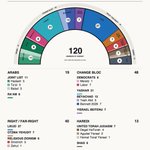
Turnout approaching 78%, after years of war, polarisation and institutional strain, shows that Israelis have not abandoned the ballot box. But high turnout is not confidence in every institution, nor an endorsement of any camp. The arithmetic is revealing: Netanyahu’s bloc won 53 seats, the Zionist opposition 48, and the Arab parties 19. Neither Zionist bloc reached the 61 seats needed for a majority.
Security is the first point of convergence, and it is not the exclusive property of the right. Across much of the Zionist spectrum there is agreement on a strong IDF, credible deterrence and the protection of citizens. The disagreements concern leadership, strategic priorities, the conduct of operations and the relationship between military objectives and political settlements.
Conscription is the second. The debate extends well beyond Haredi enlistment to whether the burdens of citizenship should be shared more equitably. Yashar under Gadi Eisenkot, B’Yachad led by Naftali Bennett, Yisrael Beiteinu and The Democrats support a broader obligation encompassing military, national or civilian service, including for Arab citizens. They differ in their proposed frameworks, exemptions and enforcement mechanisms. Religious Zionism supports expanded Haredi integration through adapted service frameworks, while Shas and United Torah Judaism defend substantial exemptions for religious students. Arab parties generally oppose compulsory service. There is no universal consensus, but a substantial constituency backs a new model of shared civic responsibility.
Accountability for October 7 is the third. The demand to establish responsibility for the failures that preceded and accompanied the attacks reaches well beyond the traditional opposition. The dispute is over the mechanism, chiefly an independent state commission of inquiry and the scope of its mandate.
Economic and institutional reform is a fourth. Cost of living, housing, productivity and public administration feature across party platforms, even where solutions differ. A sizeable constituency also wants to reform religion and state, from civil marriage and Shabbat public transport to the Chief Rabbinate’s authority.
International positioning is a fifth: the American relationship, regional partnerships and Israel’s standing remain shared objectives, notwithstanding disagreement over the means.
The convergence has clear limits. Palestinian statehood, the West Bank, settlements, annexation and the constitutional balance between the judiciary and elected government remain fundamental dividing lines. These are disputes over the territorial, constitutional and political character of Israel, not secondary policy differences.
Still, a common agenda is visible across a substantial part of the Zionist political spectrum: strong defence and credible deterrence; a fairer distribution of military and civilian service; accountability for October 7; economic resilience; effective institutions; and a strong international position. This is not a common manifesto, and no party would sign every element, but it marks where cooperation across the left-right divide is possible.
The question is therefore not only whether Netanyahu can assemble 61 seats, but whether Israel’s leaders can turn common ground into a governing programme. The ideological divide is real, yet the parliamentary contest may obscure agreement broader than the conventional narrative suggests.
Common ground is only a map. Next week will show whether Israel’s political leaders are ready to turn it into a social contract.
📊 @EylonALevy

🧐 Panem et circenses 2.0 : l’abrutissement à l’ère numérique
Les réseaux sociaux sont-ils devenus les nouveaux jeux du cirque d’une époque où les gladiateurs sont trop lâches pour mourir ?
La comparaison avec la Rome antique n’est peut-être pas aussi provocatrice qu’elle en a l’air. Autrefois, le peuple se pressait dans les arènes pour assister aux combats, acclamer les vainqueurs et réclamer parfois la mort des vaincus. Aujourd’hui, le sable du Colisée a cédé la place aux écrans, les gladiateurs aux influenceurs, aux polémistes et aux militants de clavier, tandis que les pouces levés ou baissés ont été remplacés par les likes, les partages et les commentaires. Le principe, lui, n’a guère changé : divertir la foule et détourner son attention.
Sauf qu’il n’est désormais plus nécessaire de risquer sa vie pour entrer dans l’arène. Il suffit désormais de provoquer, de susciter la controverse, de désigner des ennemis et de transformer chaque désaccord en spectacle conflictuel, dans l'espoir de récolter quelques secondes d'attention supplémentaire. La violence est devenue verbale, l’humiliation un spectacle et l’indignation une monnaie d’échange. Chacun joue son rôle devant un public qui ne cherche pas nécessairement à comprendre, mais à applaudir son camp et à conspuer celui d’en face.
Les algorithmes ont perfectionné le mécanisme en privilégiant moins la pertinence, la nuance ou la connaissance que la capacité à capter et retenir l’attention. Or, rien ne mobilise davantage les foules que la colère, la peur, le mépris et la confrontation. Nous sommes ainsi progressivement passés d’une culture du débat à une économie du spectacle. On ne cherche plus toujours à convaincre, mais à dominer la séquence ; on ne confronte plus nécessairement les idées, on expose les personnes ; on ne construit plus un raisonnement, on accumule les réactions.
Le paradoxe est que cette nouvelle arène donne à chacun l’illusion d’être à la fois gladiateur et spectateur. Nous participons au spectacle tout en prétendant le dénoncer. Nous condamnons la mise en scène de l’indignation tout en contribuant à sa diffusion. Et, derrière cette agitation permanente, se développe une autre forme de manipulation : celle d’un public progressivement abreuvé d’un pseudo-savoir, où l’accumulation d’informations tient lieu de connaissance, où l’opinion se substitue à l’expertise et où la certitude dispense de toute réflexion critique.
Peut-être est-ce là le véritable changement. Dans le Colisée, la foule venait regarder mourir les autres. Sur les réseaux sociaux, elle vient assister à leur mise à mort symbolique, tout en espérant secrètement ne jamais être la prochaine victime. Les gladiateurs, eux, ne meurent plus dans l’arène. Mais leur liberté de penser, leur crédibilité et parfois leur dignité y sont sacrifiées quotidiennement.
Panem et circenses. Du pain et des jeux. Deux mille ans plus tard, la recette n’a pas changé. À la distraction des masses s’est ajoutée leur manipulation par l’illusion du savoir : un flot ininterrompu d’informations, d’opinions et de pseudo-expertises qui donne à chacun le sentiment de comprendre le monde sans jamais l’inviter à le questionner. Les jeux ont changé de format, l’abrutissement de méthode, et le Colisée tient désormais dans la paume de nos mains.
🇺🇸 The Pentagon is preparing for the possibility of renewed strikes against Iran. @CENTCOM commander Adm. Brad Cooper has reportedly presented military options directly to President Trump, alongside Defense Secretary Pete Hegseth and Joint Chiefs Chairman Gen. Dan Caine. Washington has also reportedly warned Gulf allies to prepare for a short, intense campaign after the November 3 midterm elections.
The timing suggests that the administration may be aligning military preparations with domestic political considerations while keeping diplomatic channels open. The objective could be to weaken Iran’s missile and drone capabilities, hit military infrastructure and nuclear-related targets, and force Tehran back to the negotiating table on Washington’s terms.
But a short campaign does not necessarily mean a short conflict. Iran could retaliate against U.S. forces, Israel and Gulf infrastructure, putting energy supplies and regional stability at risk. The central question is whether military pressure can secure meaningful concessions from Tehran or simply trigger another cycle of escalation.
For now, the message is clear: Washington is preparing for the possibility of war while leaving the door open to a deal. There is, however, no confirmed indication that Trump has made a final decision to launch another attack.
🇮🇱 Election Under Scrutiny: Foreign Interference, Suspected Vote-Buying, and the Facts So Far
The Shin Bet has issued its first official statement on the investigation into suspected foreign interference and electoral corruption in Israel. Read alongside a separate report detailing the investigation, it paints a more nuanced picture than some of the claims circulating publicly.
There are two separate cases, and they need to be kept distinct.
The first involves several hundred thousand shekels allegedly transferred from Qatar to an organization linked to the Joint List. Investigators are looking into whether the money was used to fund a campaign, mobilize activists, or potentially pay voters. But the fact that a transfer is being investigated does not, by itself, establish illegal campaign financing or vote-buying. Nor does the available reporting establish Turkish involvement in this particular case.
The second case is being investigated by Lahav 433, the Israeli police’s major-crimes unit. Three Ra’am activists were reportedly arrested overnight between Monday and Tuesday after being found with envelopes containing cash. They are suspected of using the money to pay voters. Four additional suspects were arrested later and released to house arrest. However, investigators reportedly remain skeptical about whether the evidence will be sufficient to prove that the money was intended for electoral bribery rather than payments to campaign workers or some other purpose.
The Shin Bet’s statement also addresses how the investigation was handled. According to the agency, the intelligence originated from its own efforts to detect foreign interference, not from a complaint or tip-off by Likud, the opposition, or another political organization. The investigation reportedly remained confidential until voting had ended, with Central Elections Committee chairman Justice Noam Sohlberg the only outside official informed beforehand.
Sohlberg subsequently asked Shin Bet director David Zini to complete the investigation promptly so that the findings could be considered before the official results were finalized. Zini has reportedly briefed Benjamin Netanyahu, Yair Lapid, and Gadi Eisenkot. The agency says its findings will be submitted to the Central Elections Committee without political interpretation.
There are also separate allegations that money from Qatar and Turkey may have been routed through networks associated with terrorist financing to influence the election. Some reports have linked these claims to exceptionally high turnout in Arab and Bedouin communities, including an alleged 80% turnout in Rahat. But those claims do not appear to be confirmed by the Shin Bet’s official statement, and the available reporting does not establish a connection between foreign funding and higher turnout.
That distinction matters. High turnout is not evidence of electoral fraud. Foreign funding, illegal campaign spending, and vote-buying are three different issues, each requiring its own evidence. And even if individual violations are proven, that would not justify casting suspicion on an entire community that exercised its democratic right to vote.
For now, the responsible conclusion is straightforward: there are serious allegations under investigation, but no publicly established evidence that the election result was manipulated. The key questions are where the money went, what it was used for, whether any criminal offenses can be proven, and whether there was any coordinated foreign effort to influence the vote.
Until those questions are answered, claims of a Qatar-Turkey operation or widespread electoral manipulation should be treated as unverified, not as established fact.

🇮🇱 Le dépouillement est terminé. Voici la répartition des sièges :
Les blocs:
• Coalition de Netanyahou : 53 sièges
• Bloc du changement : 48 sièges
• Partis arabes : 19 sièges (Liste commune : 11 ; Ra’am : 8)
Les partis:
• Likoud : 27 sièges
• Yashar (Gadi Eisenkot) : 21 sièges
• Beyachad (Naftali Bennett) : 12 sièges
• Liste commune : 11 sièges
• Les Démocrates : 8 sièges
• Ra’am : 8 sièges
• Israël Beiteinou : 7 sièges
• Otzma Yehudit : 7 sièges
• Judaïsme unifié de la Torah : 7 sièges
• Shas : 6 sièges
• Sionisme religieux et Zehout : 6 sièges
Sous le seuil électoral de 3,25 %
• Les Réservistes et le Parti économique (Yoaz Hendel) : 2,72 %
• Amcha Yisrael (Ofer Winter) : 1,68 %
ℹ️ Pour ceux qui parlent d’un désaveu de Netanyahou, les chiffres méritent d’être regardés de près. Lors du scrutin de 2022, il avait recueilli 1’115’336 voix. Mardi, il en a obtenu 1’159’791, soit 44’455 voix supplémentaires. Autrement dit, loin d’avoir perdu des voix par rapport à 2022, Netanyahou en a gagné près de 45’000. Ces chiffres ne suffisent pas, à eux seuls, à conclure à un renforcement de son soutien dans l’ensemble de l’électorat, mais ils invitent à nuancer sérieusement la thèse d’un désaveu populaire.
🇨🇳 China under Xi Jinping: From Historical Narrative to Institutional Control
The Fifth Plenum of the 20th Central Committee, concluded on October 29, 2026, marks another stage in the political project underpinning Xi Jinping’s China. Its resolution on “persevering with full and rigorous Party self-governance” is not simply an anti-corruption programme. It is an attempt to institutionalise the Party’s capacity to discipline itself, enforce political loyalty and preserve its long-term governing authority.
This development follows a logic already visible in the major historical resolutions of 1945, 1981 and 2021. Each helped establish an authoritative interpretation of the Party’s past while consolidating its political direction in the present. The latest resolution extends that tradition from historical interpretation to the continuous supervision, regulation and renewal of the Party itself.
Its central premise is that the Communist Party can preserve its legitimacy and avoid the historical cycle of rise and decline only by maintaining its organisational strength, correcting its own failures and remaining in control of the state. Xi Jinping Thought on Party Building gives this objective an explicit ideological framework, while centralized leadership, tighter discipline and expanded oversight provide its institutional instruments.
The scale of the personnel decisions confirmed at the plenum makes this more than a theoretical exercise. The expulsions of senior civilian officials and military figures demonstrate the leadership’s willingness to extend its disciplinary campaign deep into the Party-state apparatus. Yet they also expose a persistent contradiction: a system that repeatedly requires high-level purges must confront questions about the effectiveness of its own oversight mechanisms, the reliability of its officials and the quality of information reaching the centre.
The implications extend beyond internal Party politics. China’s ability to sustain technological innovation, economic modernization and military effectiveness depends not only on political discipline but also on administrative competence, initiative and sound decision-making. Tighter control may reinforce coordination and deter corruption; taken too far, it can encourage risk aversion, bureaucratic conformity and the suppression of unwelcome information.
The resolution should therefore be understood as part of a broader effort to align political authority, ideological cohesion and institutional performance ahead of the 21st Party Congress, scheduled for the second half of 2027. It reinforces Xi’s central position without, by itself, resolving the longer-term question of succession.
The fundamental issue is not whether the Party can impose discipline. It is whether it can turn discipline into durable institutional effectiveness without undermining the initiative and adaptability that modernization requires.
Xi’s political project rests on the conviction that a strong Party is the prerequisite for a strong China. The unresolved question is whether the concentration of authority intended to secure that strength will ultimately enhance the system’s capacity to govern — or constrain it.
🔗 中国共产党第二十届中央委员会第五次全体会议公报
mfa.gov.cn/zyxw/202610/t2026…

🇨🇳 Comprendre la Chine de Xi Jinping exige d’aller au-delà de l’analyse de ses politiques économiques, de ses ambitions internationales ou de ses rapports de force avec les puissances occidentales. Ces dimensions ne prennent tout leur sens que lorsqu’on les replace dans le cadre politique et idéologique qui les structure. Il faut également comprendre comment le Parti communiste chinois articule l’autorité du dirigeant, la doctrine officielle et l’interprétation de sa propre histoire pour légitimer son pouvoir, orienter ses choix stratégiques et définir les objectifs de la nation.
En Chine, l’histoire du Parti n’est pas simplement un héritage que l’on commémore : elle constitue un instrument de gouvernement, un cadre d’interprétation du présent et une référence pour penser l’avenir. Les grandes résolutions historiques de 1945, de 1981 et de 2021 illustrent cette continuité. Chacune, dans un contexte différent, a contribué à fixer la lecture officielle du passé, à consolider une orientation politique et à préciser les fondements de la légitimité du Parti. La place accordée aujourd’hui à la pensée de Xi Jinping et à la formule des « Deux établissements » (两 个确立) s’inscrit dans cette tradition, tout en marquant une nouvelle étape dans la concentration de l’autorité politique et l’affirmation d’un cadre idéologique commun.
Pour saisir la logique de la Chine contemporaine, il faut donc examiner non seulement ce que ses dirigeants font, mais aussi la manière dont ils justifient leurs décisions, définissent les intérêts nationaux et relient leur projet politique à une certaine lecture de l’histoire. Comprendre cette logique ne signifie ni adhérer au discours officiel ni le prendre pour argent comptant. Cela suppose de le confronter aux faits, aux pratiques institutionnelles et aux contradictions du système. C’est à cette condition que l’on peut dépasser les clichés, distinguer les réalités des récits politiques et analyser la Chine selon ses propres ressorts, sans renoncer pour autant à l’esprit critique.
ℹ️ Réflexion en anglais sur les deux grandes résolutions historiques de 1981 et de 2021 ⬇️


