
Researcher @AntGroup | AI & Security. Leading key initiatives in Cyber models & Agent training, Red Teaming, Risk & Web3—turning tech into business momentum.
Joined February 2012
- Tweets79
- Following681
- Followers777
- Likes85


Chance Wang retweeted

as bad as things have gotten in the past 4 days, they are going to get a lot worse before they get better. security leaders, never let a crisis go to waste: please go to your boards and ask for help right now. not for ai, for the basics. (we need to hold on for ~18 months.)

Introducing our lab's cybersecurity model, the Creation Model (Preview), a cybersecurity model developed by AI Security Lab@Ant Group. Built on Qwen 27B, it supports vulnerability detection, analysis, exploitation and patching.
Our goal is to make advanced cyber capabilities practical for more security teams, with a smaller model and lower deployment costs.
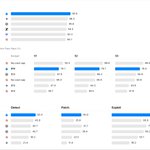
Our approach turns real-world security tasks into verifiable training environments, combining expert insights with agentic supervised fine-tuning and reinforcement learning. The evaluation results on three cyber-focused benchmarks:
• CyberGym: 90.6% vulnerability-triggering success across 1,507 targets in 188 software systems.
• CyberGym-E2E: 78.5% at S3 and 34.3% at S4 under a $10/task budget.
• EVMBench: 50.4% Detect, 40.9% Patch and 87.0% Exploit.
We're continuing to evaluate more diverse and complex security tasks, using what we learn to improve the model and narrow the gaps with larger frontier models.
An open-source release is planned.

Chance Wang retweeted

Introducing Ling-3.1-flash-1019 🚀
It scores 44 on the Artificial Analysis Intelligence Index, up from 41 for Ling-3.1-flash. Gains in agentic work: AA-Briefcase ~1400→1524 Elo and AutomationBench-AA 62%→68%.
API access and open weights coming soon. Stay tuned.

Chance Wang retweeted

New blog post 🎉: How To Use Decision Models For Evals
In this post, we show you how to choose a decision model for your task, tune its threshold (don't assume the 0.5 default is good!), and interpret its scores.
Lots of cool interactive charts here.

Chance Wang retweeted

New on our Engineering blog: Creating in-house source control.
In May, we merged around 2,500 code changes per day. In September, we merged more than 30,000 per day. As a result, we became bottlenecked by developer infrastructure built for human (rather than agent) scale.
Here, we share how we built a new version control system—and fully migrated our monorepo from git—in five months: anthropic.com/engineering/re…

Chance Wang retweeted

Do you really need to finish every rollout in RL for LLM? Not if you make your critic better—and trust it!
We propose Actor-Critic with Action Chunking (AC2): use a learned critic to score chunks of tokens => only need partial rollouts ⇒ train faster than GRPO!

Chance Wang retweeted

SFT is not dead! 🥳
We found a way to make SFT rival current prevailing posttraining methods, often generalizing better and forgetting less than RL and OPSD. 🤯
Following our prior work on reasoning with sampling, we now introduce sampling to the posttraining stack.
1/n
We're leading the cyber capability training for the Ling model


Chance Wang retweeted

🔥最新:蚂蚁百灵今日正式发布 Ling-3.1-flash!
560B 总参、仅激活 25B,最高 1M 上下文。GDPVal-AA v2.1 ELO 1673,紧贴 Opus-5(1708),领先 GLM-5.3、DeepSeek-V4.1-Flash、GPT-5.6、Kimi K3。
主要亮点:
🔹超长上下文 + 稀疏激活,面向 Agent / 办公 / 研发
🔹金融、医疗、科研场景持续加码
🔹即日起两周免费体验(256K),随后开放 1M 并计划开源
中国 Flash 又把一线模型卷到面前了。
#蚂蚁百灵 #Ling31Flash #大模型 #人工智能 #Agent #中国模型

Chance Wang retweeted

pleased to share the entire arXiv site as a dataset on HuggingFace
huggingface.co/datasets/sece…
3,148,796 papers, every version, in LaTeX, PDFs, PostScript, HTML, 16 TB in total

Proud to share SingProbe — an Endogenous Safety Guardrail for LLMs, which our lab deeply contributed to!
It reuses internal states to detect risks synchronously during streaming generation. High-precision interception with near-zero latency and compute overhead. Fully integrated with vLLM & SGLang!
Paper: arxiv.org/abs/2608.30703
Code: github.com/inclusionAI/SingP…
Models: huggingface.co/collections/i…
Bench: huggingface.co/datasets/incl…

Our AI Security Lab at Ant Group just topped the CyberGym leaderboard, ranking #1 globally!
- 98.5% success rate in vulnerability verification.
- Powered by our in-house "Tiangong Cyber" model & "Tiangong Harness," deeply integrated with top domestic LLMs like DeepSeek V4 Pro and Qwen 3.8 Max.
- End-to-End coverage: Seamlessly handling vulnerability analysis ➡️ PoC construction ➡️ result verification for complex software.

145
Chance Wang retweeted
🚀 Thanks to our partner @novita_labs to support more adventure in domain-specific AI: *Ling-3.0-Flash-Santé*
What’s in a name? In French, santé translates simply to health.
We chose this name deliberately. Ling-3.0-Flash-Santé isn’t just another general-purpose language model; it is fundamentally engineered from the ground up to serve the healthcare, medical, and life sciences ecosystems. By blending the lightning-fast inference of our Flash architecture with deep clinical domain expertise, we are putting a powerful new tool in the hands of those who save lives.

🚀 Ling-3.0-Flash-Sante is now available via Novita on @OpenRouter.
🎁 Free for 14 days.
• 124B total parameters · 5.1B active parameters
• Built for medical reasoning, clinical safety, and long-horizon tasks

Chance Wang retweeted

Grok 4.6 is here! This release by @spacexai just landed in the Code Arena: WebDev at #7 with 1618 pts.
Grok 4.6 (High) is a big jump from Grok 4.5, which sits at #13 with 1553 pts. It's now on par with GPT-5.6 Sol xHigh (1622 pts) and Claude Fable 5 (1627 pts). All three currently land in the #5-7 rank range with only 4-9 pts of separation. Expect the picture to sharpen as more votes roll in and CIs tighten.
Congrats to @elonmusk and the @spacexai @grok team on this release!


Chance Wang retweeted

We quietly released the open-source Codex Security CLI, but Hacker News found it before we had a chance to share it here...
You can now use it to scan repositories, track findings across runs, verify fixes, and add security checks to CI/CD.
This is an early release, and we're listening to your feedback as we continue improving it.

Chance Wang retweeted

Releasing the model weights and technical report of Kimi K3.
Kimi K3 is our most capable model: a 2.8T MoE model with native visual understanding and a 1M-token context window.
New model architecture: 2.5x the intelligence per unit of compute, not just more params.
Alongside Kimi K3, we're opening up more of the stack behind it — high-performance attention kernels, MoE communication library, and infrastructure for running agent environments at scale.
Model weights: huggingface.co/moonshotai/Ki…
Tech report: github.com/MoonshotAI/Kimi-K…
Tech blog: kimi.com/blog/kimi-k3

Chance Wang retweeted

We removed ~80% of the Claude Code system prompt for our newest models, this is what we've learned about writing system prompts, skills and Claude.MDs for them.

I am now focusing heavily on the AI business side—driving real-world applications and execution—stepping back a bit from pure security.
In driving these business rollouts:
Domain Experts + AI = Unprecedented leverage.
Average Users + AI = High friction. They get stuck figuring out which "skills" or "plugins" to use.
The paradigm needs to flip. Stop making humans search for tools. What if the tools proactively find the user?
We are still defining the "Next Agent," but moving from reactive chats to proactive, context-aware skill pushing is exactly the frontier I'm exploring right now.
2
120