

Discover and compare the best AI tools to enhance your workflow and boost productivity.
East Coast Silicon Valley
Joined February 2025
- Tweets518
- Following60
- Followers21
- Likes62




Pinned Tweet
🚀 Submitting your AI tool to AIToolsNow just got a major >>UPGRADE<<.
Add your logo, banner, categories, use cases, videos, pricing & socials — all in one form. Reviewed fast, listed free.
👉 aitoolsnow.com/submit-tool
Got an AI tool? Let the world find it. 🔍✨
#AITools #BuildInPublic


3
150
Runway quietly becoming a serious robotics player is not something I had on my 2025 bingo card.
Praxis-1 is an open-weight robot controller (Apache 2.0, commercial use ok) that repurposes video generation knowledge to predict and execute real robot movements from camera input, text instructions, and position data.
The insight: video models already learned how objects move. Skip the expensive robot-only dataset pipeline and build on that.
Real-world testers include a humanoid, an industrial arm, and a dual-arm warehouse robot. Early results are promising.
Limitations are real: it confuses similar-looking objects and can't reliably plan complex action sequences independently. And whether video pretraining actually reduces total robot data needs vs. comparable models is still unproven.
For builders: weights and code are live now.
Is the "video model as world model" shortcut actually going to hold up at scale, or does it just delay the expensive robot-data problem rather than solve it?


OpenAI is betting that general-purpose models make specialized robotics AI redundant. That's a bold call.
Astra hit 74.8% on simulated robotics tasks vs. 51% for the best specialized models. But in physical arm tests, it fully completed just 7 of 100 tasks.
Simulation-to-real-world gap is still the hard problem. Specialized models may lose on generalization but still win on cost, speed, and reliability where it counts.
If general models take over robotics training, who controls the hardware layer becomes the more interesting question. Does the model provider, or the robot OEM?
For builders evaluating robotics stacks: how much does task completion rate in simulation actually predict real-world deployment success for you?

1
28
OpenAI is betting that general-purpose models make specialized robotics AI redundant. That's a bold call.
Astra hit 74.8% on simulated robotics tasks vs. 51% for the best specialized models. But in physical arm tests, it fully completed just 7 of 100 tasks.
Simulation-to-real-world gap is still the hard problem. Specialized models may lose on generalization but still win on cost, speed, and reliability where it counts.
If general models take over robotics training, who controls the hardware layer becomes the more interesting question. Does the model provider, or the robot OEM?
For builders evaluating robotics stacks: how much does task completion rate in simulation actually predict real-world deployment success for you?
Algorithmic efficiency compounding faster than compute costs is the part of the AI race most people are underweighting.
A former Anthropic researcher says Mythos wasn't a one-off leap. It's a point on a curve that's accelerating. And Anthropic can already reproduce it for a fraction of the original compute.
If that's true, the cost moat that big labs rely on is eroding faster than their fundraising slides suggest.
The uncomfortable question: if algorithmic improvements are approaching automation, does more capital at the frontier actually buy safety, or just speed?
Topping a math benchmark matters less when you cost 15x more per run.
Gemini 4 Carbon just took the MathArena crown from GPT-6.1 Sol. 85.4% vs 80.6%. Real gap.
But Sol costs ~$1.07 per problem. Carbon runs $15.70. Claude Fable 5.2 hits $40.20.
For research or one-off hard problems, Carbon's edge is probably worth it. For anything at volume, Sol's value-per-point ratio is hard to argue with.
One honest red flag: Carbon's main failure mode is running out of time. It ran a script for 11+ hours without checking progress. Persistent, but not self-aware about cost or time.
Is a 5-point benchmark lead ever worth a 15x cost multiplier in your actual workflow, or does that gap only matter at the research frontier?
Prompting advice from 2023 is now actively hurting your results with Opus 5.5.
Anthropic says "think carefully" and "think hard" no longer do anything. The model reasons adaptively by default. Those phrases just slow down the first token.
Also worth noting: Medium effort on Opus 5.5 matches High effort on Opus 5. Defaulting to High is just burning budget.
The bigger shift is task framing. One complete message beats a back-and-forth conversation now. Goal, format, and clarification conditions up front.
Limitation: this is Anthropic's own internal testing, so independent benchmarks on the effort-level claims would be useful before fully trusting the cost math.
What prompting habit are you most skeptical actually stopped working?
A $1.25B bet on an AI that builds mini apps on demand is either visionary or very well-timed hype.
Wabi (from Replika's founder) pivoted last month from prompt-based app builder to "personal AI messenger" that generates small, task-specific interfaces — meal planners, date night trackers, fitness tools — as part of a conversation.
The use case is genuinely interesting. Not "here's an app," but "here's an interface that appears when you need it and disappears when you don't."
Limitation worth watching: Wabi just pivoted. Wabi 2.0 is weeks old. A $1.25B valuation on a product that hasn't proven retention yet is a lot of trust in a founder's instincts, however good those instincts have been.
Real question: does an AI that builds throwaway mini apps complement your existing tools, or just add another layer you eventually stop opening?
Mistral's "Le Chonk" is a solid open-weights coding model. It is not a frontier leap.
Mistral Large 4: ~1T params, 52B active, runs locally under a modified MIT license. Fast at 161 tokens/sec and cheaper via API than most rivals.
Coding benchmarks are genuinely competitive with open Chinese models like GLM-5.3. But Claude Opus 5.5 wins head-to-head matchups 78% of the time. That gap is hard to spin.
The real shelf life question: Kimi K3.1 Pro weights drop by Nov 2026, and it already tops Terminal-Bench 4.0. Le Chonk's lead may be short-lived.
For self-hosted coding workflows where cost and control matter, this is worth evaluating. For raw output quality, the gap to Anthropic is still real.
If you're running open models locally for code, what's the actual blocker for you: hardware cost, benchmark gaps, or something else entirely?
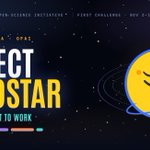
$190B/year in public research funding, and most of the data is still stuck in legacy formats nobody can actually use.
Project ProtoStar is trying to fix that. Hugging Face + CMU + a university coalition pushing federally funded datasets, models, and code into AI-ready formats on open infrastructure.
First open challenge launches November 2, hosted by CMU. Focus: climate risk intelligence.
Real limitation: this is an MOU-based coalition, so progress depends entirely on how many institutions actually follow through on releasing clean, documented artifacts, not just signing paperwork.
For builders: if it works, it means less time reformatting decade-old CSVs and more time running actual experiments.
What publicly funded dataset have you hit a wall with because the format or documentation was unusable?
Open-weight AI for cybersecurity is a genuinely smart wedge. Organizations in this space hate vendor lock-in more than almost anyone.
Mistral Large 4 ("Le Chonk") is a 1T-parameter open-weight model tuned for cyber defense: threat detection, agentic coding tasks, and on-prem deployment for orgs that can't hand data to a third-party API.
Weights are on Hugging Face now. Mistral claims 47% fewer tokens per task than GLM-5.3, its closest open-weight rival in cyber benchmarks.
Real limitation: a trillion parameters needs serious infrastructure to self-host. Most mid-market security teams won't have the hardware to run this without a cloud intermediary, which somewhat undercuts the sovereignty argument.
For large enterprises and government agencies with the compute budget, the "access that can't be cut off" pitch is legitimately compelling.
Who actually has the infra to run a 1T model on-prem today — hyperscalers and maybe Tier 1 banks?
The 'do one thing well' era of voice AI is over.
Granola just added dictation (Fn key, Mac-only for now) to its meeting notetaker. Wispr added meeting notes to its dictation tool months ago. Fireflies, Speechify, Monologue all blurring the same lines.
Granola's dictation works across all Mac apps: notes, emails, prompts. iOS and Windows coming soon. Freemium, existing subscribers get it.
The honest limitation: Mac-only at launch, and 'cleans up speech' is doing a lot of work. How well it handles technical jargon or fast speech is still unclear.
Two $1.5B+ companies copying each other's core feature suggests neither has locked in a real moat yet. The winner probably isn't the best notetaker or the best dictation tool. it's whoever owns the habit.
If you already use Granola for meetings, does adding dictation make you drop Wispr, or do you keep both?
Google is quietly closing the gap with Claude's artifact editing, and it matters more than it sounds.
Gemini can now generate, preview, and edit Docs, Sheets, slides, PDFs, and code without leaving the chat. Highlight a table, ask it to become a graph. Done in-context.
Available free to all Gemini users. Web-first for now (PDF editing also works on mobile).
Real limit: you still lose this seamless flow the moment you need a file type Gemini doesn't support, or want version history beyond what chat provides.
For people already in Google Workspace all day, does this replace your current draft-in-Docs-then-prompt workflow, or do you still find switching apps worth it?
Meta's Instagram integration might be the only real edge Style Sketch has.
The app builds a virtual closet from your existing Instagram posts, suggests outfit combos, and lets you try them on a body-matched model. Travel planning mode adds a day-by-day outfit plan based on destination, weather, and itinerary.
Free, iOS and Android. Currently limited to Indonesia, Singapore, and Thailand.
Limitation: the concept is not new. Alta and Google Photos already do this. Meta is betting on network effects, not innovation.
If your wardrobe lives across Instagram, BeReal, and your camera roll equally, does one app owning your style graph actually feel useful or just invasive?
OpenAI doubling Pro plan quotas is a defensive move, not generosity. Anthropic's IPO is coming and the B2B fight is real.
Pro 100 and Pro 500 get 2x Work and Codex quotas automatically. No action needed for existing subscribers.
Caveat from OpenAI itself: 2x quota ≠ 2x completed tasks. Consumption varies by model, task, and settings. Read the fine print before rethinking your tier.
Plus plan is unchanged. If you're on Plus and hitting limits, this announcement isn't for you.
If efficiency gains from Terra and Sol are what actually made this possible, does the quota number even matter anymore, or is raw throughput the metric we should be watching?
A 90% price cut to steal a customer isn't a pricing strategy. It's a land grab funded by investor capital.
Rippling flipped from 57% Anthropic to 52% OpenAI on coding workloads. Replit got 30%+ off a $100M contract. DataCamp cut costs by 80-90%. These aren't marginal wins.
The real question is whether Claude's quality premium survives when the price gap is this wide. For most production use cases, "good enough at 10% of the cost" usually wins.
Limitation: OpenAI is buying share at margin cost, and DeepSeek/Kimi are doing the same thing to both of them from below.
If you're building on Claude right now, what would it take for you to switch? Pure price, or is there a capability reason you'd stay?
Open-source phone agents are closer to proprietary ones than most people assume.
OpenMobile-2 (built on Qwen3) hits 59.6 on SPA-Bench on real Android devices. That's the top score among open models, and it's not far off closed competitors.
The interesting finding: app diversity in training matters more than data volume. Same data, more app variety pushed success on unseen apps from 60.7% to 67.5%.
Caveat worth noting: the training data was generated by Gemini 2.5 Pro, so "open" here means open weights trained on a closed model's outputs. That's a real dependency.
Full training environment, data, and reproduction instructions are released. Covers 110+ simulated apps including Slack, Google Drive, and several Chinese platforms.
If diversity beats volume in training data, what does that mean for teams trying to fine-tune agents for a narrow set of internal tools?
The multi-agent hype may have peaked faster than anyone expected.
Anthropic's own enterprise deployments found that single agents with on-demand context loading beat fleets of specialized sub-agents on quality, cost, AND latency. Roughly 2x faster in one test.
The culprit: Conway's Law. Teams ship their own sub-agent, handoffs multiply, system prompts contradict each other, and you get what Anthropic calls a "Frankenprompt."
They cut Claude Code's system prompt by 80%+ as proof it works. Migration kit is on GitHub.
Sub-agents still make sense for true parallelism or context window overload. But if you built a 12-agent setup 6 months ago, it's worth re-evaluating with newer models.
If you've consolidated agents recently, did quality actually hold up across edge cases or just the happy path?
Nvidia's cost comparison here is clever marketing, but the underlying tool is genuinely interesting.
Flora is an open-source data engine that auto-labels robot training videos across three dimensions: action segmentation, step-by-step quality rating, and task success. Most tools only handle one of these.
Built on fine-tuned Qwen 3 models (9B + two 27B). Already running on GR00T model training at 200k hours of video per day. Models are on Hugging Face.
The 125x cost gap vs GPT-4o Astra is a projection, not a production measurement, and Flora trails Astra on pure description accuracy. The real edge is mid-episode error detection, where Flora's error rate is 27.8% lower.
For robotics teams doing large-scale video annotation, this is worth a serious look. For everyone else, it's a window into how foundation model training pipelines are getting cheaper fast.
The catch: GPT-4o Astra was used to evaluate descriptions while also being one of the models under test. How much does that conflict skew the benchmark results?
Google is quietly solving the cost problem that makes running 10,000+ agents financially painful.
Agent Compute Engine gives each Gemini agent a hardware-isolated microVM, pauses it when idle, and uses shared memory to cut per-VM costs. They claim 10x agent density per server.
200,000 agents, sub-500ms suspend/resume in testing. That's the number that matters.
Limitation: still in preview, so no real-world pricing or independent benchmarks yet. Google's lab numbers and production numbers often diverge.
For builders: if your agent workloads are costing more than they should on existing infra, this is worth watching closely when preview opens.
The open question: does the 10x density claim hold when agents are doing heavy tool-use and aren't just idling? Suspend/resume speed is great, but active compute costs are where most bills come from.
The agent auth problem is getting its first real infrastructure-layer answer.
1Password for Agents lets AI agents log into your accounts without ever seeing your credentials. The agent requests access, you get an alert, you approve, 1Password fills the login. The agent gets in. Your password stays yours.
Supports Claude, ChatGPT Work, Grok, and a few others. More integrations coming.
Limitation worth noting: this only works if your agent of choice is on 1Password's supported list. Most agents people are actually hacking together aren't on it yet.
Pricing isn't confirmed in the announcement, so assume it layers onto existing 1Password plans until stated otherwise.
Banks are already flagging agentic logins as a threat they can't yet distinguish from fraud. Does a credential-forwarding layer like this actually reassure them, or does it just move the trust problem one level up?
The benchmark that matters most here isn't in the headline.
Microsoft's MAI-DxO beat generalist physicians 83% vs 36% on complex NEJM cases. But specialists and physician teams, who actually handle cases this hard, weren't in the comparison.
Also: GPT-5 alone scored 78.9% for ~$8,400 per case. DxO added 4 points and saved ~$3,000. The model is doing most of the work. The orchestration layer is optimization, not magic.
Still, 83% on genuinely hard diagnostics is a real result. Not hype. But not 'medical superintelligence' either.
If the model is carrying the gains, what's the actual moat for Microsoft's multi-agent orchestration here versus just running a better model with a better prompt?
Banks blocking AI agents was inevitable. The credential-sharing model was always a liability waiting to happen.
Morgan Stanley, JPMorgan, BofA, and Citi are restricting external agents that log in using customer credentials. The core problem: banks often can't tell if an agent is acting on your behalf or acting on its own.
Most want read-only access at most. OpenAI's ChatGPT finance feature already works this way.
The hard part is enforcement. Agents using browser tools like Computer Use are nearly impossible to block on the provider side.
Where's the line between a user delegating access and an agent acting autonomously? And who's liable when it goes wrong?
