

AI for design of complex bio systems. MTS @Latent_Labs. BioE PhD @UWproteindesign (David Baker) MSc @ETH_BSSE & @francesarnold 🧑🏻🔬🔬🏳️🌈 Opinions my own.
Seattle, WA
Joined December 2011
- Tweets562
- Following607
- Followers894
- Likes3.7K




Pinned Tweet
🚨 New Results Alert 🚨
Have you ever wondered what new therapeutic avenues would be enabled if we could program T Cells in the computer to target any desired peptide-MHC neoantigen with a TCR or a TCR-like antibody? What if we could validate these molecules easily in small arrayed or large pooled screens with ease regardless of our desired therapeutic modality? 🤔
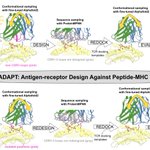
Well, we just took a huge leap towards solving this problem. Introducing ADAPT: Antigen-receptor Design Against Peptide-MHC Targets
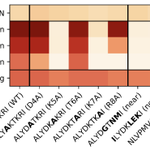
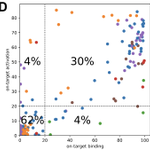
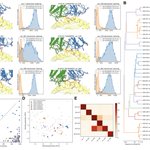
We generate de novo TCRs and Bi-Specific T Cell Engagers from a large variety of scaffolds while redesigning all 6 CDR loops and demonstrate robust binding and peptide and HLA specific functional activity in T cells.


Amir Motmaen retweeted

Today in @NatureBiotech we introduce the "recordanelle", a synthetic organelle that enables transcriptome-wide single-cell RNA recording in human cells. Big thanks to team: @ReinkemeierCD, Marcos Manero-Carranza, et al. 🧵👇
@ETH_en @ETH_BSSE @BRC_CH
rdcu.be/5Pus7dyu63ta

Ever wondered what a cell has experienced in the past? This is in general hard to measure. Here we introduce the recordanelle, to equip cells with a tool that lets them record their own history.
nature.com/articles/s41587-0…
@NatureBiotech @ETH @randall_platt @ETH_BSSE

Amir Motmaen retweeted

Avengers assemble: 1 year BakerLab + NVIDIA GenAIR = 🔥 rfd4-proteina.org
Presenting RFD4-Proteina, our latest protein design model, significantly better and faster than everything we compared against, both in silico and in the lab! 1/30
Amir Motmaen retweeted

I spent two weeks in the laboratory with @NickDesnoyer and he taught me how to “paint” flowers. I would literally dip a brush into an Eppendorf tube containing a clear liquid, then lightly tap it against white, floral buds that hadn’t opened yet.
At first, I thought this was extremely weird. I definitely did not think the flowers would change, because I had barely touched them with this liquid. But when we came back the next day, the buds had opened and were a mottled mix of white and pink. Everywhere I had touched the petals with the liquid — containing a molecule called dexamethasone — the cells had turned purple.
You could actually see the color spreading along the veins as the molecule moved through the petals. Wherever it reached cells, it switched on an introduced gene that activated pigment production. We were, in other words, painting flowers by turning genes on, using small molecule inducers.
Now Nick is taking this strain of petunia and adding two more inducible genes so he can turn on yellow and cyan pigments, too. The idea is that you could basically do CMYK printing on flowers. If you touch two different small-molecule inducers to the same part of a petal, you'd switch on both genes and thus get a blend of colors.
The whole interview is filled with thought-provoking stuff, which feels weird and egotistical to say because it’s my podcast. But talking to Nick about flower design completely opened my eyes to the breadth of what biotechnology can do.
We’re so used to thinking about therapeutics and binders and small molecules, but if you zoom out and look at how nature uses genetic diversity to create new functions, you start to see how evolution creates these interactions that can be exploited to build new functions. Nick is basically just observing those functions, finding the genes behind them, and moving them into flowers to get the effects he wants. All of this is created by repurposing genes that already exist in nature.
Amir Motmaen retweeted

Our paper is out!
It turns out that finding the right TCR partner is a bit like matching socks 🧦: almost every pair fits, but only a small fraction make the right match for antigen recognition.
If you don’t feel like diving into the full paper, there’s also a one-page summary!


TCR specificity prediction is advancing rapidly. The central question is not only which TCR sequence recognizes an antigen, but also which TCR pairings make recognition possible & where is the binding boundary? Our new paper tackles this question. 🧵
science.org/doi/10.1126/scie…

Amir Motmaen retweeted

TCR specificity prediction is advancing rapidly. The central question is not only which TCR sequence recognizes an antigen, but also which TCR pairings make recognition possible & where is the binding boundary? Our new paper tackles this question. 🧵
science.org/doi/10.1126/scie…
Amir Motmaen retweeted

Guys we need to get serious here: The new paper barely nudges our priors on GLP-1 for longevity.
I'm spending every waking moment pushing for progress on longevity, but what's going to get us there is scaling up truth-seeking, not giving in to slopulism.
Publishing this in Nature is IMO a failure of human taste and judgement.
First, the sema mice don't really live longer than healthy controls in other studies (see pic). If you stop there, this should be seen as 'nice someone did this, now do it more carefully'. This may be robust life extension it may not.
Second, we already know reduced food intake extends mouse lifespan. Why is there are whole figure comparing CR and sema effects, but no lifespan for matched food-intake? Because it should turn paper into 'sema reduces mouse food intake'
If you want to keep going, why females only? Blah blah male aggression, that doesn't stop various ITP interventions from working in males.
Or is it that constant injections shorten lifespan, possibly via ulcerative dermatitis which is more common in females? No non-injected control group, can 't say.
Fig 3 "GLP-1 ... alleviates the hallmarks of ageing and mimics the calorie restriction response" yes reducing food intake is similar to reducing food intake.
Fig 4 "modulates the genetic regulators of ageing" -> Show a bunch target genes many of which have been tested and don't nudge lifespan.
I'm glad someone did this study, I'm not saying it's not a contribution or should be retracted, but the reason this is in a tier 1 journal is because it'll get attention (boosted by hypefluencers). Apparently some journals are just giving up; I understand that the multi-year assault on truth-seeking is really hard, it's hard to imagine journals not getting replaced by AI if they lean into slopulism.


New paper @Nature: Semaglutide recapitulates many of the benefits of caloric restriction in female mice & extends lifespan by almost 100 days. Males not yet tested for lifespan
Below: Red traces = mouse movement


Amir Motmaen retweeted

I think Anthropic’s safety guardrails are becoming a joke to biologists.
Asking “what is a protein?” definitely doesn’t need extreme bio-safety restrictions, but “no need” and “not possible” are very different things.


Amir Motmaen retweeted

Gen models for biomol design have improved by leaps and bounds, but wetlab val remains a bottleneck. Excited to share our work where we address this on the prot prod&purif (SAPP) and reducing input DNA costs (DMX). nature.com/articles/s41467-0…

Amir Motmaen retweeted

On 20 August we're marking the launch of the Latent-Y Researcher Tier with an evening in San Francisco.
We opened it to researchers worldwide in July, putting Latent-Y, our drug design agent, in their hands with a daily quota of designs. It's already clear what that makes possible: ion channel inhibitors that work, CAR-T cells that kill tumour cells, binders the malaria parasite cannot escape.
Read what they built: latentlabs.com/latent-y-rese…
Two of those researchers, Prof. Vladimir Yarov-Yarovoy (UC Davis) and Dr. Daria Briukhovetska (LMU Munich), will join a panel alongside Stacy Feld (Johnson & Johnson), Prof. @lecong (Stanford), Edward Kliphuis (Sofinnova Partners) and me, with @davidkmyang (Lux Capital) moderating. There'll also be a live demo of Latent-Y, and we'll be announcing a new program for researchers taking on the hardest problems in human health.
Thursday 20 August, 6pm, Fort Mason, San Francisco.
Register at luma.com/latent-y-sf-launch.

Amir Motmaen retweeted

The GLP-1 drugs have evidence for beneficial impact— heart, kidney, liver, joints, immune system, and brain—that are independent of weight loss
@Cell_Metabolism @DanielJDrucker
cell.com/cell-metabolism/abs…

Amir Motmaen retweeted

1/
What could we discover if we had a binder for every protein in the human proteome?
We are excited to introduce the Bindome, an open and free resource of over 300,000 designed protein binder candidates against over 8,000 human target proteins.
🧵
Amir Motmaen retweeted

Could GLP-1s have a bigger impact on America than A.I.?
Watch @ProfGalloway join @BillMaher, @PeterHamby and @ErinBrockovich on this week's #RTOvertime:
Amir Motmaen retweeted

the summer 26’ cohort has been completely locked in on iterating, building, and distribution at an unusually high velocity
current residents are working on alzheimer's prevention, satellite OS, and autonomous mining robots that are already deployed
the fruits of their labor will be on display soon
alumni & friends: august 3rd 🪽
(founders in the bay, community, and alumni)
investors: august 4th 🪽
(investors, angels, and VC's)
all roads lead to demo day
🔗 spots are limited, sign up below to secure yours

Amir Motmaen retweeted

fall 2026 -- all about deep tech
residencies for both founders AND researchers
more info below 👇

APPLICATIONS ARE OPEN 🪽
if you are building deep tech that will change history, we want to do everything in our power to help
here’s what we’re offering in the upcoming cohort:
• $50k in compute credits
• housing, food, laundry services all taken care of
• peer group that might lead to life long friendships 📷
legal, health & wellness, immigration partners
• 1:1 venture partner
spend fall 2026 locked-in with other ambitious funders
🧵application link in the thread
Amir Motmaen retweeted
Today we launch Latent-Y, our drug design agent. 250 designs free every day for any approved researcher.
We are also releasing the first lab results from researchers with early access: Ion channel inhibitors that work. CAR-T cells that kill tumour cells, now in vivo. Binders the malaria parasite cannot mutate away from.
Full results: latentlabs.com/latent-y-rese…
Apply for access: platform.latentlabs.com
Amir Motmaen retweeted

Tried a code review from GPT 5.6 sol after using Opus 4.8 and GPT 5.5 for a while and it was a qualitative step up wrt insight, high level understanding of intent, and anticipating future failure modes
Maybe Fable would be as good but still can't try it with anything bio...
Amir Motmaen retweeted

Can we program a kinase like a switch? Inspired by natural autoinhibitory complexes, we designed miniproteins against active- and inactive-like conformations of Focal Adhesion Kinase. Depending on the targeted state, the resulting binders either activated or inhibited the kinase.