

@AVindman
Account based inUnited States
About this account
- Account based in
- United States
- Connected via
- United States App Store
Account-level information from X, not a live location or the device used for a specific post.
Dad. Husband. Vet. Ex National Security Council/White House Staff.
Florida, USA
Joined June 2018
- Tweets10.3K
- Following2.1K
- Followers957K
- Likes26.5K




Pinned Tweet
Trump Crushes “Buy American” and Makes China Look Like a Reliable Partner
The United States spent years convincing its allies that dependence on Chinese technology was a national security risk. What happens when American technology becomes a tool of political coercion?
On October 14, Ukraine faced another night of Russian ballistic missile attacks without the reliable advance warning it had come to expect from the United States. Around the same time, Ukrainian forces discovered that their Starlink and Starshield connections had been restricted. Drones lost connectivity, missions were disrupted, and Ukraine is left more exposed to future air attacks.
Elon Musk offered an explanation that should concern every American ally and any American trading partner dependent on U.S. technology and industrial products. Decisions about the use of Starshield, he wrote, are made by the U.S. military and, ultimately, the president. The White House characterized the disruption as a glitch, while Ukrainian officials questioned whether it was deliberate. Recent reporting has Musk proposing to Trump restrictions on Starshield services. While the precise chain of responsibility remains disputed, the strategic implications could end up being disastrous.
Governments around the world are seeing a demonstration of what happens when a government and a critical technology provider collude to restrict critical service to a country. Trump’s and Musk’s petulance, vindictiveness, and transactional ego-driven self-service will have real economic and geo-political consequences.
On the National Security Council, I saw this problem from the other side.
The warning we gave Europe about Huawei
During my time at the National Security Council, my colleagues and I worked to persuade European allies to reject Huawei’s 5G technology. The concern was not simply that Huawei was a Chinese company, or that we distrusted Beijing. It was that telecommunications infrastructure is foundational to modern society and national defense. Whoever controls critical components of that infrastructure may possess capabilities that extend far beyond the product being sold.
A compromised telecommunications network can expose sensitive information, facilitate surveillance, disrupt communications, or create opportunities to manipulate systems. Remote access, software updates, and privileged administrative controls can become vulnerabilities if a supplier—or the government capable of compelling that supplier—chooses to exploit them.
China’s 2017 National Intelligence Law reinforced these concerns by requiring Chinese organizations and citizens to support, assist, and cooperate with national intelligence work, subject to the law’s provisions. European security officials had to consider what that meant if a Chinese supplier occupied a position inside their critical infrastructure. The European Union itself identified the danger of hostile governments pressuring vendors or using national legal requirements to obtain access.
The argument was straightforward: do not allow a potential adversary to establish a position inside systems essential to your national security when that position could be exploited against you.
The same underlying concern has surfaced in other sectors. Reports about communications equipment found on Chinese-made port cranes prompted questions about whether ostensibly ordinary industrial machinery could provide an avenue for surveillance or disruption. Reports of unexplained communications equipment in Chinese solar inverters raised similar alarms about the security of energy infrastructure.
These cases are not identical, and the existence of a vulnerability does not establish that it has been exploited. But prudent governments do not wait for sabotage to occur before considering the consequences of dependence.
That was the logic behind the Huawei campaign. It was a legitimate national security argument, and it remains one today.
The problem is not exclusively Chinese
Starlink is not Huawei. SpaceX is an American company operating within a different legal and political system. The United States is not China, and an American company is not automatically an instrument of the American government. Nor does every service restriction amount to sabotage or coercion.
That matters, but it does not eliminate the underlying vulnerability.
Starlink has become essential to Ukraine’s battlefield communications, connecting troops, supporting logistics, and enabling the operation of drones. Its resilience against Russian electronic warfare has made it particularly valuable. Ukraine’s dependence developed because the system worked when other communications options were vulnerable or unavailable.
That success created a strategic liability: a substantial part of Ukraine’s military capability depended on a privately operated network that Ukraine did not control.
The October restrictions exposed the consequences. According to Ukrainian officials, changes affecting terminals operating at high speeds disrupted drone missions. Reports of the restrictions coincided with mounting U.S. pressure on Kyiv over its attacks on Russian oil infrastructure. The timing naturally raised questions about whether technology access had become another instrument of political leverage. And while the administration has disputed responsibility for the disruption, and the available evidence does not establish a definitive explanation for every affected connection, the pattern of administration actions, reporting, including President Zelenskyy’s assertions, and leaks, indicate a Trump administration pressure campaign is in play.
A country planning its defense cannot afford to treat uncertainty about access to a critical system as a minor inconvenience.
This is the distinction that policymakers sometimes miss: a security vulnerability does not require malicious code or a hidden backdoor. Sometimes the vulnerability is the ability to manipulate or turn the system off.
A supplier does not need to spy on a customer or secretly compromise its software to create strategic dependence. It may be enough to retain the ability to withdraw service, restrict functionality, change the terms of access, or make continued access contingent on political decisions.
That is a different mechanism from a covert backdoor, but the strategic consequence can be similar. A country discovers that a capability it believed it possessed is conditional on someone else’s decisions.
And the problem is much bigger than just defense systems. U.S. companies can be directed to restrict any industrial system through remote access.
Assured access is a national security commitment
In my years working on national security policy, we understood that allies need more than promises of support. They need consistency and confidence that the capabilities on which they depend will remain available when the stakes are highest.
That is what assured access means in practice.
It is one thing to purchase an American system because it offers superior performance. It is another to build your national defense around that system while assuming that commercial contracts, political commitments, and strategic interests will remain aligned indefinitely.
They may not.
In March 2025, the Trump administration suspended intelligence sharing with Ukraine and paused military assistance, creating enormous pressure on Kyiv to accept Washington’s terms. The interruption demonstrated that access to essential American support could be used as leverage in negotiations with a country fighting for its survival.
The last time Washington pulled that lever, the results showed up on the map. The March 2025 pause helped finish off Ukraine’s already embattled incursion into Russia’s Kursk region. Kyiv drew the obvious lesson and spent the following year reducing its dependence on American support, building its own long-range strike support capabilities and intelligence tools. What Ukrainian planners did not anticipate was that the United States would reach into Ukraine’s defense itself, into the early warning that gives civilians time to reach shelter and the satellite links that keep defensive systems protecting Ukrainian cities operational.
This disruption won’t change the course of the war. Ukraine has had a strong year on the battlefield, retaking ground after Russia lost its illicit access to Starlink, according to U.S. intelligence cited in press reports. But it might matter, and the fact that it might is deeply disturbing. A country fighting for its survival should never have to plan around whether its own ally’s systems will stay on.
The lesson for allies is not that the United States will always abandon them. It is that American systems functioning as presumed can no longer be assumed and are not insulated from the fitful political preferences of the president or the decisions of powerful private actors.
The Anthropic dispute shows the same structural problem in a different form: when the company resisted Pentagon demands over the use of its AI systems for mass domestic surveillance and fully autonomous weapons, the administration moved to exclude it from government work and designated it a supply-chain risk. It illustrates how quickly a company can be complicit or coerced on acceptable uses, and the consequences of refusing demands.
These are fundamental questions about whether democratic systems, open markets, and a capitalist economy should allow companies or governments to establish back doors to retain control over systems. Without consideration for any of the important questions either in support or opposition to these fundamental issues, Trump and Musk recklessly changed the game around allyship and commerce. The simple fact is that governments can no longer be confident they are procuring reliable systems for legitimate national defense purposes.
If a company can be punished for resisting government demands, and a country can lose access to a critical service amid a political dispute, every customer has reason to reconsider the risks of dependence.
Europe is already looking for alternatives
European officials understand the implications.
EU Defence Commissioner Andrius Kubilius has warned that Europe is heavily dependent on American space capabilities and has argued for developing European alternatives. The European Union’s IRIS satellite constellation is intended to provide secure communications under European control. Germany has also pursued plans for dedicated military satellite capabilities. Existing alternatives offer potential options, but building a comprehensive, resilient, sovereign system takes time and substantial investment.
The point is not that Europe can simply replace Starlink tomorrow. It cannot. The point is that the incentive to reduce dependence has grown.
And the hedging has already spread beyond defense. France is moving 2.5 million civil servants off Zoom, Microsoft Teams and Webex to a homegrown system by 2027, with officials citing Microsoft’s cancellation of the International Criminal Court prosecutor’s email after U.S. sanctions and the reliance on Starlink in Ukraine. Earlier this month, the Dutch tax authority abandoned its move to Microsoft’s cloud over security concerns and the risk of lock-in. Austria’s military, the German state of Schleswig-Holstein and Danish cities are switching to open-source tools.
Ukrainian defense innovators have reached a similar conclusion: a military cannot rely on one solution that can be switched off. Redundancy is not wasteful duplication when the system in question is essential to survival. It is a basic requirement of resilience.
The same debate has surrounded the F-35. European governments have had to weigh the aircraft’s extraordinary capabilities against concerns about long-term dependence on American software, maintenance, spare parts, and export controls. Public discussion of a supposed F-35 “kill switch” has often blurred technical questions with political fears; there is no publicly established evidence of a literal remote kill switch that can simply ground every aircraft at Washington’s command. Yet the underlying concerns about dependence and sovereign control are real.
European efforts to procure weapons and technologies less constrained by U.S. export-control rules reflect a broader desire for freedom of action. American export controls, including ITAR, serve legitimate purposes. But if allies believe those controls or access to supporting technology could be used unpredictably to restrict their options, they will look for alternatives.
Every new dependency comes with a political calculation. The more uncertain the relationship, the more attractive it becomes to pay for a second source.
Trust is part of the product
The implications extend well beyond satellites and weapons.
In fiscal year 2025, the State Department reported $331 billion in U.S. arms transfers to foreign partners, up from $318.7 billion the year before. That total includes $104.4 billion in government-to-government Foreign Military Sales and $226.8 billion in direct commercial sales licensed by the State Department. These are sales approved in a single year, with deliveries spread over many more, so the figure is best understood as a pipeline of business that depends on allies’ confidence in American reliability.
Those sales support American manufacturers, engineers, skilled workers, and communities across the country. They sustain production lines, research, and a defense industrial base that also serves U.S. forces.
Florida has a substantial stake in that business. Its aerospace, defense, space, and advanced technology sectors depend in part on a global market for American capabilities. Contracts and jobs in these industries are supported not just by the quality of American hardware, but by the confidence that customers can count on it.
And that confidence is not limited to weapons. America exports roughly $655 billion a year in digitally delivered services, from software and cloud computing to engineering and finance, and that trade depends on customers believing we won’t switch them off.
Modern aircraft, vehicles, cloud services, industrial control systems, and energy infrastructure increasingly rely on software, remote diagnostics, connected services, and over-the-air updates. A product may be manufactured in one country, operated in another, and dependent on software or network access controlled from a third. The ability to maintain, update, monitor, or disable those systems can become a source of leverage.
Customers pay for more than a machine or a connection. They pay for reliability, continuity, security, and the confidence that the product will function when they need it.
Trust is part of the product.
If Washington allows political disputes to undermine that trust, the costs will not necessarily appear immediately in a canceled contract or a public diplomatic rupture. They may emerge over years as allies diversify suppliers, build parallel systems, favor domestic production, and discount American promises of long-term support.
The resulting loss could be much greater than the value of any single contract.
Beijing does not have to win the argument
China’s leaders will not overlook the opportunity.
For years, Washington has warned that Chinese technology creates unacceptable risks because Beijing may be able to pressure its companies into serving state interests. Now Chinese officials and vendors can point to a different example: an American satellite network whose availability has become entangled in a dispute between Washington and a partner at war.
Beijing does not have to prove that Chinese systems are safer. It only has to persuade customers that American systems carry their own political risks.
That argument will not erase the differences between China’s political system and America’s. It will not eliminate concerns about Chinese intelligence laws, state influence, espionage, or coercion. Nor does one episode establish that American technology is inherently unreliable.
But it complicates the case the United States has made to the world.
We told our allies that critical infrastructure should not depend on technology controlled by a potential adversary. We argued that the legal obligations and political incentives surrounding a supplier mattered as much as the technical specifications of its equipment. We urged them to consider what could happen if access were compromised or withdrawn at the worst possible moment.
Those arguments were right.
They are right when applied to China. They are right when applied to American suppliers, too.
The difference is not that every American company poses the same risk as Huawei, or that every restriction imposed by Washington is illegitimate. The difference lies in rational national security-driven decision-making, the legal safeguards, political institutions, accountability mechanisms, and demonstrated behavior that shape the risk. Those protections are valuable, but they must be credible. They cannot be taken for granted when the government itself appears willing to use access to essential technology as political leverage.
The United States should not abandon its leadership in advanced technology. It should make that leadership more dependable. That means transparent rules, enforceable commitments, meaningful oversight, clear limits on political interference.
It also means accepting a basic reality: allies will protect themselves when they can no longer confidently distinguish a commercial relationship from a political vulnerability.
The United States spent years warning Europe about the dangers of letting Chinese products inside its critical systems. We should remember why we made that argument.
The question was never simply who made the technology. It was who could control it, under what circumstances, and what would happen if they decided to use that control against you.
With the Trump Administration’s actions against Ukraine, we haven’t just made a move - we’ve entirely changed the game and how it is played.

My twin, Congressman VA-07 @RepVindman, and Congressional Candidate NJ-07 Rebecca Bennett @RebeccaForNJ07 join me. We will discuss the midterm elections and the breaking news around the Ukraine War.
Substack Live TODAY at 1:30pm ET substack.com/@avindman/note/…


Trump’s diesel deal derailed Ukraine-Russia peace progress

Czech President Petr Pavel says a ceasefire between Russia and Ukraine was “quite close” – until Donald Trump lifted sanctions on Russian diesel.
vist.ly/5pf23

Alex Vindman 🇺🇸 retweeted

Czech President Petr Pavel says a ceasefire between Russia and Ukraine was “quite close” – until Donald Trump lifted sanctions on Russian diesel.
vist.ly/5pf23
Russia gets Ukraine and leverage over Europe. China gets the Asia-Pacific. America retreats to its own hemisphere.
Yalta built institutions to restrain great powers. This would tear them down.
open.substack.com/pub/alexan…

A Reverse Yalta
A Putin-Trump-Xi summit isn’t a three-way negotiation. It’s two vs. one.
Two adversaries who have each shown they can manipulate Trump, coordinating across the table from him. The concessions could be unthinkable.
open.substack.com/pub/alexan…

Alex Vindman 🇺🇸 retweeted

Starshield is controlled by the U.S. government.
Civilians are dying because Ukraine can’t defend itself from Russian attacks without these critical capabilities.
Yet Trump pretends like he has no idea his policies are emboldening Putin and killing civilians.
It's outrageous.

Alex Vindman 🇺🇸 retweeted

🚨NEW AD: South Florida families are being crushed at the grocery store, gas station, and doctor’s office.
I’m running to bring people TOGETHER - to lower costs, protect your Social Security and Medicare, and ban Congress from trading stocks.
We deserve leaders who put people over party, and that’s what I’ll deliver in Washington. Let’s get to work for us all!
Alex Vindman 🇺🇸 retweeted

Either the President was lying or Musk was lying, but the decision to slow down satellite speed and access has life or death consequences for Ukraine.
This deserves a full investigation by the Senate. Elon Musk should be compelled to testify before Congress and under oath.
National security decisions should be made in our national security interests, and not based on the personal whim of an unstable executive.


Breaking: Elon Musk ordered the Starlink slowdown that blindsided Ukraine on.wsj.com/4sgcpBv

Alex Vindman 🇺🇸 retweeted

Full Congressional investigation is in order. ASAP. Ukrainians died and US diplomatic personnel plus US citizens were at grave risk. wsj.com/world/ukraine-starli…

Alex Vindman 🇺🇸 retweeted

When things get hard, you have two choices: You run or you fight. @JenKiggans runs. From reporters, from constituents, and from her responsibility to our community. She just votes with Trump 100% of the time.
Hampton Roads needs a fighter to end this war, lower prices, and ban members of Congress from trading stocks.
Alex Vindman 🇺🇸 retweeted

These are not transfers from the US, but from other countries. The US is now actively sabotaging Ukrainian defense of civilians.

Breaking news: The Trump administration has not approved the transfer of interceptor missiles to Ukraine that are needed to protect the country from Russian attacks, officials said, a delay that comes as President Trump has embraced Russia in recent weeks. wapo.st/4yCb7T7

America exports $331 billion in arms and roughly $655 billion in digital services a year.
All of it runs on one thing: customers trusting we won't switch them off.
Trust is part of the product.
open.substack.com/pub/alexan…

A security vulnerability doesn't require malicious code or a hidden backdoor.
Sometimes the vulnerability is the ability to turn the system off.
Ukraine just learned that. Every U.S. ally is watching.

During my time at the National Security Council, my colleagues and I worked to persuade European allies to reject Huawei’s 5G technology. The concern was not simply that Huawei was a Chinese company, or that we distrusted Beijing. It was that telecommunications infrastructure is foundational to modern society and national defense. Whoever controls critical components of that infrastructure may possess capabilities that extend far beyond the product being sold.
A compromised telecommunications network can expose sensitive information, facilitate surveillance, disrupt communications, or create opportunities to manipulate systems. Remote access, software updates, and privileged administrative controls can become vulnerabilities if a supplier—or the government capable of compelling that supplier—chooses to exploit them.
open.substack.com/pub/alexan…
Alex Vindman 🇺🇸 retweeted

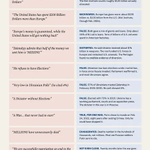
It's been a good week for Putin. In recent days, Trump has:
* Struck a diesel deal lifting some sanctions
* Restricted Starshield for Ukraine
* Cut intel warnings of Russian missile launches against Ukraine for several days
* Canceled Lindsey Graham sanctions
* Demanded Ukraine dump Zelensky
* Absolved Russia for helping Iran fight the US
* Pushed Europe to resume buying Russian gas
Hard-On for Putin, Tough on Ukraine
Look at the graphic above and read down each column. On the left is how the Trump administration has treated Vladimir Putin, the man who launched the largest war in Europe since 1945. On the right is how it has treated Volodymyr Zelenskyy, the duly-elected leader of the democratic country Putin invaded. Hold the two side by side and the pattern is obvious. The aggressor gets stroked. The victim gets ultimatums and threats. This week highlights the pattern.
Trump strokes villainy and abuses our allies. substack.com/@avindman/note/…

Alex Vindman 🇺🇸 retweeted

5/5 Now, I love America. I'm writing this because I want ordinary Americans to understand the consequences of these disastrous decisions.
The damage being done to America's reputation won't be reversed by the results of the next elections. It will take decades to rebuild that trust.
And the economic consequences, while not immediate, will go much further than a potential 2 cents per gallon decrease in diesel prices.
And if you think the world doesn't notice, or that everything I'm describing is just hypothetical, let me give you two examples of what is already happening.
These decisions were made even before the latest Starshield restrictions, which only make the problem much worse.
Airbus, one of the world's largest aircraft manufacturers, has already signed a contract to move 70 critical applications from Amazon AWS to French cloud provider Scaleway, with plans that could eventually include 900 applications.
Airbus specifically mentioned concerns about foreign laws and potential "kill switches" when choosing its new provider.
In the Netherlands, one of the country's largest telecom companies, KPN, partnered with German Schwarz Digits to build European cloud infrastructure using STACKIT, hosted in Dutch data centers and controlled by European companies.
The Dutch government has also approved STACKIT as an alternative cloud provider for its agencies.
These aren't some people complaining about Trump on Twitter.
These are major corporations signing real contracts, investing real money and building infrastructure to reduce their dependence on American technology.
And that's the part Americans need to understand.
For decades the USA was a reliable partner. Republicans and Democrats disagreed about plenty of things, but America's foreign policy was built around long-term strategic interests and institutions that survived changes in presidents.
Countries trusted the USA enough to build entire industries around its technology.
Now a foreign government has to consider whether some American president might wake up tomorrow wanting cheaper gas, believing another promise from Putin, getting angry with its elected leadership, or trying to get a better deal for his friends.
And suddenly technology that was supposed to make that country more productive becomes a potential political weapon against it.
The USA spent decades making the world dependent on its technology because the world trusted America.
Now American companies will be paying the price for political decisions they didn't make, long after the politicians responsible are gone.
And no election in the USA will magically restore that trust.
Alex Vindman 🇺🇸 retweeted

We don’t use Starlink for our responses inside Russia. We use Starlink to intercept jet-powered “shaheds” that attack our civilians and kill families.
Starlink wasn’t turned off – its speed was reduced. And when the speed was reduced, we were unable to intercept a certain number of jet-powered “shaheds.” We couldn’t use a tool that helps protect people. That’s very painful and frustrating.
We also use Starlink for mid-range strikes against enemy military targets in our temporarily occupied territories. We couldn’t do that when the restrictions were in place. And third, what matters most is people. Our warriors, who spend weeks and months on the front line, receive food and water delivered by drones using Starlink.
Has the speed been fully restored to what it was before? No. Is it being restored now? Yes.
From a conversation with media representatives in Brussels. (2/3)