

A new story every day about people who changed the world. CEO @SuperAbleInc | Building LOT 🇺🇸
San Diego, CA
Joined June 2022
- Tweets760
- Following646
- Followers162
- Likes4.6K



Pinned Tweet
Start-up founder Adam Robinson, who passed away in the Florida plane crash, wasn’t a programmer.
He was a credit default swap trader at Lehman Brothers. If you remember 2008, you know how that story ended.
When Lehman collapsed, Adam didn’t go back to Wall Street. He jumped into tech with no background. With a few co-founders, he started Robly, an email marketing company, in one of the oldest and most crowded spaces in software.
He got no big funding, no big investor, just the mind of a storyteller.
Robly grew to about $5 million in revenue. Then something interesting happened. One small feature inside Robly, a tool that helped businesses identify visitors on their websites, started getting more attention than the main product.
So he spun it out. It became GetEmails, later renamed Retention.com, and launched in November 2019.
Robly sold for eight figures. And Retention.com grew to over $20 million a year in revenue with around six employees, without raising a single dollar.
Then he did it again. He used Retention’s cash to build RB2B, which hit $4 million in annual revenue in record time.
His secret weapon wasn’t code. It was honesty. While everyone else on LinkedIn posted success stories, Adam posted the ugly parts: the mistakes, the real numbers, the struggles. People trusted him because he didn’t pretend to be who he wasn't.
Engineers might look at what he built and say there’s nothing technically impressive about it.
Maybe. But he shipped, he sold, and he built three companies from nothing.
On Sunday, he was flying to the Bahamas with his wife, Helen, their two little kids, and close friends.
He was 44.
Rest in peace, Adam.


Acun Kaya retweeted

James Talarico commits to two terms, warning that public office becomes self-preservation when politicians make it their identity
“I've already said that I'll only be serving two terms if I'm blessed to get the opportunity to serve for two terms.”
“It becomes about accumulating power rather than serving people.”
“So it's no longer a service. It is your identity and you do whatever you can to protect that, right? Which means selling out your values.”
“But then I want to give the reins over to someone else, someone who has fresh energy and new ideas and a different perspective.”
w/ @jamestalarico


Acun Kaya retweeted
He got his girlfriend pregnant at 17. His daughter posted a selfie in a T-shirt that said "Tax the Poor." This week, nearly 3 million people in his country couldn't touch their savings, and he was removed as president.
Santiago Peña, former President of Paraguay, was supposed to be the economist who wouldn't fail.
At 17, he found out his girlfriend was pregnant. He told his father he'd have to quit school and get a job. Reportedly, his father had a different idea: find out what the job would pay, and he'd pay Santiago that amount for a year so he could keep studying instead.
While raising a baby and studying economics, he played rugby for Paraguay's youth national team.
Then the résumé took off. Central Bank of Paraguay while still in college. A scholarship to Columbia. The International Monetary Fund in Washington. Finance Minister at 36.
He belonged to the opposition Liberal Party. When the president, Horacio Cartes, required his ministers to join the ruling Colorado Party, Peña switched sides. Cartes became his political patron, and later a figure sanctioned by the U.S. over corruption allegations.
In 2023, at 44, Peña became Paraguay's youngest president since democracy returned.
Then came Ueno Bank, a fast-growing digital lender that held about $850 million in public money, including pension funds. Peña had owned a stake in its holding company until 2025, and he appointed a former Ueno executive to run the central bank that was supposed to regulate it. This month, regulators seized the bank. Nearly 3 million customers were locked out of their savings.
He offered to resign. Congress refused and impeached him anyway. On Friday, the Senate voted unanimously to remove him, and prosecutors ordered his arrest. He denies any wrongdoing, and no court has found him guilty of a crime.
His daughter, a student at an elite U.S. university, had posted a gym selfie on her private Instagram wearing a "Tax the Poor" shirt. Outside Congress, people were protesting for their frozen savings.
An economist who built his whole career on banks was brought down by one.

ALT Constanza Peña (@cooooospeeeee) / Instagram, via New York Post
He got his girlfriend pregnant at 17. His daughter posted a selfie in a T-shirt that said "Tax the Poor." This week, nearly 3 million people in his country couldn't touch their savings, and he was removed as president.
Santiago Peña, former President of Paraguay, was supposed to be the economist who wouldn't fail.
At 17, he found out his girlfriend was pregnant. He told his father he'd have to quit school and get a job. Reportedly, his father had a different idea: find out what the job would pay, and he'd pay Santiago that amount for a year so he could keep studying instead.
While raising a baby and studying economics, he played rugby for Paraguay's youth national team.
Then the résumé took off. Central Bank of Paraguay while still in college. A scholarship to Columbia. The International Monetary Fund in Washington. Finance Minister at 36.
He belonged to the opposition Liberal Party. When the president, Horacio Cartes, required his ministers to join the ruling Colorado Party, Peña switched sides. Cartes became his political patron, and later a figure sanctioned by the U.S. over corruption allegations.
In 2023, at 44, Peña became Paraguay's youngest president since democracy returned.
Then came Ueno Bank, a fast-growing digital lender that held about $850 million in public money, including pension funds. Peña had owned a stake in its holding company until 2025, and he appointed a former Ueno executive to run the central bank that was supposed to regulate it. This month, regulators seized the bank. Nearly 3 million customers were locked out of their savings.
He offered to resign. Congress refused and impeached him anyway. On Friday, the Senate voted unanimously to remove him, and prosecutors ordered his arrest. He denies any wrongdoing, and no court has found him guilty of a crime.
His daughter, a student at an elite U.S. university, had posted a gym selfie on her private Instagram wearing a "Tax the Poor" shirt. Outside Congress, people were protesting for their frozen savings.
An economist who built his whole career on banks was brought down by one.
ALT Constanza Peña (@cooooospeeeee) / Instagram, via New York Post


In 1903, his great-great-grandfather arrived at Ellis Island with about $8, fleeing pogroms in the Russian Empire. On Monday, Stephen Miller becomes White House chief of staff.
President Trump announced it on Friday, three days after Republicans lost both chambers of Congress in the midterms. Miller replaces Susie Wiles, who had led the White House since the start of Trump's second term.
He grew up in Santa Monica, one of the most liberal cities in America. His family had built a successful retail business in Pennsylvania after that ancestor arrived, and his parents were Democrats. As a young kid, relatives say, he was more into Star Trek than politics.
Then, as a teenager, something shifted. He started reading conservative writers and listening to talk radio. By high school, he was the most visible conservative on campus, calling in to Larry Elder's radio show to criticize his own school.
In one student government speech, he told the crowd they shouldn't have to pick up their own trash because the school had janitors who were paid to do it. He got booed and lost the election. The video still circulates today.
At Duke, he wrote a provocative column for the student paper. When three Duke lacrosse players were accused of rape in 2006, he defended them on national TV. The charges were later dropped, and the prosecutor was disbarred.
After college, he worked for Rep. Michele Bachmann, then for Sen. Jeff Sessions, where he helped defeat a major immigration reform bill in 2013. In 2016, he joined Trump's campaign as a speechwriter and warm-up speaker at rallies. He has been with Trump ever since and is widely seen as the architect of his immigration agenda: the travel ban, refugee cuts and the mass deportation push of the second term.
In 2018, his own uncle wrote a public essay arguing that the policies Miller championed would have kept their family out of America, and noting that relatives who never left Europe were mostly killed in the Holocaust.
His supporters see something else: a disciplined operator who has been loyal to Trump since day one. The White House communications director called him a "Trump OG."
Now the kid who got booed for a speech about janitors will run the most powerful office in the world.


Jay Rockefeller died yesterday at 89.
He was a Rockefeller, president of Harvard’s most exclusive club, with his whole life planned out for him. Then he walked into his professor’s office and said, “Help me get out of here.”
He was the great-grandson of John D. Rockefeller, born less than a month after the old man died. His uncles were the governor of New York, the governor of Arkansas, and the head of Chase Manhattan Bank.
He had a sense of humor about it. He liked to say he grew up playing with blocks: “49th Street, 50th Street.”
At 21, he wrote his father a letter saying he wanted the name and the responsibility that came with it.
At Harvard, he became president of the Fly Club, which back then didn’t even admit public school graduates. By his junior year, the snobbery made him sick.
So he asked Edwin Reischauer, the country’s leading Japan scholar, for a way out. Reischauer found him a job teaching English in Tokyo. He spent three years living with Japanese students in a wood-and-paper shack in the middle of a rice field.
In 1964, at 27, he moved to Emmons, West Virginia, as a VISTA volunteer. The town had 240 people, and all but 13 families were on welfare.
He took an oath of poverty, started the town’s first Little League team and set up mobile health screenings for women.
When Robert Kennedy was assassinated in 1968, his uncle Nelson offered him the open Senate seat in New York. He turned it down.
He became the only Rockefeller ever to hold office as a Democrat. He lost his first race for governor after calling for a ban on strip mining in coal country.
He spent at least $21 million of his own money on campaigns, and his opponents printed bumper stickers that said: “Make Him Spend It All, Arch.”
He won anyway: two terms as governor, then 30 years in the Senate.
He was born with a name that could have taken him anywhere. He chose a town of 240 people. And he stayed for 50 years.


Acun Kaya retweeted

In the final lecture of his 1964 Cornell series, Richard Feynman raised an interesting question. It went something like this: how can we study just one small part of nature, discover a mathematical law, and then use it to predict what happens in places we have never explored?
What fascinated him was that observations made within a limited region could tell us something about the unknown. Near the end of the lecture, Feynman acknowledged that he did not know why this was possible. His answer was philosophical rather than scientific. He thought it might have something to do with the simplicity and beauty of nature. For Feynman, the remarkable thing was not merely that we could discover physical laws, but that these laws could reveal something about parts of nature we had never observed.

Acun Kaya retweeted
Governor-elect Bottoms says she wants to end grocery taxes (and taxes for essentials like formula and diapers) across the state, cut the taxes on homeowners insurance and cut the taxes on car insurance and offer property tax relief.
I can support all of this, and because GA is a balanced budget state, when we cut taxes, we also cut spending to match.
Those are good proposals by the looks of it.
Acun Kaya retweeted
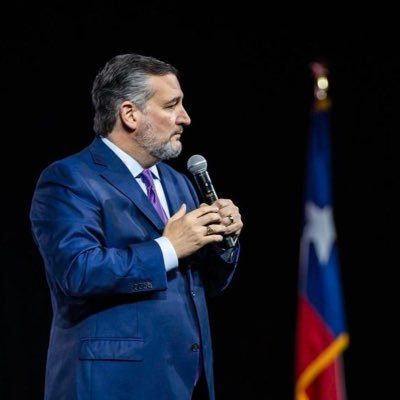
History was made last night.
For months, we were saying that 2026 was the most consequential midterm election of our lifetimes.
Unfortunately, we were right. Sometimes history is to be celebrated; other times, it is to be mourned. Always, it must be reckoned with.
2026 was not simply a blue wave; it was a blue tsunami. It was an ass kicking. It was not simply a bad 2006 midterm election. It was a Watergate-level repudiation. What happened, and why? What are the consequences, and where on earth do we go from here?
When all the votes were counted, the problem wasn’t turnout. Instead, our voters, Republicans, Libertarians, Independents, showed up and voted, and rejected our candidates, voting Democrat instead. We’ve lost the House. We’ve lost the Senate. When all is said and done, we will have lost eight to 10 Senate seats.
We lost in historically red states, like South Carolina and North Carolina, Kansas and Iowa. We lost in purple states, like Michigan, and New Hampshire, and Georgia. And we just barely won by just a single point in bright red states like Florida and Louisiana, and then there’s Texas.
Nowhere are the consequences of this election greater than Texas. In the Lone Star State, we lost every single statewide election. For weeks, I had been publicly warning on this podcast that we were in very real danger of losing everything in Texas. Far too few believed that was possible. I am very, very sorry that it came to pass. Texas has not had a Democrat governor since 1994. We haven’t had a Democrat senator since 1993. Now we’ll have both.
Why were the results so overwhelming? Pundits and analysts will break down the results for weeks or months or even years to come, but several things are already evident today.
Years ago, the very best political advice I ever got was from Heidi. She said, “It’s not about you. It’s about them. It’s about their kids, their families, their hopes, their dreams, their futures.” Too many politicians forget that.
Take the state of Kansas, for example, a state that has not elected a Democrat senator since 1932. It just did. Here’s what exit polling showed were the top issues in Kansas.
Number one, cost of living, energy, and groceries. That was listed as number one by 30.6 percent of voters.
Corruption. Number two, 18.5%.
The cost of the Iran war, 10.1%.
The candidates are terrible, 7.9%.
The Canada trade war, 7.6%.
The GOP didn’t do enough to support Trump, 6.6%.
Republicans didn’t pass the Save America Act, 5.6%.
Trump’s focus on monuments, 5.5%, and data centers and AI, 3.8%.
The top issue, cost of living, is very real. Too many in politics dismissed it. They didn’t understand. They pointed to the macro numbers showing the stock markets soaring, median income at record highs, and poverty at record lows. Those data are true, but they don’t tell all of the story.
Here are some stats that are a lot more real and personal. Spam, Hormel’s processed meat substitute, broke record sales, selling 113 million cans last year. That is nearly as much spam as was sold during the entirety of World War II. 29 percent of Americans have used buy now, pay later for groceries this year. That’s double the share just two years ago.
In August, banks repossessed 42% more homes than they did last year. In 2024, car repossessions topped 2.3 million, above the 2009 peak in the middle of the Great Financial Crisis. In 2025, 6% of 401k holders took hardship withdrawals, paying penalties. That is a record, and triple the norm.
And here’s one that’s really stunning. Americans made more than 75 million paid plasma donations in 2026. That’s another record. That means 200,000 Americans every single day, with a needle in their arm, just to pay for groceries.
That is very real pain from real Americans, and too many Republican politicians seem like they didn’t understand or they didn’t care. Food is too high, gas is too high, diesel is too high, insurance is too high, life is too high.
Tariffs have made everything too expensive, and the Iran war has dragged on too long. It should have been brief, decisive, and over. It needs to end, and we should never, under any circumstances, give the Ayatollah billions of dollars.
There’s a very real economic disconnect. Our K-shaped economy is a yawning divide. Last year, we saw the world’s very first trillionaire, a modern-day Thomas Edison, at the very same time that millions were struggling to feed their families. Data centers being constructed were turning billionaires into centibillionaires, while simultaneously the average American’s electricity bill went up 30% in the last five years.
Understandably, people were pissed off, and elected Republicans didn’t do enough to address their very real pain.
So, what do we do now? We need to listen and respond. We need to champion economic policies that make a real difference in working people’s lives, and we need to deal with the consequences.
Texas is blue. That is a hard sentence to utter. But Texas, today at least, is blue. As we sit here today, I am the only statewide elected Republican who remains in Texas. That’s not something I ever thought I would say.
We can be certain that the Democrats in Austin and in Washington will overshoot. In Texas, they will try to raise taxes dramatically. They may even try to adopt a state income tax, or even a California wealth tax. They will try to shut down the energy industry, destroying jobs across our state. They will embrace the radical transgender agenda. They will persecute those they perceive to be enemies, especially Elon Musk.
And in Washington, they will attack Trump every single day, constantly. Impeachment hearings, subpoenas, his family, cabinet members, business leaders, open persecution, and nonstop retaliation. Make no mistake. Nationally, the radicals are in charge. The communists and the Islamists who have taken over the Democrat Party have now taken over the United States Congress. They will be unleashed.
Sadly, that means many Americans will be hurt. Texans will be hurt. Their assault on business will make Texas a much less attractive place to start or grow a small business. Texas will become more like California if they succeed in halting all new investment into AI.
The economic results will be dramatic. Over $700 billion in new projects are scheduled to start in the next year. If the Democrats shut them all down, our country will very likely go into a recession. That will suit the Democrats just fine. They’ll just blame it all on Donald Trump.
In the next two years, we need to do two things.
One, fight the madness. I will work with Democrats when they’re willing to be reasonable. Last night, I called James Talarico. I congratulated him on his very impressive victory. It was a pleasant conversation, and I told him that I looked forward to working with him to try to benefit Texas.
So, if there are things like flood relief for the Hill Country, or trying to get the space academy to Texas, he and I will work together. But if the newly elected radicals push policies that hurt Texas, raising taxes, destroying jobs, opening the border, releasing violent criminals, threatening our children, undermining our constitutional rights, I will fight with all of my strength to defend Texas and to defend the Constitution.
And number two, we need to rebuild, getting behind policies that directly benefit the constituents we lost.
There’s a complicated story, no doubt, of what happened on Election Day, but as I see it, the key constituencies we lost were blue-collar voters, what had rightly become the core base of our party, Evangelical Christians, who didn’t show up with the same numbers and fervor as prior elections, farmers and ranchers. Tragically, we alienated rural America. Young people, who excitedly had voted Republican in 2024, and who shifted hard blue this cycle. And of course, Hispanics.
For Hispanics, there’s a strong overlap with young people and blue-collar workers. In 2024, just two years ago, I was proud to carry Hispanics statewide in Texas by six points, and we swung the Rio Grande Valley red for the first time in a century. It can be done, but in this election, those Hispanic voters overwhelmingly went back Democrat. We have got to turn that around.
And for young people, we need to be the party of the future. We need to champion policies that expand their future. Our two single biggest legislative accomplishments of the past two years, Trump Accounts and the school choice tax credit, which will unleash tens of billions of dollars in new scholarships for kids, are generationally powerful. I was proud to author both of those transformational policies, and yet too few candidates all across the country ran on that record.
Too few voters were even aware of what we’d accomplished for their kids and their future. But we need to build. We need to expand to continue creating a new investor class for hundreds of millions of Americans, help everyone, every American, become an owner, to have real skin in the game, to create new generations of capitalists ready to reject socialism.
People voted as they did because they were angry. Ironically, the Democrats that they elected are going to advance policies that will make affordability worse. The Democrats want gas prices higher. They want to ban gasoline engines altogether. Their extreme environmental mandates will drive up food prices and the prices of everything else.
But hear me now: we will bring Texas back. I am filled with hope and optimism. Texas will be red again. We have not suddenly become a bunch of tofu-eating, gun-banning, tutu-wearing pinko commie liberals. That ain’t us. Texas is still Texas.
We will rebuild as a true blue-collar party, not by embracing socialism, but by being real free-market conservatives. The way we built the Texas economic miracle in the first place, and we will build and rebuild America as well.
When the zealots overreach, and they will, we will stand ready to lead in the direction of freedom, of prosperity, of safety, and security, and common sense. We will return to a new dawn of freedom in America.
It is dark right now, but it is always darkest before the dawn, and morning is coming. That is my fervent prayer, and that is my commitment to you.
This fella might be the 2028 Democratic nominee.
Jon Ossoff just won a second term in Georgia by a wide margin, as the only Democratic senator defending a seat in a state Trump carried in 2024. Polymarket now ranks him among the top Democratic contenders for 2028, at around 26%. He has said repeatedly that he plans to serve all six years.
Here’s how he got here.
He grew up in the Atlanta suburbs in a comfortable family. His mother immigrated from Australia and later co-founded a group that helps women run for local office in Georgia. His father owns a publishing company, and his father’s Jewish ancestors fled pogroms in Eastern Europe. He went to Paideia, a private school in Atlanta.
As a teenager, he read John Lewis’s memoir and wrote the civil rights leader a letter asking for an internship. Lewis said yes, and stayed his mentor until he died in 2020.
After graduating from Georgetown, Ossoff used an inheritance to buy into a small London company that made investigative documentaries about things like corrupt judges in Ghana and ISIS’s enslavement of Yazidi women.
In 2019, a Ghanaian journalist who had worked on one of their investigations into soccer corruption, Ahmed Hussein-Suale, was shot dead near his home. Ossoff flew to Ghana for the funeral. The killing has never been solved.
In 2017, at 30, he ran for a suburban Atlanta House seat Republicans had held for decades. It became the most expensive House race in history at the time; critics accused him of overstating his national security résumé, and he lost by about 4 points.
Four years later, after losing the first round in the 2020 Senate election, the race fell into a runoff when his opponent missed 50% by a fraction. His opponent skipped their only runoff debate, so Ossoff debated an empty podium on live TV, then won by about 55,000 votes.
This year, as soon as Mike Collins won the Republican nomination, Ossoff reportedly gave his campaign staff a two-word order: “Bury him.”
He says he isn’t running in 2028. In 2017, nobody thought he’d ever make it to the Senate either.


A computer took 62 seconds. She took 50.
In 1977, at Southern Methodist University in Dallas, Shakuntala Devi was asked for the 23rd root of a 201-digit number. She worked it out in her head in 50 seconds: 546,372,891. A UNIVAC computer, which needed a special program written just for that problem, took 62.
Yesterday would have been her 97th birthday.
She was born in Bangalore in 1929 and had almost no formal schooling. Her father noticed when she was three that she could memorize sequences of cards, and by six she was doing calculations in front of university audiences.
In 1980, at Imperial College London, someone handed her two random 13-digit numbers: 7,686,369,774,870 × 2,465,099,745,779. She gave the correct 26-digit answer in 28 seconds, including the time it took to say it out loud. It went into the Guinness Book of World Records.
Back in 1950, hosts on a BBC broadcast told her she’d gotten a problem wrong. When they checked again, she was right, and they weren’t.
But that's not the end yet.
In 1977, the same year she beat the UNIVAC, she published The World of Homosexuals, widely considered the first study of its kind in India, arguing for full acceptance at a time when almost nobody would. In the book, she explained why she was writing it: “My only qualification for writing this book is that I am a human being.”
Three years later, she ran for Parliament against Indira Gandhi.
This week, everyone is arguing about whether AI will replace the human mind. She spent her life reminding people that computers are something humans made, not the other way around.
The machine was fast. She was faster. But the bravest thing she ever wrote had nothing to do with numbers.
Acun Kaya retweeted

James Talarico not only fights Republican extremism, but also Republican hypocrisy. James fought against the Ten Commandments bill from people who don’t even follow it themselves. “You’re saying you’d rather tell people to follow the Ten Commandments than follow it yourself?”
Acun Kaya retweeted

"I don't think you should listen to anything a politician says. You shouldn't trust anything a politician says."
"Including you?"
"Yeah."
Democratic Senator-elect James Talarico offers an unexpected response when @DanaPerino presses him on whether he still opposes proposals associated with Democratic Socialists of America-backed candidates following his election victory.
"What you should do is look at my record. That is what you can trust. Because actions, in my view, speak a lot louder than words."
@AmericaNewsroom
Acun Kaya retweeted
He was talked about as a future Nobel Prize winner. In a few months, he lost his lab, his HHMI job, and his place at MIT. Last month, a jury ordered the woman who accused him to pay him $6 million.
David Sabatini co-discovered mTOR, the protein pathway behind a huge share of today’s cancer and aging research, and ran a lab at MIT’s Whitehead Institute for 24 years.
In 2021, Kristin Knouse, a younger scientist he’d had a relationship with, told Whitehead it had been coercive. An outside investigation found he had broken the institute’s relationship policy and allowed a “sexualized undercurrent” in his lab. HHMI fired him. He resigned from Whitehead. MIT put him on leave. NYU considered hiring him, then backed away after protests.
He says he lost 35 pounds and much of his hair. “I lost everything,” he said.
So he sued her. She countersued for harassment and retaliation. His lawyers argued the relationship was consensual and that her complaint came after he started dating another woman. It took five years, and a detour through Massachusetts’ highest court, before twelve strangers heard the evidence.
On October 16, after a three-week trial, the jury sided with him on every claim and rejected all of hers.
It’s still not settled. She plans to appeal, and Whitehead says it stands by its investigation. And while the case dragged on, he rebuilt his career from scratch in Prague, with $25 million from Bill Ackman and another donor.
Institutions moved in months; the court took five years. The internet took minutes. And most of us made up our minds somewhere in between, without ever seeing the evidence.