


Advice retweeted
LET US PRAY.
God, we've been through the fire and we're still standing.
Cover the ones who held us down when we had nothing.
Humble the ones who laughed when we were struggling.
Keep us loyal, and keep us moving.
Let them lose you.
If they come back, they learned respect.
If they don't, they were never yours.
Either way, you win.
1
8
Advice retweeted
I'm sorry for posting this.
There's a toad in the Amazon that gives birth through its back. It's called the Surinam toad.
After mating, the male pushes up to 100 eggs into the female's back. Her skin swells up and seals them in. Like a honeycomb. The eggs stay there for 4 months. They don't hatch outside. They grow inside her skin. No pond. No tadpole stage.
One day her back opens. Dozens of tiny, fully formed toads push out and swim away on their own.


Advice retweeted
I bet you did not know this.
Some butterflies can drink tears from animals.🦋
Yes. Tears.
Certain butterflies, especially in tropical regions, land on the eyes of turtles, crocodiles and other animals and feed on the salty fluid.
Why?
Because tears contain sodium and other minerals that butterflies need.
And there’s something even stranger…
The butterfly isn't trying to hurt the animal. It is basically using the animal's eye as a tiny mineral source.
So while the animal is sitting there thinking:
“Why is this thing on my face?”
The butterfly is having lunch. 😂🦋
Nature has some seriously weird ways of getting nutrients.


I shouldn't be saying this.
Some turtles never need to come up for air. They breath with their butt.
Meet the Fitzroy River turtle from Australia. It pulls oxygen straight from the water… through its butts.
It has special sacs inside its cloaca, lined with tiny blood-rich fingers. The turtle pumps water in and out up to 60 times a minute. Those sacs act like underwater lungs. One species can get nearly all the oxygen it needs this way. It can stay submerged for weeks without a single breath of air.
Nature found a way to turn a multipurpose opening into a secret survival tool.
Would you rather breathe like that or keep using your lungs?


Advice retweeted
I shouldn't have said this.
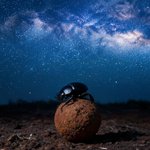
This dung beetle navigates using the milky way. At night it rolls a ball of dung backwards. It can't see where it's going. So it climbs on top, does a little dance to look up, and locks onto the stars.
It does this with a brain smaller than a rice!


