


ilster retweeted

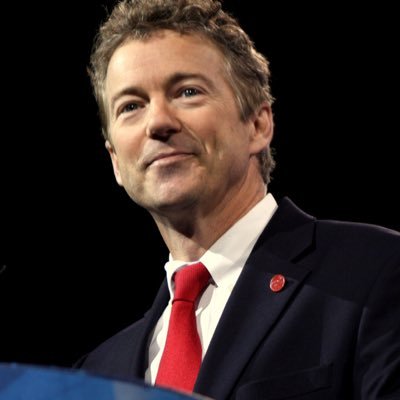
President Trump just endorsed Byron Donalds for Governor of Florida.
Massive. Game over.




ilster retweeted

Do you feel the cultural shift?
The Left demonized Patriotism as racist.
The Left demonized Masculinity as toxic.
They told you America was inherently bad.
They did this so people would be afraid to fight back and to weaken men.
All so they could…
Destroy America.
Destroy American exceptionalism.
But due to President Trump…
Patriotism is cool again.
Masculinity is celebrated.
People are no longer staying quiet.
America is getting back to being America.
There is no apologizing.
The Left are the unhappy miserable outcasts and everyone sees it.
They hate America and what America stands for.
It started with USA Hockey and Jimmy’s Famous Seafood telling the Media to “Go F*ck Yourself”.
Then Trump making DC monuments beautiful again.
Then Team SpaceX launches standing proudly in front of American flags.
Then the US National Team standing Patriotically with hands over their hearts during the anthem.
Then UFC at the White House in its full patriotic glory.
Now Americans proudly celebrating the 250 birthday of the GREATEST country on Earth.
Pure unapologetic Masculine Patriotism.
They might seem like little things.
But they’re not.
Winning the Culture War will lead to saving America.
And America must be saved.
Save America to save the West.
Save the West to save the World.
God bless the United States of America!🇺🇸


ilster retweeted

Truly amazing. I’m upping my price target, from $ibrx 208/ share to 1,000 , making #immunitybio the first trillion dollar biotech in the world , by 2032
(Retweet for max sharing, is caring)
1) Video for prior price target:
IBRX $208 Price Target: How to Discount $23B Revenue at 20x P/S
youtu.be/eC2PUinHWgM
2) Video for 2027 explosion:
IBRX Is About to Blow Up in 2027 – And the X-factor will surprise you!
youtu.be/efvBVt2dOQw


ilster retweeted
*Please retweet me*
My $ibrx thesis is about the right scale at the right time.
Time has to do with sbla and pappilary
Scale has to do with CIS , pappilary and NSCLC (Saudi)
When scale and timing collide you will see real healing , real global scale and real results.
Earnings review (point in time economics) attached
IBRX Q1 Revenue MEETS April Performance: Why The Stock May Dip (ST), But Set for Expansion Long-Term
youtu.be/6GDMi4RNBbg
Price target 2026/7: 30 usd
Price target 2029/30: 208
ilster retweeted
This is what @DrPatrick is up against Fyr: @RepThomasMassie
$ibrx is more than likely saving this man and if it isn’t , other cancer drugs that haven’t been approved by the commy fda, are doing the job
Retweet this for max reach and if you haven’t seen my sBLA approval breakdown yet it’s one of my highest reviewed short videos , here:
$IBRX May 2026 Catalyst: sBLA Filing Decision + PDUFA Explained – Strap In For A Potential Moon Shot
youtu.be/fuXClgHnYGU
Cc: @joerogan @bullishbruk @seahorse_anton @RWMaloneMD @RobertKennedyJr @danritacca @BaBig90 @MarioNawfal @aleabitoreddit @JacquesBahou @LynnCareySaylor @petitnong_


Former GOP Senator Ben Sasse had Stage 4 pancreatic cancer that spread to his lungs and liver. Doctors gave him 4 months to live.
5 months later his tumors have shrunk 76%.
The drug that's saving him isn’t FDA-approved, but he got it through a clinical trial.
So why are never-Trump holdovers at the FDA blocking other dying Americans from drugs that work?
Meet Vinay Prasad.
Until recently he ran drug approvals at the FDA and said on his own podcast that he has a Trump “Voodoo Doll” he liked to stab and called Trump voters a "cult." Trump finally pushed him out, but his crew is still there saying “no”.
Prasad's whole career was funded by Arnold Ventures, a foundation built on Enron money, and they handed him $2 million to go hunt for drugs to destroy. They even run an entire "FDA Accountability" project to make approvals harder. Here are some their “kills”:
Melanoma drug - FDA panel said approve but Prasad overruled them.
Duchenne heart drug for dying little boys - Prasad cancelled the advisory meeting before it could happen.
Ataxia drug - Rejected despite hitting endpoints. Harvard doctor told the Senate it was "death by technicality."
Since 2025: 23 rare disease drugs rejected.
Moms of dying kids don't care about the deep state’s "process."
They care if their child sees Christmas.
Prasad is gone. His crew isn't and the Enron money isn't.

ilster retweeted

As I am converging on the role of IL-15 in cancer and infectious disease, the more I explore the literature, the more I find that the hypothesis of the "Parallels between Cancer and Infectious Disease" is correct. Early on, I believed that COVID was one of the most immunosuppressive viruses and published the paper on the "COVID-19: Staging of a New Disease" with Dr. Carlos Cordon-Cardo.
Now, I find a thought leader, Dr. Richard S. Hotchkiss confirming the belief that both cancer and infectious disease run parallel courses and represent the collapse of the immune system. The power of IL-15 in correcting these disorders whether it be cancer or sepsis is our goal as we pursue clinical trials both in sepsis and multiple tumor types.
I could not agree more with this statement by Dr. Hotchkiss et al., that:
"On a more general level, greater collaboration is required between oncologists, infectious-disease
specialists, translational immunologists, and
pharmaceutical companies in developing clinically relevant tests that identify patient-specific defects in innate or adaptive immunity... A change in clinical outcomes — in both cancer and infectious disease — will occur more quickly if investigators in these specialties pull together."
ImmunityBio will be the harnessing force to make this collaboration happen and advance clinical trials to change the paradigm of care.
pubmed.ncbi.nlm.nih.gov/3308…
nejm.org/doi/10.1056/NEJMcib…


ilster retweeted

NASA has released the first full image of Earth in 54 years.
The photo was taken from the Orion spacecraft, which is currently traveling to the Moon.
The last time Earth was photographed in its entirety from deep space was in 1972 during the Apollo 17 mission. Since then, such images have been created by stitching together multiple shots taken from Earth’s orbit.

ilster retweeted

Food for thought.
Trump, Hormuz and the End of the Free Ride
For half a century, Western strategists have known that the Strait of Hormuz is the acute point where energy, sea power and political will intersect. That knowledge is not in dispute. What is new in this war with Iran is that the United States, under Donald Trump, has chosen not to rush to “solve” the problem. In Hegelian terms, he is refusing an easy synthesis in order to force the underlying contradiction to the surface.
The old thesis was simple: the US guarantees open sea lanes in the Gulf, and everyone else structures their economies and politics around that free insurance. Europe and the UK embraced ambitious green policies, ran down hard‑power capabilities and lectured Washington on multilateral virtue, secure in the assumption that American carriers would always appear off Hormuz. The political class behaved as if the American security guarantee were a law of nature, not a contingent choice. Their conduct today is closer to Chamberlain than Churchill: temporising, issuing statements, hoping the storm will pass without a fundamental reordering of their responsibilities.
Trump’s antithesis is to withhold the automatic guarantee at the moment of maximum stress. Militarily, the US can break Iran’s residual ability to contest the Strait; that is not the binding constraint. The point is to delay that act. By allowing a closure or semi‑closure to bite, Trump ensures that the immediate pain is concentrated in exactly the jurisdictions that have most conspicuously free‑ridden on US power: the EU and the UK. Their industries, consumers and energy‑transition assumptions are exposed.
In that context, his reported blunt message to European and British leaders, you need the oil out of the Strait more than we do; why don’t you go and take it? Is not a throwaway line. It is the verbalisation of the antithesis. It openly reverses the traditional presumption that America will carry the burden while its allies emote from the sidelines.
In this dialectic, the prize is not simply the reopening of a chokepoint. The prize is a reordered system in which the United States effectively arbitrages and controls the global flow of oil. A world in which US‑aligned production in the Americas plus a discretionary capability to secure,or not secure, Hormuz places Washington at the centre of the hydrocarbon chessboard. For that strategic end, a rapid restoration of the old status quo would be counterproductive.
A quick, surgical “fix” of Hormuz would short‑circuit the dialectic. If Trump rapidly crushed Iran’s remaining coastal capabilities, swept the mines and escorted tankers back through the Strait, Europe and the UK would heave a sigh of relief and return to business as usual: underfunded militaries, maximalist green posturing and performative disdain for US power, all underwritten by that same power. The contradiction between their dependence and their posture would remain latent.
By declining to supply the synthesis on demand, and by explicitly telling London and Brussels to “go and take it” themselves, Trump forces a reckoning. European and British leaders must confront the fact that their energy systems, their industrial bases and their geopolitical sermons all rest on an American hard‑power foundation they neither finance nor politically respect. The longer the contradiction is allowed to unfold, the stronger the eventual synthesis can be: a new order in which access to secure flows, Hormuz, Venezuela and beyond, is explicitly conditional on real contributions, not assumed as a right.
In that sense, the delay in “taking” the Strait, and the challenge issued to US allies to do it themselves, is not indecision. It is the negative moment Hegel insisted was necessary for history to move. Only by withholding the old guarantee, and by saying so out loud to those who depended on it, can Trump hope to end the free ride.

ilster retweeted

Ever notice how sitting all day makes you feel more tired, not less?
That’s because muscle contraction is one of the biggest drivers of circulation and metabolism.
When muscles move, they help:
- Pump blood
- Regulate glucose
- Stimulate mitochondria
Without movement, your metabolism literally slows down.
ilster retweeted
Will submit data..coming soon.
NCI, NIH and even FDA knew since 2007 that IL15 was a game changer for cancer of all types. Every scientific thought leader ranked it number one ..almost 20 years ago. I hope Marty sits down with the reviewers when the data comes in. Saving patients bladders matter. Prolonging life matters. Quality of life matters. T cell and NK cell expansion matters. Duration matters.

FDA Commissioner Dr. Marty Makary revealed a major shift at the agency that’s still making waves:
“I personally meet one-on-one with reviewers and ask: ‘Are you seeing anything that gives you chills up your spine because it could be such a game-changer?’”
He described the FDA’s new proactive approach:
- No more passive waiting for applications.
- When early data looks “too good to be true,” they call companies directly: “Forget the paperwork — send more data now.”
- Fast-track vouchers for decisions in weeks instead of years.
- Recent example: gene therapy restored normal hearing in 3 of 12 deaf children (improved in 7) with perfect safety — FDA contacted the company days after NEJM publication.
Makary emphasized the FDA is aggressively tracking promising treatments for blindness, deafness, pediatric/rare diseases, cancers — and a “potentially promising” therapy for type 1 diabetes that has reviewers excited.
This is the FDA acting like it’s on the front lines of curing disease, not just regulating it.
Months later — are you hopeful this new mindset finally delivers real cures, or waiting to see hard results?
ilster retweeted
Something people may not be aware of with Immunity Bio, Vertical Integration and Digital Intelligence
Vertical Integration
Most biotechs pay a “Middleman Tax” to manufacture which eats into their profits. But $IBRX is different. They own a massive facility in New York that can produce 1 million vials of ANKTIVA per year.
This means when revenue scales up their costs remain relatively flat.
Digital intelligence
The Immune Digital Twin.
it’s a virtual replica of a patient’s immune system. They crunch trillions of data points, including genomic, proteomic, and transcriptomic information, to create this digital twin.
They can “rehearse” immunotherapy responses before the first dose, identify super-responders, and optimize the “Universal Backbone” strategy. It’s like having a virtual lab assistant that can help them achieve their goals.
Long AF $IBRX

ilster retweeted
Carl June the father of CAR-T cells discussing how to activate cold tumors (meaning cancer cells that are not recognized by T cells). These cold tumors which has lost their MHC expression are exactly the targets of NK cells.
youtube.com/live/DKd8YPX3gWc…


ilster retweeted

🚨 Where Is The Photonics Trade Headed Next?
$AAOI $POET $GLW $MRVL $CIEN
$LITE & $COHR earnings came out last week.
So let’s talk about what they actually told us and how that signal flows through the rest of the ecosystem.
When companies at this layer post strong quarters at the same time, guide higher, and openly talk about being sold out, it means real infrastructure is being built in a very significant way. Hardware is being ordered, systems are being installed, and capacity is being scaled.
That’s what makes their results so useful as signals.
What Lumentum Holdings and Coherent Corp just showed is that photonics is moving beyond a simple upgrade cycle and into something broader.
This is starting to look like the early stages of an infrastructure build, where light becomes core plumbing for how AI systems operate.
Both calls reinforced four things:
• Demand visibility is moving outward (multi-year commitments, customers ordering further ahead)
• Supply is still the bottleneck (InP fully allocated, demand exceeding capacity by ~25–30%)
• The architecture shift is very real (800G now, 1.6T coming, plus OCS and CPO ramps)
• Manufacturing execution is becoming a moat (yield, throughput, six-inch InP, assembly scale)
These are the keys.
Now the key question becomes: how does that signal flow through the rest of the stack?
Let’s comb through it.
$AXTI
Before we even get to transceivers and optical engines, the photonics stack starts upstream with raw materials. A huge portion of high-speed datacenter optics relies on compound semiconductors, especially Indium Phosphide.
This is where AXT fits.
AXT supplies InP substrates that sit at the very beginning of the chain. Think of it as feedstock that downstream players turn into lasers, detectors, and optical components.
This matters because Lumentum and Coherent both confirmed they are still supply constrained at the laser level. That constraint starts upstream.
So AXTI becomes an early tell.
For AXT I’m watching:
• InP availability and lead times
• Pricing dynamics
• Any commentary around export permits or shipment friction
• Mix shift toward InP vs other substrates
What we know is that when substrates get tight, everyone downstream feels it.
$AAOI
Once light is generated, it has to be turned into usable data signals. That happens inside transceivers, sitting at the edge of every fiber connection.
That’s where Applied Optoelectronics operates.
As networks move from 400G to 800G and toward 1.6T, transceivers become harder to manufacture. Execution starts to matter as much as design. Yield, reliability, and production scale become everything.
Lumentum just told us their EML lasers are sold out for six quarters and demand keeps widening.
That typically means transceiver makers are seeing real orders forming behind the scenes.
For AAOI, the questions are simple:
Can they qualify fast enough?
Can they manufacture consistently at higher speeds?
On AAOI’s call I’m watching:
• 800G shipment scale and 1.6T timelines
• Customer concentration vs diversification
• Yield and manufacturing commentary
• Gross margin behavior as volume ramps
That determines whether demand turns into durable revenue.
$POET $MRVL
As systems get denser, customers increasingly want integrated solutions instead of assembling everything piece by piece.
That shift pulls architecture players into focus.
Marvell is building toward owning more of the data-movement stack, spanning switching silicon, optical DSP, silicon photonics adjacency, and now scale-up fabrics. They’re trying to become connective tissue for massive AI clusters.
Alongside that sits POET Tech
POET lives in the optical engine layer, integrating lasers, detectors, and electronics into compact photonic assemblies. As optics moves closer to compute, this layer becomes more valuable because it reduces system complexity and can lower manufacturing cost.
For POET, milestones are very sequential:
Design wins → qualifications → repeat orders → volume shipments.
On POET’s call, I’m watching:
• Language shifting from development units to production
• Qualification progress
• Evidence of automated test and packaging scale
• Revenue mix moving toward repeat customers
That progression is what turns promising tech into real business.
$TSEM
Design alone doesn’t build data centers. Everything still has to be fabricated, packaged, and tested. That’s where Tower Semiconductor enters.
Tower provides specialty manufacturing, including silicon photonics processes.
As optical integration rises, foundries become strategic assets.
On TSEM’s call, I’m watching:
• Silicon photonics utilization
• New program ramps
• Packaging/test investments
• Specialty process demand tied to optical I/O
Capacity and consistency directly determine how fast photonics can scale.
$CIEN
AI infrastructure doesn’t stop inside one building. Data has to move between campuses and regions.
That’s handled by optical transport, which is the domain of Ciena.
When cloud providers spend on transport, it confirms clusters are being connected at scale.
On CIEN’s call, I’m watching:
• DCI backlog and order growth
• ZR/ZR+ coherent optics mix
• Lead times
• Explicit AI-driven demand commentary
Strong transport demand validates a broad network build.
$GLW
Every optical link ultimately relies on fiber.
That’s where Corning fits.
No fiber means no optics.
As racks get denser and architectures get more leaf-spine-heavy, you add higher fiber counts, tighter bend tolerances, more pre-terminated assemblies, and you try to install it faster with less labor.
On GLW’s call, I’m watching:
• Datacenter fiber volumes
• High-density cable mix
• Capacity expansion
• Orders tied to new builds vs upgrades
$FN
One of the clearest real-world indicators of activity is Fabrinet.
Fabrinet assembles and tests optical hardware for Lumentum and Coherent.
When FN ramps, products are already moving through factories.
On FN’s call, I’m watching:
• Backlog growth
• Optical line utilization
• Hiring and capex
• Margin leverage vs overtime pressure
$SMTC $MTSI
Behind every optical lane sit analog components that keep signals clean at extreme speeds.
That’s Semtech and MACOM Technology Solutions.
As speeds rise, their content per system increases.
On their calls, I’m watching:
• 800G → 1.6T attach rates
• Design wins converting to production
• Margin expansion from higher-performance parts
$AVGO $ANET $NVDA
Finally, there are the big dogs.
Broadcom defines networking sockets.
Arista Networks builds the Ethernet fabric.
NVIDIA sets cluster architecture and deployment scale.
When these accelerate, photonics follows.
On their calls, I’m watching:
• AI capex cadence
• Cluster architecture changes
• Optical I/O, CPO, and scale-up fabric language
They determine the future and the pace of the entire build.
...
Lumentum and Coherent just confirmed we’re entering a broader photonics build phase.
Photonics is becoming core infrastructure for AI. No doubt about it.
Now it’s on us to find the players that capture the CAPEX over the next few years.
If you found this insightful, please do save and repost.

🚨There is a ton of momentum building in photonics right now.
$POET $MRVL $LITE $COHR $AAOI $TSEM $CIEN
Every part of the stack is heating up, and management teams have basically spent the last month broadcasting the same story.
Let’s dig into some of the recent bits I’ve been watching...
$LITE
Q1 revenue up 58% YoY to $533.8M with next quarter guided to ~$650M, hitting their mid-2026 target two quarters early.
Management pointed to cloud-optics demand running well above supply with transceivers, optical circuit switches, and early co-packaged optics driving the next leg.
$COHR
“AI data centers and communications remain strong long-term growth drivers.”
They just posted $1.58B in revenue, +17% YoY, and highlighted accelerating hyperscale DCI demand across their ZR / ZR+ lineup and their 400G / 800G ramps.
$MRVL
“AI infrastructure is transforming faster than ever.”
“We’re going to have a silicon-photonics powerhouse at Marvell when this is all done.”
The $3.25B Celestial AI acquisition comes with a modeled $500M run-rate by FY28 and $1B by FY29
Celestial AI
“Marvell is the ideal home for our Photonic Fabric… the scale and customer reach to take this platform into high-volume production.”
$POET
Their optical-engine technology is already designed into Celestial AI’s Photonic Fabric, the same platform Marvell just paid $3.25B to acquire.
As AI systems move toward denser, more integrated optical engines, POET sits directly inside one of the most advanced photonics architectures in the market - now part of Marvell’s silicon-photonics roadmap.
$AAOI
Revenue up 82% YoY.
They’re on track to build what they believe will be the largest domestic production capacity for 800G and 1.6T transceivers by year-end, roughly 35k parts per month, all inside their Texas footprint.
$TSEM
Expecting silicon-photonics revenue to more than double off last year’s base.
They’re investing $300M into photonics and AI-focused expansion and calling for ~75% growth in that segment.
$CIEN
“We delivered record orders. Cloud and AI providers continue to invest in high-capacity optical transport.”
DCI and long-haul momentum continue to show up directly in the numbers.
...
But you can’t just look at the transceiver and laser makers.
Some of the clearest signals are coming from the companies building the architecture and the supply chain behind it.
$AVGO
AI revenue moving from ~$11B to $20B+.
They’re doubling down on silicon photonics
Controlling the switch silicon, the optical DSP, and the optical engines at the heart of modern AI racks.
If you’re bullish on photonics, this is one of the companies defining the socket.
$ANET
Building the “AI spine.”
Their Ethernet-based AI networking platform relies entirely on high-speed optics to stitch together massive GPU clusters
100k-GPU scale and up.
As clusters get larger, copper falls out of the system and optics takes over.
$FN
Record ~$980M in revenue.
They manufacture optical engines for some of the largest players in the space - $NVDA, $LITE, $COHR, and others.
When Fabrinet says demand is exceptional, it means the orders are already in the building.
$GLW
Optical Communications revenue up 33% YoY.
AI racks require roughly 10x the fiber density of legacy cloud racks.
Corning is supplying the physical layer that makes 800G and 1.6T optics viable at scale.
$SMTC
Solid print tied to growing traction in Linear Pluggable Optics (LPO).
They sit in the analog layer, drivers and TIAs that fire the lasers, and are positioned directly under the 800G / 1.6T cycle.
$MTSI
Revenue up 30% YoY.
They build the high-speed analog components that sit behind next-gen optical engines and are essential for 1.6T designs.
....
This is all widespread.
It’s lasers, transceivers, optical switches, silicon photonics, scale-up fabrics, DCI, long-haul transport, Ethernet AI spines, fiber density, and the analog chips behind every laser all moving in the same direction.
If you’re tracking AI infrastructure, photonics continues to gain strength week after week.
