

https://xitter.cf/t.co/syzTGESSmo
Joined June 2018
- Tweets7.8K
- Following4.5K
- Followers7.9K
- Likes28.3K





Pinned Tweet
a number of people have reached out to me about my math spaced repetition cards
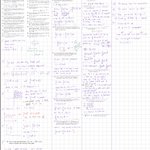
my linear algebra (632 cards): "Linear Algebra and Its Applications" by David C. Lay, Steven R. Lay, and Judi J. McDonald: app.mochi.cards/decks/e11c23…
my vector calculus (640 cards): "Vector Calculus" by Susan Colley and Santiago Cañez: app.mochi.cards/decks/e11c23…
my differential equations (in progress: 105 cards so far): "Notes on Diffy Qs: Differential Equations For Engineers" by Jiří Lebl: app.mochi.cards/decks/e11c23…
naz retweeted

@elonmusk Elon, I want to tell you something as a Ukrainian.
For years, many people in Ukraine admired and respected you. I was one of them. I personally saw you as a technological genius, a visionary, someone who was building the future while others were still living in the past.
And that is exactly why your growing hostility toward Ukraine is so difficult for me to understand.
Ukraine is not a perfect country. We have corruption, political failures, and many problems. Nobody denies that. But tell me, which country is perfect?
Ukraine is also a country of incredibly talented engineers, scientists, entrepreneurs, developers, artists, and ordinary hardworking people. We build world-class technology, innovate under impossible conditions, value education, and have repeatedly shown the world what courage, resilience, and human dignity look like.
We are a country that voluntarily gave up the world's third-largest nuclear arsenal in exchange for security assurances.
We are a nation that stood up in 2014, during the Revolution of Dignity, because we refused to live under authoritarianism and Russian domination. We wanted freedom, democracy, and the right to choose our own future.
And today, we are fighting for that same freedom.
Every day, Ukrainian civilians are killed by Russian missiles, drones, and bombs. Children lose their parents. Parents bury their children. Entire cities are destroyed. Millions of lives have been shattered.
These people are not dying because of Zelenskyy. They are not dying because of Ukrainian corruption. They are dying because Putin chose to invade another sovereign nation and continues to wage a war against its people, cities, culture, and identity.
Yes, corruption must be fought. Yes, every dollar of international aid must be accounted for. Ukrainians themselves deserve transparency and justice more than anyone.
But corruption does not justify invasion. Political failures do not justify bombing children. And no amount of criticism of Ukraine changes who crossed the border with an invading army.
You seem to believe that giving up Donbas and Luhansk could bring peace. But why should we believe Putin would stop there?
He already violated Ukraine's sovereignty after promising to respect it. He took Crimea in 2014. He fueled war in Donbas. And in 2022, he launched a full-scale invasion.
What makes you think another territorial concession would finally satisfy him?
History has shown us what happens when democracies believe they can secure lasting peace by rewarding an aggressor with someone else's land.
We have seen this before, in Europe, in the years leading up to World War II.
Peace built on surrender to a dictator is not necessarily peace. Sometimes it is simply an invitation to the next war.
Elon, you are a man who talks about the future of humanity, about making civilization better, about taking humanity to Mars.
But what kind of future are we building if we accept that powerful dictators can erase smaller nations simply because they have more weapons?
Ukraine is not asking the world to pretend we are perfect.
We are asking the world to recognize that we have the same right to exist, to be free, and to determine our future as Americans do.
And one more thing: Ukrainians have never been your enemies. Many of us admired you, believed in your vision, and appreciated what Starlink made possible during the darkest days of this war.
That is why your words hurt more than you might realize.
You have enormous influence. Your voice can shape how millions of people understand this war.
I still want to believe that the man who dreams of advancing humanity can recognize the humanity of people fighting simply to survive.
It is not too late to stand on the right side of history.
Not on Zelenskyy's side. Not on any politician's side.
On the side of freedom. On the side of human life. On the side of a nation's right to exist.
That is all we are asking for.
🇺🇦
naz retweeted

Game theory teaches that if you have an edge over other players, you must shut up about it. Don't announce you have the winning hand unless that's the way you win. Ed Thorp would only bet when math was on his side: he invented card counting in blackjack and his hedge fund had 20% returns over 20yrs with only 3 months down. (He invented a formula for option pricing that he never publicized; when others did, they got a Nobel prize).
Buffett thought the same way; when he felt out of touch with the game, he closed his partnership in 1969. These Masters go around teaching how they did it, but they know no one can compete with them. Game selection is as important as skill, and it can't be taught in a one-hour speech. "If 30 mins into a poker game you don't know who the patsy is, you are the patsy"
naz retweeted

There have been many people with much sharper rising EC curves who didn't end up in complete collapse
Losing beyond these 2 points marked out is not "greed" or "balls."
It is a deep misunderstanding of the game, pure retardation & cope.
Greedy people keep the money they make.


naz retweeted

I constantly have to explain to people from abroad why British politics is the way it is.
So here’s a TL;DR summary.
> The UK is highly conservative, especially England
> The political class was completely captured by left liberal ideology
> So the mainstream “right wing” party kept promising conservative policies.. but then gave us unprecedented waves of immigration, asylum and woke institutional takeover
> They blamed the high immigration on our membership of the EU, so pressure built and they gave us a rigged referendum in which the government literally posted every household a flyer saying “don’t do it, it will be terrible”
> we voted Brexit anyway - because we wanted lower immigration, desperately
> They ramped non-EU, 3rd world immigration up by orders of magnitude to the highest levels in history to punish us and to squash Covid inflation by lowering wages while pumping their own property portfolios
> Eventually, we’d had enough.. but there was no other serious movement on the right yet.. so we punished them with a historically low vote, removing them from power
> This meant the mainstream left wing party won by default. But quickly realised all their ideas had been implemented..
> So now all they do is tinker at the edges and brutally crack down on anyone deemed to be problematic to the race communism revolution / replacement program
So here we are.. patiently waiting for 2029 for our next vote.. as if in an orderly queue.. with a party in power that is the antithesis of what the majority of British people actually want.
Meanwhile the right is so unbelievably frustrated that it has fractured into 3 parties
1) the original conservatives “we’re sorry we will definitely lower immigration this time”
2) Reform : “anyone can be British as long as it’s legal - we just want to grow the economy and stop the illegals”
3) Restore : “millions must go”
I hope you’ve enjoyed my intro to British politics.



naz retweeted

It really helps to treat trading as a business, because the reason businesses earn money is often close to the reason you earn money in trading. In both cases you get paid for 1) being able to do things others can't do or 2) taking on risk others don't want to take on. That's essentially the whole thing.
I had asbestos removed this year, which was my first real contact with that industry. Great example, same two things blocking everyone else from doing the job: you need the infrastructure (certification, skills, expensive equipment, etc.) and even if you had all of that, you still wouldn't *want* to do it, because the work is unpleasant, hard, and the risk of getting it wrong is severe. That gap is the entire business model. The market pays a premium for absorbing a problem the rest want nothing to do with.
Trading pays for exactly that. You get paid for doing the shitty thing, for sitting in positions others won't sit in. So you want to move toward ideas and strategies that have some shittiness to them: uncomfortable, with a clear downside and a specific risk attached.

naz retweeted

Met a German founder this week and asked him if all the stories one reads about the challenges of startups in Germany are exaggerated. "No, they're understated." Proceeded to describe spending a full day having a 90-page investment contract read to him (mandatory under German law; § 13 BeurkG) by a notary that then charged €30,000. That was for his first company. His second company, needless to say, was not incorporated in Germany.
Notes on Diffy Qs by Jiří Lebl - completed last week☑️
I originally planned to study ODEs from Simmons, but Lebl’s more concise, reference-style approach appealed to me because I wanted to move through this block relatively quickly.
Several reviews criticise the book for being too terse and leaving too many gaps for the reader to fill. Personally, I did not find this to be much of a problem. The main exception was the introduction of phase planes, which I found rather underdeveloped and had to work through separately with Claude.
For anyone looking for a modern ODE book with a sensible number of exercises that moves rapidly through the standard “bag of tricks,” this is a very strong choice.
Through Lebl’s references, I also came across Thomas Judson’s free online ODE book. It gives a more expansive treatment without becoming excessively long and looks like an excellent alternative. With a little more time available, I would seriously consider using it as the main text.
Here is my Lebl spaced-repetition deck (under 500 cards): app.mochi.cards/decks/e11c23….
Next up is Blitzstein, followed by Wasserman. I expect both books to take considerably longer than the ones I have studied recently, as I intend to work through them more carefully.

Vector Calculus by Susan Colley - completed 🎉
I hadn't studied any vector calc before this book, so I went in quite Green (got it?). The original plan was Hubbard's Vector Calculus, but it would have taken far longer to get through, so I switched a few days in. My first impressions of Colley were mixed - mostly down to notation abuse in the early chapters. Thankfully that turned out to be a very localised inconvenience: the rest of the book is fantastic. Tons of interesting exercises, and a lot of things I'd seen in machine learning finally clicked - the gradient as the direction of steepest ascent/descent, for example. Hubbard has plenty of material I find genuinely interesting, but my goal was to get up to speed with standard vector calc as fast as possible, and Colley does that very well.
The big meta lesson from this run: spend more time picking the right book. I already use AI heavily in my studying, so why not use it to work out what needs learning in the first place - and which books, or even which chapters and sections, are relevant to you? Never in the history of humankind has an individual had a personal professor and domain expert in every subject within such close reach, permanently "on call". This is technology that empowers every individual. Use these tools to your advantage - don't outsource your thinking to them, make them make you smarter!
I had Claude and ChatGPT produce a roadmap of the areas of math I need for my specific goals. You can go a step further and have these tools rate different books along multiple axes against your end goal, so that even the book you pick up is specifically tailored to you! More than that: share a table of contents and they'll tell you which chapters are core and which are optional. My next goal is differential equations - looks like around 6 weeks. For that one, I had Claude build a section-by-section reading roadmap, including some optional material my primary book doesn't cover, pulled from a second book.
All of this to say: you can now learn whatever you want, and quite rapidly. There's a prevailing opinion that drilling exercises is overwhelmingly superior to picking up a book. Drilling per se isn't the problem - the problem is being handed a paragraph of context and then 100 copies of the same exercise in different flavours. That turns you into a machine that has acquired a bag of cookbook recipes. Personally, I find it far more enjoyable to take a strong book and crunch through it. And use AI here too: have it pick out which of the book's exercises actually deserve your attention - the ones that align with your end goals and each test a genuinely different area of your knowledge. That way you study on your own terms: you decide what's worth your time, instead of being spoon-fed and relying on someone else's judgment. Like, go beat Spivak's Calculus with sheer number crunching.
naz retweeted
What I want as a trader is the ability to find out I'm wrong. To progress in trading (or any intellectual domain), you must formulate your beliefs in a way that makes them explicitly falsifiable. By intentionally making your ideas vulnerable to being disproven, you eliminate ambiguity and create a pathway to objective "truth".
What's quite often missing in discretionary is the scientific rigor that profitability demands. A sound approach starts with an idea, a hypothesis about how or why price behaves the way it does. From there, you ask "how could I prove this wrong?" and then do exactly that, as ruthlessly as possible. Most of your ideas will turn out to be dogshit. That's fine. That's just the way it is. Trading is a discipline of structured skepticism.


The head of trading at the world's largest CFD broker (IC Markets), on discretionary vs systematic trading:
"I've looked at hundreds of thousands of traders over the years... The client who I'd put my own money behind is the system trader... The discretionary trader is someone who looks good for a period of time and then blows up in spectacular fashion."
Wow. That’s a hell of a statement. Full interview here: youtu.be/WhhDMq8WEr8
naz retweeted

We're using a new method to hire engineers at @HelloUntangle.
I think this playbook will become the standard for hiring technical talent in the age of agents.
Here's how it works:
1. We ask candidates to submit a screen recording of their whole screen, shipping a new feature on a current app they work on.
Note: This is usually 45 minutes of video - no editing or speeding up - we want to see them thinking, prompting and problem solving with the agent - we also want to see their devops skills.
2. We watch these videos and pick a subset to go through Round 2.
3. Round 2 is giving them a seat on @DevinAI so they have secure access to our repo.
4. We ask them to ship a new real-world feature and get the PR merge-ready.
5. We pay them a fixed fee to do this, and they have 16 hours to complete the work.
6. We watch the videos, review at all the Devin threads, have an agent do the same, and then choose which one to hire.
Note: We don't have any meetings with the folks before any of these things. It's all about the work and the results.


naz retweeted

In 2015 I formed a small group of engineers at Jane Street to rebuild the firm’s core trading system from the ground up, and we ended up cutting latency by two orders of magnitude. Some of the techniques we used, relevant for algorithmic trading systems and exchanges today:
Zero allocation: Whenever a program allocates memory for an object on the heap, the runtime pays a steep penalty in latency. The simplest solution is to avoid memory allocation entirely.
Jane Street famously uses OCaml, a strongly typed programming language that by default produces garbage collected by a dynamic collector. Most other firms use languages with manual memory management, but it was a strict part of Jane Street’s tech culture that all risk-sensitive code had to be written in OCaml. It took a collaborative effort across multiple groups within Jane Street’s technology org to create zero-allocation core libraries, combining the type safety of a functional programming language with the memory profile of a language like C.
We built the new main trading loop in this hybrid OCaml/C-style, producing zero new allocations in the critical path from tick to trade. In modern languages like Rust, it is substantially easier to achieve precise memory management while still benefiting from type safety and compile-time guarantees.
Kernel bypass: A primary goal of a low-latency trading system or exchange is to pull a network packet containing market data or order flow through the network card’s interface and into the program’s memory space as fast as possible. The standard Linux OS kernel uses slow abstractions to support a wide variety of network drivers, at the expense of the entire system’s end-to-end latency. When we started with an empty program that contained no business logic and only forwarded packets through when received, the end-to-end latency was already too slow.
To fix this issue, we employed a standard practice in the HFT industry in which we bypassed the OS’s kernel stack entirely by leveraging our network card vendors’ proprietary APIs to DMA packets straight from the NIC into memory. This technique brought our empty-packet-forwarding baseline into the latency regime we needed in order to build out the rest of the trading, risk, and protocol code.
Local IPC: Kernel bypass is necessary when reading routed packets off a network from a third party such as another exchange or client connection. When communicating between internal instead of external processes, the fastest transports avoid network stacks entirely.
Processes within the same box can transfer messages using shared memory or Unix domain sockets. This allowed us to continue with our familiar process boundaries for separable components without sacrificing significant performance. We had to write custom logic to emulate many of the features of network- and transport-layer protocols, with the result of creating a reusable, zero-overhead IPC mechanism.
Working on this problem was one of the most intellectually rewarding experiences of my early career. The above latency optimization techniques are fairly commonplace in the HFT trade but hard to learn outside the industry setting. Half of our team at Architect comes from Jane Street and other trading firms, and we value using our domain knowledge to build exchanges for the public rather than trading software that never leaves an HFT’s walls.
naz retweeted

Recently I've flipped from being bullish to being bearish about AI.
I think I'm updating my bearishness to be more solidly bearish. Early thoughts (which I hope to be disproven in the next year or so, I would prefer progress) and my reasoning:
The whole 'it turns out if you keep training and scaling the models more they develop broad new capabilities in lots of domains' thesis is wrong (sorry Demis). The recent batch of models haven't got more general, they've got less general. This is most obvious in the fact that their language outputs have got much worse in comparison to e.g. o3. If they were gaining generalist capacities we would expect them to be describing their work in ever more graceful and comprehensive prose!
The image that was being shared as the AGI thesis (November 2025, Tomas Pueyo) was the spiky bubble that has a current spike or two out past human capabilities (e.g. on coding or math) but below human on other capabilities on the other spikes - the future prediction was that as the models scale/advance, every spike would grow bit by bit until the whole center encompasses the human capabilities, with super-superhuman on some spikes. I think it seems like what's actually happened in the last few models has been that the coding/math spike has grown, but leaving behind or even at the cost of the other spikes. The models are no better at some simple logic, language (and sometimes worse!).
This makes sense from a simple RL perspective; you can't RL something endlessly on one domain of tasks and expect it to improve on the other tasks. The fact that early LLMs did seem to improve generally was a byproduct of the written language corpus covering everything - that corpus is general, so training it on that gave the appearance of something generally intelligent and becoming more generally intelligent as it got better at replicating that corpus. But the actual logic and underlying ground truths behind the language aren't captured efficiently enough and weren't effectively RLd in - they top out at some point (I guess this happened around the time that there was the 'has scaling hit a wall' discussion in late 2024). Chain of thought was then a genuine breakthrough, along with web search, which plugged into that general LLM global-corpus intelligence to lead to post 2024 gains.
The AI companies have since worked out that coding works (and pays) really well (basically this is because the entire job is nearly perfectly recorded and exists as training data, and you can set up clear benchmarks and rewards). The recent models (and benchmarks) have been maxxing that and we've seen degradation on normal English use for that reason. This could still be transformative, leading to extremely powerful (and potentially dangerous, particularly in cyber security) models but it's not a pathway to AGI.
I'm probably at about 40% confidence about this. It fits my current observations of AI progress and has a basic explanatory model. It doesn't account for potential breakthroughs, which is a major reason for discounting.
To make some predictions, I guess if I'm right this will become broadly apparent and more widely acknowledged in the next year or two, as we see how the spikiness of models that keep getting released develops.
Maybe there will be efforts to concentrate on specific spikes e.g. health or law which require going back to earlier models and RLing on a different data set/with different rewards/benchmarks. Maybe those separate models can be linked together to give a more apparently general model. How capital intensive that is/the potential profitability will be a defining question. But I just don't see general abilities emerging atm, and I don't think we will any time soon. Good news - a whole industry of tackling important specific problems/sectors can open up!


naz retweeted

no risk management. just vibes.
idk how to tell you this, but it is pretty much impossible to sustain any amount of profitability if you’re casually accepting -50% drawdowns
mind you, this is “performance this month”, and we are only 18 days into the month…
the name of the game is: small losses and large wins.
large wins and large losses results in you trading exactly like the [presumed] ‘95% of traders that lose’
think of how many traders before you have experienced several bullmarkets that you could only dream of
of those people, think of how many you know that actually have something to show for it.
that second grouping is significantly smaller for a reason.
we all have more in common than we do different; there are very few exceptions to this rule - don’t be naive.
manage your fucking risk.

Feels bad, -49.4% drawdown this month after the recent crash.
My portfolio is mainly AI chokepoints and bottlenecks.
In the memory, photonics, robotics, and upstream semis, (on margin) which all tend to be higher beta than others. But reduced leverage recently from the crash.
I see a lot of people making fun of the drop or AI names, saying it’s obvious that:
- “AI is a bubble”
- “memory/kospi is a bubble”
- “photonics is a bubble”
- “humanoids won’t get anywhere”
- “neoclouds will get replaced by hyperscalers like Meta”
And a bunch of retail + bots saying “sell everything, it’s never going to recover”.
But I have conviction that all these themes are backed by structural revenue growth or technological shifts.
And I’ve had similar drawdowns back when there admin threatened global tariffs, before markets pulled off a recovery.
I personally have a longer horizon + higher tolerance for volatility than others, to see how this plays out.
Especially considering a lot of retail view things on a week to week basis: no, my thesis isn’t wrong yet if I project revenue inflection in H2 2027 and it’s 2026 now.
Anyway, feels bad short term just wanted to share anyway for transparency.
