
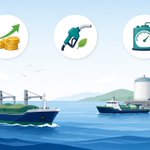



Why don't cargo ships just switch to clean fuel tomorrow? Mostly, it comes down to cost.
DNV estimates a new ammonia fueled ship costs about 15 to 20% more to build than a conventional one. Green ammonia in Europe runs roughly five times the price of diesel for the same energy. And ammonia needs nearly three times the tank space, so ships refuel more often.
So why are owners ordering these ships anyway? They are betting on long term cargo contracts, rising costs for emissions and tighter rules, especially in Europe. CMB.TECH alone plans 21 ammonia powered ships by 2029.
More refueling stops mean more ammonia stored at ports and more transfers that have to be done right. That is the part we focus on: storing and delivering ammonia safely, all the way to the last tank.
freightwaves.com/news/worlds…
🤖 Made with AI

Singapore just wrote the safety rulebook before the ammonia fuel arrives.
The Ministry of Manpower released its first Ammonia Safety Guidelines this month, written for ammonia used as a clean fuel and hydrogen carrier. It covers how ammonia is stored in tanks, moved by truck, container, pipeline and ship, transferred between them, and handled in an emergency.
Ammonia itself isn't new. Industry has handled it for fertilizer, refrigeration and chemicals for generations. What's new is using it as fuel, which means larger amounts, more handovers and more people working near it.
Writing the rules before the volumes show up is the right order. Every new tank, truck and transfer point needs the same basics: good design, gas detection, clear procedures and trained people.
That last mile of tanks and transfers is the part we think about every day at AmHyTech.
mom.gov.sg/-/media/mom/docum…
🤖 Made with AI

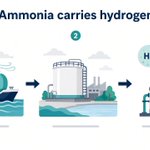
Hydrogen is hard to ship. Ammonia is much easier. So what happens when it arrives?
Amogy plans to test its ammonia cracking system on Singapore's Jurong Island in 2027, working with the research agency A*STAR. Cracking simply means breaking ammonia back into hydrogen and nitrogen right where the hydrogen is needed. The pilot unit is designed to make up to one ton of hydrogen a day under real industrial conditions.
This matters because ammonia already moves around the world by ship, so it can bring clean hydrogen to places that cannot easily make their own. Tests like this show whether that last step works at industrial scale.
Every one of those deliveries still ends at a tank, and that is where we focus: storing and handling ammonia safely before it becomes hydrogen.
shipandbunker.com/news/apac/…
🤖 Made with AI

Not every clean ship has to be a new ship.
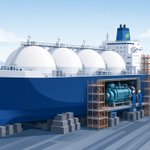
Maersk Tankers' plan to retrofit four of its very large ammonia carriers so they can run on ammonia, the same cargo they already carry, has been selected for EU Innovation Fund support. The project expects to avoid more than 1.2 million tonnes of CO2 equivalent over ten years. Grant terms are still being finalized, and the company says going ahead depends on customer commitments.
Upgrading ships already on the water matters, because a ship built today can sail for decades. It also means more ammonia moving through ports and more fuel transfers that have to be done safely.
That is the part we focus on: storing and delivering ammonia safely, from terminal tank to ship.
worldports.org/maersk-tanker…
🤖 Made with AI

Why do Midwest farmers watch soil thermometers before fall fertilizer goes on?
The rule of thumb is "fifty and falling." Farmers wait until soil four inches down is 50°F and cooling before they inject anhydrous ammonia. In cold soil, microbes work slowly, so more nitrogen stays put over winter for next year's corn instead of washing into streams. Iowa officials this week also urged inhibitors and cover crops to cut losses further.
Good for yields, good for water, and it saves money when ammonia costs this much.
It also means a lot of ammonia has to move in a short window once the ground cools. Safe storage near the farm and reliable last mile delivery help farmers hit that window.
iowadnr.gov/news-release/202…

Ammonia plants make more than fertilizer. They also help put the fizz in your soda.
When ammonia is made from natural gas, carbon dioxide comes out as a byproduct. In Europe, that CO2 has been a major source for sparkling drinks, food packaging and food processing.
Now high gas prices have pushed Yara to cut European ammonia output, and its executives cite estimates that 25 to 28% of the region's ammonia is offline. One said it looks a lot like 2021 and 2022, when plant closures also squeezed CO2 supply.
Fewer local plants means more imported ammonia moving by ship, rail and truck. Every one of those tanks and transfers has to be safe. That last mile is where AmHyTech focuses.
expanamarkets.com/insights/a…
#ammonia #fertilizer
🤖 Made with AI

Happy Mole Day from a team that thinks about ammonia all day.
October 23 celebrates a famous chemistry number: 6.02 x 10²³, the count of molecules in one "mole" of anything.
For ammonia, one mole weighs about 17 grams. So a single metric ton of ammonia holds roughly 59,000 moles, and every one of those moles holds that giant number of molecules.
That ammonia feeds crops as fertilizer, helps clean truck exhaust, and is starting to fuel ships. All of it has to be stored and delivered safely, from the plant to the farm, the port and the fuel tank. That last mile is where AmHyTech focuses.
moleday.org/
#ammonia #chemistry
🤖 Made with AI

Japan just started making cleaner ammonia at home, from start to finish.
INPEX has begun producing ammonia at its Kashiwazaki Hydrogen Park in Niigata and supplying it to Mitsubishi Gas Chemical. The gas comes from a nearby Japanese field, and the CO2 from production is pumped back underground into an old gas field that no longer produces.
The plant uses a newer process that runs at lower heat and pressure, which could let smaller ammonia units sit closer to the people who use them.
Making ammonia nearer to demand means shorter trips. It also means more tanks and more deliveries in more places, and every one of them has to be safe. That local last mile is where AmHyTech focuses.
inpex.com/english/news/uploa…
#ammonia #hydrogen
🤖 Made with AI

The ship that brings your next car across the ocean may run on ammonia.
NYK and K Line plan four ammonia fueled car carriers by 2030, as reported by Nikkei, with JERA supplying the fuel. From 2029, JERA plans to bring ammonia from places like Louisiana to its Hekinan power station in Japan, then hand it to the ships with small bunkering vessels.
Car carriers repeat the same routes and call at the same ports, which makes them a smart early fit for a new fuel.
But a clean ship is only as good as the trip its fuel takes. Every tank and every transfer along the way, from the import terminal to the fuel hose, has to be safe and reliable. That last stretch is where AmHyTech focuses.
worldports.org/nyk-k-line-an…
#ammonia #shipping
🤖 Made with AI

Clean fuel projects need steady rules, not just good engineering.
More than 260 companies and groups, including the Ammonia Energy Association, just asked the European Commission to keep its binding clean hydrogen targets for industry and transport beyond 2030. A new proposal is due in November.
Why it matters: builders sign contracts and pour concrete years ahead. If the rules change halfway, the first movers get punished and projects stall.
The gap is big. AEA counts European projects that would turn ammonia back into hydrogen with potential demand for about 17 million tons of ammonia, yet only about 0.2 million tons of that is running or under construction today.
Closing that gap means far more ammonia shipped, stored and delivered safely on its final leg. That is the part AmHyTech works on.
ammoniaenergy.org/articles/k…
🤖 Made with AI

When natural gas gets expensive, Europe makes less of its own ammonia.
Yara reported today that high gas prices pushed it to cut ammonia output in Europe. As of October 16, its curtailments were running at about 270,000 metric tons of ammonia per quarter.
Most ammonia is still made from natural gas, so gas prices flow into fertilizer and, in time, food. When local plants slow down, more ammonia has to travel by ship, rail and truck to reach farms and factories.
Every extra leg means another tank to fill, store and empty safely. That last mile is where AmHyTech is focused.
yara.com/siteassets/investor…
🤖 Made with AI

That blue cap pump next to the diesel nozzle at a truck stop is an ammonia story.
Diesel exhaust fluid is about 32.5% urea and the rest pure water, and urea is made from ammonia. Inside the exhaust it turns back into ammonia, which helps a catalyst change nitrogen oxides, a big cause of smog, into plain nitrogen and water.
So cleaner air on the highway quietly depends on ammonia being made, stored and delivered safely every day, long before anyone sees that blue cap.
acea.auto/fact/diesel-exhaus…
🤖 Made with AI

Not every climate win is a brand new plant.
KBR will upgrade two existing AGF Nitrogen ammonia plants, in Wittenberg, Germany and Linz, Austria, so they burn less natural gas and release less CO2. Together they can make about 2,450 tons of ammonia a day for fertilizer and industry.
Using less gas per ton matters for fertilizer costs and Europe's food supply. The other half of the job is getting that ammonia from plant to field with safe, reliable storage and delivery.
globenewswire.com/news-relea…
🤖 Made with AI

A ship that carries ammonia can now run on it too.
Eastern Pacific Shipping has named Terra Clove, the first very large ammonia carrier with an ammonia dual fuel engine. Its first green ammonia fill is planned at LOTTE Fine Chemical's terminal in Ulsan, Korea.
Long ocean trips are one of the hardest parts of shipping to clean up, and ammonia is one of the few fuels that can go the distance. But as the owners point out, the engine alone is not enough. It also takes safety systems, trained crews and the right infrastructure.
That is the part we care about most: storing and delivering ammonia safely at every stop, from terminal tank to ship.
epshipping.com.sg/eastern-pa…
🤖 Made with AI

Most people link ammonia with fertilizer. Fewer know it also helps make solar panels.
Solar cell factories use ultra pure ammonia to form a thin coating on each cell. India plans to grow its solar cell capacity from about 35 GW to about 175 GW by 2028, yet it relies on imports for this ammonia.
Japan's Tsubame BHB has won government support to build a demonstration plant in India making 2,000 tons a year of ultra pure ammonia from hydrogen left over at a chlorine plant. That is enough for about 20 GW a year of solar cell production.
Making it near the factories is half the job. The other half is storing and delivering it so it arrives as clean and as safe as it left.
ammoniaenergy.org/articles/t…

Fall fertilizer season puts a lot of ammonia on rural roads, most of it in nurse tanks, the pressure tanks on wheels towed from the farm supply yard to the field.
Federal safety agencies FMCSA and PHMSA have urged owners of certain older nurse tanks to have them tested at least every five years. X ray checks of 142 tanks from one maker, built between 2007 and 2012, found 100 that failed.
It is an expensive season too. According to DTN, anhydrous ammonia averaged $987 a ton in the second week of October, 18% above a year ago.
High prices make it tempting to stretch old equipment. Reading the data plate, checking welds and testing on schedule keep the last mile safe.
fmcsa.dot.gov/regulations/ha…

Can making ammonia closer to home cut the cost of getting it there?
The UK has imported all of its ammonia since its last plants closed in 2022 and 2023. A new company, UK Green Ammonia, plans small modular plants next to new hydrogen projects, starting at about 14,000 tons a year. Its founder estimates shipping and logistics are 30% to 40% of the landed price of imported ammonia.
Shorter trips help. But the last leg, into a tank at a food plant or a cold store, still has to be stored and delivered safely.
gasworld.com/story/exclusive…

Europe makes polluters pay for their carbon, then puts that money back into cleaner technology.
This week the European Commission picked 77 projects to share €3.4 billion from its Innovation Fund, which is paid for by the EU carbon market. Ammonia shows up three times: a project in the Netherlands that turns ammonia back into hydrogen, and two ship engine projects in Italy and Denmark built to run on ammonia. Grant agreements are still being worked out, with results expected early next year.
That is the economics of cleaner shipping in one picture. Pollution gets a price, and the price helps pay for the alternatives. Every one of these projects will still need ammonia that is stored and delivered safely, from the terminal all the way to the engine room.
gasworld.com/story/hydrogen-…

Why does a gas bill in Europe matter to a farmer?
Most ammonia, the base of nitrogen fertilizer, is made from natural gas. European gas prices have climbed to their highest level since December 2022, and some ammonia plants there are cutting output. So Europe leans harder on imported ammonia just as supply from Asia is getting tighter, and prices are expected to firm on both sides of the Suez Canal.
When local plants slow down, more ammonia travels farther by ship. Every extra trip adds another tank, another transfer and another delivery that has to be done safely before it reaches the field.
ausfertcorp.com/weekly-updat…

A green ammonia plant in India is being planned with customers in Europe in mind.
Avaada plans to invest roughly 20,000 crore rupees in a green ammonia plant in Gopalpur, Odisha, aiming to start around 2030. The project has already received EU renewable fuel certification for 85% of its output, and the company is pursuing long term supply deals with European buyers for uses like shipping and fertilizer.
That is a long trip from plant to farm field or ship's fuel tank. A certificate proves how the ammonia was made. Safe storage, careful handling and reliable delivery at every stop after that are what get it to the people who need it.
hydrocarbonprocessing.com/ne…
