


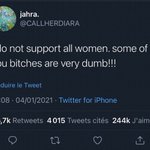




Giada retweeted

Afghan women can’t study, can’t work, can’t speak in public, and now they can’t even be called by their own names. What has no name doesn’t exist. No woman is free until all women are free.


Giada retweeted

She started crystal meth on her own because it was the only thing that kept the PTSD quiet enough for her to work. People have addictions for serious reasons and it always breaks my heart.

Her father raped her at four and filmed it like a trophy. Faith found the video at nine on her birthday, confronted him when he got out of prison, and he started doing it again. At 14, her own stepsister took money to drive her to a man named Jaykuan Robinson who locked her in a closet and sold access to a child's body to anyone who knocked. She is 16, pregnant, working Figueroa with untreated PTSD, razor scars, and a 27-year-old "boyfriend" who takes half her money.
Faith was born in Oklahoma to a father who used heroin and a mother who went to prison when Faith was six months old. She never had a mother. The woman who gave birth to her showed up exactly once in sixteen years, not to hold her daughter, not to say she was sorry, but to get divorce papers signed. Faith watched her walk in, sign the documents, and leave. That was the only visit.
Her father was in and out of prison through most of her childhood, and when he was locked up, he told Faith's grandmother to let her use his phone for her ninth birthday. Faith opened it, scrolled through the photos, and found a video of herself at four years old being raped by the man who was supposed to protect her. She was nine. It was her birthday present.
When he got out of prison and came back into her life, Faith told him what she had seen. She looked him in the face and said she knew. He didn't apologize. He didn't cry. He didn't promise to be better. He started doing it again.
Faith stayed quiet. There was no mother to run to, no adult in the house who would believe a little girl over the man paying the bills. Her father was a child molester and everyone around her either didn't know or didn't care enough to stop it. "My dad is a child molester," she says in the interview, flat, like she is reading the weather. "My whole life was just hard."
By 14, she was living in California City when she met a man named Jaykuan Robinson through her stepsister. What happened next is something Faith describes in a few short sentences that carry more weight than most people's entire life stories. Robinson kidnapped her. Her own stepsister was behind the wheel, paid to deliver a 14-year-old girl to a man who would lock her inside a closet and charge strangers cash to rape her.
He forced crystal meth into her body to keep her compliant. She didn't know what meth was before Robinson. She didn't know what any of this was before Robinson. "I didn't know nothing about any of this," she says. She was a kid who went to school and got her nails done and thought she was pretty. That girl died in that closet.
When Faith eventually got away and went home, she expected her family to hold her together. Instead, they looked at her differently. "Everybody just treated me different," she says. "They think I'm not shit anymore because of what happened to me." The people who were supposed to love her made her feel like the closet was her fault. So she went back to the streets. Not because she wanted to. Because the streets were the only place that didn't pretend to care and then look away.
She dropped out after eighth grade. She started using crystal meth on her own, the same drug Robinson had forced into her, because it was the only thing that made the PTSD quiet enough to work. She suffers from major depression, bipolar disorder, and post-traumatic stress disorder. She is supposed to be on psychiatric medication but doesn't have any. "After every day I wanna cry," she says. "I'm supposed to be on psych meds, but I don't have anymore."
The scars on both her arms tell the rest of the story. They climb from her wrists all the way up, dozens of them, layered on top of each other. "I used to cut myself," she says, and then she holds up her arms and adds quietly, "all the way up." She doesn't do it anymore, she says. But the scars are still there, every single one of them, and they aren't going anywhere.
Today Faith is 16, two months pregnant, and working Figueroa Street in Los Angeles. Her "boyfriend" is 27 years old. She says she loves him. She says they share the money. The interview doesn't press further, but a 27-year-old man living off a pregnant 16-year-old prostitute in a motel room doesn't need much explanation. She has no savings, no apartment, no education past eighth grade, and no family that picks up the phone.
Jaykuan Robinson was arrested in 2017. He is in prison right now. The courts are trying to get Faith to testify against him, but that means walking into a courtroom and telling a room full of strangers the same story she told a camera on a sidewalk in Los Angeles. She was 14 when he took her. She is 16 now. The law calls that justice. Faith calls it Tuesday.
In the video below, Faith sits on a curb and describes finding the video of her father raping her at four years old, her voice flat and steady as if she is reading a grocery list, and then holds up both arms to show the scars that climb from her wrists to her shoulders, the physical map of everything no one stopped from happening.
She still talks about going back to school. She wants to go to college for victim advocacy and give free speeches at schools that can't afford to bring in guest speakers. "That could have been me," she says about her old classmates who have cars and houses and jobs now. She says it without bitterness, just a fact, the way you observe that the weather changed and you forgot your coat.
Some will say Faith is a lost cause, a 16-year-old pregnant prostitute with a drug history and no education who will never leave Figueroa Street. Others will say she is a child who was raped by her father, sold by her sister, kidnapped by a predator, abandoned by her mother, and thrown away by every single person who was supposed to keep her safe.
Is Faith a cautionary tale, or is she proof that the system never had a plan for girls like her?

Giada retweeted

Y’a des gens qui vivent des singeries et nous on se plaint

At 13, a pimp tattooed his name across her face and sent her to Figueroa Street. At 28, a trick raped her at gunpoint in a child-locked car, her pimp told her "I don't care, go back out there," and another trick drove 65 mph before she jumped out and cracked her skull open.
Her name is Asriah. All 5 of her children are gone. Her brother is dead. $80,000 from strangers is spent. She lives in her car.
In the video below, she sits across from the interviewer days after the state took her fifth baby from the hospital. Her body is still recovering from the birth. Diapers are pressed to her chest to soak up the milk that keeps coming for a baby who is no longer there.
Asked what she learned from losing 5 children, she says "no more kids," and breaks down.
She says she lost so much blood in labor that her levels fell to 6.5, when normal is 12 to 16. Doctors told her she will likely be anemic for life. She drove herself to the hospital in contractions and gave birth alone. She breastfed her daughter for 2 and a half days before the state walked in. By the time she left the building, she couldn't see her at all.
Her mother was a drug-addicted prostitute in Los Angeles, hit in the skull with a shovel by a boyfriend. Her father was in prison. At 2 months old, Asriah was already in foster care.
Foster homes. Group homes. Juvenile halls in Long Beach, the Valley and Iowa. By middle school she had stopped going to class, and child services handed her to probation.
At 13, she ran from a placement with another girl. The girl's pimp was waiting outside. The girl went back. Asriah stayed.
That same week he put her on Figueroa. Dates cost $40 or $60. The quota was $1,500 to $2,000 a night. She gave him every dollar and kept a meal, a motel room and her next outfit. If she came up short, he beat her.
He tattooed "Jordan" down the side of her face in jet-black ink, the way ranchers brand cattle. Years later she paid an artist to cover it with roses so she wouldn't see his name in the mirror.
By 23 she had been through 6 pimps. All 6 were violent. They pulled her hair, kicked her on the ground, spat in her face.
One night a trick picked her up in a pickup with a car seat in the back. She thought nothing of it. On a dark street she felt metal against her spine. He had a gun on her. She yanked the door handle. He had engaged the child locks.
He raped her, then took everything she had made that night.
When she told her pimp, he said "I don't care. Go back out there and make your track."
She went back out that same night.
2 years later, another trick wouldn't let her out of his car. He passed her block and floored it. 60. Then 65. She opened the door, covered her face and jumped.
The asphalt burned off the skin on both knees, both hands and both buttocks. Her skull cracked on impact. She needed over 30 staples and stitches, plus skin grafts. She had to learn to walk again, then to write again. Her pimp was in jail, so she lay there for 3 or 4 days before she could get to a hospital. The burns had reached third degree.
At 20 she started on crystal meth because it was the only thing that shut everything off. She used on and off for 3 years.
Her brother was the only person who ever showed her what love looked like. He had joint custody of her 2 oldest children. 3 years ago, he killed himself.
Her first 2 kids came as a teenager, by one of her pimps. The state took them. Then a third, a fourth. Taken too.
After the first Soft White Underbelly video, viewers raised $80,000 on GoFundMe to help her stabilize. The interviewer says each time she was handed a chance to build something, she ended up back in the same cycle. The money is gone.
Now she sleeps in her car by the ocean in San Diego and spends her days staring at the water, trying to stay sane. No income. No home. No partner. No children.
She is 28.
Some will say she never had a chance from the day she was born. Others will say she got $80,000 and every opening in the world and took the same road every time.
Is Asriah a victim of a system that failed her from birth, or a woman who failed herself?


Giada retweeted

His name is John Amana.
Black accomplishments deserve to have their names said with their work


Giada retweeted

Si ce n’est pas déjà fait !
service-public.gouv.fr/parti…


