

Volunteer Cornwall Butterfly Conservation. Pearl-bordered Fritillary Species Champion.
South West, England
Joined February 2022
- Tweets436
- Following22
- Followers82
- Likes381


Andrew Thomas retweeted

Clouded Yellow. Pale (helice) form. Cornwall yesterday.
#butterflies #Cornwall

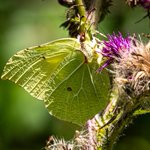
With so many Clouded Yellows around it was a surprise to see this lovely male Brimstone in the garden this morning.


Nothing like a walk along the coast path near Looe in Cornwall when the sun is out. The cliffside tracks are alive with butterflies right now—spotted a Common Blue, a Small Copper, and a Wall today.


Clouded Yellows have been appearing in good numbers across Cornwall this year, riding on warm winds from southern Europe. Look out for their glowing orange-yellow wings, edged with a bold black border.
Andrew Thomas retweeted

Gorgeous Green-eyed Flower Bee, SE Cornwall. Many thanks to @stevesando1 for the information. A first for me & possibly my new favourite bee! @B_Strawbridge #WildCornwall #bees #insects

The Ringlet’s gold-rimmed eyespots aren’t just for show — they can help confuse birds and deflect attacks away from the body, so a butterfly may end up a bit battered but still live to fly another day.

Penlee Battery in East Cornwall is a great place to see Marbled Whites. 188 seen there this morning. The species occurs across much of Cornwall, though it is largely absent from the far south-west. Males are bold black and white, while females show a yellow-orange underside.


60 Silver-studded Blues at Poldice Valley today! Significant colonies inhabit Cornwall’s heathlands (many on old mining sites) & coastal dunes, mostly in the west. This nationally rare species still faces tough battles against developers on dunes to keep habitats safe.


CBC field trip to Greenscoombe Wood today: despite heavy cloud and rain forecast, we saw an amazing 83 Heath Fritillaries. Imagine if it had been sunny! The overcast conditions meant the butterflies stayed settled, making them easy to spot, count, and photograph.


Large skippers have been flying in Cornwall for a couple of weeks now. The male has a thick black line through the centre of the upper forewing—actually a scent brand of special scales used to attract females.


Marsh fritillaries flying today on Bodmin Moor. Living in damp meadows and boggy grassland, needing Devil’s-bit Scabious to survive. Like the pearl-bordered and small pearl-bordered fritillaries, they're under threat—with populations down 66% in England since 1990.

Bunny’s Hill, Cardinham, this morning: a whopping 217 Small Pearl-bordered Fritillaries in just 45 minutes, in blazing temperatures. Absolutely incredible.


Pearls still around on Bodmin Moor. Numbers seriously down, though. Increasing numbers of Small Pearls. Too hot!!


No Pearls on the Coast Path this afternoon—flight season’s over for the pearl‑bordered fritillaries along the Cornwall coast. But consoled to find this Large Skipper soaking up the sun instead.

While their caterpillars rely entirely on violets, adult Pearl-bordered Fritillaries need plenty of early spring nectar to fuel their flights. Bugle, dandelion, bluebells are vital, and they also happily visit newly blossomed bird's-foot-trefoil.

Cornwall Butterfly Conservation field trip to Pendrift on Bodmin Moor today was a special one: 70 Pearl‑bordered Fritillaries seen plus 7 Small Pearl‑bordered Fritillaries. A lovely sight but the emergence of the Small PBFs reminds us our Pearls have only a few days left to fly.

Pearl-bordered fritillary nectaring on bluebell at Fellover Brake, Bodmin Moor. Following a very wet winter, cold easterly winds the past few weeks, and only the occasional sunny spell, numbers are running well below typical levels.

Pearl-bordered Fritillary snacking on Sheep's-bit. One of 44 seen on Cornish coast path this morning. Rain on the way unfortunately.

