

AI+Science, Co-Founder @accelerated_u, Bren Professor @caltech, Time100, Fmr Sr Director of #AI research @nvidia Fmr Principal Scientist @awscloud
Joined May 2021
- Tweets2.8K
- Following2.5K
- Followers46.9K
- Likes7.1K









Prof. Anima Anandkumar retweeted

really fun doing this with @srush_nlp!! softmax was just the start. we did a full numerical audit of ML ops across PyTorch, JAX, TF, NumPy, CuPy, ONNX Runtime and MLX, checked against TorchLean, and found a lot more!!!

Lean Verified Precision (w/ @Robertljg)
Recently, "A Fix for Softmax" demonstrated a surprising bug in the textbook softmax implementation. How do we avoid having subtle bugs in the world's most expensive software? 🧵

Prof. Anima Anandkumar retweeted

From language models to AI that understands the physical world, @AnimaAnandkumar outlines what she sees as the next wave of artificial intelligence at #HTLS2026!
In conversation with @vishalmathur85, Technology Editor, Hindustan Times.
📺 Watch the session on YouTube: youtube.com/watch?v=apA9XLQn…
#NewRulesNewRealities #HTLeadershipSummit #HindustanTimes | @VFSGlobal @AdityaBirlaGrp
Prof. Anima Anandkumar retweeted
How can AI improve the way we predict extreme weather events?
At #HTLS2026, @AnimaAnandkumar highlights how AI-powered forecasting uses historical data and learned patterns to make faster, more reliable predictions, including hurricane tracking.
#NewRulesNewRealities #HTLeadershipSummit #HindustanTimes | @AdityaBirlaGrp | @VFSGlobal | @vishalmathur85
Prof. Anima Anandkumar retweeted


HTLS 2026 Day 1: VFS Global's Zubin Karkaria and Caltech's Anima Anandkumar Join In xitter.gq/i/broadcasts/2POrpQOam…

Prof. Anima Anandkumar retweeted
🔴 #LIVE: 𝐙𝐮𝐛𝐢𝐧 𝐊𝐚𝐫𝐤𝐚𝐫𝐢𝐚, Founder and CEO, VFS Global, and 𝐀𝐧𝐢𝐦𝐚 𝐀𝐧𝐚𝐧𝐝𝐤𝐮𝐦𝐚𝐫, Co-Founder of Accelerated Understanding and Bren Professor at Caltech, take the stage for conversations on Day 1 of #HTLS2026 ✨
#NewRulesNewRealities #HTLeadershipSummit #HindustanTimes | @AnimaAnandkumar | @Nisheeth_U @vishalmathur85
xitter.gq/i/broadcasts/2yboWMbno…

Prof. Anima Anandkumar retweeted
At #HTLS2026, @AnimaAnandkumar highlights how AI-powered scientific modelling can make complex physical simulations faster and more efficient, in conversation with @vishalmathur85!
📺 Watch the session on YouTube: youtube.com/watch?v=apA9XLQn…
More details: hindustantimes.com/s/1lwRVM8
#NewRulesNewRealities #HTLeadershipSummit #HindustanTimes | @VFSGlobal @AdityaBirlaGrp
Prof. Anima Anandkumar retweeted

Two weeks from today: #SC26 Keynote Speaker Anima Anandkumar takes the stage in Chicago!
Learn more about her work in AI and her special relationship with the SC Conference series: sc26.supercomputing.org/2026…

Prof. Anima Anandkumar retweeted

Very excited to share GeoWind2Plan 🚀, our NeurIPS 2026 Spotlight paper, and a new interactive demo ✨!
We make high-resolution 3D wind predictions in seconds to guide energy-efficient drone planning.
Wind-aware planners often assume the wind field is already known. But simulating airflow around buildings takes hours of CFD, making it impractical for short drone missions when wind conditions change.
Our approach couples wind prediction with trajectory optimization. By rotating the city layout to align with a fixed reference wind, we turn wind-direction generalization into building-geometry generalization. A localized neural operator uses multi-directional distance features to predict 3D wind within a flight corridor. The planner then optimizes the drone’s path and speed in continuous 3D space to reduce energy use. In our simulations, the drone generally flies higher and faster in tailwinds, lower and slower in headwinds, and shifts sideways to exploit favorable local winds.
Corridor prediction takes about 3 seconds versus roughly 8 hours for full-domain CFD. Compared with wind-agnostic planning, our method reduces average energy use per kilometer by 12.7% in headwinds, 6.9% in tailwinds, and 4.5% in crosswinds in CFD-evaluated simulations. It captures 75–88% of the energy savings achieved with CFD-reference wind fields.
Moving forward, we will focus on turning AI predictions of the physical world into actionable decisions for autonomous systems. Follow our lab for updates: dual.xiongyexiao.com
Explore the demo: move the start 🚩 and goal ⛳, change the wind, and watch the airflow and routes respond.
Demo: geowind2plan.com
Desktop Chrome or Edge recommended.
Paper: arxiv.org/abs/2609.36056
Congratulations to my students Shaoxiang Qin and Yucheng Zhao, and thank you both for your hard work on this project! Many thanks as well to Fuyuan Lyu, Di Zhou, Jiachen Yao, Steve Liu, Anima Anandkumar, and Liangzhu Leon Wang for their valuable contributions and collaboration. We’re also very grateful to the NSF-funded COMPASS: Center for Complex Particle Systems and AI Tennessee for supporting this work!
Prof. Anima Anandkumar retweeted

SkAI and NNCI welcomed @Caltech’s Dr. @AnimaAnandkumar on neural operators & AI for science. From a weather model that beat supercomputers to simulating black holes and fusion reactors, she still emphasizes the human role: "AI isn’t replacing scientists anytime soon."


Prof. Anima Anandkumar retweeted

Introducing our first #MWC27 Barcelona keynote speakers 👏
🔹 @mati, @ElevenLabs
🔹 @amywebb, @FTSG_Consulting
🔹 Yoon Young Park, KT
🔹 @AnimaAnandkumar, @accelerated_u & @Caltech
🔹 Dr Hany Farid, GetReal Security
Pre-register now 👉 gsma.at/47yn7Kq

Prof. Anima Anandkumar retweeted

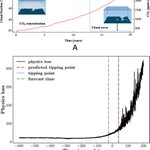
A new Caltech-led paper demonstrates that an AI program can be used to predict when tipping points occur in simple models, including models of a climate-change system and simulations of turbulent airflow over a plane's wing.
caltech.edu/about/news/forec…

Prof. Anima Anandkumar retweeted
What if we’re thinking too narrowly about AI?
For #SC26 Keynote speaker Animashree “Anima” Anandkumar, the next frontier goes far beyond large language models. It’s AI that can understand and simulate the physical world.
Read our conversation:
sc26.supercomputing.org/2026…

Prof. Anima Anandkumar retweeted

Why learn everything from scratch when centuries of science have already taught us how the world works?
We’re excited to introduce ReRoute 🔀: bringing what-if reasoning to scientific AI models by combining observational data with partial mechanistic knowledge.
🔥 No controlled intervention data required.
🧵 1/7

Excited to share ReRoute, our new framework for scientific counterfactual prediction: informed by partial physics knowledge for much better generalization. 🌍
AI models can be remarkably accurate on familiar data, yet struggle with scientific ‘what-if’ questions
The key idea: Combine observational data with partial physical knowledge to predict unseen interventions—without requiring new controlled experiments.
Instead of retraining models on expensive new simulations, ReRoute uses known partial physical mechanisms to guide pretrained models through lightweight fine-tuning on existing data.
The results:
🌍 Up to 31.8% lower prediction error under severe CO₂ distribution shifts in climate emulators.
🔬 Up to 89.6% lower counterfactual error in controlled advection–diffusion experiments.
⚡ No new intervention data. No retraining from scratch. Just lightweight fine-tuning.
We also establish a causal identification result under explicit structural assumptions, with a machine-checked proof in Lean.
The bigger picture: Scientific AI doesn't always need more data or bigger models to generalize beyond what it has seen. Sometimes, knowing just a little about how the world works can make a big difference. @Dingling_Yao @kahaan_gandhi @FrancescoLocat8 @Caltech
📄 Paper: arxiv.org/abs/2610.02252
#AIforScience #ScientificML #ClimateAI #CausalInference #PhysicsAI

Prof. Anima Anandkumar retweeted
Prediction asks “what”. Science asks “what if”.
ReRoute is a step toward scientific AI that does more than reproduce what we've observed.
🌍 Climate is just one example. What scientific “what-if” would you explore?
Bring the physics you know. Ask the what-ifs you couldn't. 🔀
📄 arxiv.org/abs/2610.02252
Joint work with amazing @kahaan_gandhi, Valentin Duruisseaux, Boris Bonev, @FrancescoLocat8, @AnimaAnandkumar
🧵 7/7
Prof. Anima Anandkumar retweeted
Verifying ML in Lean and the future :)
Since we released TorchLean in March, quite a lot has changed!! I've finally written up some of the new features we've been working on, and one of the biggest developments is that TorchLean is becoming a more general tensor programming and execution framework inside Lean. We've expanded the tensor API with shape-safe operations, einsum for general tensor contractions, and rearrange, expand, and reduce for manipulating tensor dimensions. You can now express matrix multiplication, multi-head attention, and more complicated tensor computations directly in Lean, with shapes checked during elaboration. Even more exciting, our einsum implementation has a verified lowering path, generating fused index-based computations with Lean-checked proofs connecting them to their mathematical specifications, including the order of arithmetic operations and also matching python einsum speed!!!
We've also been developing a shared intermediate representation (IR) for execution, differentiation, verification, and compiler transformations, including support for importing computation graphs from external ML frameworks. Alongside this, we've expanded CPU/GPU execution, including compiling supported Lean functions to CUDA, and integrated LibTorch for larger-scale training now matching pytorch speed. Other developments include configurable numerical precision through FloatLib (whatever format you desire), higher-order automatic differentiation connected to mathlib, and additional tools for neural-network certification and numerical reasoning. The goal is to let researchers write computations naturally, execute them efficiently, and establish mathematical guarantees about what they actually compute.
It's been an incredibly exciting time for mathematics and lean and I believe the future will be even greater: )! With @leanprover and mathlib, we're seeing what happens when mathematical knowledge becomes something computers can independently check, build on, and extend. I believe something similar can happen in ML and scientific computing, and much of my PhD at @Caltech has been about building the foundations for that. Modern ML systems involve much more than mathematical functions: numerical approximations, automatic differentiation, compiler transformations, optimized GPU kernels, and complex training pipelines. I want us to be able to work with the computations researchers actually use, run experiments, and prove meaningful properties about those same definitions!!
There's still an enormous amount of work ahead, particularly around GPU kernel verification and connecting the existing ML ecosystem to Lean, but I believe now is the right time to start building something analogous to mathlib for ML and scientific computing! Everything is open source, and I'd love for more people to experiment with it and contribute :)!
Over the next few days, I'll also be sharing concrete examples of what we've built, verified, and discovered along the way, from training GPT 2 in Lean to checking transformer computations, finding bugs in major ML libraries to investigating numerical issues in LLM inference, and formalizing results from ML papers. I hope these examples show both what's already possible and how much more there is to explore!
Happy to chat about these topics or just in general about research, my dms are open!
Longer Blog: robertboy18.github.io/TorchL…

Prof. Anima Anandkumar retweeted
Really excited to share that our work on TorchLean at @Caltech, with @AnimaAnandkumar, has been selected for support through the 2026 AI for Math Fund, run by @RenPhilanthropy and funded by @xtxmarkets.
Since releasing TorchLean, we’ve expanded from verified neural-network execution to autodiff, floating-point semantics, verification, and GPU execution; uncovered bugs and semantic mismatches across major ML stacks; and seen teams at major companies and U.S. national labs begin using it for ML verification.
With this support, we’re excited to push toward formally verified GPU execution and GPU kernel verification—part of a broader goal of making AI and scientific computation trustworthy across the full stack.
TorchLean: leandojo.org/torchlean.html
Congrats to all the winners!

We're delighted to announce the winners of this year’s grants from the AI for Math Fund, powered by founding donor @xtxmarkets:
22 winners, 30+ organizations, selected from 400+ applications across 50 countries.
Backed by a record $17.1M from XTX Markets, bringing their total commitment to $35.1M.
renaissancephilanthropy.org/…
1/2

Prof. Anima Anandkumar retweeted

Heading to San Francisco to present our paper "Rethinking Psychometric Evaluation of LLMs: When and Why Self-Reports Predict Behavior" at two @COLM_conf 2026 workshops: Agent Behavior (WAB) and AI Measurement Science (AIMS)! It was also recently accepted to the #NeurIPS2026 main conference.
❓ The question: Can low-cost psychometric self-reports anticipate how LLMs actually behave?
Across 11 frontier LLMs and 4 behavioral tasks, we find that self-report–behavior coherence exists, but it is selective:
▶ Within a shared conversation, a behavior-specific framework, the Theory of Planned Behavior, reaches human-level coherence. Broad Big Five traits do not.
▶ Across separate conversations, coherence survives for behaviors anchored outside the immediate prompt, such as implicit bias, and collapses for behaviors driven by context, such as sycophancy.
▶ Persona prompting makes self-reports more consistent across conversations, but it does not bring behavior into alignment.
📄 Paper: arxiv.org/abs/2606.12730
🌐 Project page: psychology-of-ai.github.io/p…
Come find us on Fri, Oct 9 (PDT):
📌 Workshop on Agent Behavior (WAB): Poster Session I, 10:00–11:30 AM, Continental Ballroom 4
📌 AI Measurement Science (AIMS): Poster Session 2, 3:00–4:15 PM
w/ @Barry_Han_PR, @p_song1, @MarmarelisMyrl, Ramit Debnath, Dean Mobbs, @AnimaAnandkumar, @rmichaelalvarez, @Caltech, @CaltechLCSSP
@NeurIPSConf
#COLM2026 #AIEvaluation #LLMPsychometrics #AIAlignment #AgentBehavior

Prof. Anima Anandkumar retweeted

Encoding How and Where Concepts Are Expressed, accepted to #NeurIPS2026 @NeurIPSConf
Common SAEs express each concept through a scalar code. But what if your data or model activations have spatiotemporal structure?
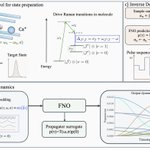
We introduce a new class of SAEs based on Fourier neural operators (SAE-FNO), that parameterize concepts as functions. Replacing scalar activations with feature maps lets us capture which concepts are active and how and where they are expressed: concept sparsity selects active concepts, while domain sparsity determines their spatial expression.
What if changing the sparsity setting changes the concepts you discover and your scientific conclusions?
SAE-FNO separates structure from expressivity: domain sparsity controls concept structure, while allowing more active concepts increases expressivity. Our experiments show stable concept characteristics across concept sparsity levels, emergent temporal consistency, and generalization to resolutions beyond those seen during training.
These capabilities could support mechanistic interpretability of neural operator foundation models for scientific machine learning.
This is a joint collaboration, between @UAlberta/@AmiiThinks and @Caltech, with @ailsaxshen and @AnimaAnandkumar.
Paper: arxiv.org/abs/2509.03738

We introduce Sparse Autoencoder Neural Operators (SAE-NOs), a functional framework for representation learning and mechanistic interpretability that treats data as samples from underlying continuous functions and learns mappings between function spaces.
Standard SAEs (SAE-MLP) represent each concept with a scalar activation and a vector-valued dictionary atom, limiting their ability to capture how and where a concept is expressed across structured domains.
SAE-FNO introduces feature-map representations with both concept sparsity and domain sparsity, allowing the model to capture not only which concepts are active, but also where and how they are expressed across the domain.
This is a joint collaboration, between @UAlberta/@AmiiThinks and @Caltech, with Ailsa Shen and @AnimaAnandkumar. 1/
arXiv: arxiv.org/abs/2509.03738

Prof. Anima Anandkumar retweeted

Mysuru born scientist takes AI beyond words in nature’s law. Congratulations! Prof Anima Anandkumar!. Great to see this in today’s @timesofindia . Keep inspiring the world, Bharat & our heritage city #Mysuru 🇮🇳✨
@narendramodi @AshwiniVaishnaw @nvidia @JensenHuang @AnimaAnandkumar
