

Web3 Educator || Promoting Projects Through Educating Minds and Creative Strategy || Ambassador #TRONEcoStar || @MegPrimePay || KOL @wavesprotocol
Cape Verde
Joined May 2013
- Tweets41.3K
- Following7.5K
- Followers59.2K
- Likes14.2K




Pinned Tweet
Something quiet but significant is happening in Web3.
A fully live platform is turning one of the world’s most common daily activities into a structured, revenue-sharing ecosystem.
No noise. No gimmicks. Just traction, utility, and real-world users.
This is the story of @runwago
....walk with me lets explore 🧵🔻

TRON's stablecoin ecosystem reached another major milestone in Q3 2026, with average stablecoin supply climbing to $92.25 billion.
According to the Q3 2026 report, this represented:
▪️ 4.18% growth quarter-over-quarter.
▪️ 14.58% growth year-over-year.
▪️ $93.88 billion in total supply by the end of the quarter.
The quarterly average was an all-time high, highlighting the continued expansion of stablecoin value held on the network.
1. What does stablecoin supply actually measure?
Stablecoin supply represents the total USD value of stablecoins issued natively on a blockchain.
For TRON, this metric includes stablecoins issued directly on its network while excluding bridged stablecoins.
It is important to understand that supply is different from transaction volume.
▪️ Supply measures the value of stablecoins existing on the network.
▪️ Transaction volume measures the value transferred over a given period.
▪️ Active holders measure the number of addresses holding stablecoins.
Together, these metrics provide a broader picture of stablecoin adoption and usage.
2. Why is this growth significant?
Stablecoins provide blockchain users with access to digital representations of fiat currencies, particularly the US dollar.
Unlike traditional bank transfers, stablecoins can move across blockchain networks around the clock, without depending on conventional banking operating hours.
This makes them useful for:
▪️ Cross-border payments and remittances.
▪️ Moving dollar-denominated value between wallets and exchanges.
▪️ DeFi lending, borrowing and liquidity provision.
▪️ Digital payments and merchant transactions.
▪️ Holding dollar-pegged assets on-chain.
As more value is held in stablecoins, blockchain networks become increasingly important infrastructure for transferring and accessing digital dollars.
3. TRON's position in the stablecoin economy
USDT-TRC20 plays a central role in TRON's stablecoin ecosystem.
Its adoption has helped establish TRON as a major network for stablecoin transfers, particularly where users need to move dollar-denominated value between exchanges, wallets and payment platforms.
The Q3 report also highlighted that TRON overtook Ethereum in late July to become the largest network for USDT supply.
That milestone reinforces the network's importance in the global stablecoin settlement landscape.
4. What comes next?
The next stage is converting stablecoin growth into deeper real-world utility.
More stablecoin supply creates additional capacity for payments, trading, lending and other on-chain financial activities. However, sustained adoption also depends on liquidity, reliable infrastructure, accessible payment services and consistent user demand.
The bigger picture:
TRON ended Q3 2026 with $93.88 billion in stablecoin supply, after recording an average of $92.25 billion throughout the quarter.
This is more than a headline number. It reflects the growing amount of dollar-denominated value held within TRON's ecosystem and strengthens its position as a major settlement layer for stablecoins.
As stablecoins become increasingly integrated into global payments and financial services, TRON's infrastructure will remain an important part of that conversation.
@trondao @justinsuntron #TRONEcoStar

TRX demonstrated resilience in Q3 2026 despite weakness across the broader Layer-1 market.
TRON's fully diluted market capitalization averaged $31.54 billion, declining just 0.18% QoQ while increasing 0.97% YoY. This was the second-highest quarterly average on record.
For comparison, the combined fully diluted market cap of tracked L1 networks fell 41.08% YoY. As a result, TRON's share of the market increased from 0.87% to 1.49%.
▪️ Institutional access expanded
Three major developments strengthened access to TRX in the US:
▪️ July 14: Anchorage Digital introduced native TRX staking for institutional clients.
▪️ July 27: CFTC-regulated Bitnomial listed TRX futures.
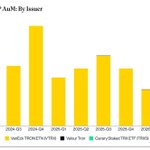
▪️ September 9: Canary Capital launched the Canary Staked TRX ETF (TRXS), offering exchange-traded TRX exposure with staking rewards.
▪️ What gives TRX utility?
TRX is the network's native utility token. Users can burn TRX to pay network fees or stake it to obtain Energy and Bandwidth, resources used to cover transaction costs.
These functions connect TRX directly to network activity, while the new institutional channels provide additional ways for market participants to access the asset.
The bigger picture
TRX maintained a relatively stable market capitalization while the wider L1 market experienced significant annual declines.
Combined with expanding institutional access, this highlights TRON's growing presence in traditional financial markets.
However, the network's largest pool of value remains its stablecoin ecosystem, making stablecoin settlement and real-world utility important drivers of its long-term development.
@trondao @justinsuntron #TRONEcoStar

TRON’s Q3 2026 performance highlights its growing role in stablecoin settlement, payments and institutional finance.
As a Layer-1 blockchain, TRON supports on-chain activities ranging from stablecoin transfers to DeFi, real-world assets and emerging AI applications.
Founded by Justin Sun in 2017, TRON uses Delegated Proof of Stake (DPoS), where TRX holders vote for network representatives. The top 27 become Super Representatives responsible for block production and consensus.
Key Q3 2026 metrics:
▪️ Stablecoin supply: $92.25B (+4.18% QoQ)
▪️ Transactions: 1.08B (+31.19% YoY)
▪️ Monthly active users: 17.81M (+8.71% QoQ)
▪️ Fully diluted market cap: $31.54B
▪️ Network revenue: $693.21M (-3.10% QoQ)
Major developments:
▪️ TRON overtook Ethereum in late July to become the largest network for USDT supply.
▪️ Institutional access expanded through Anchorage Digital, Bitnomial futures and Canary Capital's staked TRX ETF (TRXS).
▪️ Bitstamp added another institutional-friendly access point for USDT-TRC20.
▪️ TVM compatibility with Ethereum's Prague and Osaka upgrades advanced in late August.
Why it matters
TRON's growth is not limited to transaction activity. Its expanding stablecoin ecosystem, institutional access and technical development are strengthening its position in the global on-chain economy.
The next opportunity is to build on this foundation through stablecoin payments, institutional infrastructure, real-world assets and AI applications.
@justinsuntron #TRONEcoStar

TRON recorded the largest increase in stablecoin market capitalization over the past 24 hours, adding $279.5 million.
According to data from Token Terminal, TRON led all blockchain networks in stablecoin market cap growth during the measured period.
▪️ Why this matters
Stablecoin market cap growth can reflect additional stablecoin issuance, capital moving onto a network, or changes in the value of stablecoins circulating within its ecosystem.
For TRON, this is particularly relevant because USDT-TRC20 plays a major role in its on-chain economy.
▪️ More stablecoin activity strengthens TRON’s position as a settlement network.
Stablecoins support transfers, payments, DeFi liquidity, lending and exchange activity. Growth in their supply can create more capacity for these use cases, although market cap growth alone does not prove increased transaction volume or user adoption.
The bigger picture: TRON continues to demonstrate its importance in the stablecoin economy, with the latest 24-hour snapshot putting it ahead of other chains in stablecoin market cap growth.
Data: @TokenTerminal
@justinsuntron @trondao #TRONEcoStar

TRON’s DeFi ecosystem recorded significant growth in Q3 2026, with Total Value Locked (TVL) increasing 26.6% quarter-over-quarter to $5.7 billion.
But the interesting part is where that capital was concentrated and how other sectors of the ecosystem developed.
▪️ Lending and CDP dominated DeFi
Lending and Collateralized Debt Position (CDP) protocols accounted for approximately 90% of TRON’s total DeFi TVL.
This shows how important lending markets and collateral-backed financial applications remain to the network’s DeFi economy.
▪️ JustLend maintained its leading position
JustLend DAO held approximately $3.9 billion in TVL, making it a major contributor to TRON’s lending and DeFi activity.
Its position highlights the demand for on-chain lending infrastructure, where users can supply assets to earn yield and borrow against supported collateral.
▪️ DEX activity gained ground
Decentralized exchanges also recorded notable expansion.
TRON’s DEX share of DeFi TVL nearly doubled, moving from 6% to 9.5%.
Meanwhile, DEX TVL roughly doubled to $542 million.
This suggests that decentralized trading infrastructure is gaining a larger share of capital within the ecosystem.
▪️ What these numbers tell us
TRON’s DeFi growth is not coming from a single sector.
Lending and CDP protocols continue to anchor the ecosystem, while decentralized exchanges are expanding their contribution.
The combination matters because a healthy DeFi ecosystem needs multiple layers: lending markets, collateral management, liquidity and decentralized trading.
The bigger picture:
With Q3 TVL reaching $5.7 billion, JustLend holding roughly $3.9 billion, and DEX TVL climbing to $542 million, TRON’s DeFi ecosystem showed growth across both established and expanding sectors.
The next important metric to watch is whether this capital growth translates into sustained user activity, liquidity depth and protocol usage.
@justinsuntron @trondao #TRONEcoStar

This adds another important dimension to TRON’s Q3 growth: its position in crypto payments. I’d connect the figures to real-world payment utility rather than simply presenting them as transaction statistics.
TRON is not only a major network for stablecoin transfers. It is also taking a leading position in crypto-card payment activity.
According to the Q3 2026 research figures, total crypto-card transaction volume increased by 60.5% quarter-over-quarter to $2.32 billion.
Within that market, TRON ranked first among blockchain networks by card payment volume.
Here’s how the networks compared:
▪️ TRON: 27.5% — approximately $638 million
▪️ Ethereum: 24.0%
▪️ OP Mainnet: 14.9%
▪️ BNB Smart Chain: 14.3%
TRON's 27.5% share puts it ahead of Ethereum by 3.5 percentage points.
That is a notable position in a market where crypto payment infrastructure is increasingly connecting digital assets with everyday purchases.
▪️ Why this matters
Crypto cards create a bridge between blockchain-based assets and familiar payment experiences.
Users can hold digital assets and access payment services that work across merchant categories such as groceries, restaurants, transport and retail.
For this model to work at scale, the underlying infrastructure needs to support reliable transfers, stablecoin liquidity and efficient settlement.
TRON's strong presence in stablecoin transfers makes its position in crypto-card payments particularly significant.
▪️ The bigger picture
The 60.5% quarterly increase in crypto-card volume points to growing activity across the sector.
And with approximately $638 million in card volume and a 27.5% market share, TRON ranked as the largest network in the reported dataset.
This is another indication that TRON's role in the digital asset economy extends beyond trading and DeFi.
Its infrastructure is also becoming part of the conversation around how people access and spend crypto in everyday commerce.
@justinsuntron @trondao #TRONEcoStar

TRON’s institutional footprint expanded in the US during Q3 2026, with $TRX gaining access to new regulated financial products.
Two developments stand out: a TRX futures listing on Bitnomial and the launch of the Canary Staked TRX ETF (TRXS) on Cboe BZX.
Both represent important steps in connecting TRON with traditional financial markets.
▪️ 1. TRX Futures on Bitnomial
In July 2026, TRX futures began trading on Bitnomial, a US exchange and clearinghouse regulated by the Commodity Futures Trading Commission (CFTC).
This introduced a regulated derivatives route for eligible US traders and institutions to gain exposure to TRX.
Futures are financial contracts that allow market participants to take positions based on an asset's future price. They can also be used for hedging and managing market exposure.
For TRX, this means institutional participants have another route to access and manage their exposure without relying exclusively on spot-market purchases.
▪️ 2. Canary Staked TRX ETF (TRXS)
On September 9, 2026, Canary Capital launched the Canary Staked TRX ETF under the ticker TRXS on the Cboe BZX Exchange.
It became the first US-listed exchange-traded product offering exposure to TRX.
What makes TRXS particularly interesting is its dual investment objective:
▪️ Provide exposure to the spot price of TRX held by the fund.
▪️ Participate in TRON's delegated Proof-of-Stake validation process to earn staking rewards.
The net staking rewards are reflected in the fund's net asset value rather than being distributed directly to investors.
The product launched with approximately $50 million in assets, giving the market an early indication of investor interest in this new investment vehicle.
▪️ Why These Developments Matter
The two products serve different purposes.
Bitnomial provides access through regulated futures markets, while TRXS offers exchange-traded exposure to TRX alongside staking-related rewards.
Together, they broaden the financial infrastructure available to US market participants interested in TRON.
This is significant because institutional adoption requires more than network activity. It also depends on accessible investment products, regulated trading venues, custody infrastructure and familiar financial structures.
The bigger picture:
TRON is already a major settlement network for stablecoin activity, particularly USDT.
Now, its native asset, $TRX, is gaining additional exposure within traditional financial markets.
Q3 2026 showed that TRON's expansion is not limited to on-chain adoption. Its connection with institutional financial infrastructure is growing too.
Sources:
▪️ TRON Q3 Research: trondao.org/research/state-o…
▪️ Bitnomial Futures Listing: ct.com/press-releases/trx-fu…
▪️ Canary Capital TRXS Launch: canaryetfs.com/canary-capita…
@justinsuntron @trondao #TRONEcoStar

Crypto adoption becomes more meaningful when digital assets move beyond exchanges and wallets and start connecting with everyday spending.
A new research report from Oobit, published by TRON DAO, offers an interesting look at this transition.
The study examines USDT transfers on TRON alongside everyday card payments made by the same group of Oobit users between March 1 and August 31, 2026.
Here’s what the data reveals.
▪️ USDT is at the center of the activity
According to Oobit, users in the research cohort primarily interacted with USDT-TRC20 when depositing and withdrawing through TRON.
This highlights an important role for TRON: providing the blockchain infrastructure for moving dollar-pegged stablecoins between wallets, exchanges and payment platforms.
Rather than focusing primarily on TRX transfers, the observed activity was predominantly driven by USDT.
▪️ TRON activity spans multiple regions
The dataset records TRON deposit and withdrawal activity among Oobit users across:
▪️ Europe
▪️ Middle East
▪️ Latin America
▪️ Southeast Asia
▪️ North America
This geographic distribution provides another perspective on how stablecoin transfers are being used across different markets.
▪️ What users are spending on
The research also examined categorized Oobit card payments made by users in the same cohort.
The largest merchant categories included:
▪️ Groceries and supermarkets: 14.8%
▪️ Restaurants: 12.4%
▪️ Taxis and ride-sharing: 7.7%
▪️ Fast food: 7.1%
▪️ Miscellaneous food stores: 5.5%
Groceries and restaurants alone accounted for a combined 27.2% of categorized card payments.
That is a useful indicator of the everyday spending activity captured in the research.
▪️ Why this matters for stablecoin adoption
There are two different but connected parts to this picture.
First, TRON provides the infrastructure for users to transfer USDT on-chain.
Second, Oobit provides a payment experience through which users can make card purchases at everyday merchants.
The research brings these activities together by examining the same user cohort.
It does not mean every card purchase was directly processed on TRON. Rather, it shows how on-chain stablecoin activity and conventional card payments can coexist within one payment experience.
The bigger picture:
Stablecoin adoption is not only about transaction counts, wallet balances or DeFi activity.
Its practical value also depends on whether people can move digital dollars efficiently and access them for familiar financial activities.
When blockchain infrastructure connects with payment platforms, the distance between holding digital assets and using them in everyday life becomes smaller.
That is an important part of the real-world utility conversation around TRON and USDT.
Source: trondao.org/research/tron-oo…
@justinsuntron #TRONEcoStar

We went from sharing .iso files through peer-to-peer networks to sharing .txt prompts that can help generate entire games. The internet has changed dramatically, but one idea remains relevant: distributing digital content without depending entirely on centralized infrastructure.
And BitTorrent has been part of that evolution from the beginning.
When BitTorrent introduced its peer-to-peer protocol in 2001, it changed how large files could be distributed across the internet.
Instead of relying on one central server to deliver every copy, multiple users could exchange pieces of the same file directly with one another.
Here's how that technology evolved.
▪️ 1. The Original Revolution: Peer-to-Peer File Sharing
BitTorrent introduced a different approach to file distribution.
Files were divided into smaller pieces, allowing multiple peers to download and upload different parts simultaneously.
As more participants joined a swarm, they could contribute bandwidth to the distribution process.
This reduced dependence on a single source and made large-scale file sharing more efficient.
▪️ 2. From File Sharing to Decentralized Storage
The evolution didn't stop at downloads.
With BTFS (BitTorrent File System), the ecosystem expanded into decentralized storage.
BTFS uses a peer-to-peer, content-addressable architecture that allows digital content to be stored and accessed through a distributed network.
Its V4.0 upgrade introduced dedicated Storage Providers, smart-contract-managed file metadata, and decentralized governance improvements.
This moves the technology beyond simply transferring files toward supporting decentralized data infrastructure.
▪️ 3. Blockchain Adds an Economic Layer
Another important development is $BTT.
BTT introduces token-based utility around shared network resources, including bandwidth and storage.
Through the BitTorrent ecosystem, the token also supports the BTTC network, where it serves as the native gas and governance token.
Users can stake BTT to participate in validator or delegator activities and contribute to network security.
▪️ 4. The Bigger Vision: Infrastructure for a Digital Economy
Today, digital content is no longer limited to movies, music, or software installations.
It includes AI-generated assets, application data, NFT content, and resources used by decentralized applications.
These developments create demand for infrastructure capable of distributing, storing, and managing digital information efficiently.
BitTorrent's evolution from peer-to-peer file distribution toward decentralized storage and blockchain infrastructure reflects how its original technology can support broader Web3 use cases.
The interesting part isn't just how far technology has come. It's how the original principle of peer-to-peer collaboration continues to find new applications.
From sharing files to supporting decentralized storage and blockchain networks, BitTorrent remains part of the conversation about how digital infrastructure can work without relying entirely on centralized systems.
The next generation may be sharing prompts that build games, but the infrastructure for distributing digital information still matters.
BitTorrent started by changing how files moved across the internet. Its next chapter is about contributing to how decentralized applications use and distribute digital resources.
Explore the ecosystem: [BitTorrent](bittorrent.com/?utm_source=c…) | [BTTC](bt.io/?utm_source=chatgpt.co…) | [BTFS](btfs.io/?utm_source=chatgpt.…)
@justinsuntron @BitTorrent #TRONEcoStar

Token deflation becomes more meaningful when it's connected to actual ecosystem activity, not just announcements.
TRON Eco has now recorded more than $30.90 million in combined buyback and burn value across $JST, $SUN, $BTT, and $WIN.
This represents an important step toward connecting ecosystem revenue, token buybacks, and verifiable supply reduction.
But what makes this development significant?
Let's break it down.
▪️ 1. Four Tokens, One Deflationary Direction
The buyback and burn initiatives cover four major tokens within the TRON ecosystem:
$JST: The core governance token of the JUST ecosystem.
$SUN: A key token within TRON's decentralized trading ecosystem.
$BTT: Powers utility across BitTorrent-related decentralized infrastructure.
$WIN: Associated with WINkLink's oracle infrastructure.
Each token has its own ecosystem utility, but their buyback and burn initiatives share a common objective: reducing circulating supply through token removal.
▪️ 2. $BTT and $WIN Complete Their First Burns
Both $BTT and $WIN have completed their first buyback and burn rounds.
This is an important milestone because the initiatives have moved beyond announcements to actual token supply reduction recorded on-chain.
The on-chain records also give the community a way to independently examine the transactions and verify the reported burns.
▪️ 3. $JST Updates Its Buyback and Burn Mechanism
$JST has also taken an important step by updating its buyback and burn mechanism.
This development forms part of the broader JUST ecosystem upgrade, which brings products such as JustLend, USDD, and GasFree under a unified architecture centered on JUST DAO.
The objective is to strengthen the connection between ecosystem activity and the long-term token economic framework.
▪️ 4. Why Revenue-Backed Token Economics Matter
A sustainable token economy needs more than limited supply.
It also needs meaningful utility, economic activity, and mechanisms that connect ecosystem performance with token economics.
When protocol activity generates revenue that can support buyback initiatives, it creates a potential link between the growth of an ecosystem and the reduction of its token supply.
That is the direction behind TRON Eco's evolving deflationary initiatives.
The bigger picture:
$30.90M+ in combined buyback and burn value across four ecosystem tokens is a significant milestone.
More importantly, these initiatives introduce measurable supply-reduction mechanisms that can be tracked and verified on-chain.
Real ecosystem activity. Verifiable token burns. A stronger focus on long-term token economics.
Explore the full TRON Eco Deflation Report and examine how these initiatives are progressing.
#TRONEcoStar @justinsuntron

AI infrastructure is growing rapidly, but scaling performance while addressing environmental impact is another important challenge.
AINFT is highlighting progress on that front, reporting that its AI rendering operations have achieved 100% green energy compliance, reaching an all-time high.
Here's what stands out from its latest update.
📊 1. Environmental Performance Over 30 Days
▪️ 100% green energy compliance reported.
▪️ 50,000+ tons in carbon offset certificates issued.
▪️ Environmental efficiency maintained steadily.
▪️ Network usage continues to increase.
📈 2. Growing Network Activity
Beyond environmental performance, AINFT highlights continued growth in network usage.
Increasing activity points to expanding demand for its AI and NFT infrastructure, while the network continues to support computational workloads and on-chain interactions.
The important consideration is how infrastructure maintains operational efficiency as usage scales.
🌱 3. Connecting AI Growth With Sustainability
AI rendering and other computational workloads require significant resources.
As demand increases, energy efficiency and environmental accountability become increasingly important considerations for infrastructure providers.
AINFT's reported green compliance milestone highlights its focus on combining AI infrastructure growth with sustainability efforts.
The bigger picture:
AINFT is working at the intersection of AI, NFTs, and Web3 infrastructure, with growing network activity and reported environmental progress forming part of its broader development.
Scaling AI infrastructure is important. Making that growth more sustainable matters too.
More intelligent infrastructure. Growing network activity. A stronger focus on environmental efficiency.
@justinsuntron @AINFTcom
#TRONEcoStar

AI is moving beyond chatbots. The next step is integrating intelligence directly into the applications people use.
That's the direction AINFT AI is exploring with its developer-focused API infrastructure on TRON.
Instead of building AI capabilities from scratch, developers can access multiple AI models through one platform and integrate them into their applications, agents, and automated workflows.
Here's what makes it interesting:
▪️ API-First Infrastructure: Generate API keys and connect AI capabilities to applications through standard REST APIs.
▪️ Web3-Native Authentication: Use TRON wallet infrastructure such as TronLink for signature-based authentication.
▪️ Unified Credit System: Top up using TRX, USDT, USDD, or USD1, while monitoring usage and token consumption.
▪️ Multi-Model Access: Select different AI models based on reasoning requirements, speed, and computational costs.
▪️ Practical Applications: Build autonomous agents, AI-powered dApps, content generation systems, customer bots, and automated workflows.
The biggest advantage is flexibility. Developers aren't locked into a single model or limited to interacting with AI through a chatbot interface.
They can integrate intelligence directly into the products they're building.
AINFT AI is bringing AI access, Web3 authentication, and programmable intelligence together to support the next generation of applications on TRON.
Explore and integrate:
Platform: chat.ainft.com
API: chat.ainft.com/key
Docs: docs.apenft.io/docs/models
@AINFTcom @justinsuntron #TRONEcoStar

Building a DeFi application is already complex. Finding the oracle information needed to integrate reliable market data shouldn't make it harder.
One challenge developers often face when working with oracle infrastructure is locating the right configuration details for the assets they want to support.
They need to identify the correct market feed, understand its parameters, and confirm the asset information before integrating it into their smart contracts.
That's where WINkLink's improved data presentation makes a difference.
Developers can now find important oracle information in one place, including:
▪️ Market Data: Access relevant market information for supported assets.
▪️ Feed Parameters: Find the configuration details needed to understand and integrate oracle feeds.
▪️ Asset Identity: Identify the specific assets associated with available feeds and reduce confusion during integration.
Why does this matter?
When developers have to search across multiple sources for basic oracle information, integration becomes unnecessarily complicated.
Bringing these details together makes it easier to explore available feeds, understand their configurations, and identify the information needed when building on-chain applications.
For example, a developer building a lending protocol needs access to the appropriate price feed for supported collateral assets. Having the relevant market data, feed parameters, and asset identity readily accessible can make the integration workflow more straightforward.
It's a practical improvement that reduces information friction and helps developers spend more time building.
Better access to oracle information. Simpler integration workflows. More room to focus on building.
That's another step toward making WINkLink infrastructure more accessible to the developers building on TRON.
#TRONEcoStar @justinsuntron @WinkLink_Oracle

AI and Web3 are converging, but the next big step is bringing creativity, digital ownership, and intelligent services into one connected ecosystem.
That's the vision behind AINFT.
Rather than focusing on a single product, AINFT is building an ecosystem that connects different parts of the digital economy, from creating and trading digital assets to supporting creators, discovering new projects, and accessing AI-powered services.
The ecosystem revolves around four major products, each serving a different purpose.
Let's explore them.
▪️ 1. AINFT Marketplace: Where Digital Ownership Meets Creativity
Every digital creator needs a place to showcase their work and connect with potential buyers.
AINFT Marketplace provides an environment where users can create, explore, and trade digital assets.
It brings creators and collectors together, making digital ownership and NFT trading part of a broader Web3 experience.
▪️ 2. NFT Pump: Discovering the Next Wave of Innovation
Innovation in Web3 often starts with new ideas, creators, and emerging projects.
NFT Pump focuses on helping users discover and support the next wave of on-chain innovation.
It adds another dimension to the ecosystem by creating opportunities to explore emerging NFT initiatives and participate in the evolving digital asset landscape.
▪️ 3. AINFT Foundation: Supporting Creators and Builders
An ecosystem cannot grow through technology alone. It also needs people who are willing to create, experiment, and build.
AINFT Foundation focuses on empowering creators and builders to contribute to the ecosystem's development.
By supporting the people behind new ideas, it helps create an environment where creativity and innovation can continue to develop.
▪️ 4. AINFT AI Service Platform: Bringing Intelligence into the Ecosystem
AI is becoming an increasingly important part of digital experiences.
AINFT AI Service Platform provides access to AI models and intelligent services in one place.
This opens up opportunities for users and developers to explore AI-powered capabilities without treating artificial intelligence and Web3 as completely separate worlds.
How do these four products connect?
Think about the bigger picture:
AINFT Marketplace supports digital creation and ownership.
NFT Pump helps users discover emerging on-chain projects.
AINFT Foundation supports the creators and builders driving ecosystem growth.
AINFT AI Service Platform brings intelligent tools and AI capabilities into the experience.
Each product addresses a different need, but they contribute to one broader vision.
The future of Web3 won't be defined by digital assets alone. It will also involve how people create, discover, own, and interact with intelligent digital experiences.
AINFT is bringing these elements together through its AI × Web3 ecosystem.
Four products. Different capabilities. One connected vision.
Explore the ecosystem: ainft.com
@AINFTcom @justinsuntron #TRONEcoStar

What if your TRX could do more than sit in your wallet? You could use it as collateral to mint a decentralized stablecoin without selling your holdings.
That's one of the core utilities behind USDD.
Through its vault system, USDD allows users to deposit supported crypto assets as collateral and mint USDD against their positions.
Instead of selling an asset to access liquidity, users can unlock its value while retaining exposure to the deposited collateral.
Let's understand how the system works.
1. How USDD Vaults Work
The process starts with depositing an eligible asset into a vault.
The deposited asset serves as collateral, allowing the user to mint USDD up to the permitted borrowing limit.
However, the position must maintain a minimum collateral ratio.
This means the value of the deposited collateral must remain sufficiently higher than the USDD minted against it.
If the collateral value falls too close to the required threshold, the position may face liquidation according to the protocol's rules.
2. Multiple Collateral Options
The USDD dashboard displays several supported collateral markets:
▪️ TRX-A
▪️ TRX-B
▪️ TRX-C
▪️ USDT-A
▪️ sTRX-A
▪️ WBTC-A
▪️ WBTC-B
Each vault has its own collateral requirements, minting limits, and stability fees.
For example, the displayed minimum collateral ratios include:
- TRX-A: 120%
- TRX-B: 117%
- TRX-C: 130%
- USDT-A: 105%
- sTRX-A: 130%
- WBTC-A: 150%
- WBTC-B: 130%
These differences matter because each collateral type has its own risk parameters.
3. Understanding Stability Fees
Minting USDD also involves a stability fee.
This is a protocol charge associated with maintaining a minted USDD position.
The dashboard displays different fees depending on the collateral vault.
Examples from the screenshot include:
▪️ TRX-A: 0.5%
▪️ TRX-B: 0.5%
▪️ TRX-C: 0.5%
▪️ USDT-A: 1%
▪️ sTRX-A: 1%
▪️ WBTC-A: 2.5%
▪️ WBTC-B: 3.5%
The displayed TRX vault fees also show reduced rates compared with their previous figures.
This gives users a clearer view of the costs associated with minting against different collateral types.
4. Why Overcollateralization Matters
USDD uses an overcollateralized minting model.
In simple terms, users must deposit collateral worth more than the USDD they generate, according to the applicable vault requirements.
This provides a collateral buffer against market volatility.
For example, at a 120% collateral ratio, minting 100 USDD requires at least $120 worth of eligible collateral at the relevant valuation.
That buffer is important because crypto collateral prices can fluctuate.
5. USDD Utility Goes Beyond Minting
Once users have USDD, they can explore additional opportunities within the broader JUST ecosystem.
These include supported savings and yield products, stablecoin swaps through the Peg Stability Module (PSM), and transfers through GasFree.
GasFree now supports USDD, allowing eligible users to send it on TRON without holding TRX specifically to cover sponsored transaction fees.
That's another step toward making USDD more practical for everyday blockchain interactions.
The bigger picture
USDD brings together collateralized stablecoin minting, multiple vault options, savings opportunities, and payment utility.
The vault system gives eligible users a way to access liquidity against their deposited assets, while the broader ecosystem provides additional ways to use the stablecoin.
It's important to understand the collateral requirements, stability fees, liquidation conditions, and risks before opening a position. Vault parameters can also change.
USDD isn't just about holding a dollar-pegged asset. It's about building financial utility around it.
Explore the vaults and minting options: usdd.io
#TRONEcoStar @justinsuntron #TRONEcoStar

$2.17 BILLION in protocol TVL. $1.54 BILLION in total supply. USDD is building beyond being just another dollar-pegged stablecoin.
Stablecoins are becoming an important part of the blockchain economy, but their real value goes beyond maintaining a stable price.
What matters is how people can use them: holding value, accessing DeFi opportunities, earning yield, and transferring funds efficiently.
That's the broader direction behind USDD, the decentralized stablecoin within the JUST ecosystem.
A look at the USDD dashboard reveals some interesting figures:
📊 USDD Ecosystem Snapshot
▪️ Total Supply: $1.54 billion
▪️ Protocol TVL: $2.17 billion
▪️ Savings TVL: $196 million
These figures provide a snapshot of the capital and activity represented across the USDD ecosystem.
But there's more to the story than the numbers.
▪️ 1. Stablecoin Infrastructure Built Around Transparency
USDD is a decentralized stablecoin designed to maintain its peg to the US dollar through crypto reserves.
Its reserve-backed architecture is intended to support stability while providing users with access to a transparent, blockchain-based financial system.
For stablecoin users, transparency and the ability to examine the underlying collateral arrangements are important considerations.
▪️ 2. DeFi Utility Beyond Holding USDD
A stablecoin becomes more useful when it can participate in different financial activities.
USDD is integrated into the broader JUST ecosystem, where users can explore supported savings and yield opportunities.
The dashboard currently displays $196 million in Savings TVL, highlighting the capital represented in its savings product.
Users should always review the applicable terms, yield mechanisms, and risks before depositing assets.
▪️ 3. GasFree Now Supports USDD
This is another important development.
GasFree now supports USDD transfers, allowing eligible users to send USDD on TRON without needing to hold TRX specifically to cover the sponsored transaction fee.
Instead of acquiring a separate gas token before making a transfer, users can pay eligible transfer fees in USDD through compatible GasFree services.
That removes an additional step and makes stablecoin transfers more straightforward.
▪️ 4. Connecting Stability, Yield and Payments
Consider how these features complement one another.
USDD provides the stablecoin infrastructure. Savings products create opportunities for DeFi participation. GasFree helps simplify the transfer experience.
Together, they address three practical needs within the stablecoin economy: holding value, accessing financial opportunities, and moving funds.
The bigger picture
USDD is developing within an ecosystem where stablecoins are not simply assets to hold. They can also serve as building blocks for payments, savings, and decentralized financial applications.
The dashboard figures offer a useful snapshot of that ecosystem, while the GasFree integration adds another layer of everyday utility.
Stablecoin adoption is not just about how much supply exists. It's also about what users can actually do with it.
Explore USDD: usdd.io
@justinsuntron @USDDecentralize #TronEcoStar

$1.44 BILLION in 7-day trading volume. That's the kind of activity putting SunSwap V4 on the radar of the TRON DeFi ecosystem.
Decentralized exchanges are an important part of any DeFi ecosystem. They provide the infrastructure users need to swap assets, access liquidity, and participate in on-chain markets without relying entirely on centralized intermediaries.
On TRON, SunSwap V4 is bringing several trading features together with impressive activity reflected in its latest dashboard snapshot.
Let's look at what stands out.
1. Smart Routing: Optimizing Token Swaps
Finding an efficient trading route matters when swapping tokens.
SunSwap V4 features smart routing, designed to help identify suitable trading paths for swaps across available liquidity.
Rather than making users manually navigate different trading pools, smart routing helps simplify the swapping process.
2. 99% Energy Subsidy: Addressing Transaction Costs
Transaction fees can become an obstacle when users interact with DeFi applications frequently.
SunSwap V4 highlights a 99% Energy Subsidy, an important feature aimed at reducing the Energy cost associated with eligible trading interactions.
This can make on-chain swaps more accessible, particularly for users who regularly trade on TRON.
3. Deep Liquidity: Supporting Trading Activity
Liquidity is essential to a functioning DEX.
It helps users execute swaps and gives trading pairs the resources needed to facilitate transactions.
SunSwap V4 combines its trading infrastructure with a growing pool ecosystem, supporting liquidity access across its markets.
Now, look at the dashboard numbers.
According to the snapshot shared:
▪️ Total Value Locked: $672,229,710
▪️ TVL Growth: +2.22%
▪️ 7-Day Trading Volume: $1,446,598,218
▪️ 7-Day Volume Growth: +356.24%
▪️ 7-Day Transactions: 116,906
▪️ Transaction Growth: +67.96%
▪️ Total Trading Pools: 26,846
▪️ New Pools: +3
These figures provide an interesting picture of activity across the platform.
The 7-day trading volume increase is particularly notable, while the growth in transactions shows increased activity during the same reporting period.
Why does this matter for TRON DeFi?
A strong DeFi ecosystem needs more than lending protocols and stablecoins. It also needs efficient trading infrastructure where users can exchange assets, access liquidity, and move between different opportunities.
SunSwap V4 contributes to that part of the ecosystem through smart routing, Energy subsidies, and deep liquidity.
With TRON's DeFi ecosystem continuing to expand, decentralized trading platforms remain an important piece of the bigger picture.
More liquidity. More trading activity. A smoother swapping experience.
Explore SunSwap V4: [Sun.io](sun.io/?utm_source=chatgpt.c…)
#TRONEcoStar @justinsuntron @OfficialSUNio

A DeFi ecosystem needs more than products and liquidity. It also needs a governance structure that gives its community a way to participate in important decisions.
That's where JST and JUST DAO come in.
As part of the JUST brand upgrade, governance across the ecosystem is being brought under a unified structure centered on JUST DAO, with JST serving as its core governance token.
But how does this relationship work?
Let's break it down.
▪️ 1. JST: The Governance Token
JST is the core governance token of the JUST ecosystem. It gives eligible token holders the ability to participate in governance by submitting proposals and voting on decisions that affect the ecosystem.
This creates a framework through which the community can contribute to discussions about the protocol's direction and development.
▪️ 2. JUST DAO: The Governance Hub
JUST DAO provides a unified governance structure across the ecosystem.
Rather than treating each product as an entirely separate governance environment, the updated architecture brings products such as JustLend, USDD, and GasFree under a broader governance framework.
This helps coordinate ecosystem-level decisions and gives governance a more connected structure.
▪️ 3. JST Buyback and Burn
Another important part of the upgrade is the integration of JST buyback-and-burn operations under JUST DAO.
Buyback-and-burn mechanisms are designed to purchase tokens and permanently remove them from circulation.
Bringing this process under the unified governance structure makes it part of the wider JUST ecosystem framework, with on-chain activity providing transparency into token movements and burns.
▪️ 4. Why Unified Governance Matters
Consider the different services within the JUST ecosystem.
JustLend focuses on lending, borrowing, staking, and Energy services. USDD provides decentralized stablecoin infrastructure. GasFree helps simplify eligible stablecoin transfers.
Although these products serve different purposes, they are connected through the broader JUST ecosystem.
A unified governance hub provides a common structure for coordinating decisions and supporting the ecosystem's development.
The bigger picture:
JST provides the governance utility. JUST DAO provides the coordination structure. Together, they connect community participation, ecosystem governance, and JST buyback-and-burn operations.
The JUST brand upgrade is therefore more than a change in product presentation. It also establishes a clearer governance architecture for the ecosystem.
Explore the governance framework and follow JUST DAO:
just.network/dao
@justinsuntron @DeFi_JUST #TRONEcoStar

16 billion transactions. More than 411 million accounts. TRON's network growth continues to reach new milestones.
Behind every major blockchain ecosystem is one important measure of adoption: actual network activity.
TRON has now surpassed 16 billion cumulative transactions, alongside more than 411 million total accounts.
These figures highlight the scale the network has reached and its growing role in the global blockchain economy.
But what do these milestones actually tell us?
▪️ 1. More Than 16 Billion Transactions
Cumulative transactions reflect the enormous volume of activity processed across the TRON network over time.
From stablecoin transfers and DeFi interactions to smart contract executions, TRON continues to support a wide range of blockchain use cases.
▪️ 2. Over 411 Million Total Accounts
The network has also crossed 411 million total accounts, demonstrating its extensive reach.
This milestone reflects the number of accounts created on the network, although account growth alone should not be confused with active users.
▪️ 3. Stablecoin Utility Remains a Major Driver
TRON has established a strong position in stablecoin infrastructure, particularly through USDT transfers.
Its relatively accessible transaction costs and established ecosystem make it an important network for users moving stablecoins, accessing DeFi services, and interacting with blockchain applications.
▪️ 4. A Growing Ecosystem
Beyond transactions and accounts, TRON's ecosystem continues to develop across several areas:
DeFi through JustLend DAO and other protocols.
Stablecoin infrastructure through USDT and USDD.
Oracle services through WINkLink.
Decentralized storage and computing through BitTorrent-related infrastructure.
Each contributes to the broader utility of the network.
The bigger picture is clear:
16 billion transactions represent years of accumulated network activity, while 411 million accounts demonstrate the scale of TRON's address base.
The next challenge is turning that scale into even greater real-world utility, sustained activity, and meaningful adoption.
TRON keeps building, and the numbers continue to tell the story.
#TRONEcoStar @justinsuntron

TRON DeFi TVL jumped 26.6% in Q3 to $5.7 billion, while its DEX market share climbed from 6% to 9.5%.
That's more than a positive quarterly snapshot. It shows how TRON's DeFi ecosystem is expanding beyond its established lending business and building a more diversified financial infrastructure.
And there are some important numbers behind this growth.
Let's break them down.
1. Lending Remains the Backbone of TRON DeFi
Lending and CDP services account for approximately 90% of TRON's overall DeFi TVL.
This highlights how important lending infrastructure remains to the ecosystem. Users need platforms where they can supply assets, earn interest, borrow against collateral, and manage liquidity.
One of the biggest contributors here is JustLend, the core lending product within the JUST ecosystem.
With approximately $3.9 billion in TVL, JustLend continues to play a major role in TRON's DeFi activity.
Its lending infrastructure provides users with opportunities to put their assets to work while accessing borrowing services.
2. TRON DEX Activity Is Picking Up
Another interesting development is the growth in decentralized exchange activity.
During Q3:
▪️ DEX TVL reached approximately $542 million.
▪️ DEX TVL nearly doubled quarter-over-quarter.
▪️ TRON's DEX market share increased from 6% to 9.5%.
Why does this matter?
DEXs are essential to a functioning DeFi ecosystem. They provide on-chain markets where users can swap tokens, access liquidity, and participate in decentralized trading without relying entirely on centralized exchanges.
The increase in TVL and market share suggests that TRON's decentralized trading infrastructure is gaining a larger position in the broader DeFi landscape.
3. JUST Is Bringing Its Ecosystem Under One Architecture
Beyond the numbers, another important development is the recent JUST brand upgrade.
The ecosystem has transitioned from its previous JustLend DAO branding toward a unified architecture centered on JUST DAO.
This brings several important products into a more connected ecosystem:
▪️ JustLend: Lending and borrowing through SBM V1 and SBM V2, alongside sTRX and Energy services.
▪️ USDD: An overcollateralized decentralized stablecoin designed to support stablecoin liquidity and DeFi participation.
▪️ GasFree: A framework that allows eligible users to pay stablecoin transfer fees in USDT or USDD instead of needing TRX for gas.
Each product addresses a different need, from capital management and stablecoin utility to reducing friction when interacting with the blockchain.
The brand upgrade creates a clearer structure for these services while bringing ecosystem governance under JUST DAO.
4. What the Bigger Picture Reveals
Consider how these developments connect:
Lending provides capital efficiency. Stablecoins support liquidity and payments. DEXs facilitate decentralized trading. Energy services help users manage transaction costs.
These are complementary parts of a functioning DeFi ecosystem.
TRON's Q3 performance reflects growth across these areas, with lending maintaining its dominant position while decentralized exchange activity expands.
The numbers worth remembering:
▪️ $5.7B — TRON DeFi TVL.
▪️ +26.6% — Quarterly TVL growth.
▪️ $3.9B — JustLend TVL.
▪️ $542M — TRON DEX TVL.
▪️ 9.5% — DEX market share, up from 6%.
TRON DeFi is evolving.
The opportunity is no longer just about having one strong lending sector. It's about building an interconnected ecosystem where lending, stablecoins, trading, staking, and transaction infrastructure complement one another.
With the JUST brand upgrade adding another layer of product integration, the ecosystem is positioning itself for broader DeFi participation.
Bookmark these numbers. TRON's next chapter in DeFi will be worth watching.
@justinsuntron #TRONEcoStar @trondao
