

I write about engineering Industrial Systems | Energy | Aviation | Metallurgy | Defense Some of my most interesting posts are in Highlights
Paris, France
Joined July 2015
- Tweets57.3K
- Following366
- Followers10.1K
- Likes286K








Pinned Tweet
A Tomahawk can sit sealed inside its launch canister for years. Its jet engine has never run, and its flight battery isn't sitting there permanently charged.
When the missile is finally selected, the ship supplies power, loads the mission details and wakes up a machine designed around the assumption that almost everything has to work correctly the first time.
Then it changes character completely. A dormant lithium thermal battery activates, and a Mk 135 booster burns roughly 146 kg of solid propellant to throw the 1.5 tonne launch package out of the ship.
Within a few seconds the wings are out, the booster is gone and a tiny Williams F415 turbofan has taken over. Once running, even the battery is no longer needed, a generator driven by the engine powers the missile's electronics.
The F415 produces only about 650 lb of thrust. That sounds nowhere near enough for something this heavy, but the engine isn't carrying the Tomahawk.
At cruise speed its small wings generate the lift, the turbofan only has to replace the drag. Roughly 500 kg of dense JP-10 fuel gives it the endurance to keep doing this for more than 1,000 km while flying extremely low.
Tomahawk has also kept getting smarter without changing that basic architecture. Modern versions can be retargeted after launch, loiter, and even send back an image from an area they pass over.
More than 2,300 have been fired in combat since 1991.
That may explain its longevity better than any specification. America has spent four decades upgrading the electronics, navigation and payloads inside Tomahawk because the machine underneath still works just fine.
With those upgrades, it remains one of the most capable weapons in the subsonic cruise missile class.


America's guided missile destroyers bring an enormous amount of firepower to a naval war.
But what most people overlook is how these very warships also play a major role in the ebb and flow of American military operations, from weeks of intense fighting to periods of withdrawal, negotiations and renewed strikes.
The Arleigh Burke class forms the backbone of the US destroyer fleet, with more than 75 ships in service.
Modern versions displace nearly 10,000 tonnes and carry 96 vertical-launch cells, accommodating everything from Tomahawk cruise missiles to sophisticated air-defence and ballistic missile interceptors.
A Tomahawk can strike targets roughly 1,600 kilometres away. That allows these destroyers to operate far offshore while attacking targets deep inland, without relying on nearby airbases.
These were the actual naval assets that inflicted massive damage to Iran.
And they are equally important in defence. Their Aegis radars and Standard Missiles provide a substantial part of the protective umbrella around American aircraft carriers, with several destroyers working together to detect and intercept incoming threats.
The 2026 Iran war demonstrated the scale of this capability.
The USS Abraham Lincoln operated in the Arabian Sea with three Arleigh Burke destroyers, while several others were deployed independently. Across the initial 39 day campaign, American naval forces, including submarines, launched more than 1,000 Tomahawks.
But those 96 launch cells are shared between offensive and defensive missiles. Every Tomahawk missile fired and every interceptor expended reduces what remains available for the next engagement.
And unlike fuel or ordinary supplies, these missiles cannot routinely be replenished at sea. Destroyers need suitably equipped ports to reload, or other fully armed warships must replace them. This rotation can takes weeks to happen during actual combat.
This introduces an often overlooked consideration when examining the periods of intense fighting and subsequent negotiations with Iran.
There are many reasons why the fighting between America, Israel and Iran moves between heavy strikes and negotiations. But one overlooked factor is the availability of fully armed destroyers.
These pauses can give America crucial time to rotate its warships to equipped ports, replenish their offensive and defensive missiles, and return them to the region ready for another round of operations.
Watch the movements of these guided missile destroyers closely, and you can get a much clearer picture of how the war is likely to unfold over the next three to four weeks.
Sometimes, the most important engineering details are hidden in the smallest print on the packaging.
And USB-C cables are one of the finest examples of why this matters.
Imagine connecting your phone to a 50-watt charger.
With one cable, it charges remarkably fast. Replace it with another that looks almost identical, and suddenly charging takes considerably longer. Same phone, same adapter, so what's different ?
The answer lies beneath the insulation.
USB-C merely defines the connector's shape. Inside, the thickness and resistance of the copper conductors determine how efficiently the cable carries electrical current.
Higher-current cables also contain a tiny identification chip called an e-marker, which tells the charging system what the cable can safely handle.
But data transfer is an entirely different story.
A cable capable of delivering 240 watts might transfer files at just 480 megabits per second, while another supports 40 gigabits per second, over 80 times faster. Achieving those speeds requires additional signal-carrying wires, carefully controlled spacing and specialised shielding to prevent interference.
And there's another detail worth knowing. Some seemingly ordinary USB-C cables have been modified to conceal tiny computers and wireless electronics capable of injecting malicious commands into connected devices.
It's a good reason to at all cost avoid unfamiliar charging cables in public places like airports.
So the next time you buy a USB-C cable, read those tiny specifications. Charging power, data speed and even data security can depend on engineering that's completely invisible from the outside.
What looks like an ordinary piece of wire can be considerably more sophisticated than you imagine.
🤖 Made with AI

Readers added context they thought people might want to know
The image in this post does not show real USB-C cable construction, which features simpler wiring and a compact e-marker chip per teardowns. Power delivery and data speed are independent specs negotiated separately.
chargerlab.com/teardown-of-ba…
usbconnectioninformation.com/guides/usb-c-c…
howtogeek.com/theres-a-tiny-…
Just wanted to clear up something about the image here.
It's AI generated, and the intention was simply to help people picture some of the engineering that goes into a USB-C cable. It was never meant to be an actual teardown or an exact representation of how every wire and component is connected on a granular level.
I understand that some of those finer details aren't accurate, and that's a fair point. But the post itself isn't about individual solder joints or component placement.
It's about why two cables that look almost identical can have very different capabilities, and the engineering behind those differences.
The distinction between charging power and data transfer speeds is also something I've already explained in the original post.
That's really all I was trying to communicate. The illustration has its limitations, but the underlying explanation remains on the point, and I hope that distinction is clear.
Genghis Khan's conquests may have killed nearly 10% of humanity. We survived and multiplied.
Now, a slower demographic upheaval threatens to reshape entire nations for generations, perhaps centuries.
- Around 1800, humanity numbered barely one billion. Over the next 225 years, that number multiplied eightfold, transforming cities, agriculture, industries and our entire relationship with the planet.
- Modern medicine, sanitation and industrialised food production changed human survival. Mortality fell, life expectancy increased, and societies began accommodating generations that lived far longer than their ancestors.
- But the same world that dramatically extended human life is now producing fewer children. Global fertility has fallen from nearly five children per woman in 1970 to around 2.2, with many industrialised societies far below replacement.
- The reversal is almost invisible because generations overlap. At one child per woman, successive generations of daughters can roughly halve, while the total population remains enormous because older generations are still alive.
- China demonstrates the consequences. From 1.4 billion people today, the UN projects approximately 633 million by 2100. A demographic contraction approaching 800 million people, larger than Europe's entire population.
- But the economic pressure begins decades earlier. Smaller generations enter the workforce while much larger generations retire. Fewer working-age people must sustain pension systems, healthcare and public infrastructure built during expansion.
- And infrastructure cannot simply disappear with its population. Roads still need repairs, railways need maintenance, and schools lose pupils. Shrinking communities can inherit enormous fixed costs with progressively fewer taxpayers.
- This extends beyond national borders. An ageing China or Europe changes consumption, investment and industrial demand, affecting trading partners whose own populations may still be growing. Demographic decline can become an international economic pressure.
- Yet the reversal will be uneven. India and much of Africa may keep growing while other societies contract. Automation, migration and productivity can soften the consequences, but cannot automatically reverse decades of demographic momentum.
The Mongol conquests destroyed populations through extraordinary violence.
This transformation is fundamentally different. It unfolds through generations that are never born, while the people already alive continue ageing.
Humanity spent centuries building a civilisation capable of supporting ever more people. Now, some of its largest societies and cultures face a very different challenge, sustaining everything they built when the generations meant to inherit it are becoming smaller than ever.


Look inside the open weapons bay of an F-35.
Behind the missiles are insulated pipes, electrical cables and machinery most people never associate with stealth.
We hear plenty about radar-absorbing coatings and carefully shaped intakes, but those are only part of what makes this aircraft so difficult to build.
Six infrared cameras watch virtually every direction, feeding imagery to a helmet that lets the pilot effectively see through the aircraft.
Electronic-warfare receivers listen for hostile signals, while onboard computers combine radar, infrared and other information into a constantly updated picture of the surrounding airspace. Rafale and Typhoon have sophisticated sensors too. The F-35's leap is integrating this electronic nervous system with an aircraft designed from the outset to be difficult to detect.
Keeping it running creates another problem, heat. The F-35's main generator has a design rating of around 160 kilowatts, and its computers, sensors and power electronics all need temperature control.
Pumps circulate synthetic liquid PAO coolant through internal lines, collecting heat and carrying it to exchangers. Some of that energy is designed to be absorbed by the aircraft's roughly eight tonnes of fuel, which doubles as a thermal reservoir before eventually being burned in the engine.
Other heat is passed into the engine's bypass airflow through exchangers built into its fan duct. Even disposing of waste heat becomes part of the aircraft's propulsion architecture. That is stealth architecture.
You might wonder why it needs all this when the air at 50,000 feet is around minus 56°C. At Mach 1.6, however, air brought to rest can reach roughly plus 54°C. That doesn't mean the whole skin gets that hot, but thin air and aerodynamic heating make cooling less straightforward than simply installing a radiator.
And that's the deeper meaning of fifth-generation design. It isn't mastering one coating or one radar shape.
It's controlling how advanced sensors, electricity, fuel, cooling and propulsion work together, while limiting the unwanted heat and signals the aircraft presents to an enemy. Even the path taken by waste heat becomes an engineering decision.
And that is precisely why so few countries can build a true fifth-generation fighter. It isn't a modular upgrade from the fourth generation, but a fundamental redesign of the entire aircraft from the granular level, where every system must be engineered together from the ground up, to make a full spectrum stealth aircraft.


The United States spent $954 billion on its military in 2025.
Nearly a trillion dollars in one year, roughly the size of Poland’s entire economy and almost three times China’s military spending.
For a country protected by two enormous oceans, with no comparable military rival on either land border, that is an extraordinary commitment. But America’s military is built to operate far beyond its own shores.
Look at the Bell Boeing V-22 Osprey. The Marines wanted something helicopters could not easily give them, take troops straight off a ship, then fly them much farther and faster, without needing a runway.
So engineers built an aircraft with two engines that tilt into airplane mode, gearboxes joined by a shaft that can transfer power between rotors, and a wing and blades that fold away for storage at sea.
Getting all of that to work was another matter.
The Osprey was supposed to enter service in 1992. It arrived in 2007. Its estimated research and development bill tripled from $4.2 billion to $12.7 billion, while the original plan for 913 aircraft was cut roughly in half.
Hundreds eventually entered service, but mechanical failures and difficult maintenance did not disappear with induction.
Now consider what decades of work like this leave behind. Not just an aircraft, but people who know how to design its transmissions, manufacture its parts, test its systems and keep it flying.
That experience takes years to build. Let it go cold, and you cannot simply buy it back when you need it.
This is part of why the United States always keeps its military-industrial complex running hot. It wants new capabilities, of course, and it wants the industrial muscle to keep developing them even if some of them fail on many metrics.
The Osprey’s enormous overruns were never part of some clever investment strategy. But decades of such ambitious projects have helped America build an industrial ecosystem with extraordinary engineering depth, manufacturing expertise and technological capabilities that few countries can match.
And that is the reason America remains a superpower. It never lets its military industrial complex go cold, even in peacetime. Because when a war against an industrial rival of contemporary scale comes, you cannot wait until then to start sharpening your sword.
In 1960, a Soviet S-75 surface to-air missile brought down an American U-2 spy plane flying nearly 70,000 feet above the ground.
Its powerful first stage rocket booster helped the missile reach altitudes that had once offered reconnaissance aircraft remarkable protection.
Now, 66 years later, look at what Ukrainian engineers are doing with Mi-8 helicopters carrying electric interceptor drones.
The Ukrainian F7 Litavr interceptor drone can reportedly reach 350 km/h, while the conventional Russian Shaheds it hunts typically cruise at around 180-200 km/h. But the Litavr's standard operational radius is only around 40 km.
The lithium-ion batteries that made inexpensive electric interceptors possible were always going to impose limits on their battlefield reach at some point.
At high speeds, aerodynamic drag becomes enormously expensive in energy. Every kilometre spent climbing and chasing an incoming Shahed consumes precious battery endurance.
The helicopter changes that equation entirely.
Instead of forcing the interceptor to make the entire journey under its own power, the Mi-8 can carry multiple drones towards an approaching threat, release them at altitude and give them some initial forward velocity.
That potentially means less battery energy spent reaching the engagement area, more available for the final pursuit, and a better chance of catching the target before running out of power.
Almost seven decades apart, the battlefield looks almost unrecognisable. Yet beneath the extraordinary advances in electronics, propulsion and guidance, the engineering problem remains remarkably familiar.
In 1960, a rocket booster helped carry an interceptor towards its target. Today, a helicopter is being used as a kind of reusable airborne booster, carrying electric interceptors closer before releasing them.
Different technologies, separated by generations, solving essentially the same problem, getting a weapon within reach of its target before its limited energy runs out.
Xi Jinping is 73, and China is preparing for a confrontation it cannot afford to lose.
- China recorded a staggering $1.2 trillion trade surplus in 2025. Yet its reported US Treasury holdings have fallen from $1.3 trillion in 2013 to just $591 billion.
- Instead, China has been accumulating physical gold at an extraordinary pace. Official reserves have crossed 2,400 tonnes, with 23 consecutive months of purchases.
- Russia learned the danger of holding wealth within Western financial systems in 2022, when roughly $300 billion of its central-bank assets were frozen. China has been reducing this exposure for years.
- But money is only one vulnerability. China depends heavily on imported petroleum, much of it paid through banks connected to SWIFT and shipped by sea, exposing it to financial sanctions and maritime supply disruptions during a confrontation.
- So China has accumulated oil inventories approaching 1.5 billion barrels, worth over $100 billion at $70 per barrel. It has also maintained deep energy relationships with Russia and Iran for obvious reasons.
- And China is reducing the oil its economy needs in the first place. Over 50,000 kilometres of high-speed railway now connect its cities, while electric vehicles already displace roughly one million barrels of daily oil demand.
- Behind this transition sits an enormous industrial ecosystem. China has invested in overseas mineral supplies, dominates critical-mineral refining, and manufactures much of the world's batteries and electric vehicles.
- The same industrial depth extends into steel, electricity, electronics and shipbuilding. China produces roughly half the world's steel and accounts for more than half of global commercial shipbuilding output.
- And this is increasingly translating into military capacity. Annual J-20 fighter production has grown from around 20 in 2020 to an estimated 120, alongside the expansion of the world's largest navy by vessel count.
China is systematically reducing the financial, energy and industrial vulnerabilities that the United States and its partners NATO could exploit in a major war.
My reading is that these preparations point towards Taiwan.
China has never abandoned its ambition to bring the island under its control, including by force. And when it eventually makes that move, it will want the capacity to withstand the sanctions, disruption and industrial demands that follow.
The timing remains unknown. But the preparations are already visible and in the final stages.

BREAKING: China purchased +25 tonnes of gold in August via the London OTC market, according to Goldman Sachs estimates.
This is +25% more than the official +20 tonnes reported by China's central bank for this month.
This also follows estimated purchases of +35, +40, and +48 tonnes in July, June, and May, respectively.
Over these 4 months, China's estimated gold purchases through the OTC market exceeded officially reported purchases by 83 tonnes, or +128%.
Meanwhile, global central banks are estimated to have acquired +79 tonnes of gold in August, +365% above the pre-2022 average of +17 tonnes.
China is stockpiling gold.

Have you ever wondered how investigators can sometimes reconstruct a suspect's movements using nothing more than mobile phone records?
One of the clues is surprisingly ordinary, which cellular towers their phone connected to, and when.
A tower doesn't necessarily reveal someone's exact location. But a sequence of connections can help investigators narrow down where a phone might have travelled.
And the engineering behind this is something almost every smartphone user experiences daily without realizing it.
Imagine driving down a highway while speaking to someone. Your phone is continuously moving between the coverage areas of different cellular towers, yet the conversation carries on uninterrupted.
How does this work ?
Your phone constantly measures neighbouring signals, evaluating their strength and quality. As one connection deteriorates, the cellular network can prepare another cell to take over, transferring the necessary connection information before instructing your phone to switch.
Engineers call this a handover.
And it isn't simply a matter of choosing the strongest signal. Carefully designed timing rules prevent your phone from repeatedly jumping between towers whenever their signals fluctuate.
The actual switching can happen in milliseconds, often without either person noticing. Think about that for a moment.
An entire radio connection can be replaced while you're still speaking the same sentence.
And depending on what records are retained, those otherwise invisible connections can leave behind clues about a phone's movements.
Something engineered to keep billions of conversations flowing has also become a valuable tool for understanding where those conversations took place.
🤖 Made with AI

A piece of aluminium the size of a Rubik’s cube would hardly catch your attention on the ground.
But leave that same piece of metal in Earth’s orbit, and it could become a serious threat to a spacecraft worth hundreds of millions of dollars.
At the altitude of the International Space Station, debris can travel at nearly 28,000 km/h.
But not everything up there moves in the same direction. Satellites follow different orbital paths, sometimes crossing at opposing angles.
When that happens, their closing speed can approach 54,000 km/h. A solid aluminium cube weighing just 500 grams, striking at that relative speed, would carry roughly 56 million joules of kinetic energy, equivalent to over 13 kilograms of TNT.
Imagine that hitting the space station. At such incredible velocities, the collision generates enormous shock waves, breaking apart and sometimes vaporising metal.
The resulting cloud of fragments can tear through structures behind the initial impact. A single strike in the wrong place could cripple critical systems or threaten a pressurised module, despite the station’s protective shielding.
And there are an estimated 1.5 million pieces of debris measuring between 1 and 10 centimetres orbiting Earth. Many are difficult to track reliably. Detecting something with radar is one thing, knowing precisely where it will be tomorrow is another.
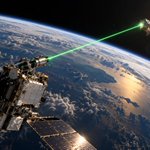
One possibility being explored is using powerful lasers to change the paths of these fragments without physically touching them.
Small corrections made early enough could prevent collisions, while more ambitious systems might gradually lower debris into denser atmospheric layers, where it eventually burns up.
After all, the challenge isn't necessarily stopping something travelling at 28,000 km/h or faster. It's changing where that object will be when another spacecraft arrives.
🤖 Made with AI

One of the most fascinating things about nature is how easily we assume that every other creature sees the world exactly as we do.
Think about those wildlife documentaries where a tiger slowly approaches a deer through the forest. Sometimes it's barely 15 or 20 metres away, and you can clearly make out its enormous orange body against the green vegetation.
It almost makes you wonder how such a brightly coloured animal could possibly be camouflaged.But here's the fascinating part. The tiger you're looking at isn't the same tiger its prey sees.
Humans possess three types of colour sensitive cones in our eyes, allowing us to distinguish reds, greens and blues.
Deer and wild boars, however, have only two. Their eyes struggle to distinguish orange from green, meaning the tiger's striking orange coat appears far less conspicuous against the surrounding vegetation.
Its black stripes make things even harder, breaking up the outline of its body among tall grass, branches and shadows.
Now consider what this means in the wild.
You're dealing with one of the largest and most powerful terrestrial predators, capable of extraordinary bursts of acceleration, with enormous muscular strength and a body built almost entirely for ambush.
And evolution has given it another advantage, camouflage remarkably well suited to the eyes of the animals it hunts.
The wilderness we see through human eyes is not necessarily the wilderness experienced by the creatures living in it.


For decades, Formula 1 existed in a different engineering universe from everyday cars.
It wasn't simply faster. It was where manufacturers discovered what an automobile could become when convention mattered less than performance.
By the 1980s, engineers had squeezed over 1,000 horsepower from 1.5 litre turbo engines. McLaren was building carbon-fibre chassis while ordinary cars relied on steel.
Carbon-carbon brakes, ground effect and active suspension weren't marketing features. They were answers to problems engineers had the freedom to solve and innovate.
Safety limits were always necessary. But somewhere along the way, governing the competition began to mean prescribing the machine. Engine architecture, aerodynamics, development spending, increasingly, the possibilities are decided before a designer picks up a pencil.
Brilliant engineers still find advantages, but within a rulebook that determines which ideas can even be attempted.
Consider 2026. Formula 1 introduced a much larger electrical contribution in the name of efficiency and road relevance. Then came super-clipping, cars harvesting battery energy even with the driver flat on the throttle, sometimes slowing before the end of a straight.
The FIA had to revise the rules to reduce excessive harvesting. In a sport built on chasing speed, that should trouble anyone who loves the engineering.
And yet audiences are growing. Commercial success makes the strategy easy to defend. Boeing's history offers a different, much graver warning, an emphasis on shareholder returns was rewarded for years, while damage to engineering culture became painfully apparent later.
A rising financial graph cannot tell you whether the institution is improving.
Outside F1, technology hasn't stood still. The road legal Rimac Nevera R can hit 100 km/h in 1.72 seconds and reach 430 km/h under controlled conditions.
F1 still holds an enormous advantage over a complete lap. But pieces of the old performance gulf are disappearing.
Formula 1 earned its title by letting ingenuity stretch the limits of the automobile. If it keeps narrowing that freedom by over regulating itself, I wouldn't dismiss the possibility that within five years a road-legal EV hypercar leaves a dealership and beats a contemporary F1 car around a circuit.
What, then, would 'the pinnacle' mean?
Have you ever looked up at the night sky and wondered what you're actually looking at?
To most of us, they're simply thousands of tiny lights scattered across the darkness. But among them are stars, a few planets, and, if you know where to look, even entire galaxies.
And here's something extraordinary about those distant lights.
Some of the galaxies we can observe are tens or hundreds of millions of light years away. The light reaching us tonight may have begun its journey long before the first human beings walked the Earth.
Which raises a fascinating question.
If light has no mass, why can't it travel any faster? What limits its speed ?
Anything with mass requires increasing amounts of energy to accelerate towards the speed of light. But photons have no rest mass, so what determines their speed?
It turns out that light isn't being held back by anything. Its speed in a vacuum, approximately 300,000 kilometres per second, is a fundamental property of spacetime itself. It governs how quickly information and physical influences can travel.
And according to relativity, even if a photon travels for a billion years by our clocks, the proper time along its journey is zero. Not because the photon experiences an instantaneous journey, but because its path through spacetime has no elapsed proper time.
Now think back to those distant lights in the sky.
A star whose light has travelled millions of years to reach your eyes might have exploded long ago. Its final moments could even be travelling towards us right now, while we're still seeing the light it emitted when it was alive.
Every time we look into the night sky, we're looking into the past. The farther we see, the further back in time we travel, observing the universe not as it exists today, but as it existed when that light first began its journey.
- Why does the universe have a speed limit at all?
- Is it a fundamental law of nature, something deeper we have yet to discover, or a rule established by a creator?
- We know how this limit works. But why it exists remains one of the deepest mysteries of our universe.
🤖 Made with AI

America first flew its F-22 Raptor in 1997, nearly thirty years ago.
Compare it with China's J-20 today, and you might conclude that American aviation technology is still generations ahead.
But what if everyone is looking at the wrong weapon?
The J-20 is only the visible blade. The real power lies in China's industrial machine, capable of forging it again and again.
> In 1997, America was already flying the F-22.
> China was still struggling to master advanced fighter engines.
> Its GDP per person was barely $800.
> The J-20 wouldn't make its first flight until 2011.
> Even then, propulsion remained a major challenge.
> Early Chinese jet engines suffered serious hot section reliability problems.
> But Chinese engineers kept building, testing and improving them.
> Every generation taught the next something the previous one couldn't do.
> Slowly, an aviation industry dependent on foreign technology began mastering more of its own.
And then something remarkable happened.
> In 2020, China was producing an estimated 20 J-20s annually.
> By late 2025, that estimate had climbed to 120.
> A sixfold increase in just five years.
> But the real story wasn't confined to the aircraft factory.
To understand why, look at what America accomplished during World War II.
> In 1939, the United States manufactured just 2,141 military aircraft.
> Yet it already possessed one of the world's largest civilian industrial economies.
> Then war forced the country to reorganize its manufacturing capacity.
> Automobile plants began producing aircraft engines.
> Factories expanded, workers retrained and supply chains were transformed.
> Ford built Willow Run to mass produce the four engine B-24 bomber.
> At peak output, one bomber emerged roughly every production hour.
> By 1944, America was manufacturing 96,318 military aircraft annually.
> That's 263 aircraft every single day, 75 years ago.
> Nearly 45 times its output just five years earlier.
America had demonstrated something extraordinary. An industrial economy could become a military weapon in its own right.
Now consider the country manufacturing the J-20.
> In 1990, China accounted for 2.8% of global manufacturing production.
> By 2024, that figure had reached 32%.
> Nearly one-third of the world's manufacturing output.
> Around 125 million people worked in its manufacturing sector in 2023.
> More than seven times America's entire manufacturing workforce in 1944.
> China produces roughly half the world's crude steel.
> Its factories operate more than two million industrial robots.
> Its shipyards command an enormous share of global shipbuilding.
> And across its industrial clusters, suppliers manufacture everything from advanced electronics to the machines that build other machines.
But the greatest achievement isn't simply having enormous factories.
> It's building an interconnected industrial ecosystem.
> Materials, precision machinery, electronics, components and assembly increasingly exist within the same manufacturing economy.
> The J-20 is one product of that accumulated capability.
> And China is still developing its aerospace industry, including new engines and another stealth-fighter family.
> A country that once struggled to build reliable advanced engines is now producing sophisticated combat aircraft in substantial numbers.
Now imagine a hypothetical war, five or ten years from today.
> China faces the United States and its NATO allies in a prolonged conflict.
> Both sides begin converting their industrial economies for war.
> Russia's war in Ukraine has shown what sustained military demand can do to production.
> America demonstrated the staggering potential of industrial mobilisation in World War II.
> But China would enter this conflict with an even larger, more automated manufacturing base than it has today.
Now consider what that could mean for aircraft production.
> Suppose annual military aircraft production reached 3,000, perhaps even 5,000.
> Of those, 1,500 to 2,000 could hypothetically be stealth fighters.
> That's four to five advanced fighters rolling off production lines every day.
> Because prolonged wars aren't decided by which aircraft looks more impressive.
> They're decided by how quickly nations can produce, repair and replace what the battlefield destroys.
America once demonstrated that industrial power could overwhelm the battlefield. Eighty years later, it may have to confront that same lesson from the other side.
The question is no longer simply whether one F-22 can defeat one J-20. It's whether the United States and its allies can withstand the full industrial weight of China if those factories were ever mobilized for war.
The Cold War pushed nations into doing things that would be almost unthinkable under ordinary circumstances.
Some of those decisions were so extraordinary that their consequences are still circling the Earth, decades after the rivalry ended.
In the 1970s, the Soviet Union faced a peculiar military problem. It had developed powerful antiship missiles capable of striking American aircraft carriers from enormous distances. But finding those carriers across millions of square kilometres of ocean was another matter entirely.
The solution was remarkable. Put nuclear reactors into space. Yes you read that right.
The Soviets built radar reconnaissance satellites powered by miniature reactors containing highly enriched uranium. Each produced roughly 100 kilowatts of thermal power, converted into just 3 kilowatts of usable electricity through thermoelectric generators.
These spacecraft operated barely 250 kilometres above Earth, searching the oceans for US warships. But there was a problem. At such low altitudes, atmospheric drag would eventually pull an abandoned satellite back towards Earth.
So engineers designed a disposal system that would push the reactor assemblies into higher orbits, roughly 900 kilometres above the planet, where they could remain for centuries.
In January 1978, one failed. Kosmos 954 reentered over Canada, scattering radioactive debris and triggering a massive recovery operation.
Later safety procedures introduced another unexpected consequence. Ejecting reactor cores released liquid-metal coolant into space, forming tens of thousands of tiny metallic droplets.
Decades later, NASA could identify this unusual debris population through powerful ground-based radars, although most particles remain too small to track individually.
Today, commercial companies are filling Earth's orbit with thousands of communications satellites. Some operate in regions already contaminated by the remnants of that earlier military age.
The Soviet Union disappeared in 1991. The Cold War ended. But the nuclear machinery launched to hunt American warships remains part of the environment that future generations must navigate.
🤖 Made with AI

We hear endlessly about how expensive modern fighter aircraft are to operate. But there's another branch of the military where projecting power thousands of kilometres from home requires an extraordinary amount of money, manpower and industrial infrastructure.
The Navy.
Consider an American Arleigh Burke-class destroyer. A single warship can cost over $2 billion to build, displaces nearly 10,000 tonnes and carries more than 300 sailors, powerful gas turbines, sophisticated radar systems and up to 96 missile launch cells.
Keeping it operational is expensive enough. Sending it halfway around the world is an entirely different undertaking.
The crew needs food, drinking water and medical support. The engines consume enormous quantities of fuel. Every piece of machinery requires maintenance, and the missiles carried aboard can collectively represent hundreds of millions of dollars in weaponry, depending on the loadout.
And here's where naval warfare becomes particularly complicated.
Unlike an aircraft returning to an airbase, a destroyer cannot simply reload its vertical launch missiles in the middle of the ocean under normal operating conditions. Fuel and supplies can be replenished at sea, but missile rearming generally requires suitable port facilities.
The farther these ships operate from home, the more they depend on replenishment vessels, overseas bases, maintenance networks and supporting aircraft and warships.
This is why relatively few countries can sustain serious naval operations thousands of kilometres beyond their coastlines.
Building a billion-dollar warship is one challenge. Building the enormous logistical system required to keep an entire fleet operational on the other side of the planet is something else entirely.
And that, perhaps, is the most underestimated cost of modern military power.
🤖 Made with AI

Almost everyone has a memory from childhood that feels strangely different from everything else.
Perhaps you're ten or twelve years old. It's a beautiful summer afternoon, sunlight is pouring through the windows, and you're waiting to go outside and ride your bicycle with friends.
Or maybe it's a cold autumn evening, the leaves are falling, and you're sitting with your family, enjoying a little ritual that nobody realized would one day disappear.
Years later, a familiar song, a particular smell or even the afternoon sunlight can bring that entire feeling rushing back.
And for a brief moment, you don't just remember being there. You remember what it felt like to be that person.
There's a reason these memories have such a peculiar hold over us.
When we revisit a cherished moment, parts of the brain involved in memory and reward become active, including the hippocampus and ventral striatum. The experience can bring genuine pleasure, often accompanied by a strange sadness because we know those days are behind us.
But here's something even more interesting.
Our brains don't always bring these memories back by accident. Research published in 2006 found that feelings of loneliness and distress can make us more likely to become nostalgic.
And those memories often involve people, places and experiences where we once felt loved, safe or connected. Remembering them can actually restore some of that feeling of belonging, particularly when the present feels uncertain.
It's incredible when you think about it. Something as ordinary as an afternoon spent cycling with friends can become a source of comfort twenty years later, long after you've forgotten what you were even talking about that day.
And perhaps that's one of the strangest things about growing up.
We spend much of our childhood looking forward to becoming adults, only to discover that some of the moments we would give anything to experience again were the ones we barely thought about while living them.
The True Price of War,
On Christmas Day in 1914, six German soldiers appeared above their trench without rifles. Across a narrow stretch of battered ground, British soldiers watched them cautiously. The Germans began shouting that they did not want to fight that day. Then they offered to send over beer.
It was an extraordinary offer to receive from men you had been ordered to shoot. British Captain Clifton Stockwell had strict instructions against fraternizing with the enemy.
But the Germans were unarmed, and he worried that one nervous soldier might open fire. So he climbed out of his trench and called for the German captain to meet him.
The two officers walked into the open and saluted. After a brief conversation, they agreed not to shoot until the following morning.
A barrel of beer crossed toward the British trenches Christmas pudding went back the other way. The officers even shared a drink. Men who had spent their days watching for enemy movement across that same ground were now exchanging Christmas greetings.
Elsewhere along the Western Front, similar scenes unfolded. Soldiers shared cigarettes, talked about their families and helped bury the dead. For a short while, the land separating the trenches became a meeting place. But the peace was fragile and short lived. Some sectors never stopped fighting, and the soldiers still had orders from their commanders.
The following morning, Stockwell fired three shots into the air and raised a Christmas greeting above his trench. From the German side came a message of thanks. The two captains appeared once more, bowed and saluted, then returned to their positions. Two shots were fired into the air from the German trench.
What had begun with an exchange of beer had ended with an exchange of gunfire signals. The same officers who had arranged to stop shooting had now politely arranged its return. Their brief understanding had changed nothing about the larger war, which continued for almost four more years.
More than a century later, consider Russia's war in Ukraine. After more than four and a half years, independent estimates put the combined military toll above two million killed, wounded and missing. Just think of the amount of families that are broken by this war.
Surveys suggest substantial support for negotiations among ordinary Ukrainians and Russians alike. Yet wanting negotiations is not the same as agreeing to their terms. Territory, security and the fear of another invasion remain enormous obstacles. Those bearing the daily human cost do not individually have the power to settle these disputes.
Perhaps the most haunting part of Christmas 1914 is that the soldiers needed no great diplomatic conference to recognize one another's humanity.
They shook hands, shared food and found a way to stop shooting. But they could not settle the war that had brought them there. And that question still follows us today, how do you turn the willingness to stop fighting into a peace that people can trust will last?
It takes far more than a ceasefire to end a war, and often far longer to make peace than it ever took to begin fighting.
🤖 Made with AI

Infrared decoy flares were developed in the 1950s as heat-seeking missiles began tracking the infrared signature of aircraft engines and exhausts.
Engineers needed to create a competing heat source that could pull a missile’s seeker away from the aircraft. Nearly seventy years later, that idea still protects fighters, including the F-35 aircraft.
A conventional flare packs magnesium, Teflon and a Viton binder into a small cartridge. An electrical signal fires an impulse charge, whose expanding gases eject the payload before it burns.
Older designs can emit infrared radiation with a characteristic spectral temperature around 2,000 kelvin, sometimes for just four seconds.
There is more engineering here than the burning material.
At fighter speeds, the dispenser must eject the flare cleanly into the high-speed airflow without igniting it prematurely. Even a small failure in the ejection mechanism can cause the payload to ignite before leaving the aircraft.
And these cartridges need to sit unused for nearly a decade. Yet when an infrared-guided missile is closing in, potentially just 10-12 seconds from impact, the flare must fire on command, separate cleanly and produce the right infrared signature almost immediately. There is very little room for a second attempt.
But the missile technology has changed just as much.
Earlier infrared seekers could be distracted by a brighter source. The AIM-9X and other imaging seekers can process a target’s infrared appearance and movement.
A flare can burn hotter than an engine and still give itself away. Modern spectral decoys therefore aim to imitate the aircraft’s infrared emissions, creating a harder problem in chemistry, consistency and ageing.
Meanwhile, stealth fighters conceal their dispensers behind doors, and air combat increasingly involves radar-guided missiles with claimed ranges of 300-400 kilometres. Flares cannot defeat those radar threats, they remain relevant to infrared-guided missiles.
The familiar shower of fire will become less effective against advanced seekers.
But expendable infrared deception is unlikely to vanish from future fighters. Its survival now depends less on producing greater heat signature than on producing a convincing target.
One of the most fascinating things about evolution is how millions of different creatures have developed their own extraordinary ways of surviving.
Some rely on brute strength, others on speed, camouflage or intelligence. But occasionally, evolution produces something so remarkably sophisticated that it almost seems overengineered.
And one of the finest examples is an insect most of us barely give a second thought to.
The dragonfly.
What makes it extraordinary begins with how it hunts.
Unlike predators that simply chase their prey, dragonflies can anticipate where a flying insect is heading and adjust their own trajectory to intercept it almost like a surface to air missile system. Specialised visual neurons track the target while the dragonfly's nervous system continuously coordinates its movements.
And the flight mechanics are equally remarkable.
Unlike most insects, dragonflies have direct muscular control over their four wings. By adjusting their movement and timing, they can hover almost motionlessly, fly backwards, accelerate suddenly and change direction with astonishing precision.
Even their wings hold a surprise.
Under a microscope, the surface of certain dragonfly wings is covered in tiny nanostructures capable of damaging bacterial membranes through physical forces. Materials scientists are studying these structures to develop antibacterial surfaces without relying solely on chemical agents.
But perhaps the most surprising part is how all this engineering comes together.
Ask someone to imagine a highly successful predator, and they'll probably think of a lion, tiger or crocodile.
Yet studies of certain dragonflies have recorded successful captures in roughly 95% of their hunting attempts.
And that's what makes evolution so extraordinary.
While we spend decades developing autonomous guidance systems, highly manoeuvrable aircraft and advanced antibacterial materials, nature has already brought versions of all three together in an insect small enough to rest on your finger.