

Sharing all things network infrastructure, collaboration tools, and smart building technology.
UK
Joined July 2009
- Tweets2.2K
- Following487
- Followers1.2K
- Likes347






Pinned Tweet
🔓 The gate is gone. Get free, unlimited access to expert-led AIOps insights: hubs.ly/Q04yrjnY0

Don't let unexpected risks creep into your network this Halloween. 🕷️
Discover expert advice on securing your network operations and managing AI-related risks in our latest Tech Insights guide: hubs.ly/Q04CNtXB0
What if your NHS network could take on more of the work, while giving your team greater control over security?
With FutureNow Networks, NHS organisations can reduce manual tasks, contain security threats, and manage access policies consistently across acute and community sites.
But how does it all work?
Our latest infographic breaks down the three technologies behind campus fabric, showing how they work together to simplify network management, strengthen security, and improve resilience.
View the infographic here: hubs.ly/Q04CFkxV0


Planning a university network refresh, but unsure where to start or how to make your investment count?
We've brought together practical tools, expert insights and real-world university examples to help you:
- Understand where legacy infrastructure is costing you more than you think.
- Benchmark connectivity across seven campus environments.
- Explore practical approaches to modernisation.
- See how other universities are delivering network upgrades within tight timescales.
Whether you're assessing your current infrastructure or building a case for investment, find the resources to help you take the next step.
Explore our guide to the ultimate university network refresh: hubs.ly/Q04CzbsR0

Enjoyed our latest FutureNow episode with @Cisco's Hannah Mills and Regan Newman? We're taking the conversation a step further!
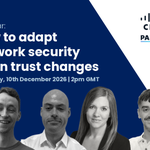
Join us on Thursday 10 December at 2pm GMT as Hannah and Regan join Block's Robert Brady and Paul Yarwood for a practical webinar on turning identity intelligence into stronger, more responsive security.
Walk away with a clear understanding of the four steps to making identity-driven security work across your environment:
1. Establish identity: Understand who and what is connecting to your network.
2. Recognise changing risk: Use identity intelligence to detect when behaviour or trust changes.
3. Turn insight into action: See how Hybrid Mesh Firewall can adapt access controls and segmentation as risk evolves.
4. Simplify security management: Discover how Security Cloud Control and Cisco Cloud Control can help manage policy consistently across your environment.
🔓 PLUS: Get exclusive access to an in-depth demonstration of the latest Cisco Cloud Control capabilities, showing how these technologies can come together in practice.
🎟️ Save your spot: hubs.ly/Q04CscWc0
@CiscoSecure

How secure is your network if you can't see what's connecting to it?
@Cisco's Hannah Mills and Regan Newman join Block to explore how better network visibility, identity-based access controls, and Zero Trust can help public sector organisations strengthen security and get more from their existing infrastructure.
🎙️ Catch the full conversation: hubs.ly/Q04CgVbz0
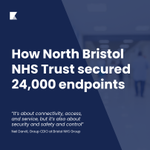
In healthcare, network security matters because so much depends on the network staying secure and available.
At North Bristol NHS Trust, thousands of medical devices rely on secure connectivity to support patient care across its sites.
Following a major network transformation with Block, the Trust had already standardised its estate using Cisco infrastructure. But with security threats growing and the environment becoming more complex, there was more work to do.
Working together, we built on those foundations to strengthen security across the network, introducing greater segmentation, access control, and visibility of connected devices.
For the Trust, it meant a more resilient network and stronger protection for the technology its teams rely on every day.


Our latest FutureNow episode is live📢 Rob Brady from Block is joined by @Cisco Hannah Mills and Regan Newman to explore where to start with Zero Trust, how to get more from existing security investments, and what emerging AI threats mean for your network.
Hear the full conversation: hubs.ly/Q04B_w1j0
How do you contain threats when your university's network extends far beyond the campus perimeter?
At UCISA DISC 2026, network and security leaders came together to discuss that challenge, from managing patching workloads and protecting vital lab equipment to improving visibility and making MFA work for users.
We've pulled together the key takeaways, including how Durham University is using segmentation and balancing security with the needs of teaching and research.
Discover what the experts had to say: hubs.ly/Q04BV3z10

ALT Patching and perimeters
How can you improve cybersecurity without overhauling your entire network?
Join us for the next episode of FutureNow with Cisco Security this Thursday to find out.
Happy Friday! We’re looking back at the Block summer party, where we all got together for some well-earned fun in the sun. ☀️
A big thank you to everyone across Block for all the hard work this year. We're lucky be part of such a brilliant team.
And it's safe to say we know how to have a good time! ❤️✌️
Securing investment in network security is rarely straightforward. Especially when NHS budgets are stretched, and competing priorities are high.
A strong business case can make all the difference when taking proposed changes through your Change Advisory Board (CAB) and wider investment approval process.
To help you make your case, we've pulled together some key statistics from across four network security architectures. Each one offers evidence you can use to demonstrate how investment can reduce risk, protect clinical services, and deliver long-term value.


What happens when your network passes every test? 🎓
When connectivity is no longer a constraint, universities can unlock more possibilities for teaching, learning, and research.
- Seamless connectivity across campus
- Better access to digital learning resources
- Stronger protection for sensitive data and research
- More inclusive learning experiences
And that's just the beginning.
Our FutureNow Networks for Universities whitepaper explores the real-world use cases for secure, seamless connectivity and what they could mean for your campus.
Discover what's possible. Explore the whitepaper:
hubs.ly/Q04B5FkF0

A big thank you to everyone who joined us for BlockHeadz Live on Friday! 🙌
It was great to welcome everyone to our London office for an afternoon exploring one of the biggest topics in networking right now: AI.
From industry insights and the latest technology updates to getting hands-on with automation in our Build Lab, it was brilliant to see everyone getting involved and sharing ideas.
It's days like these that remind us why we built BlockHeadz. To give network engineers and architects a space to learn from each other, explore new technologies and build their skills while tackling real-world challenges, all as part of a community.
And we're looking forward to doing more of it!
Fancy joining us at the next BlockHeadz event or getting involved in the conversation online?
Find out more and join the community here: hubs.ly/Q04zTJFd0


Is your network ready for AI?
In our latest FutureNow episode, HPE Juniper’s Elliot Townsend gets into the practical side of AI-driven networks, including where to start, how technologies like MCP fit in, and why standardising your network matters for optimising operations.
If AI is part of your network roadmap, there’s plenty in this episode worth taking away: hubs.ly/Q04zB_WP0
Zero Trust for the NHS has to work in the real world: legacy infrastructure, medical devices, third-party access and zero tolerance for downtime.
Our new report, Beyond the perimeter, shows NHS security and network teams how to turn Zero Trust into a practical, phased roadmap.
Inside:
🔹 Where to start
🔹 Identity, access + segmentation priorities
🔹 Legacy and medical device considerations
🔹 CAF/DSPT implications
🔹 A realistic path to implementation
Get the report: hubs.ly/Q04zg4YX0

That's a wrap on Day 1 of DISC26! 👏
It's been great speaking with university teams today about the challenges that can emerge in the gaps between network and security teams, tools, and shifts.
A big theme from today's conversations has been how to bring network and security closer together, improve visibility across complex environments, and strengthen 24/7 threat detection and response.
We'll be back tomorrow for Day 2, so if you haven't caught us yet, come and find the Block team at Stand 16, conveniently located by the refreshments. ☕ Who knows, you might just win some AirPods!
☕ Stand 16, by the refreshments
📅 7-8 October
📍 Hilton Newcastle Gateshead
8 days to make big changes to a university network.
When teaching schedules can't move, network upgrades have to fit around them.
For one UK university, that meant deploying a new cloud-managed residential network during just eight days of the Easter break.
In that time, Block helped replace 52 residential switches and 495 wireless access points.
The next phase brought high-speed connectivity to 1,200 student rooms, with secure self-service onboarding designed to give students a better home-from-home experience.
See what can be achieved when the delivery window can't move → hubs.ly/Q04zrlNM0

More dashboards, monitoring, and data. Does your network team know what to do with it?
In our latest FutureNow episode, @HPE_Networking Elliot Townsend challenges one of the assumptions he hears from network managers: “I already have all the data.”
He questions whether you have the right context to understand what the data means, what needs attention, and what to do next. That’s where AI-native networking can help.
Listen to the full conversation to understand how HPE Juniper is using AI to turn network data into something teams can act on: hubs.ly/Q04zhy5M0
Heading to Ucisa #DISC26 tomorrow?
You’ll find the Block team at Stand 16, right by the refreshments. ☕
We’ll be talking about how universities can close the gaps between network and security teams, improve visibility, and strengthen 24/7 threat detection and response.
If that’s on your agenda, stop by and say hello.
☕ Stand 16, by the refreshments
📅 7–8 October
📍 Hilton Newcastle Gateshead

Does moving to Zero Trust mean replacing your network?
Not necessarily.
For NHS organisations, you can introduce Zero Trust progressively by aligning identity, segmentation, and access policies within your existing infrastructure.
How do you do this?
Instead of assuming a user or device can be trusted once they’re inside the network, access is continually assessed based on identity, context, and risk.
Take a quick look at our one-pager to see what that means in practice: hubs.ly/Q04yTK8t0
