

First in my family to run a business. Now I help owners find customers, markets and partners. Still explaining what I do at family weddings.
Bengaluru, India
Joined January 2014
- Tweets13.1K
- Following5K
- Followers1.7K
- Likes3.7K



Pinned Tweet
Namma Bengaluru. My city since 2005, and I am still fond of it.
Reached the cafe early this morning. As usual. I think punctuality is my only superpower 😀
The person I was meeting got stuck in Bengaluru traffic. I always give Bengaluru traffic the benefit of the doubt 🙂 After 21 years here, I know it’s part of the charm.
Today is my first proper working day after a fever. Dengue came visiting again. The first time was in 2012. My platelets fell to 5,000, and ironically, that became my push to leave everything and start fresh on my own.(Version 1.0, Accidental entreprenure 😊)
This time dengue left early. I think it learned something from me. (Version 2.0)
So, back in the game. And now I am looking for a few good people to work with. More on who, just below.
#Bengaluru #NammaBengaluru

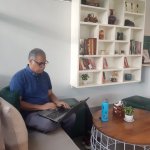
ALT Me at a Bengaluru cafe, working on my laptop while I wait for my meeting.
Prakashan B V retweeted
For 21 years, my salary came on the first of every month. I never once wondered how it got there.
In 2012, I started my own business, and within a few months I learnt a new language. “Cheque is ready, sir, only signature is pending.” “Accounts person is on leave.” “Kindly send the invoice once more, the earlier one is not traceable.”
Some of my invoices travelled so many times, they deserved their own GST number.
That was when I truly understood the business owners I had been interacting with all those years. Every month, they make the first of the month happen for everyone else. Salaries, suppliers, rent, taxes. Nobody asks them how.
Today, when an owner talks to me about growth, I ask about the payment cycle before the order size. A big order with a long wait can hurt more than a small order paid on time.
And I still have a soft corner for every accounts person who says, “Today itself, sir.”
#Entrepreneurship
#Founders
#BusinessGrowth
A good product can be ready for the market.
The market may still need time to understand it.
I have seen this with manufacturers, service businesses and new technologies. The interesting work often begins after the product is ready.
I wrote about that second journey.
The Second Journey of a Good Product.
For business owners and founders thinking about customers, markets and what comes next: linkedin.com/pulse/second-jo…

14
For 21 years, my salary came on the first of every month. I never once wondered how it got there.
In 2012, I started my own business, and within a few months I learnt a new language. “Cheque is ready, sir, only signature is pending.” “Accounts person is on leave.” “Kindly send the invoice once more, the earlier one is not traceable.”
Some of my invoices travelled so many times, they deserved their own GST number.
That was when I truly understood the business owners I had been interacting with all those years. Every month, they make the first of the month happen for everyone else. Salaries, suppliers, rent, taxes. Nobody asks them how.
Today, when an owner talks to me about growth, I ask about the payment cycle before the order size. A big order with a long wait can hurt more than a small order paid on time.
And I still have a soft corner for every accounts person who says, “Today itself, sir.”
#Entrepreneurship
#Founders
#BusinessGrowth
Prakashan B V retweeted
Namma Bengaluru. My city since 2005, and I am still fond of it.
Reached the cafe early this morning. As usual. I think punctuality is my only superpower 😀
The person I was meeting got stuck in Bengaluru traffic. I always give Bengaluru traffic the benefit of the doubt 🙂 After 21 years here, I know it’s part of the charm.
Today is my first proper working day after a fever. Dengue came visiting again. The first time was in 2012. My platelets fell to 5,000, and ironically, that became my push to leave everything and start fresh on my own.(Version 1.0, Accidental entreprenure 😊)
This time dengue left early. I think it learned something from me. (Version 2.0)
So, back in the game. And now I am looking for a few good people to work with. More on who, just below.
#Bengaluru #NammaBengaluru
ALT Me at a Bengaluru cafe, working on my laptop while I wait for my meeting.
If you are a consultant, a freelancer, a retired expert or a hustler with a venture of your own, I would love to hear from you.
Maybe you are a first-time entrepreneur, or an accidental one like me.
Maybe you are building something with AI for core engineering, construction, infra or manufacturing or small business. Or you have just started a business with sustainability at its heart.
Engineering or well beyond it. The rest is better over a conversation. Tell me what you do best.
DM me, or WhatsApp (messages only): wa.me/919448719271
1
34
I enjoy talking to people from completely different professions.
They often ask simple questions that those of us in the field stopped asking years ago!
Sometimes those questions make us think. Sometimes they make us laugh at ourselves.
And occasionally, they make us wonder why we never thought of that! 😄
23
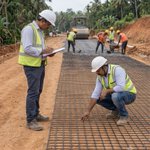
In Oman, I once spent more time explaining welded steel mesh to the people fixing it than to the engineers approving it. 😀
The engineers had the drawings, and the drawings made perfect sense. The site team had questions. Often better ones.
That's when I understood something about taking forward new core engineering products.
The approval happens in the office, but the product's reputation is made on site, by people who may never see the specification.
27
In Bengaluru, your groceries arrive in ten minutes. The oil from last night’s bajji may one day fly a plane.😊
Collectors on auto-rickshaws move kitchen to kitchen across the city, gathering used cooking oil from hotels and restaurants.
Indian Oil, HPCL and BPCL have sought supplies for biofuels, including future aviation fuel.
Yet industry estimates suggest only about 5% is collected through organized channels.
The fuel technology already exists. The harder part is a collector turning up at the same kitchen, week after week.
The last mile decides more outcomes than the idea does.
#Bengaluru
@peakbengaluru
1
32
Wishing everyone in Namma Bengaluru and beyond a very Happy Deepavali!
The report behind this post, on Bengaluru’s used cooking oil collectors:
ndtv.com/bangalore-news/how-…
#NammaBengaluru

34
Prakashan B V retweeted
I wrote more on this in today's newsletter:
linkedin.com/pulse/next-year…

Prakashan B V retweeted
“So what exactly do you do?”
Most first-generation business owners have heard this at weddings, functions and reunions, somewhere between the sambar and the payasam.
Nobody in my family had ever raised an invoice for a business of their own. In 2012, at 43, after 21 years in corporate life, I became the first. I never planned it, so I call myself an accidental entrepreneur.
Corporate life taught me plenty, but running your own business is another matter.
In a company, the salary arrives on the first of every month, as reliably as the monsoon reaches Kerala in June. On your own, you need someone to buy first, and then someone to pay on time.
So I learnt again from the people across the table, and I paid my tuition in cups of tea. Some stretches were tough, but I was fortunate to have family, mentors, friends, old colleagues and well-wishers standing by me.
Fourteen years later, I am the one across the table. Founders and owners, in engineering, technology and well beyond, often come with a good product and a quiet order book. Together we work out where the next customers, markets and partners will come from. That, for anyone still asking, is what I do.
If you are the first in your family, by plan or by accident, the question may never stop. But one day a younger cousin will ask you a different one: “How did you start?”
Answer that one with patience, even if your payasam goes cold. That is how a family gets its second entrepreneur.
Happy Dhanteras to everyone building a business, and especially to those who are the first in their family to try.

ALT Me at work on my laptop, on a sofa beside a bookshelf and a small round table.
Today is Dhanteras. Across India, families will buy gold, silver or a new steel vessel, and nobody has to persuade them. The only discussion at home is which shop and how much. Most businesses never get a day like that.
Happy Dhanteras to everyone celebrating. And to my fellow business owners, may the opportunities be good, the customers loyal and the payments arrive on time. Ideally, all three this week. 😊

“So what exactly do you do?”
Most first-generation business owners have heard this at weddings, functions and reunions, somewhere between the sambar and the payasam.
Nobody in my family had ever raised an invoice for a business of their own. In 2012, at 43, after 21 years in corporate life, I became the first. I never planned it, so I call myself an accidental entrepreneur.
Corporate life taught me plenty, but running your own business is another matter.
In a company, the salary arrives on the first of every month, as reliably as the monsoon reaches Kerala in June. On your own, you need someone to buy first, and then someone to pay on time.
So I learnt again from the people across the table, and I paid my tuition in cups of tea. Some stretches were tough, but I was fortunate to have family, mentors, friends, old colleagues and well-wishers standing by me.
Fourteen years later, I am the one across the table. Founders and owners, in engineering, technology and well beyond, often come with a good product and a quiet order book. Together we work out where the next customers, markets and partners will come from. That, for anyone still asking, is what I do.
If you are the first in your family, by plan or by accident, the question may never stop. But one day a younger cousin will ask you a different one: “How did you start?”
Answer that one with patience, even if your payasam goes cold. That is how a family gets its second entrepreneur.
Happy Dhanteras to everyone building a business, and especially to those who are the first in their family to try.
ALT Me at work on my laptop, on a sofa beside a bookshelf and a small round table.
Prakashan B V retweeted
Years ago, my business partner was travelling abroad, and a VERY difficult call landed on my table.
We had spent considerable time, A lot of effort and our money developing a geosynthetic tubular structure to remove silt from a dam.
The prototype was ready, site trials were done, and we had even placed the order for fabrication. The project looked promising.
Then the customer called for a fresh round of price negotiation, after everything had already been closed.
They had alternatives on the table which they created making use of our tried and tested prototype which we had developed over a period of time, and now the customer wanted a significant reduction, immediately.
Some negotiation is always expected. But the price reached a point where I was no longer comfortable with what we would have to commit to, just to win the order.
So I said no. It was not easy. We had already put a lot into the project, and I knew saying no could mean losing it completely.
We did lose it. The project went ahead through another route.
Much later, I came to know that the other route had run into difficulties. I don't mention that to suggest our solution would certainly have succeeded. Engineering doesn't give us that luxury. Every project has its own conditions and risks.
When I walked away, I didn't know what would happen later. I only knew what we could responsibly commit to, and what we could not. Many years of working with engineering products, projects and customers had taught me that much.
There is nothing unusual about a customer asking for a better price. That is part of business.
But sometimes, somewhere in the negotiation, the question changes.
Can we win this order?
Or should we win it on these terms?
The second question is the harder one.
Good to see the technology that brings groceries in 15 minutes now bringing ambulances with trained paramedics. Thank you, @deepigoyal . In Bengaluru traffic, our part as citizens is simple: make way for every ambulance, whoever runs it, and never misuse emergency help.
Prakashan B V retweeted
Diwali cleaning at the office always turns up two things. Pens that stopped writing long ago, and proposals, partnership queries and quotations that nobody followed up.
The pens can go. But before the proposals and quotations go back into the drawer, it is worth asking what actually stopped each one.
More often than we think, it was a person we never met. The one we spoke to liked it. Somewhere behind them sat a consultant or a finance head who never saw our file, and the matter quietly ended there.
Wishing everyone a very happy Diwali, and a year in which the right file reaches the right table.
