

This is my official Twitter account as the former State Minister for Foreign Affairs and International Cooperation of the Federal Republic of Somalia.
Somalia
Joined June 2019
- Tweets365
- Following1.3K
- Followers2.3K
- Likes84
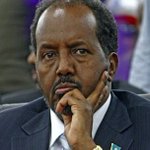


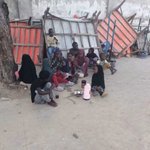


If anything, the country’s current political situation reveals the ugly face of #political #clanism. I’m not sure though if we the #Somalis will learn the lesson this time, since we didn’t learn it from earlier tragedies caused by clan politics. Still, it is increasingly clear that those who push political clanism often end up turning on each other. There are many examples and a living one is #HSM and his cronies who used political clanism to come to power. Political clanism turns allies into rivals and rivals into enemies. The only way out is #justice for all, not for one clan, not for one circle of power, but justice for every Somali with a clear caveat that such justice must be defined and measured by agreed parameters anchored in a home-grown, endogenous governance system owned and led by Somalis. Until that lesson is learned, the same tragedy will simply keep finding new actors.
#Somala #Somalis

ALT Political clanism in Somalia

ALT Political clanism in Somalia
People who fought empires don’t bow to a bully. That refusal is the oldest Somali institution of all and it is still holding. Kudos Somali Americans.

ALT USA Election + Somalis
Having had the privilege to participate the international Givernance Forum in Xiong’an, China, alongside more than 200 diplomats, politicians, academics and civil society representatives, I left with a deepened appreciation of both the gravity and the opportunity of this moment. The discussions made clear that, while perspectives naturally differ in emphasis and approach, there was a broad and constructive convergence, we, as a global community, are entering an era of profound change on a scale unseen in a century. The prominent voices gathered in the forum agreed that humanity faces a defining choice, between a future marked by peace, dialogue and win-win cooperation, and one marred by war, confrontation and zero-sum competition.
For my part, I believe the choice is clear. We should choose the former, not as a matter of rhetoric, but for the sake of humanity and future generations. This choice can be pursued on the basis of the Global Governance Initiative inaugurated by China a year ago, which upholds the purposes and principles of the United Nations and embraces a global governance vision characterized by extensive consultation, joint contribution and shared benefits. Its strength lies in addressing the crux and root causes of crises and challenges internationally and locally and in building on five core concepts: sovereign equality, international rule of law, multilateralism, a people-centered approach and real actions.
I therefore commend the spirit of open dialogue shown at the forum and respectfully encourage all partners, across governments, international organizations, academia and civil society, to translate this shared conviction into inclusive cooperation and practical action. In a world of diverse histories and national circumstances, no single voice can provide all the answers, but by choosing dialogue over confrontation and cooperation over zero-sum competition, we can help shape a more peaceful, equitable and sustainable future for all.

ALT Global Givernance

ALT Global Governance
7
345
Balal Mohamed Cusman retweeted

Russian President Vladimir #Putin said on Wednesday that #Russia was interested in restoring economic cooperation with the US during a meeting with #US President Donald Trump's special envoy Steve Witkoff in St. Petersburg.
Witkoff arrived in the city on October 21 for talks with Putin aimed at resolving the conflict in #Ukraine.
(Photo caption: A car carrying Steve Witkoff is seen at Pulkovo Airport in St. Petersburg, Russia, Wednesday.)

Under the cover of darkness, terrified #children cling to their #mothers as heavy machinery systematically hammers Mogadishu's most #fragile homes into dust, reducing the shelters of the #helpless to graves of debris, night after ruthless night, as the powerful watch and profit.! Vulnerable families who have already endured decades of conflict and #displacement are driven out from their shelters when security forces stand guard while bulldozers do their work; business interests bankroll the operation. And the Member of Parliaments (MPs) who were elected to represent those same vulnerable people look on with cold indifference, treating the tears of their own constituents as mere background noise to be muted rather than a drowning people begging to be pulled from the rubble.
This is what happens when the logic of profit is allowed to override every other consideration - religion, Somaliness, humanity and morality etc - and ordinary lives are treated as an obstacles to the enrichment of the privileged few.
This is the unbearable consequence of a ruling elite deciding that their own opportunities for profit matter more than the lives and welfare of the people.
This cannot continue. Somalia needs a leadership who will put the safety, dignity and future of ordinary Somalis first.

ALT Displacing the vulnerable people by their own government

ALT Displaced people
The federal compact that we #Somalis carefully and painstakingly built, with the sustained support of #international #partners, is unravelling right before our eyes. On one hand, key Federal Member States such as #Puntland and #Jubaland have openly rejected the federal government’s authority, citing its failed military interventions and other missteps, and accuse #Mogadishu of unilateralism. The remaining federal member states, meanwhile, remain firmly under presidential control rather than functioning as true autonomous tiers of the federal system.
On the other hand, the #opposition groups no longer recognizes the president's #legitimacy risking that even Somalia's security forces in the capital risk fragmenting along clan lines, transforming political disputes into violent confrontations.
The March 2026 illegal #constitutional amendments, which, among other things, extended the president's term from four to five years and parliamentary mandates by one year, is at the heart of the #crisis. These amendments are viewed as a unilateral power grab by President Hassan Sheikh Mohamud to remain in power illegally and this action has further eroded public trust and transformed a procedural dispute into a fundamental fight over the rules of #governance.
Besides, this internal #political deadlock is attracting dangerous external interference backing different #Somali factions, creating a patronage market that exacerbates fragmentation and allows external powers to bargain with fragments of the state.
The evidence is clear. Somalia's political settlement is #collapsing, its constitution is disputed, its institutions lack legitimacy and the country is therefore #fragmenting.
In conclusion, the sole path to avert this looming crisis is the urgent holding of free, fair, and nationally agreed-upon #elections, grounded in broad #consensus. This is not a mere procedural formality, but an existential necessity - the decisive step through which a new leader can be elected with a clear mandate to reconstitute the country and restore the broken social contract.

ALT Election dispute and risk of insecurity
At a time of intensifying geopolitical competition across the Horn of Africa and beyond, I believe the preservation of Somalia’s unity and sovereignty must remain our highest national priority. Across the nation, the Somali people are watching with growing concern the looming crises of potential disintegration conincided with an apparent reluctance to establish and implement a credible framework for free, fair and timely universal suffrage. Delaying a clear and credible electoral timetable is not a strategy in such a perilous situation, it is a dangerous miscalculation that risks deepening/widening the disintegration and empowering the centrifugal forces that threaten Somalia’s unity and long-term stability.
I firmly believe that acting now will ensure that Somalia’s democratic future and with it, its unity and Sovereignty, remains in the hands of its people, rather than allowing to be overtaken by political arrangements shaped beyond Somalia’s borders under the stewardship of external actors.

ALT 2026 Elections
6
1,255
In my assessment, the risk for #disintegration is the gravest threat #Somalia faces today, driven by zero-sum politics and constitutional gridlock that have eroded governance nationwide. Recent strife in #Mogadishu, #SouthWest State electoral dispute, #Puntland’s growing estrangement from the federal framework, #Galmudug’s growing instability and the prolonged standoff between #Jubbaland and the Federal Government are interconnected symptoms of a deepening crisis. What makes this situation even more alarming is the growing involvement of external actors seeking to advance their own strategic interests within Somalia’s fragmented political landscape. For instance, the recently unholy relationship between #Somaliland region of Somalia and Israel, among other geopolitical developments, risks further complicating an already fragile environment and could accelerate centrifugal forces that undermine national unity. I believe that Somalia’s survival, as a unified nation state, demands genuine dialogue and renewed unity, because unity is now an existential necessity, not a mere objective.
@TheVillaSomalia @Somalia #Somalia @AqalkaSare @golaha_shacabka @aqalkahoose #SharciBaaDalLaguDhisaa @Abdijaliilsamow @somalianalyst @HassanSMohamud

ALT Somali map
1
3
335
Watching the stark warning issued today by the two former Presidents Mohamed Abdullahi Mohamed (Farmaajo) and Sheikh Sharif Sheikh Ahmed, one cannot simply dismiss it as routine political disagreement. Such warnings, coming from two former heads of state with firsthand experience of Somalia’s complex political landscape, should be viewed as a serious call for reflection on the country’s current trajectory and the potential consequences of continued political polarization and unilateral decision-making.
The Somali people, as well as Somalia’s genuine international partners, must not underestimate the gravity of these warnings. In Somalia’s fragile political environment, such warnings are preventive alarms, not corrective remedies. Somalia’s history painfully demonstrates that preventing a crisis is infinitely easier than repairing the damage after the fact.
In this situation, inclusive dialogue, consensus-based electoral arrangements and strict adherence to constitutional principles are not merely desirable, they are indispensable. In the current circumstances, they represent the only viable path to preserving Somalia’s stability, protecting its democratic gains and preventing a relapse into crisis. Anything less would be a dangerous gamble with the future of Somalia and the security of the entire Horn of Africa.
@TheVillaSomalia @Somalia #Somalia @AqalkaSare @Golaha_ shac_JFS @aqalkahoose @sec_council @UKinSomalia @US2SOMALIA @EU_in_Somalia @AmbWangYu @AsstSecStateAF @ACAfricaCenter @_AfricanUnion @US_SrAdvisorAF @TC_MogadisuBE @tcbestepe @UNTMIS @francescaDM_EU @ymahmoudali
#SharciBaaDalLaguDhisaa

ALT President Farmaajo and Sh. Sharif
History teaches us a simple but powerful lesson in politics: the best politician is not necessarily the one who holds power the longest, but the one who understands when his political moment has come to an end and manage the transition with dignity.
President Pinochet ruled Chile from 1973 to 1990. Despite the brutality of his regime, he ultimately accepted to negotiate a transition to civilian government. Pinochet did not become a democratic hero, nor was he absolved of the controversies surrounding his rule. However, by recognizing the political reality and allowing a negotiated transition, he avoided a potentially devastating civil conflict and preserved some degree of personal and family security.
Conversely, President Ceaușescu ruled Romania from 1965 until 1989. As public dissatisfaction grew, he still remained convinced that his authority was secure. He failed to recognize that both his domestic support and international environment had fundamentally shifted. The consequences were swift and severe for failing to recognize the political reality.
President Hassan Sheikh Mohamud now faces a choice that many leaders before him have faced. He can interpret recent events in Mogadishu as a warning that immediate dialogue, compromise and consensus-building around the national electoral process are essential to preserving stability and national cohesion. Or he can continue to believe that the instruments of state power alone can contain growing political tensions. History, however, rarely judges leaders by the authority they wielded, but by the wisdom they demonstrated when confronted with moments of national consequence.
@TheVillaSomalia @Somalia #Somalia @AqalkaSare @Golaha_ shac_JFS @aqalkahoose #SharciBaaDalLaguDhisaa @Abdijaliilsamow @somalianalyst @HassanSMohamud

ALT President HSM
A well-known #experiment by Johns Hopkins University researcher Curt Richter illustrated a powerful lesson about the direct correlation between human endurance and hope. In the experiment, rats placed in water initially gave up quickly. However, after being rescued once and returned to the water, they continued swimming for far longer. The conclusion was simple yet profound; when hope exists - to be rescued in this case -, endurance survives.
Today, many Somalis feel that this sense of hope is being endangered. The #democratic transition and the promise of a more #inclusive #elections have long represented the only source of hope and endurance for Somalis. However, the unilateral moves by Hassan Sheikh Mohamud toward the regional and national electoral processes are causing growing concern among citizens who fear that the only hope they had is being undermined. Therefore, unless Somalis as well as the international partners stand firmly together and reject the unilateral electoral processes, the country risks losing the hope that has sustained its people through decades of hardship and unprecedented suffering.
@TheVillaSomalia @Somalia #Somalia @AqalkaSare @Golaha_ shac_JFS @aqalkahoose @sec_council @UKinSomalia @US2SOMALIA @EU_in_Somalia @AmbWangYu @AsstSecStateAF @ACAfricaCenter @_AfricanUnion @US_SrAdvisorAF @TC_MogadisuBE @tcbestepe @UNTMIS @francescaDM_EU @ymahmoudali
#SharciBaaDalLaguDhisaa

3
4
392
The internationally mediated talks expected to take place in Mogadishu come at a profoundly critical moment for Somalia’s future, particularly with only three days remaining in the mandate of the current government.
Although it is concerning that Somalis increasingly find themselves placing greater trust in international mediators than in their own political leaders nevertheless, there must be clear awareness that influential figures within both the government and opposition camps - many of whom have long benefited from Somalia’s entrenched culture of kakistocracy - may quietly seek to frustrate or dilute the success of the talks in order to preserve their personal interests or political relevance. Therefore, given the repeated failures of previous political negotiations and the very limited time remaining in the mandate of the current government, all other political disputes must now give way to three key national priorities, which must remain the central focus of international mediators as they responsibly use their collective leverage to push both sides toward a credible and timely agreement on three essential issues: a realistic electoral model, the composition and legitimacy of the National Independent Electoral Commission, and a practical implementation timeline.
The new electoral framework however must neither drag Somalia backward into previous contested models nor attempt to impose an unrealistic one-person-one-vote system disconnected from the country’s current political and security realities.
The urgency now is securing a workable national consensus capable of safeguarding stability, institutional continuity and public confidence in Somalia’s future.
@TheVillaSomalia @Somalia #Somalia @AqalkaSare @Golaha_ shac_JFS @aqalkahoose @sec_council @UKinSomalia @US2SOMALIA @EU_in_Somalia @AmbWangYu @AsstSecStateAF @ACAfricaCenter @_AfricanUnion @US_SrAdvisorAF @TC_MogadisuBE @tcbestepe @UNTMIS @francescaDM_EU @ymahmoudali
#SharciBaaDalLaguDhisaa

In the current political climate in #Somalia, time, experience and authority are all placed in the hands of President Hassan Sheikh Mohamud with the expectation that he would rise above his past failures - allegations of @corruption, @nepotism, land grabbing, arbitrary @detention of journalists and activists and the marginalization and @displacement of some of the country’s most vulnerable communities.
Just to remind you Mr. President, the political reality in Somalia is brutal and unavoidable; once power fades, the protection of state machinery disappears with it. Paid media narratives will no longer shield reputations and carefully manufactured propaganda will collapse under the weight of public memory. Political loyalists who today praise you without restraint will reposition themselves overnight for survival, as we are already beginning to witness. The same clan-based elites and patronage networks currently benefiting from your administration - those loudly defending every misstep because they expect unmerited privilege, contracts, influence and political favoritism through narrow interests - will be the first to abandon you the moment the balance of power changes. Their loyalty is not to principle, nationhood or even to you personally; it is loyalty to access, privilege and survival. History has repeatedly shown that when political tides turn in Somalia, yesterday’s loudest defenders often become tomorrow’s loudest accusers in order to protect themselves.
Despite all these, history has not completely closed its door on you Mr. President. That is why this moment may represent the only meaningful exit still available to you. If you genuinely wants history to remember you with any measure of dignity, then you must urgently abandon exclusionary politics and champion a truly inclusive, consensus-based electoral process before the expiration of the current mandate on 15 May 2026. Because in the end, all current controversies may become secondary if Somalia, under your leadership, can peacefully avoid another cycle of fragmentation, violent instability or renewed civil conflict — Allah (GOD) forbid.
@TheVillaSomalia @Somalia #Somalia @AqalkaSare @Golaha_ shac_JFS @aqalkahoose #SharciBaaDalLaguDhisaa @Abdijaliilsamow @somalianalyst @HassanSMohamud

9
577
In the current political impasse in @Somalia, as the government and opposition edge toward possible negotiations and the government’s mandate draws to a close, I believe the way forward will not be found in grand declarations or claims of exclusive authority. It must begin with a quieter but firmer understanding: WE WILL NOT RETURN TO THE ABYSS - NEVER AGAIN - a recognition shaped by the memory of a time when violence overtook politics, the state collapsed and the country paid a devastating price - compounded this time by extremist groups and other destabilizing actors poised to exploit the ensuing chaos. That shared restraint is the minimum foundation - an agreement to step away from zero-sum politics and to reject the recurring temptation of unilateral decisions that have so often pushed the country toward breakdown.
Ultimately, I see that only then can a new national imagination take shape organically, not as a blueprint forced through unilateral constitutional changes or political maneuvering, but the sole belief that power can be negotiated rather than seized, legitimacy can be shared rather than claimed and the future can once again belong to all Somalis.
@TheVillaSomalia @Somalia #Somalia @AqalkaSare @Golaha_ shac_JFS @aqalkahoose @sec_council @UKinSomalia @US2SOMALIA @EU_in_Somalia @AmbWangYu @AsstSecStateAF @ACAfricaCenter @_AfricanUnion @US_SrAdvisorAF @TC_MogadisuBE @UNTMIS @francescaDM_EU @ymahmoudali
#SharciBaaDalLaguDhisaa


3
3
291
Investing in @hydrocarbon sector in Somalia requires far more than a commercial calculation, it is a strategic commitment that demands disciplined foresight and a readiness to absorb significant financial and geopolitical risk. These ventures require billions in capital and unfold within fluid international dynamics that can shift with little warning.
@Turkiye is undoubtedly the first to commit @investment at this scale in the country’s extractive sector, yet @investments of this magnitude cannot be driven by projected financial returns alone. They must be anchored in a sober and continuous assessment of the country’s political trajectory, both in the short and long term.
In this regard and without suggesting any form of external interference, it is reasonable to expect that, in its risk assessment, Turkiye should take Somalia’s evolving political landscape into the account, particularly the electoral process. This is especially pertinent given the growing perception among some Somalis that the current administration’s insistence on a unilateral electoral path may, in part, be influenced by an assumption of Turkish support. Whether accurate or not, this is particularly sensitive in a global environment where large-scale investments like hydrocarbons are increasingly exposed to indirect geopolitical pressures.
Ultimately, given the scale of its existing commitments, Turkiye should not hesitate to use its influence, quietly but decisively, to advocate for free, fair and genuinely consensus-based elections. This need not entail overt political intervention, rather, it calls for principled diplomatic engagement that reinforces a simple truth - enduring partnerships are best sustained under governance that is legitimate, inclusive and broadly accepted.
@tcbestepe @TheVillaSomalia @Somalia #Somalia @AqalkaSare @Golaha_ shac_JFS @aqalkahoose @sec_council @UKinSomalia @US2SOMALIA @EU_in_Somalia @AmbWangYu @AsstSecStateAF @ACAfricaCenter @_AfricanUnion @US_SrAdvisorAF @TC_MogadisuBE @UNTMIS @francescaDM_EU @ymahmoudali
#SharciBaaDalLaguDhisaa


What we are witnessing in Mogadishu today should be of deep concern to all Somalis, as well as to the international partners. Unchecked land grabbing, the use of security forces against civilians and the growing pattern of arbitrary detention of citizens for expressing their views all point to a system under increasing strain. Combined with a deepening constitutional crisis and the prospect of an unlawful term extension, this situation also raises the serious risk that national institutions, particularly the armed forces, now strengthened with greater capabilities, could be drawn into internal political divisions, especially if security force is used to suppress opposition candidates. The warning signs are feasible and the consequences of inaction are serious and far-reaching. At such a critical juncture, any ambiguity or hesitation by the international partners, particularly, risks being perceived as acquiescence, with consequences that may be difficult to contain.
@TheVillaSomalia @Somalia #Somalia @AqalkaSare @Golaha_ shac_JFS @aqalkahoose @sec_council @UKinSomalia @US2SOMALIA @EU_in_Somalia @AmbWangYu @AsstSecStateAF @ACAfricaCenter @_AfricanUnion @US_SrAdvisorAF @TC_MogadisuBE @UNTMIS @francescaDM_EU @ymahmoudali
#SharciBaaDalLaguDhisaa

I have watched on social media, with deep concern, a statement from a key opposition figure stating that a decision was reached during a meeting held in Nairobi, Kenya, where some opposition leaders from the same clan as H.E. President HSM endorsed dividing the opposition along clan lines as a strategy to pressure the federal government into holding elections.
In the Somali context, where the wounds of past civil strife are still deeply felt, this approach is not only misguided, it is dangerous. It shifts the country away from a unified, principled opposition grounded in national interest and instead pushes political engagement into opaque, fragmented sub-channels defined by lineage rather than legitimacy. The implications are profound. Over time, this normalizes a political culture in which opposition movements are organized not around ideas, policies or vision, but around clan identity. In the long run, it may also set a dangerous precedent where opposition parties are defined by clan allegiance, ultimately undermining their credibility, weakening their moral authority and diminishing their ability to effectively hold the government accountable on behalf of all Somalis. This is a disastrous path that Somalia cannot afford to take again!
@TheVillaSomalia @Somalia #Somalia @AqalkaSare @Golaha_ shac_JFS @aqalkahoose #SharciBaaDalLaguDhisaa
@Somalia @Abdijaliilsamow #Somalia


It increasingly appears that #Somali #politicians are grappling with what I would describe as a Fragmented National Vision Syndrome. A condition in which group/self-interest-driven #polarization has produced a deeply entrenched culture of self-righteous governance. In this environment, #political actors, whether at the #federal or the federal member state levels tend to advance narrowly defined agendas shaped by clan or group affiliations, regional loyalties or personal ambitions, each firmly convinced that their vision alone represents the legitimate path toward national recovery and state-building. As a result, the prospect of constructing a shared national vision, anchored in the rule of law as set out in the provisional #constitution becomes increasingly remote, as consensus is perceived not as a collective achievement but as a compromise of principle. While psychologists might interpret this situation through analytical frameworks of behavior and cognition, #theologians, if invited to reflect on the this situation, might go further, describing it as though Somali leaders appear almost #demon-driven, gripped by forces that clouds judgment and fuels division.
Therefore, the only realistic path forward for Somalia, in my view, must rest on collectively shaping and genuinely embracing a shared national vision that decisively removes the dangerous relativity that allows every politician to claim equal #legitimacy for their actions.
@TheVillaSomalia @Somalia #Somalia @AqalkaSare @Golaha_ shac_JFS @aqalkahoose #SharciBaaDalLaguDhisaa
